 By st20113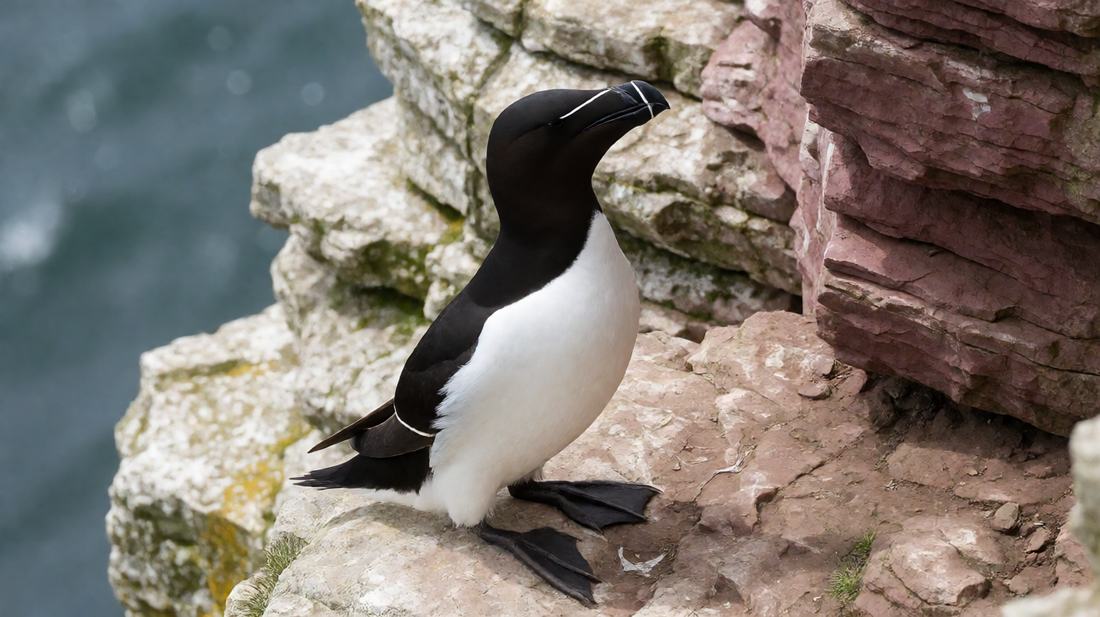
Alca torda | Razorbill
Species Profile · Alcidae
Razorbill
The nearest living relative of the extinct great auk, and the quietest of the large auks — a crevice nester with a deep, powerful bill for holding slippery fish.
IUCN: Least Concern
Range
Length
Bill
Weight
Nest
The last of the great auk’s line
A living relative of an extinct bird
The razorbill is a compact, powerful seabird. It belongs to the family Alcidae, the auks. It is one of the most distinctive auks of the North Atlantic. Its back is black and its under parts are white. Its deep, blunt black bill carries a thin white line. That combination sets it apart from the guillemot at a distance.
The razorbill is the closest living relative of the great auk. That flightless bird was hunted to extinction in the middle of the nineteenth century. So the razorbill is the nearest surviving member of that line. Its structure sits between the guillemot and the puffin. The guillemot has a long bill and nests in the open. The puffin has a short bill and nests in a burrow.
The razorbill sits in between. It also shares their colonies and their fishing grounds. The three often fish the same water. They differ in bill shape, nesting site and feeding method.
Family tree
Alca, a genus of one species
The razorbill sits in the genus Alca. That genus now holds only one living species. The great auk was the other member of the line. It died out in 1844. The genus sits with the guillemots and murres among the larger auks. The razorbill differs from the guillemot in its bill. Its bill is much shorter and much deeper. It also carries a white line across it.
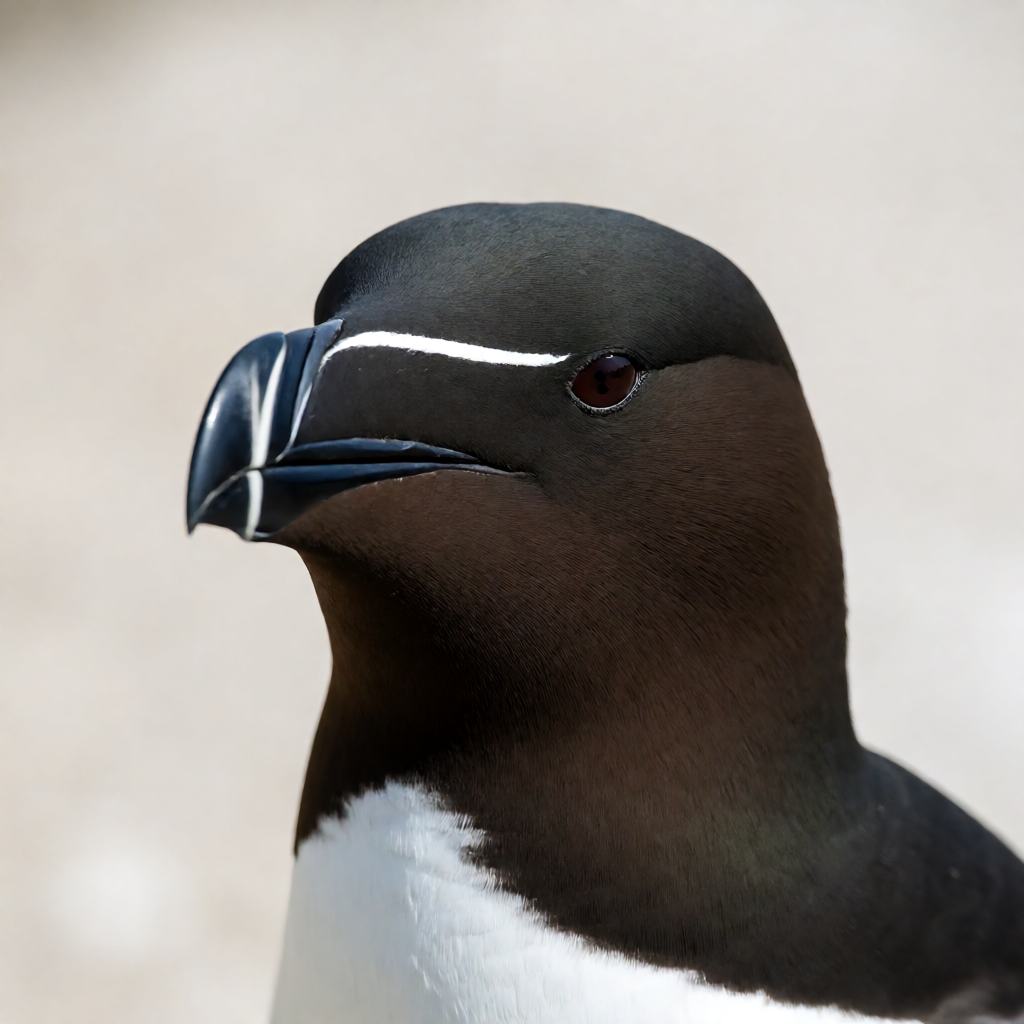
It shows a white band at the base of the culmen. The bill is a deep, laterally compressed organ. It is between 30 and 35 millimetres long. That shape holds slippery fish firmly. The razorbill is the close relative of the Atlantic Puffin (Fratercula arctica). That bird shares the same colonies and the same fishing grounds. Yet its bill and its nesting method are quite different. Comparing the three species of one cliff is instructive.
Closely related birds split a habitat by small differences. Structure and behaviour decide who takes what. Linnaeus described the razorbill in 1758. Today we accept a few subspecies. They differ in size and plumage detail. Ringing shows the birds are very faithful to their sites. A bird returns to the same crevice each year.
Deep bill, white line
How to identify one
An adult razorbill is 37 to 39 centimetres long. Its wingspan is 63 to 68 centimetres. It weighs 505 to 890 grams. It is a stout, compact auk with a short neck. Its bill is far deeper and more powerful than a guillemot’s. That gives the head a different profile. Both sexes look alike. The head, neck, back, upper wing and tail are black. That colour is deepest in summer.
A narrow white line runs from the bill to the eye. A white band crosses the base of the bill. The breast and belly are clean white. The underwing is white too. The pattern is much like the guillemot’s. The razorbill lacks the guillemot’s brown tones. It also shows the white bill line and face marks. Those are the best field marks up close. The wings are short and narrow.
Flight is fast, direct and rather whirring. The bird flies low with rapid wing beats. It cannot soar. It swims and dives with its wings. The feet only steer. The voice is a low growl or grunt. It is deeper and less frequent than a guillemot’s call. The razorbill is far less vocal than its neighbour.
1
2
3
Crevice and cold sea
Where it lives
The razorbill needs a crevice, cavity or boulder on a sea cliff. It also needs cold, productive water near the colony. So it lives on exposed rocky coasts. In summer it ranges across the whole North Atlantic. It nests from Britain and northern France in the south. It reaches Iceland and Greenland in the north. It also uses arctic Canada.
Its colonies favour more sheltered, more broken rock than a guillemot’s. The bird prefers a narrow, dark crevice. It also uses the space beneath a fallen boulder. So it is often overlooked where guillemots are obvious. In winter the bird leaves the land. It spends the season on the open ocean. It moves south of the breeding range.
It reaches the Bay of Biscay and the Mediterranean. It also reaches Iberia and north-west Africa. Canadian and Greenland birds move south to New England. So the bird is a creature of the open sea for most of the year. It is a bird of the cliff only in the breeding months. The species sits at the southern limit of its range on the French and Spanish coasts.
A diver after small fish
What it eats
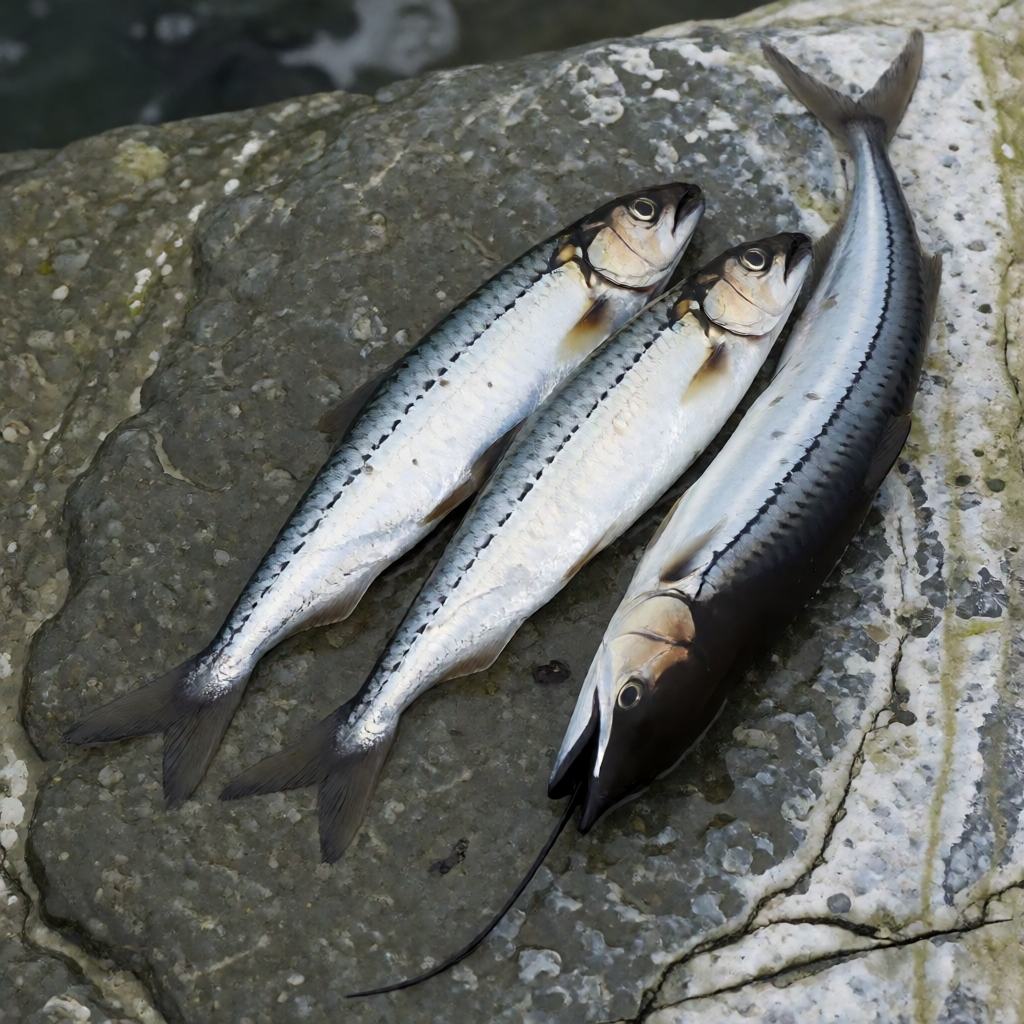
The razorbill eats fish from cold, productive water. Its diet is much like the guillemot’s and the puffin’s. Sandeels are the most important item. They swarm around northern colonies in summer. Sprats and young herring matter too. So do capelin and young cod, whiting and similar fish. The bird also takes small squid. It eats crustaceans and bristle worms as well.
It also takes small fish from near the bottom. The feeding method is the auk’s dive. The bird swims down from the surface with its wings. It then chases the fish with great agility. Recorded dives pass one hundred metres. A dive most usually lasts between thirty seconds and a minute. The deep, powerful bill holds the catch firmly. The tail of a fish often shows outside the bill.
The bird can hold several fish at once. It arranges them with the heads facing inwards. Feeding happens in daylight, mostly morning and evening. Birds fly to the fishing grounds in small parties. They fly low over the water. So the species depends on small, abundant cold-water fish.
A crevice for one egg
The breeding cycle
Razorbills pair in the spring. The bond often lasts for many years. The birds are among the most faithful of seabirds. They return to the same mate and the same crevice. The bird makes no more than a token nest. The single egg is laid on bare rock. It may sit on a few pebbles or some plant material. The egg is pale with dark blotches and scrawls.
Both parents sit for between 32 and 36 days. The egg rests on the feet. It is covered by the feathered brood patch of the belly. The egg of the razorbill is more globular than a guillemot’s. That is because it lies in a crevice, not on an open ledge. There is far less risk of it falling into the sea. The downy chick is fed by both parents. It stays in the crevice for between 17 and 23 days.
It then weighs about a third of the adult. It does not fledge in the ordinary manner. It jumps or flutters from the cliff at night. It falls to the water and swims away with the male parent. The pair then spends the winter together on the ocean. The female stays at the colony a while longer. That night-time departure is rarely observed.
A quiet bird of the cliff
Conservation
The razorbill is Least Concern on the global Red List. Its range is wide. The world total runs to more than a million birds. Yet the species has declined in the south and east of its range. British, North Sea and Baltic populations have fallen in recent decades. The bird is now of concern in Britain. It is on the amber list of the conservation agencies. The causes match those that affect the guillemot.
The abundance and distribution of small fish have changed. The sea has warmed. Sandeels, herring and sprats have been overfished. So the birds find less food in the breeding season. Other pressures add to the loss. Oil and chemicals pollute the sea. Gill nets and drift nets drown many birds. Recreation and climbing disturb the colonies.
The species is protected across its whole range. Key colonies are reserves and special protection areas. They are wardened through the season. Its breeding success and survival are monitored. That helps measure the health of the northern seas. Protecting sandeels and other forage fish is now central. So the razorbill’s future depends on fisheries policy, not just on reserves.
Quick hits
Five things to remember
- The razorbill is the nearest living cousin of the great auk. That flightless bird of the North Atlantic was hunted to extinction in 1844. The two were the last survivors of a lineage separated from other auks for millions of years.
- The deep, blunt bill carries a thin white line and grips slippery fish. A fish tail often juts out past the bill. The bird can hold several fish at once, with the heads facing inwards.
- The egg lies in a crevice or under a boulder rather than on an open ledge. It is therefore more globular than a guillemot’s egg. It has no need of a shape that stops it rolling into the sea.
- The chick leaves the crevice at about a third of the adult weight and cannot yet fly properly. It flutters down to the sea in the dark and swims off with its father. The two winter together on the ocean.
- The razorbill is the quieter of the two large auks of the European cliff. It is often silent even in a crowded colony. It prefers a narrow crevice to an open ledge, so it is easily overlooked.