 By Iris
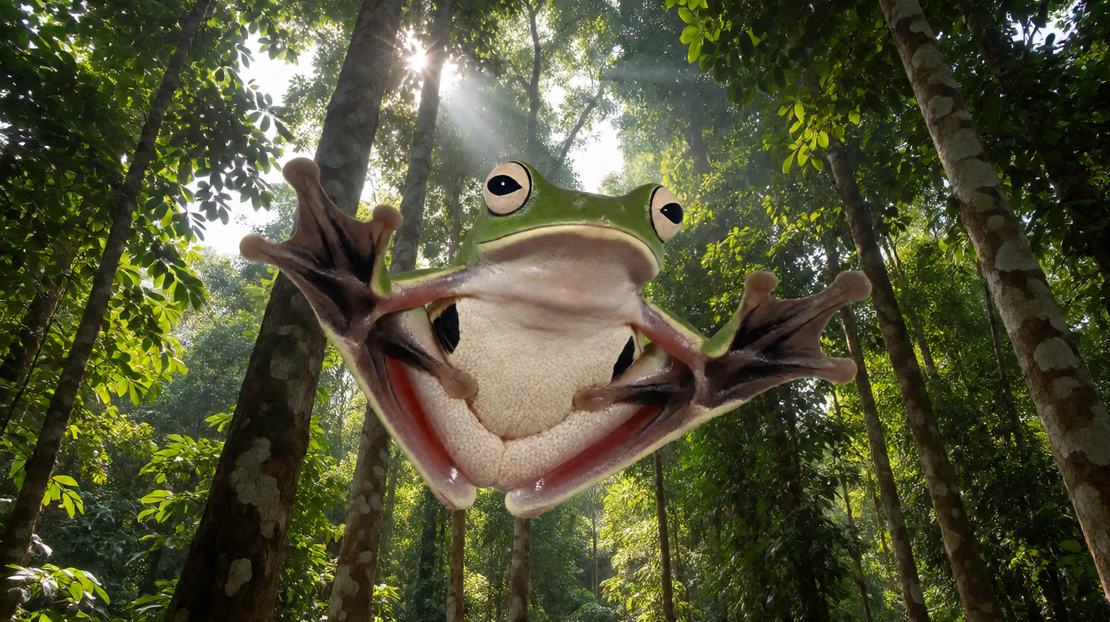
Rhacophorus nigropalmatus | Wallace’s Flying Frog
Species Profile · Rhacophoridae
Wallace’s Flying Frog
A green frog that crosses the canopy on black webbed feet.
Least Concern
Length
Male length
Glide
Webbing
Range
Rating
Fifteen metres between two trunks
A wing made of toes
Green skin and huge black feet announce this frog. Wallace found it in Sarawak in 1855. Since then the species has turned up across the Sunda low land. Frogs of this group glide rather than fall.
Long toes spread a wide web, and the web acts as a wing. Thick skin flaps run down each leg. One leap can carry the frog 15 m between trunks. Such a path is short, yet it crosses gaps that no walking animal can use.
Most movement happens after dark, when the forest cools. By day the frog sits high on a trunk, where green skin blends into bark and leaf.
Family tree
Rhacophoridae, the moss frogs
Rhacophorus nigropalmatus sits in Rhacophoridae, the moss frog group. Boulenger gave the species its name in 1895, forty years after Wallace collected the first one. Its name refers to the black web between the toes.
Old texts place it under Polypedates, a wider group. Flying frogs form a loose set of some eighty species across Asia. The Red-Eyed Tree Frog lives in the New World, while this one never crosses the sea.
Both nest above water, so the tadpoles drop straight in. Their colours differ, though, since one is bright and the other is plain. No subspecies is named today.
A name from Sarawak
How to tell one
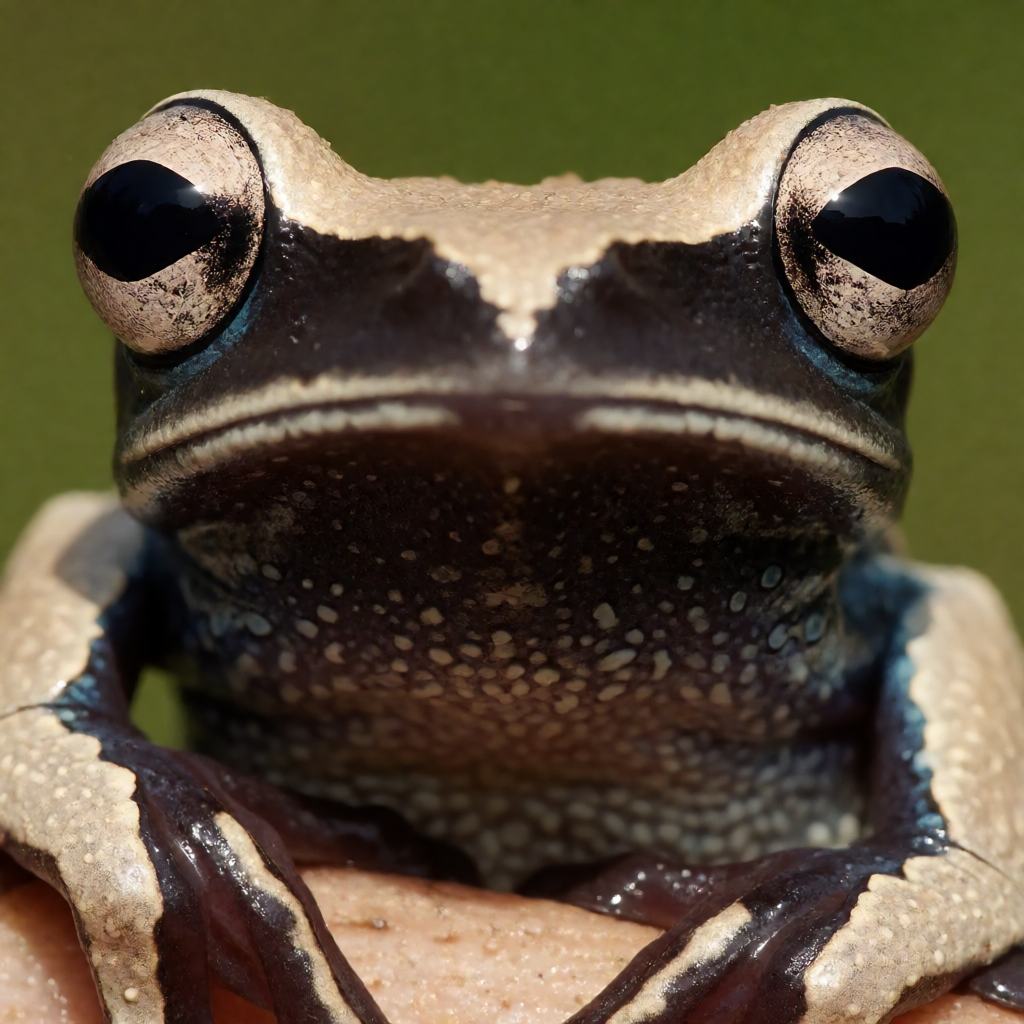
Females reach 10 cm from snout to vent. Males stop at about 7 cm. Bright green covers the back, and the flanks show a pale yellow. Black webbing fills the space between very long toes.
Skin flaps hang along the outer edge of each leg, and they widen the gliding surface. Together these parts make a wing of skin. Eyes bulge above the skull, so the frog sees in near darkness. Adhesive pads at the toe tips grip wet bark.
Weight stays low, which makes a glide cheap. A frog of this size can turn in mid air, and it lands on a trunk feet first.
1
2
3
Skin stretched into a sail
Where it lives
Low land rain forest holds the species. Records come from southern Myanmar and Thailand. Peninsular Malaysia carries the largest share. Borneo, Sumatra and nearby islands hold other groups.
Trees must stand close, since a glide cannot cross open ground. Rivers cut the forest into blocks, and the frogs stay on one side. Breeding pools sit in quiet hollows away from the main flow. Palm oil blocks now cut through much of the old range.
Secondary forest also suits the frog, although the roof there stays low and the air dries faster. Parks such as Mulu in Sarawak keep large blocks whole.
Trees that stand close
What it eats
Insects make up the whole diet, though the mix shifts with the season. Crickets, grasshoppers and roaches form the usual prey through most of the year. Hunting begins after dusk, since the air then cools. Sitting still, the frog waits for movement.
A strike takes a fraction of a second. Prey is caught with the mouth, not the hands. Big eyes pick up the least motion in near darkness, which suits a hunter that sits still. Birds and snakes take a share of the frogs.
Tree holes give shelter between hunts. A frog that misses a jump falls to the forest floor, where snakes and birds find it easy prey.
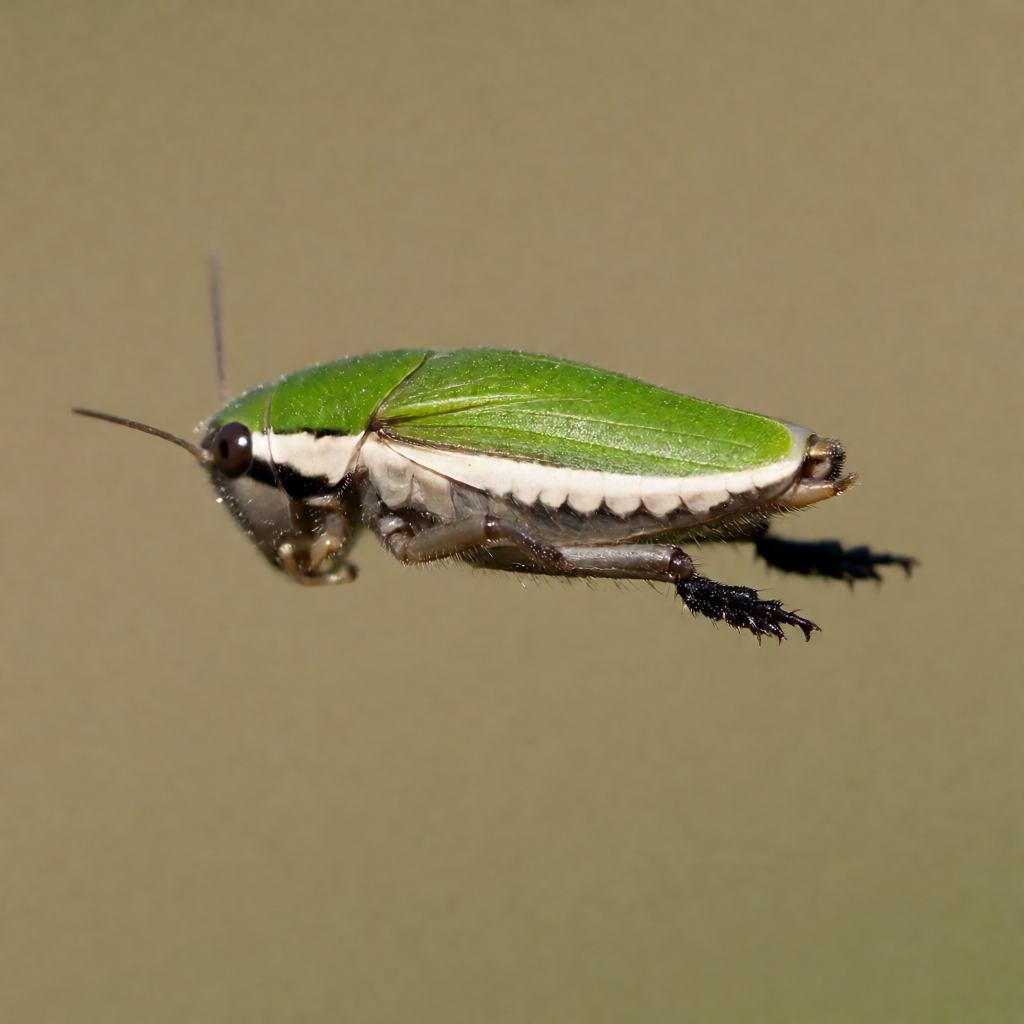
Insects after dark
The breeding cycle
Rain sets off the breeding season, because pools need fresh water. Males call from low branches over pools. Its call is a harsh croak, quite unlike the song of other frogs. A pair joins on a branch above the water, and the male clings to the female as she works.
Females beat the foam with their hind legs. Foam holds the eggs above the pool, so the clutch stays wet. Tadpoles hatch and drop into the water below. Free swimming larvae feed on plant matter.
Metamorphosis takes about two months. Nests sit on rocks or leaves, and each one holds a few dozen eggs.
Least Concern, and forest bound
Conservation
The IUCN lists the frog as Least Concern, as assessed in 2022. A wide range and a large count keep the rating low. Forest loss is the main threat. Logging and palm oil both remove the tall trees that the frog needs, and neither leaves a path to the next block.
Drought hits the pools, and the tadpoles need still water. Collectors take a few animals for the cage trade. No global count exists, so the true trend stays unclear. Parks in Borneo and Malaysia guard a large share of the range.
National law in Malaysia and Indonesia bans unlicensed capture. Watching a frog glide is not the same as keeping a forest whole, yet both rest on the same trees.
Side by side
How It Compares
| Trait | Wallace’s Flying Frog | Red-Eyed Tree Frog |
|---|---|---|
| Length | 10 cm in the female, and 7 cm in the male | 6 cm to 7 cm, with long thin legs |
| Glide | 15 m on spread toes and skin flaps | no glide at all, and it leaps between leaves |
| Home | Sunda lowland forest in five countries | Central American rain forest from Mexico to Panama |
| Colour | bright green above with black webbing | green above with blue flanks and red eyes |
| Food | crickets, grasshoppers and roaches after dark | insects and small arthropods taken at night |
| Nest | a foam mass on a branch above a pool | a jelly clutch on a leaf over a pond |
Common misreadings
What People Get Wrong
- Many people think the frog truly flies, yet it only glides on spread webs.
- Some accounts place the species in the New World, although every record comes from South East Asia.
- Guides often say the foam nest floats on the pool, yet it sits on a branch above the water.
Going further
Sources and Further Reading
Quick hits
Five things to remember
- Wallace found the first one in 1855.
- The black web works as a wing.
- One glide can cover 15 m.
- These frogs build nests of foam.
- Tadpoles drop straight into the pool.