 By Iris
Titanus giganteus | Titan Beetle
Species Profile · Cerambycidae
Titan Beetle
The largest beetle in South America, with jaws strong enough to split a pencil.
Not Evaluated
Length
Jaws
Range
Adult food
Larva
Rating
The biggest beetle in the Amazon
Sixteen centimetres of shell
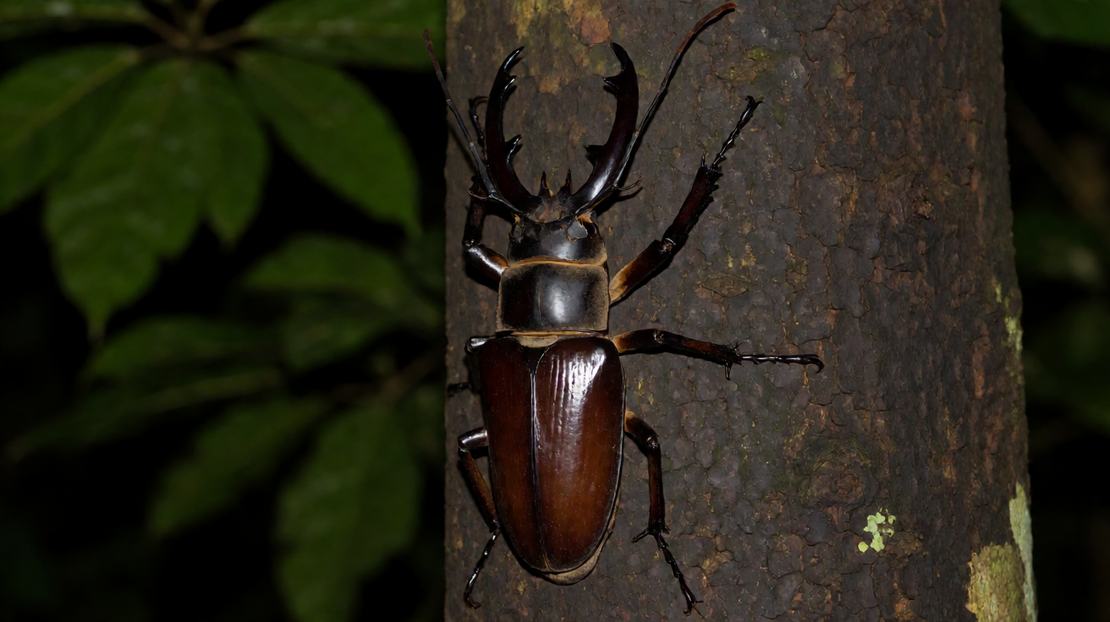
Titan beetles carry heavy jaws and a body longer than a human hand. Adults reach 16 cm, and a few pass 17 cm. No bigger beetle lives there. It flies at night, and it comes to lamps hung in the forest.
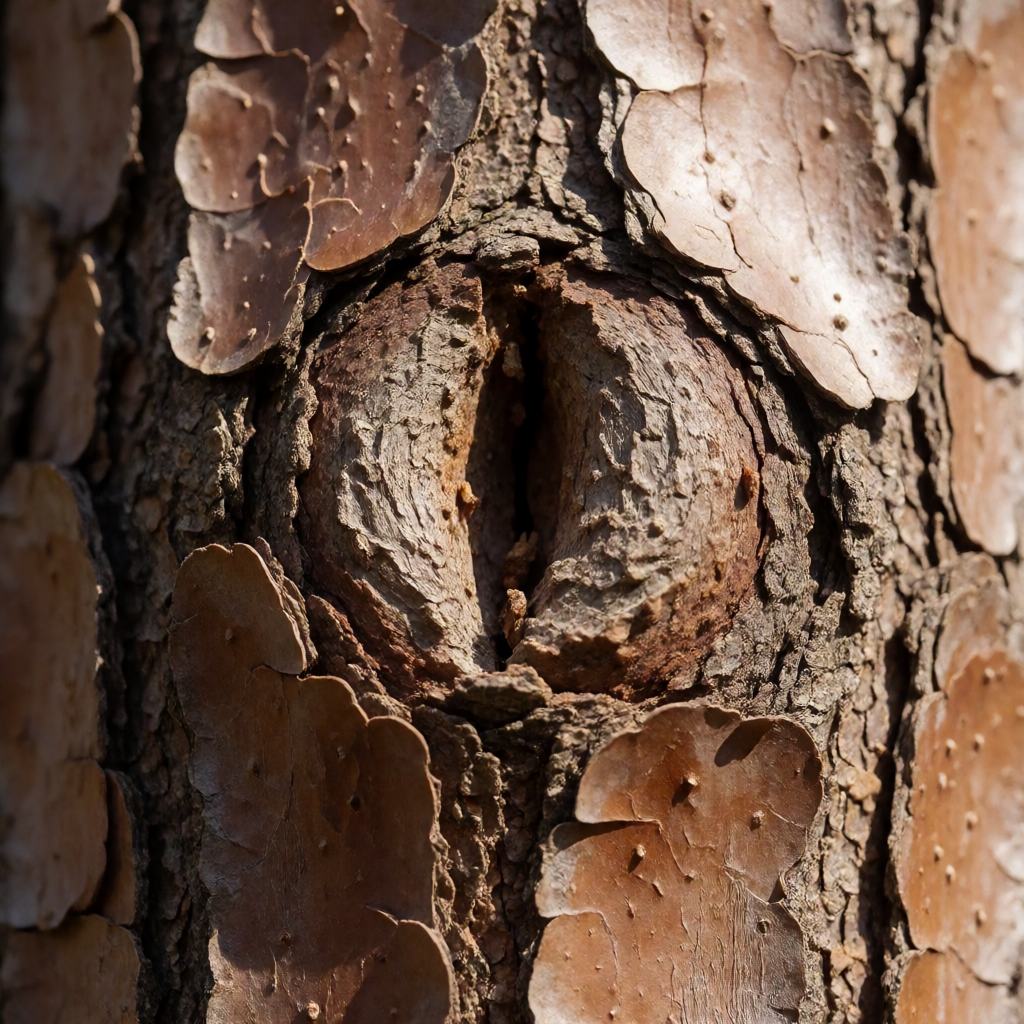
Nothing about the animal is gentle, although it eats little. Heavy jaws can snap a pencil, and they open wide when the animal is handled. Nobody has found a larva, so the first two years of the life cycle remain a blank page for science. Dealers pay high prices, and the trade runs on secrecy.
Adults stay hard to find. Most specimens come from a few river basins.
Family tree
Cerambycidae, the longhorn beetles
Titanus giganteus is the only species in its genus. Family is Cerambycidae, and the group holds the longhorn beetles of the world. Its nearest relative here is the Great Capricorn Beetle, a smaller cousin.
Both larvae bore into wood, and both adults carry feelers longer than the head. Yet the two live on different continents, since one never leaves the Amazon. German naturalist Herbst described the species in 1775, and the name has held.
Workers place it with the sawyers, among the other big longhorns. Its genus holds one species, which is unusual among beetles of that size, since most large groups split into many forms. No subspecies is listed.
Armour, jaws and feelers
How to tell one
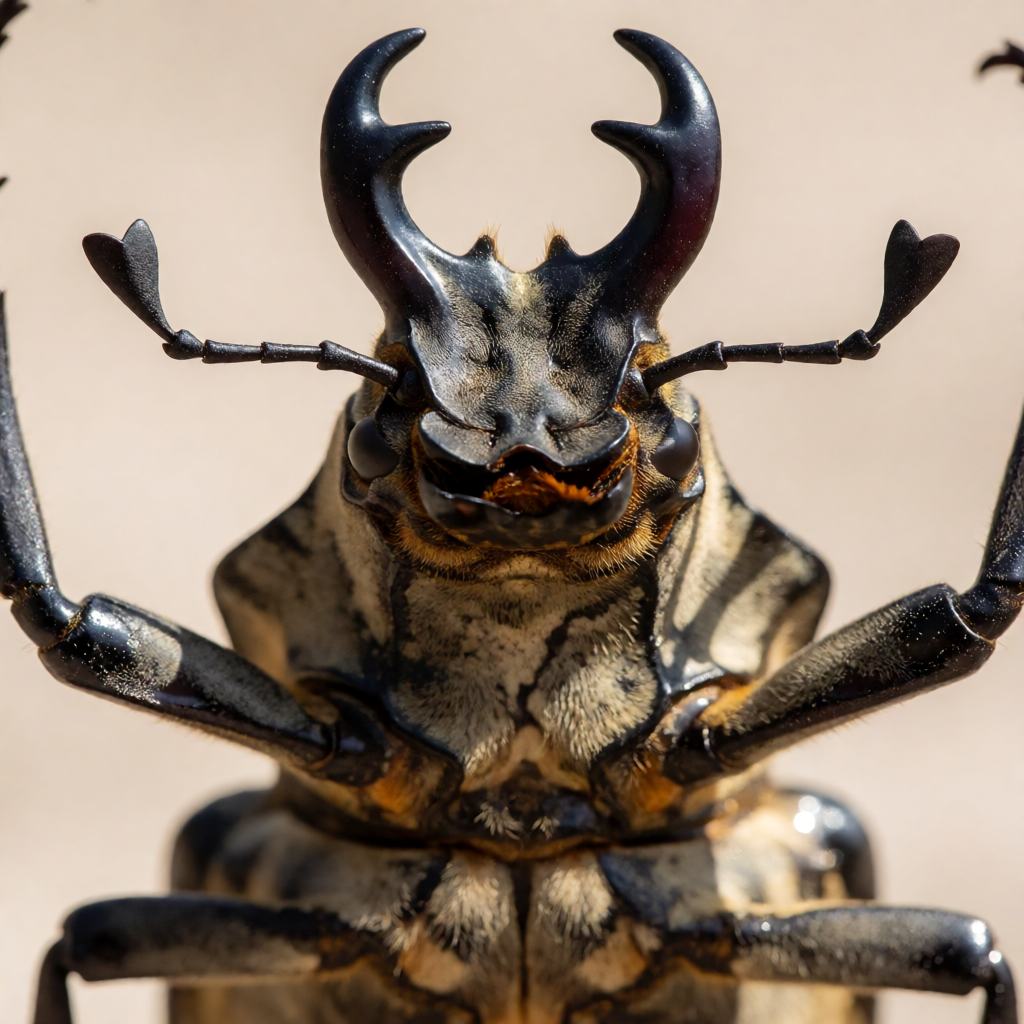
Length runs from 12 cm to 16.7 cm, and females grow slightly larger. Body is flat, and the wing cases stay hard. Colour is dark brown. Jaws reach 3 cm, and each one carries a pair of teeth on the inner edge.
Those jaws serve in fights over females and in defence, yet the adult cannot use them to chew wood as a larva would. Feelers are thick, and they reach half the body length. Legs carry sharp claws, and the feet grip rough bark with ease. Wing cases shine, and they protect a pair of flying wings.
Flight is clumsy. Disturbed beetles hiss, and the sound comes from rubbing body parts together. Eyes are small.
1
2
3
The Amazon basin only
Where it lives
Lowland rainforest holds the species across the Amazon basin. Records come from Brazil, Peru, Ecuador, Colombia, Bolivia and the Guianas. Its range covers several million square kilometres of forest.
Nothing is known about territories. Adults fly high, and they rarely come down except to mate or to find light. One tree may draw several beetles on the same night, since the adults gather where a light burns in the dark.
Forest clearing removes the dead wood, and the species then fades. Nobody has found a breeding site, so the habitat needed by larvae stays unknown. Canopy hides them.
An adult that barely eats
What it eats
Adults eat very little, and some take nothing at all. Sap and rotting fruit may pass the mouth, although no worker has watched a meal. Jaws are built for fighting, since they cannot chew wood.
Energy stored during the larval stage must last the adult for its whole life, and that life rarely runs past a few months. Nothing is known about the larval diet either. Workers assume dead wood, since every other large longhorn feeds that way.
No host tree is named. Fungi in the wood may do the real work, and the larva then takes the result. That question stays open.
A larva nobody has seen
The breeding cycle
Adults meet at night, and males fight over females. Two males push with their jaws, and the stronger one wins the female. Nothing is known about courtship beyond that.
Females probably lay eggs in dead wood, since every related species does so, but no one has seen one do it. A larva may take years to grow, and nobody has timed it. The change would follow in the same wood, although no pupa has been found.
The cycle stays hidden. Captive animals live for weeks, and none has bred. Dealers keep dead specimens rather than livestock, so no one has tried to rear one.
Not Evaluated, and still common
Conservation
The Red List has no entry for the species. Nobody has counted the numbers, and the trend therefore stays unknown. Dealers pay hundreds of dollars for a single beetle.
Forest loss is the main risk, although the species uses a wide range. Larvae that take years to mature cannot replace losses quickly, so removal of adults may matter more than the trade admits. No rule protects the species, and no reserve targets it.
Reserves cover much of the range, and the beetle breeds inside them. Records stay thin, and the picture stays incomplete. Most records come from collectors rather than from surveys.
Side by side
How It Compares
| Trait | Titan Beetle | Great Capricorn Beetle |
|---|---|---|
| Length | 12 cm to 16.7 cm, and females grow larger | 2.5 cm to 5.5 cm, and the feelers match the body |
| Colour | dark brown, with hard shining wing cases | black brown, with a grey blue bloom |
| Food | almost nothing, since the adult barely eats | sap and fruit, taken by day |
| Young | a larva nobody has ever found | a larva that bores through oak bark for years |
| Build | jaws 3 cm long, used as levers in fights | feelers longer than the body, used as scent trails |
| Range | the Amazon basin, and nowhere else | Europe and western Asia, wherever old oaks stand |
Common misreadings
What People Get Wrong
- Many people assume the jaws crush wood, yet the adult cannot chew and eats almost nothing. Energy stored in the larval stage must last the whole adult life.
- A common tale says the larva bores through living trees, although nobody has ever found one. Workers assume dead wood, since every other big longhorn feeds that way.
- Guides claim the beetle reaches 20 cm, yet the largest measured animal stays under 17 cm. Collectors pay hundreds of dollars, so every record comes from the trade.
Going further
Sources and Further Reading
Quick hits
Five things to remember
- It is the largest beetle in the Amazon.
- Nobody has found its larva.
- The jaws can snap a pencil.
- Adults may eat nothing at all.
- A specimen sells for hundreds of dollars.