 By Iris
Metasepia pfefferi | Flamboyant Cuttlefish
Species Profile · Sepiidae
Flamboyant Cuttlefish
A small cuttlefish that walks on two arms across the sea floor.
Data Deficient
Length
Walk
Colour
Life
Food
Rating
Eight centimetres, and never in a hurry
A cuttlefish that walks
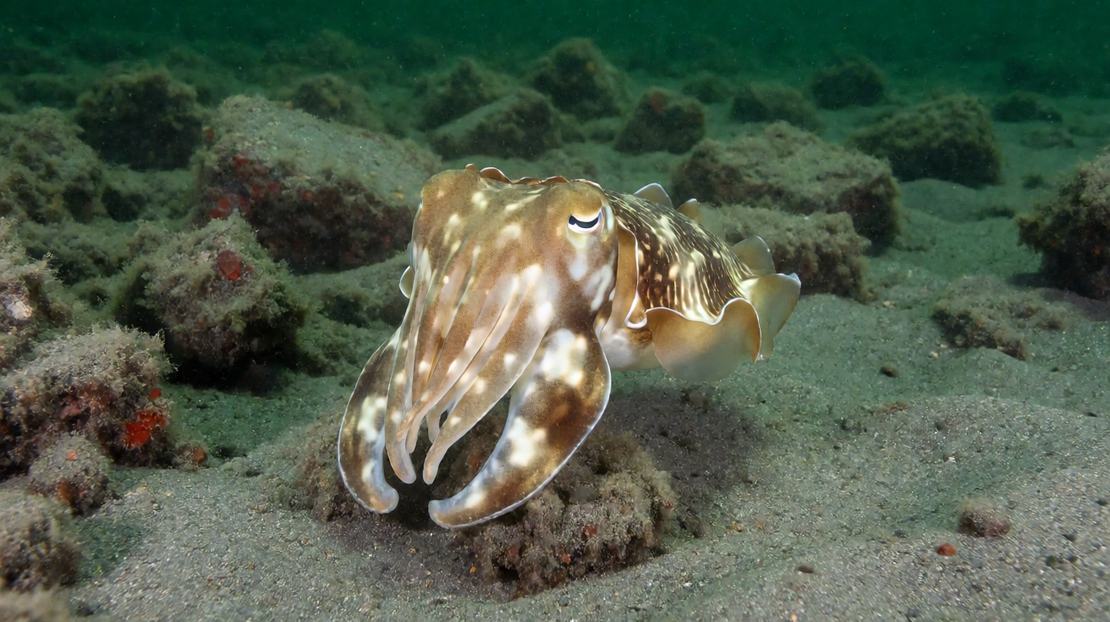
Flamboyant cuttlefish walk on the sand, and they wear a warning on the skin. Bands of purple, yellow and white ripple across the body, although the base colour stays cream. Body length reaches 6 cm. Two lower arms carry the animal, and the other six reach out in front.
It lives on sand and mud, and indeed it never swims far. Bright skin warns predators away, since the flesh carries a strong poison. Divers who meet one see a small animal walking slowly across grey silt, with colour moving over the skin like weather. Most cuttlefish swim, and this one prefers the bottom.
The walk looks awkward. Nothing about the animal is fast, and nothing needs to be.
Family tree
Sepiidae, the true cuttlefishes
Metasepia pfefferi is one of two species in its genus. Family is Sepiidae, and the group holds the cuttlefish of shallow seas. Its nearest kin on this site is the Giant Pacific Octopus.
Both carry pigment cells in the skin, and both change colour within a second. Yet the two differ in size, since one stays small and the other grows huge. William Hoyle described the species in 1885 from a specimen in the Arafura Sea.
Workers moved the genus in 2023, and the old name still appears in guides. That revision placed the animal in a larger group of fourteen species, so field guides and dive shops still disagree about the label. No subspecies is listed.
Soft body, no outer shell
How to tell one
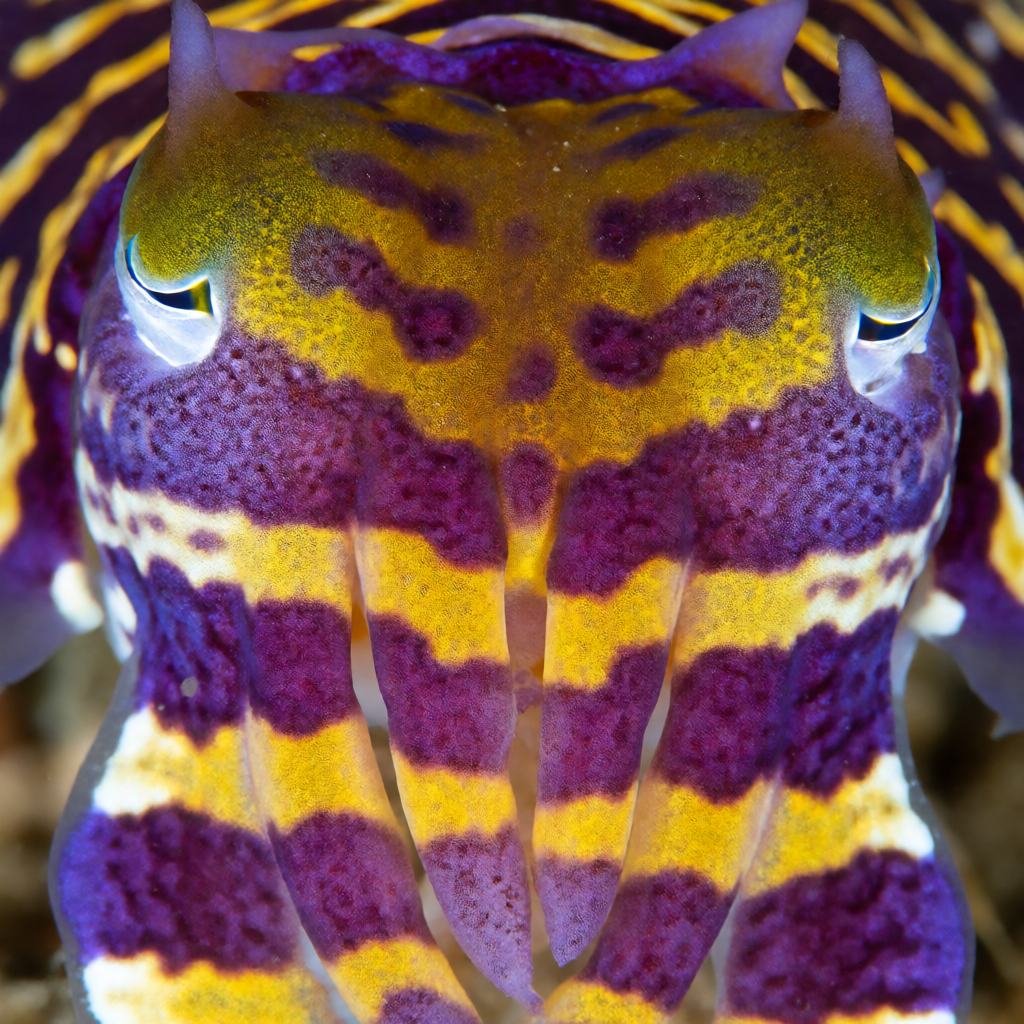
Mantle length reaches 6 cm, and the whole animal measures about 8 cm. Skin carries small flaps, and the flaps rise when the animal is alert. Its body looks soft. Colour runs from cream to dark brown, and the change takes under a second.
Two fins run along the sides, and they ripple as the animal walks. Muscle in the mantle holds tetrodotoxin, the same poison that makes a puffer fish dangerous, and the bright skin advertises it. Eight arms circle the mouth, and two of them are longer. Those arms shoot out to take prey, and they retract in a blink.
Eyes are large. A cuttlebone fills the body, and it controls buoyancy. Its beak is hard.
1
2
3
Sand and rubble in warm shallows
Where it lives
Sand and silt hold the species across the Indo Pacific. Its range runs from western Australia to southern New Guinea and the Philippines. Depth stays between 3 m and 86 m, although most animals sit shallower.
Divers call the ground muck. Nothing grows on that bare bottom, so the animal relies on colour rather than cover. One patch of sand may hold several animals within a few metres, since the ground offers food and shelter in equal measure.
Coral reefs nearby hold none, because the animal needs soft ground. Coastal building and dredging bury the silt, and the animals then leave. Warm water sets the range.
Hunting on foot by day
What it eats
Small fish form the diet, and shrimp follow close behind. It also takes crabs and worms, and it hunts by day. A slow walk ends in a sudden strike, and the tentacles finish the job.
Two long tentacles shoot from the mouth faster than the eye can follow, and they pull the prey back to the beak. Nothing is chewed, and the beak tears the food apart. One meal may take an hour, since the animal eats slowly and often.
Feeding stops at dusk. Captive animals take shrimp, although the diet must stay varied. Most aquariums fail with the species, because the food and the water quality both prove hard.
One breeding season only
The breeding cycle
Adults live alone, and they meet only to breed. Males display before a female, and they drive other males away. Eggs go down in ones and twos, and each one measures 1 cm.
Females cement them under a shell or in a rock crack, and they then stay nearby until the last one hatches. Young animals hatch as small adults, since no floating stage exists. They hunt at once, and they grow fast on the same food as their parents.
Life lasts 12 months to 18 months, and breeding ends it. Both sexes die young. Nobody has raised a full generation in a tank, although public aquariums keep trying.
Data Deficient since 2009
Conservation
The Red List calls the species Data Deficient. Workers assessed it in 2009, and no one has counted the population since. Collectors want the animal, and the trade takes a steady toll.
Most captives die within weeks, since few tanks can supply the right food. Short life and a small range leave the species exposed, so a single well dived bay may lose its animals for years. Dredging and coastal building bury the silt it needs.
Warming water may shift the sand, and the animal would then move with it. No rule protects it. Divers who handle one damage the skin, and the animal rarely recovers.
Side by side
How It Compares
| Trait | Flamboyant Cuttlefish | Giant Pacific Octopus |
|---|---|---|
| Length | mantle 6 cm, and the whole animal about 8 cm | arm span past 4 m, and the body alone 60 cm |
| Colour | cream to dark brown, changed in under a second | red brown to purple, changed within seconds |
| Food | small fish, shrimp and worms, taken by day | crabs, clams and fish, cracked open with the beak |
| Young | hatch as small adults, with no floating stage | hatch as larvae and drift for months |
| Build | two fins ripple as the animal walks on two arms | eight arms and no fins, with a pumping mantle |
| Life | 12 months to 18 months, and breeding ends it | three years to five years, and breeding ends it |
Common misreadings
What People Get Wrong
- Many people believe the animal swims all day, yet it walks on two arms and rarely leaves the bottom. That gait looks awkward, so divers notice the animal at once.
- A common tale says the flesh tastes mild, although the muscle carries tetrodotoxin. The bright skin advertises that poison, so a predator that bites once learns to stop.
- Guides claim the species lives on reefs, yet every record comes from sand and silt. Coral nearby holds none, because the animal needs soft ground.
Going further
Sources and Further Reading
Quick hits
Five things to remember
- It walks on two arms.
- The flesh carries tetrodotoxin.
- Colour changes in under a second.
- It lives about a year.
- Females guard the eggs.