 By Iris
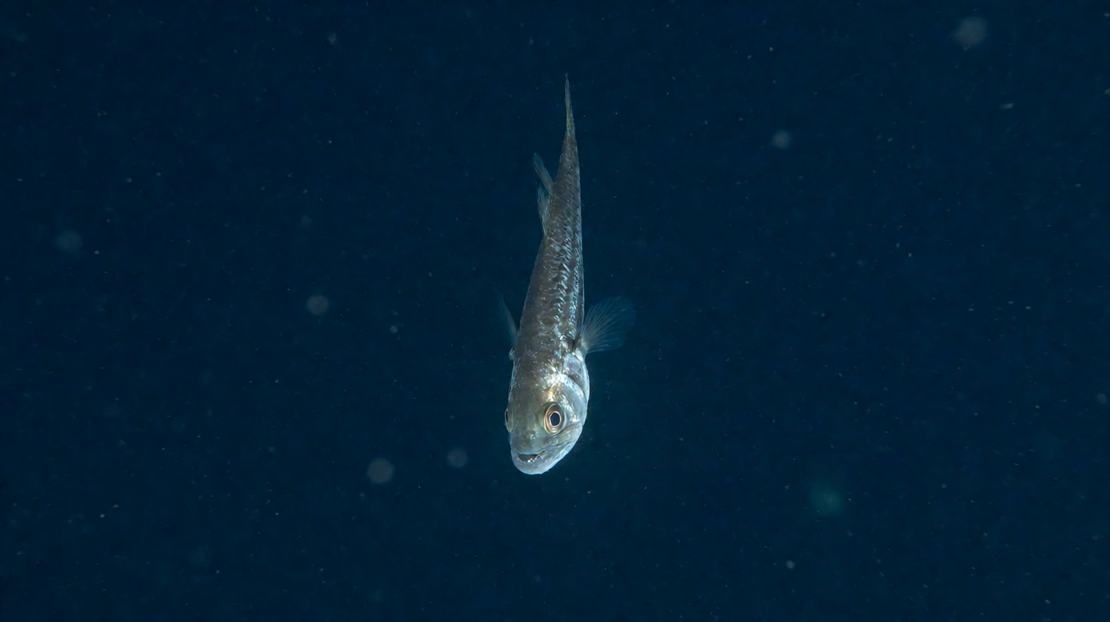
Chauliodus sloani | Viperfish
Species Profile · Stomiidae
Viperfish
A slim deep sea fish with fangs too long to close inside its mouth.
Not Evaluated
Length
Fangs
Depth
Light
Food
Rating
Thirty centimetres of black water
Fangs that cannot close
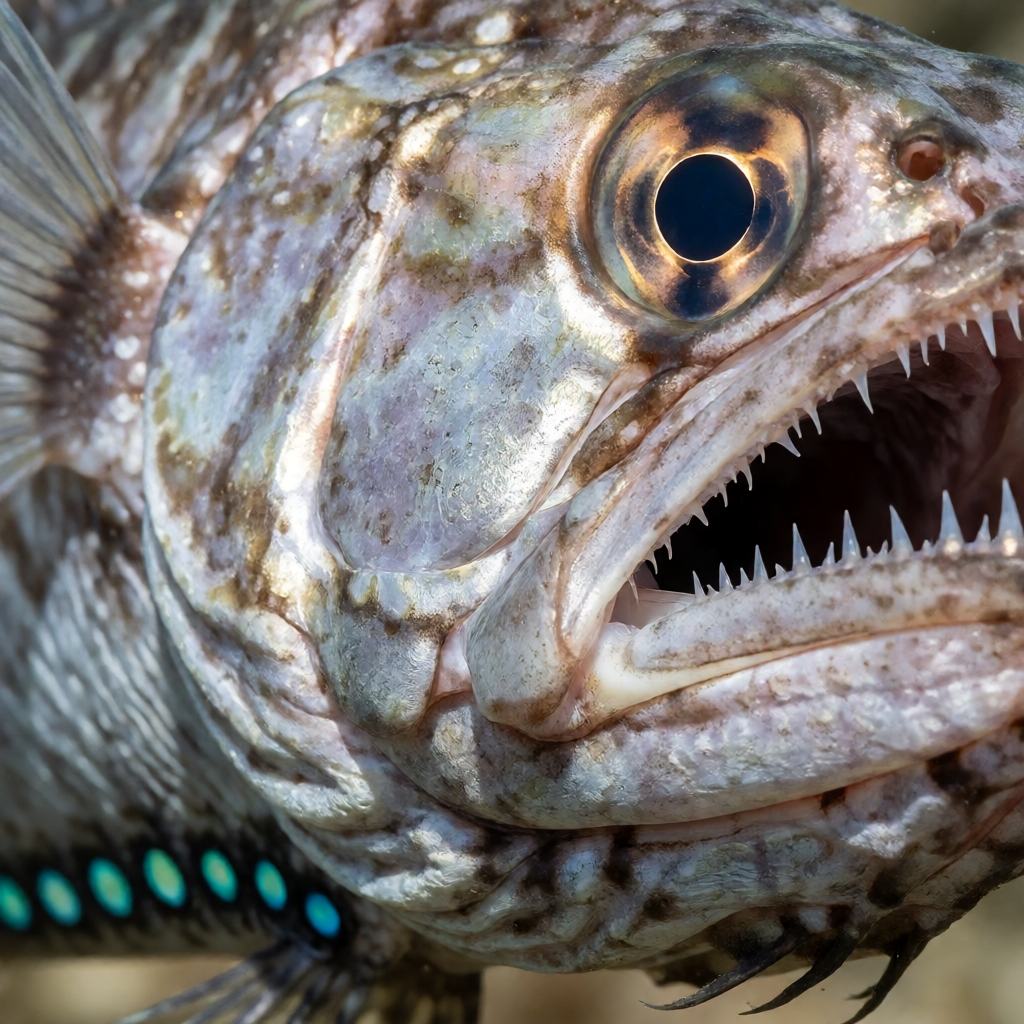
Viperfish hang in dark water with their jaws open, and the teeth stay ready. No other fish carries fangs so long for its size. Body length stays near 30 cm. A row of light organs runs along the belly.
Each one glows blue green. That glow hides the fish from below, since it matches the faint light above. Most people never meet one alive, and few ever will. It lives between 200 m and 1500 m by day, and it rises at night.
A first dorsal fin reaches forward over the head like a rod, and its tip carries a small lamp that may draw prey close. Nothing about the animal is built for speed. It waits instead.
Family tree
Stomiidae, the dragonfishes and viperfishes
Chauliodus sloani is one of nine viperfishes. Family is Stomiidae, and the group holds the dragonfishes and the loosejaws. Its nearest relative on this site is the Humpback Anglerfish, a small ambush hunter of deep water.
Both sit still in the dark, and both strike at anything that passes. Yet the two kill in different ways, since one bites and the other swallows. Two German workers described the species in 1801.
Nine species share the genus, although each one keeps to its own band of water. Its name comes from the Latin word for a viper, and the teeth explain the choice better than any drawing could. No subspecies is listed.
A body built for ambush
How to tell one
Length runs from 22 cm to 30 cm, and a large female may pass 32 cm. The body is long, and it tapers to a thin tail. Fangs on the lower jaw reach 12 mm. They close outside the upper lip.
Those teeth lean back, so a fish that slides in cannot slide out again, and the jaw then lifts the prey toward the throat. Skin is silver, and it carries no scales at all. Photophores line the belly and the flanks, yet each one sits in a dark pocket. One dorsal fin stands over the head like a fishing rod.
Fins are small and soft. Eyes sit far forward, and they face upward, since the fish hunts from below. A stomach stretches, and it holds prey almost as long as the body. Muscle stays pale.
1
2
3
Cold water below 200 m
Where it lives
Deep open water holds the species in every warm ocean. By day it stays between 500 m and 1500 m. No useful light reaches that far. At dusk it rises, and it feeds near 200 m until dawn.
Cold water sets the limit. Temperatures near 4 C suit the fish, although it also enters warmer northern seas. That daily climb is the largest migration on earth, since billions of small animals rise together and sink again before sunrise. Adults stay alone, and they never form a school.
Trawls catch a few by accident, although the catch rarely reaches the surface alive. The bottom stays far below.
One fish at a time
What it eats
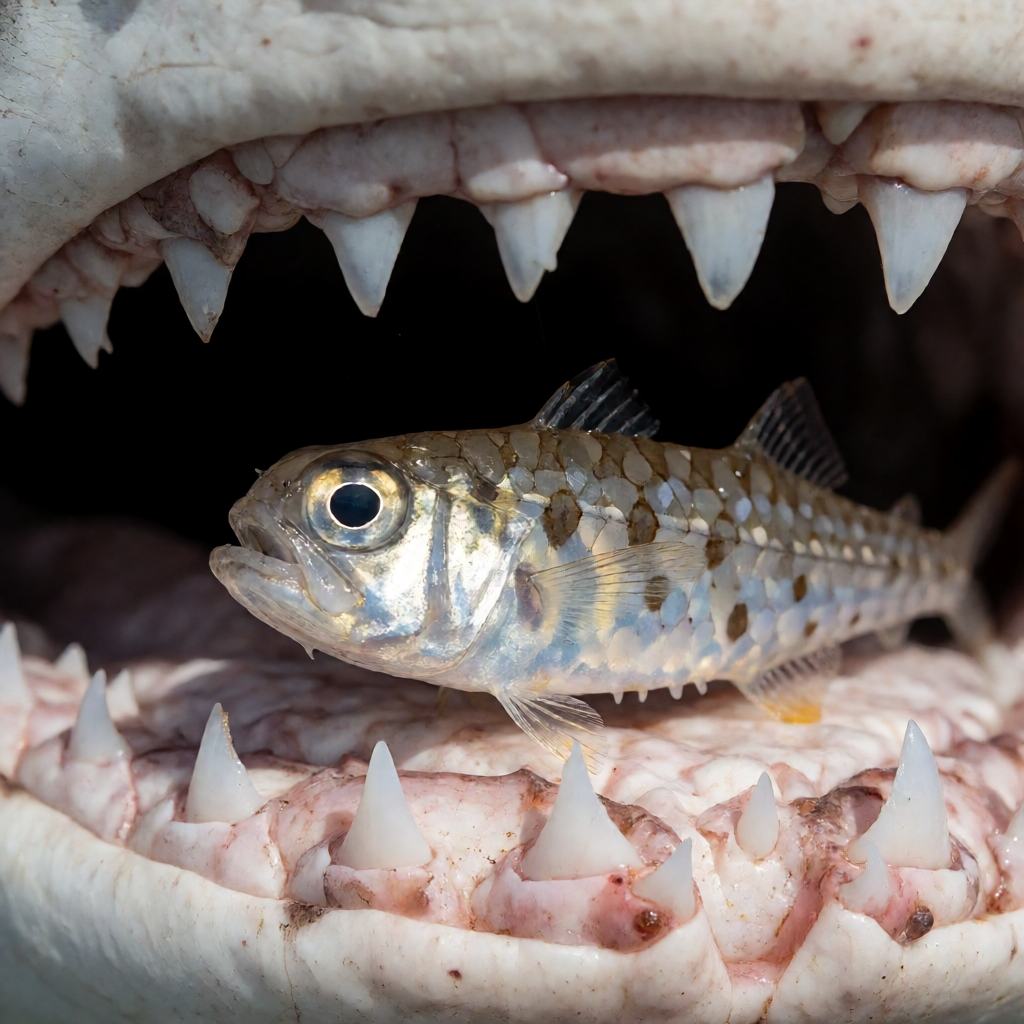
Small fish form the diet, and lanternfish rank first. Shrimp and krill also go down, and the fish takes them one at a time. The fish hangs still, while it waits for a shape to cross the jaw.
A strike takes less than a second, and the whole body lunges forward so fast that the prey has no time to turn. Teeth hold the catch, and the jaw cannot open far enough to let it go. One meal may last a week, since food is scarce at that depth.
Nothing is chewed. One stomach expands, and it takes prey up to 60 percent of body length. Feeding happens at night.
Eggs that float upward
The breeding cycle
Little is known, since nobody has watched the fish spawn. Males and females look alike, and both carry the same light organs. Eggs are small and buoyant, and they rise toward the surface.
Larvae look nothing like the adult, with a long thin body and a head that grows into shape over several months. Young fish stay near the surface, and they sink deeper as they grow. Growth is slow, and adults may live ten years.
Spawning stays unstudied. Captive animals have never bred, since pressure and cold cannot be copied in a tank. Part of the life cycle remains a guess.
Not Evaluated, and unrecorded
Conservation
No Red List entry exists. Nobody has counted the population, and no trend is known. Deep trawls catch the fish by accident, and most of the catch dies.
Deep sea mining may stir the water column, although the risk stays unmeasured. A slow life in cold water leaves little room for recovery, since a group that loses adults may take years to replace them. Plastic reaches the deep, and fibres turn up in midwater fish, though the harm stays unknown.
No rule protects the species, and no reserve covers the open water. Warming water may shift the layer it needs, and the fish would follow. The species stays common.
Side by side
How It Compares
| Trait | Viperfish | Humpback Anglerfish |
|---|---|---|
| Length | 22 cm to 30 cm, and the teeth run 12 mm | 18 cm for the female, and 3 cm for the male |
| Colour | silver, with blue green light organs along the belly | black and soft, with no scales at all |
| Lure | a small lamp on the tip of the first dorsal fin | a glowing bait that hangs in front of the mouth |
| Food | lanternfish, shrimp and krill, taken one at a time | fish and shrimp, swallowed in a single gulp |
| Young | small buoyant eggs that rise toward the surface | larvae that drift near the surface for months |
| Depth | 200 m to 1500 m, rising at night | 1000 m to 4000 m, and never rising |
Common misreadings
What People Get Wrong
- Many people think the fish swallows prey whole, yet the teeth hold every catch in place. A strike takes less than a second, and the jaw then lifts the prey toward the throat.
- A common tale says the light organs warn enemies away, although they actually hide the fish from below. The glow matches the faint light above, so a predator looking up sees nothing at all.
- Guides claim the fish grows to a metre, yet the largest animals stay near 30 cm. Trawls bring up few adults, so most records come from a chance catch.
Going further
Sources and Further Reading
Quick hits
Five things to remember
- The teeth close outside the upper lip.
- A light organ sits on the fin tip.
- The fish swallows prey half its own length.
- It rises 1000 m every night.
- Nobody has seen it spawn.