 By Iris
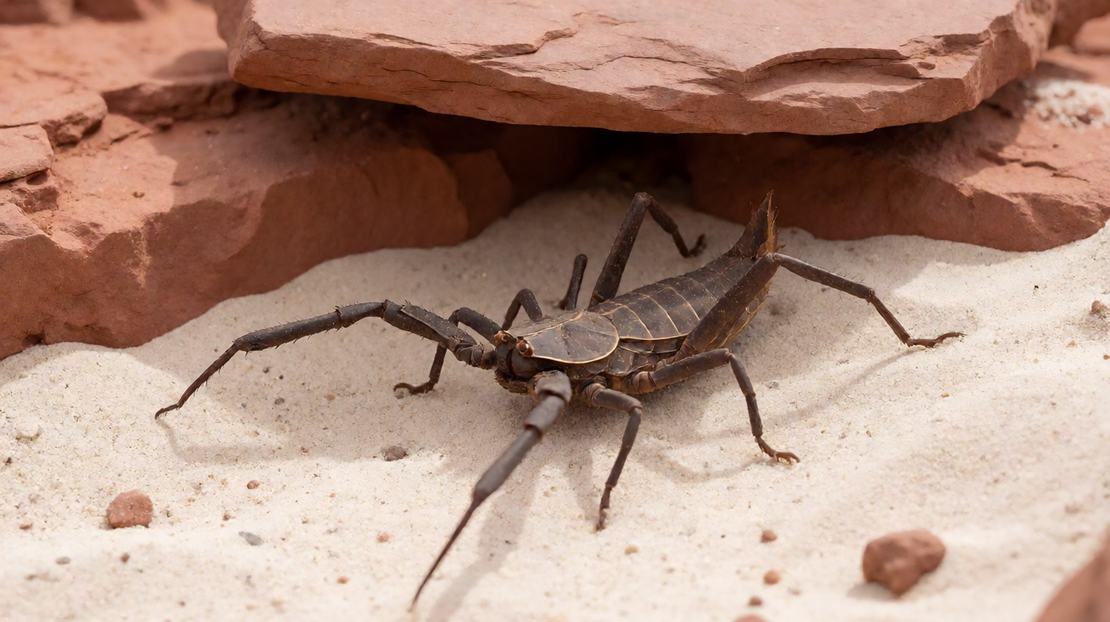
Mastigoproctus giganteus | Giant Whip Scorpion
Species Profile · Thelyphonidae
Giant Whip Scorpion
A flat arachnid with heavy pincers, a thin tail and a spray of acid instead of venom.
Not Evaluated
Length
Tail
Spray
Range
Food
Rating
Vinegar on demand
A whip for a tail
A giant whip scorpion walks the desert floor at night with two long feelers stretched ahead. A rear whip looks dangerous, although it is not. This arachnid has heavy pincers but no sting, and the tail carries a thin thread instead of a barb. Nothing about it injects venom.
Defence is chemical, since the tail can spray acid at any hand that grabs the animal from behind. That spray smells of vinegar, and the old name vinegaroon comes from it. Body length runs to about 7 cm with the tail, although a large male grows bigger. Eight legs walk, while the front pair works as feelers.
It hunts the desert night, and it finds prey by touch. Nothing in its look suggests how harmless it is.
Family tree
Thelyphonidae, the whip scorpions
Workers place it among the whip scorpions, an order of arachnids. The species is Mastigoproctus giganteus, the largest of its group in North America. Its closest kin here is the Deathstalker Scorpion, a venomous relative of the same class. Both carry pincers, and both hunt at night.
Yet one stings and the other only sprays. Workers described the species in 1835 from Mexican material, although the name changed twice. Order Uropygi holds about a hundred species, though most of them live in the tropics. Gene work places the group near the spiders, although the body looks like a scorpion.
Tail is not a weapon, and the pincers do the work. Names have changed, since workers split the group more than once.
Thelyphonidae, whip scorpions
How to tell one
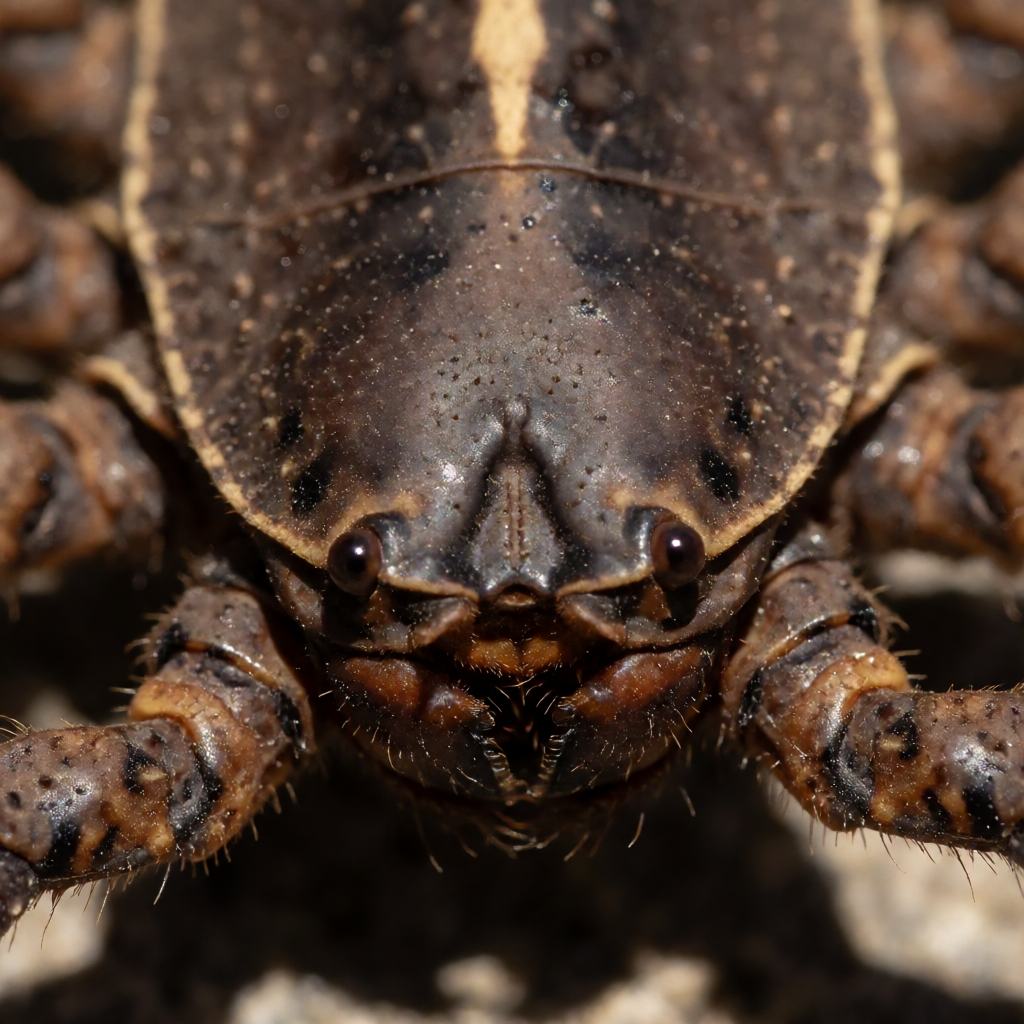
Body is flat and dark brown. A hard shell covers it. Length reaches 7 cm, and a large male grows a little more. Pincers are thick, and each one ends in a strong finger.
Front legs are long and thin, and they work as feelers. Those legs touch the ground ahead, so the animal reads the surface as it walks. Eight eyes sit in a cluster. None of them sees much.
Tail is short and ends in a thin thread. Two glands at the base hold the acid, and a strong muscle drives it out through the thread. Spray reaches about 30 cm, and it can hit an eye. Book lungs lie under the abdomen, and they open through four slits.
1
2
3
Pincers, legs and a thread
Where it lives
The species lives in desert and dry grassland from Arizona to Mexico. It hides under stones and logs. Cattle dung works too. Flat rock makes a good roof, since the air beneath stays damp.
Humidity matters more than heat, since a dry burrow will kill it. Pincers do the digging when the ground is soft, and the burrow then holds the damp air all summer. Summer rain brings it out, because the desert then fills with insects. Winter sends it deep, since the surface freezes at night.
A single rock may hold several animals in the cold months. Nothing about the habitat is rare, and the species therefore stays common. Ranches and roads have removed some ground, though not enough to matter.
Dry ground under stones
What it eats
The hunter takes insects, millipedes and small scorpions. It also takes snails and worms when the rain has softened the ground. Prey is caught with the pincers and passed to the mouth. No venom is used, since the animal has none to inject.
One large meal may last a week, and the animal then rests. Cannibalism happens whenever two animals meet in a small space, although it is rare. Water comes from the body of the prey, and the animal rarely drinks. It hides by day.
Nothing is stored, and the gut handles what arrives. Hungry animals take what they can.
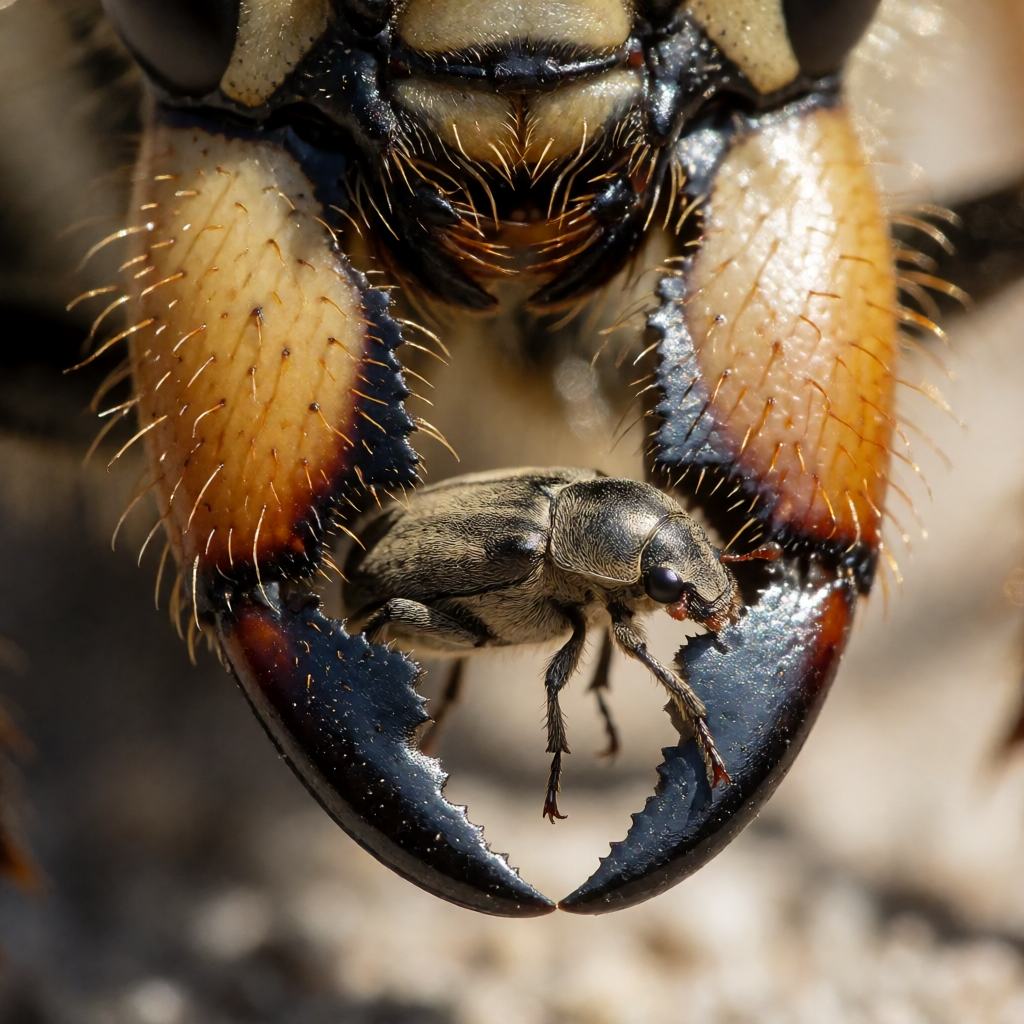
Insects taken at night
The breeding cycle
Males deposit a packet of sperm on the ground in summer. She picks it up, and fertilisation happens inside her body. She then makes a sac of eggs, and she carries it under the abdomen until the young hatch. That sac holds thirty to forty eggs, and she guards it for weeks.
Young hatch as small pale animals and climb onto her back. They stay there until the first moult, and then they leave. Growth is slow. Adults live for several years, and some reach seven.
Nobody has watched a full courtship in the wild, since the animal hides by day. Most of the cycle comes from animals kept in captivity.
Not Evaluated, and often feared
Conservation
No Red List entry covers the species. Collectors take animals for the pet trade, and that trade is legal. One female can be sold for a good price, although the trade is small. Habitat loss matters less, since the desert is not farmed much.
Hunger then kills it. Nobody counts the population. The trend stays unknown. This animal is common where it occurs, as far as records show.
Protected desert parks hold stable groups, and those groups look healthy. A harmless animal with a frightening look is easy to protect. People who know it stop killing it, and that is the whole trick.
Side by side
How It Compares
| Trait | Giant Whip Scorpion | Deathstalker Scorpion |
|---|---|---|
| Length | 6 cm to 8 cm including the thin tail, and the body stays flat | 3 cm to 8 cm, and the tail curls over the back |
| Colour | black brown, and the pincers look heavy | yellow brown, and the body looks pale against sand |
| Food | insects, millipedes and small scorpions | insects and spiders, taken with the pincers |
| Defence | a spray of acid from the tail, and no sting at all | a sting with strong venom, and a warning shake |
| Build | a long thread tail with no stinger, and thick mouth parts | a jointed tail with a stinger, and thin pincers |
| Range | the dry south west of North America | North Africa and the Middle East |
Common misreadings
What People Get Wrong
- Many people fear the whip scorpion, yet it has no venom and cannot sting. The tail sprays acid instead, and the spray stings the eyes of an attacker.
- A common tale says the animal hunts people, although it avoids light and runs from footsteps. It hides under stones and cattle dung by day, and it hunts the desert night.
- Guides claim the pincers crush bone, yet the animal uses them to hold insects. The spray reaches 30 cm, so a handler keeps the tail pointed away.
Going further
Sources and Further Reading
Quick hits
Five things to remember
- It sprays acid from its tail.
- The spray smells of vinegar.
- It has no sting and no venom.
- The front legs work as feelers.
- A female carries her young on her back.