 By st20113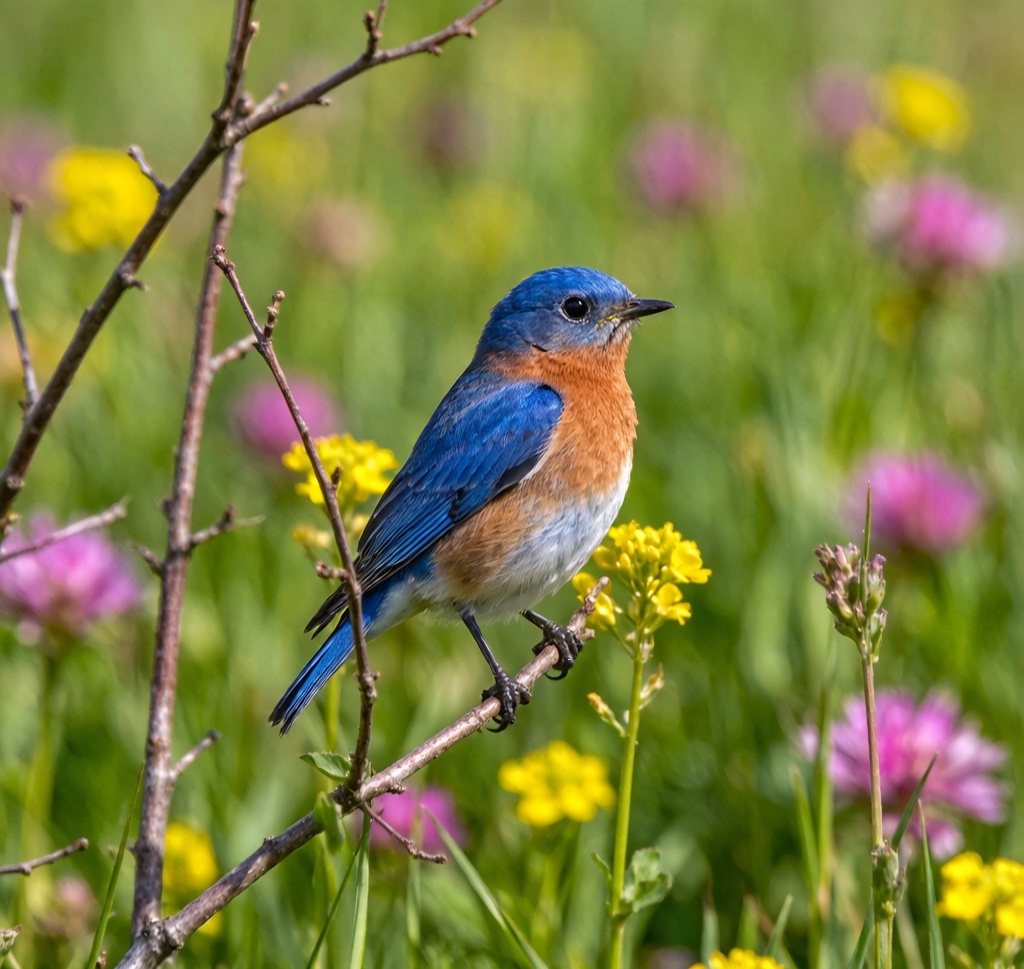
The eastern bluebird (Sialia sialis) is one of North America’s most beloved and iconic songbirds, celebrated for its vivid plumage, melodious song, and its long-standing association with the arrival of spring. As one of three bluebird species in the genus Sialia — the others being the western bluebird (Sialia mexicana) and the mountain bluebird (Sialia currucoides) — the eastern bluebird occupies the broadest breeding range of the three. Its striking blue upperparts, warm rusty-red breast, and pure white belly make it one of the most recognizable birds in eastern North America. The species holds the distinction of being the first bird reported to have been identified as returning to the United States in spring by ornithological records dating to colonial times.
## Physical Characteristics
The eastern bluebird is a small thrush, measuring 16 to 21 centimeters in length with a wingspan of 25 to 32 centimeters and weighing 28 to 32 grams. The male displays brilliant cerulean blue plumage on the crown, nape, back, wings, and tail — colors produced by structural coloration in feathers rather than pigments. The throat, chest, and upper flanks are a warm, rich rusty-red to burnt orange, contrasting sharply with the pure white lower breast and belly. The wings and back often show a subtle brownish tinge in worn plumage. Females are considerably more subdued, with greyish-brown upperparts, a faint bluish wash on the tail and wings, and paler, less extensive rusty coloring on the breast. Juveniles display a spotted plumage resembling that of other thrushes, with blue tones appearing only after the first prebasic molt in late summer.
## Habitat and Distribution
The eastern bluebird inhabits open woodlands, meadows, orchards, golf courses, and agricultural lands throughout eastern North America, from southern Canada to the Gulf of Mexico, and from the Atlantic coast to the Great Plains. The species thrives in semi-open habitats characterized by a mix of open grassy areas for foraging and scattered trees or structures for perching and nesting. It is primarily a migratory species in the northern parts of its range, moving southward in autumn to the southern United States and northeastern Mexico. Southern populations may be year-round residents. The species’ historical abundance and subsequent decline — followed by significant recovery driven by nest box programs — have made it a flagship indicator of grassland and savanna ecosystem health.
## Diet
The eastern bluebird is an opportunistic insectivore whose diet varies seasonally. During the warmer months, it feeds primarily on insects and other invertebrates, including grasshoppers, crickets, beetles, caterpillars, moths, butterflies, spiders, and snails. During fall and winter, when insect prey is scarce, bluebirds shift to a diet dominated by berries and small fruits, including mistletoe berries, honeysuckle, dogwood, juniper, and wild grapes. Foraging is conducted from elevated perches — wires, fence posts, and tree branches — from which the bird drops to the ground to capture prey. This sit-and-wait hunting strategy is highly efficient in open habitats and is a defining behavioral trait of the species.
## Nesting and Reproduction
Eastern bluebirds nest in cavities, primarily old woodpecker holes and human-provided nest boxes. The male attracts females to a potential nest site with a courtship display involving wing-fluttering, soft chattering calls, and provisioning of nesting material. Once paired, the female builds the nest — a compact cup of grasses, pine needles, and plant stems — over approximately two weeks. She lays a clutch of two to seven pale blue eggs — uniquely and distinctively colored among North American songbirds — and incubates them for 11 to 19 days. Both parents feed the nestlings, which fledge approximately 16 to 22 days after hatching. Eastern bluebirds frequently raise two to three broods per year in southern parts of the range.
## Conservation and Cultural Significance
The eastern bluebird population suffered significant declines through the mid-20th century due to habitat loss, competition from introduced house sparrows and European starlings for nesting cavities, and pesticide use reducing insect prey availability. The establishment of nest box trails across North America — a grassroots conservation movement that began in the 1960s and continues to expand — has been instrumental in restoring bluebird populations to many parts of their former range. Today, the species is considered common and stable, and its vibrant blue and orange plumage, cheerful song, and amenability to nest boxes have made it a cherished symbol of spring and a flagship species for open-space habitat conservation.