 By Iris
The Sultanate of Malacca | The Port That Held the Sea Road
Historical Profile · Malaya
The Sultanate of Malacca | The Port That Held the Sea Road
A landing beach on a narrow strait turned into the busiest harbour in the region, and charged every hull that passed.
AD 1400-1511
Founded
Strait
Faith
Trade
End
The big picture
Introduction
One port on the west coast grew from a village of boatmen into the busiest port in the region. It took a hundred years, though nobody planned it at all. It was called Malacca. Its rulers held the strait that carried the monsoon trade.
They charged a fee on everything that passed. At its height, ships from India, China, Java and Arabia met in the same roadstead. Malacca had no great army and no great land behind it. It had a position, a set of rules and the support of a distant emperor.
Those three things made it rich, while the loss of the third finished it. Visitors left accounts of a town of many tongues. They described a market where a dozen coins were weighed every morning.
Setting
Historical Context
Between Sumatra and the Malay coast the strait is narrow. The monsoon decides when a ship may move. A fleet coming west from China must wait for the wind to turn. Malacca sat at the waiting point, and that gave its rulers a natural edge. Wind, not walls, made the town, and every ruler knew it.
A prince from Palembang founded the place around 1400, and he chose well. His own city had lost its trade, so he moved west with a few hundred followers. He picked a river mouth with a hill behind it and a deep channel in front. The hill gave him a fort, while the channel gave him a port. New states on that coast needed help, since Siam claimed the land and Java’s Majapahit empire claimed the sea.
Its ruler went to China and offered tribute. That offer bought an ally, and it cost almost nothing in real terms. A gift of local goods went north, and a promise of backing came south, therefore both sides gained.
Turning points
Key Events
Chinese fleets arrived in 1405 and came back six more times. Their admiral, Zheng He, used Malacca as a base for the western voyages. In return, the Ming court warned Siam off, therefore the young state survived its first bad decade. A warehouse went up for the fleet, while a hill was fenced as a camp. Its ruler took up Islam around 1414, and he took the title of sultan. Islam helped trade, because it tied Malacca to the Muslim merchant nets of Gujarat and Arabia.
Shared faith made contracts easier, and strangers settled more willingly. Coins began to carry Arabic words, while the law code kept its older Malay forms, so that the two systems sat side by side. Siam attacked in 1446 with a land army and failed. Walls held, and the state grew bolder. By 1450 its men were writing a code of law. By 1500 the port handled more goods than any other in the region.
Envoys from Java and from the Sumatran ports came to ask for terms, since the port now set the price. Portuguese ships came in 1509 and were badly treated. They came back in 1511 with a fleet of eighteen sail and a train of cannon. It fell after a month of fighting. Its sultan fled south, and his line kept a small court upstream for another century.

1
2
3
Who held power
People and Powers
A sultan sat at the top, and below him four men shared the port trade. Each one handled a single merchant group. Gujaratis went to one desk, Tamils to another, Javanese to a third and Chinese to a fourth. That plan kept disputes inside a group that knew its own customs. It also kept the crown informed, since each headman reported on his own people.
Bendahara ran the court and the law. Temenggung held the army and the police. These titles passed among a small set of families, and marriage tied them together. Twelve people could run a city of thousands. Each of them owned a set of clients, because that was how power worked.
One more power sat outside the state. Ming China backed Malacca for thirty years, and that backing mattered more than any wall. When China pulled its fleets back after 1433, the port had to defend itself. It never again fought a war with a friend behind it.
Everyday world
Daily Life and Society
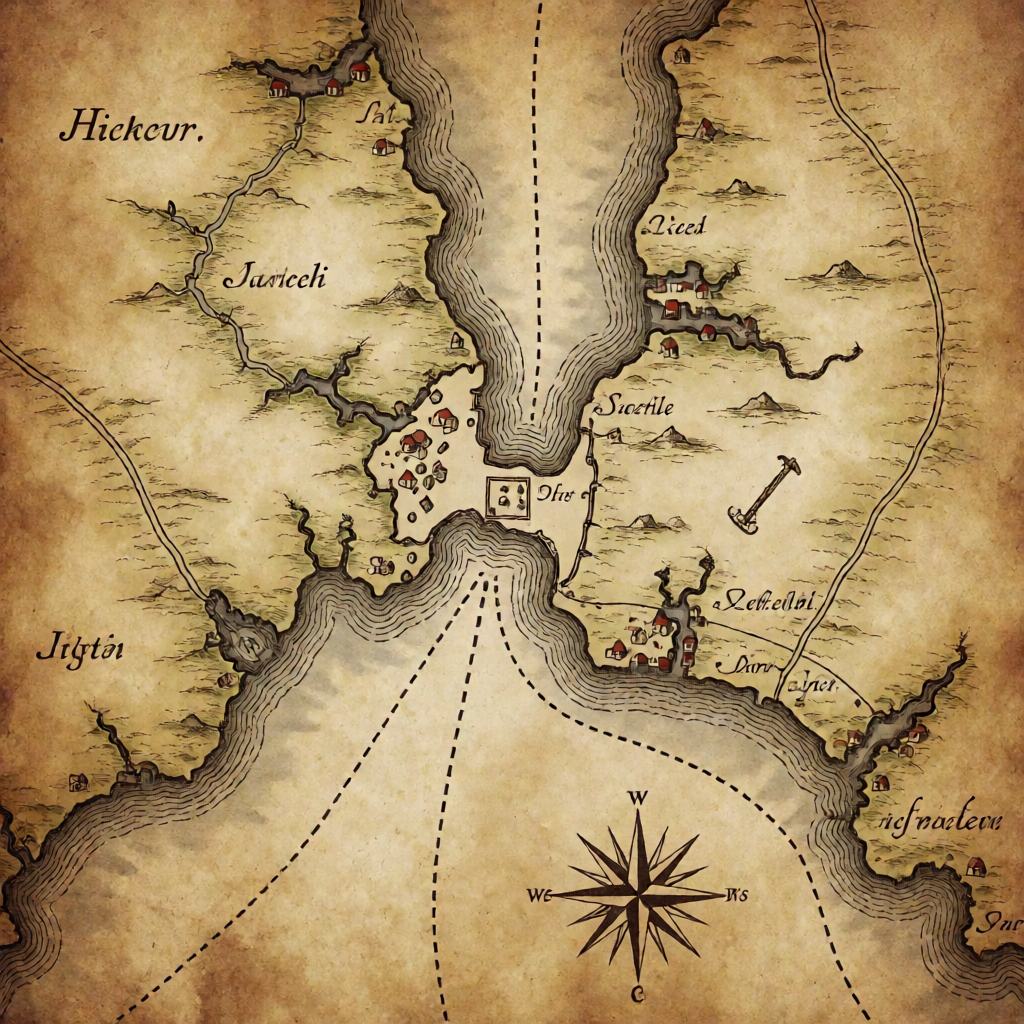
Malacca was built on both banks of a river, and a bridge joined the two halves. Stores lined the waterfront, and the streets behind them held shops and lodgings. Men from a dozen countries lived in their own quarters, each with a headman. Visitors could hear Tamil, Chinese, Javanese and Malay within a single street. Food came from the interior and from Java.
Markets opened early and closed before the heat. Porters carried goods from the boats to the stores, while the sultan took a fee at each step. Water came from wells, although the river ran past every door. Towns kept a watch for fire, since a wooden town burns fast. Law was written down, and it mixed local custom with Islamic rules.
Penalties were graded by rank, which tells us how the society thought about order. Nobles paid less than a common man did for the same offence. The code said so plainly, therefore nobody could plead ignorance.
Craft and ideas
Trade, Technology and Ideas
Trade was the whole point. Indian cloth came east, fine china came west, and tin from the Malay hills went both ways. Gold and goods from the islands passed through the same stores. For much of this traffic the sea route replaced the old Silk Road. A ship could carry more than a caravan. Money came in many shapes, so the port weighed rather than counted.
Gold dust, silver coins and foreign pieces all went onto the same scales. The rate was posted each morning. That habit made Malacca an exchange, and it drew bankers from Gujarat. A merchant could arrive with one coin and leave with another. Ship design came with the traders. Chinese junks carried bulk, Indian ships carried value, and Java boats worked the shallow water.
The port never built a great fleet of its own, because it did not need one. Ideas arrived on the same ships. Islam came through Gujarat before it spread into the islands, so that Malay and Arabic words mixed in the market. Malay became the tongue of trade, therefore a merchant from Sulawesi could do business in Java with it, and nobody needed a third language.
What lasted
Legacy
Portugal held Malacca for a hundred and thirty years. The port never got back its old place. Trade moved to Johor, to Aceh and to the Dutch base at Batavia, while the old port silted up. Closed markets cannot replace a port that strangers choose.
Malay went on spreading, and it became the common tongue of the region, even so the political centre moved. Islam spread across the islands, while the sultanate became a model for later states. Courts copied its titles and its law code, and in turn its way of dividing the port trade by group. Malacca left ruins and a gate.
Its real legacy is a set of rules about how to run a port. Every trading city in the region copied them.
Side by side
How It Compares
| Point | Malacca | Majapahit |
|---|---|---|
| Dates | About 1400 to 1511 | About 1293 to 1527 |
| Centre | A port on a strait | A court in Java |
| Wealth | Tolls on shipping | Rice and tribute |
| Faith | Islam after 1414 | Hindu and Buddhist |
| Force | Hired fleets and forts | Land armies and vassals |
| End | Taken by Portugal, 1511 | Broken by Demak |
Common misreadings
What People Get Wrong
- Malacca grew rich by farming its own land. Trade passing through the strait paid the tolls, and warehouses held goods from both ends of Asia.
- Portugal took the port with a single fleet. Two attempts failed before a third worked in 1511, because the defenders had cannon of their own.
- Written law from the sultanate survives. Courts kept a code of sea law, and thus a record of how cargo was split after a wreck.
Going further
Sources and Further Reading
- Wikipedia, Malacca Sultanate
- Encyclopaedia Britannica, Malacca. Encyclopaedia Britannica, Inc.
- Andaya, B. W. and Andaya, L. Y. 2001. A History of Malaysia. Palgrave.
- Reid, A. 1993. Southeast Asia in the Age of Commerce. Yale University Press.
Quick hits
Five Things to Remember
- A prince from Palembang founded Malacca around 1400.
- Chinese fleets used the port as a base from 1405.
- The ruler took up Islam around 1414 and became a sultan.
- Siam attacked in 1446 and failed.
- Portugal took the city in 1511.