 By Iris
Pilobolus crystallinus | Dung Cannon Fungus
Species Profile · Pilobolaceae
Dung Cannon Fungus
A pin-sized fungus that builds pressure in a ball of water and fires its spore cap two metres.
Not Evaluated
Height
Range of shot
Launch
Aim
Cycle
Rating
A cannon a few millimetres tall
The fungus that fires its spores
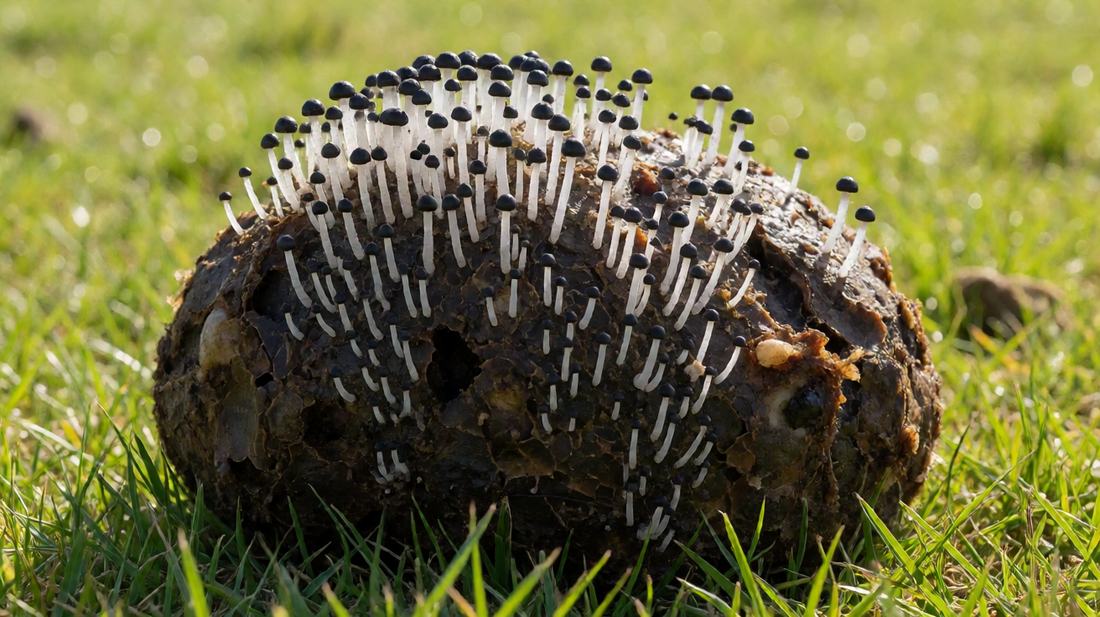
Dung cannon fungus grows on fresh cow pats. This fungus is tiny. A clear stalk holds a small black cap. The cap is a bag of spores. Below it sits a swollen ball of liquid.
Pressure builds inside that ball. When the pressure peaks, the ball bursts. Each cap leaves at high speed, and it flies up to two metres. Nothing else in the fungal world fires so far for its size, and the launch takes only a fraction of a second. That bag sticks to a grass blade.
A cow eats the grass, and the spores pass through. They land in dung and start again. This simple loop has run for millions of years, and it needs no help from any animal.
Family tree
Pilobolaceae, the dung moulds
Science calls the species Pilobolus crystallinus. This species belongs to the pin moulds, an old group of fungi that never build a mushroom. Another relative here is the Candlesnuff Fungus, which also launches spores into moving air. That fungus grows on dead wood, while this one needs fresh dung.
Its genus name means hat thrower, and the species name means clear. Both names describe the swollen stalk, which is almost transparent. Scholars have studied the fungus since the seventeenth century. Early work showed that it aims at light, and that discovery is still quoted today.
The group is ancient, and it split from other fungi long before mushrooms appeared. Spores are not sexual at first, since the common stage is a simple clone.
Ten millimetres of pressure
How to tell one
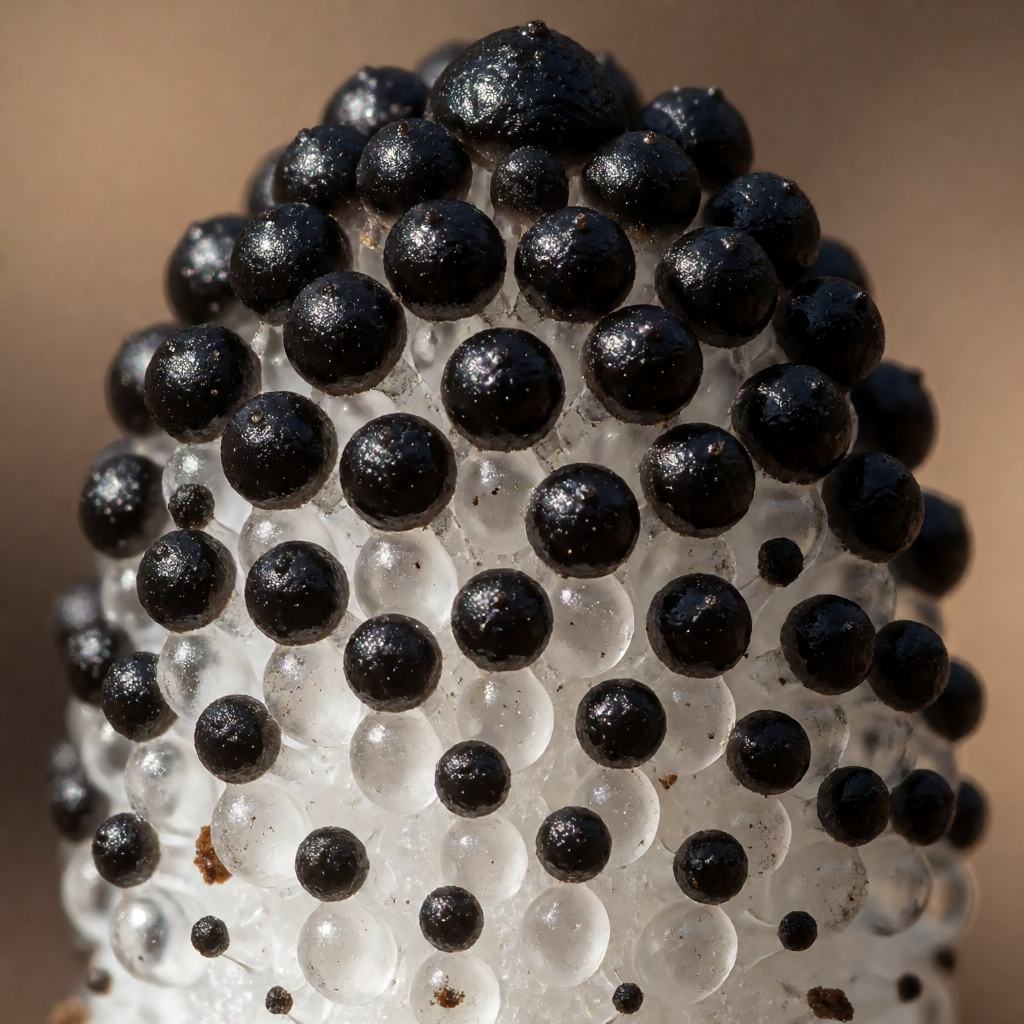
Its stalk is a clear tube of cells. Stalks stand two to ten millimetres high. A swollen vesicle sits at the top. Above the vesicle rests the spore cap, a small black dome. This body is little more than water and wall.
No roots spread into the dung. Threads at the base anchor the fungus instead. That vesicle works as a lens, and it tells the stalk which way the light is coming from. Because the stalk bends toward the light, the shot goes toward open sky. That aim matters, since spores must reach grass and not bare soil.
Its wall stretches as liquid pours in from the dung below. Pressure inside can reach several times the pressure of the air around it. When the wall fails, the cap is thrown clear of the dung at a speed no camera can follow.
1
2
3
Grazed pasture and fresh dung
Where it lives
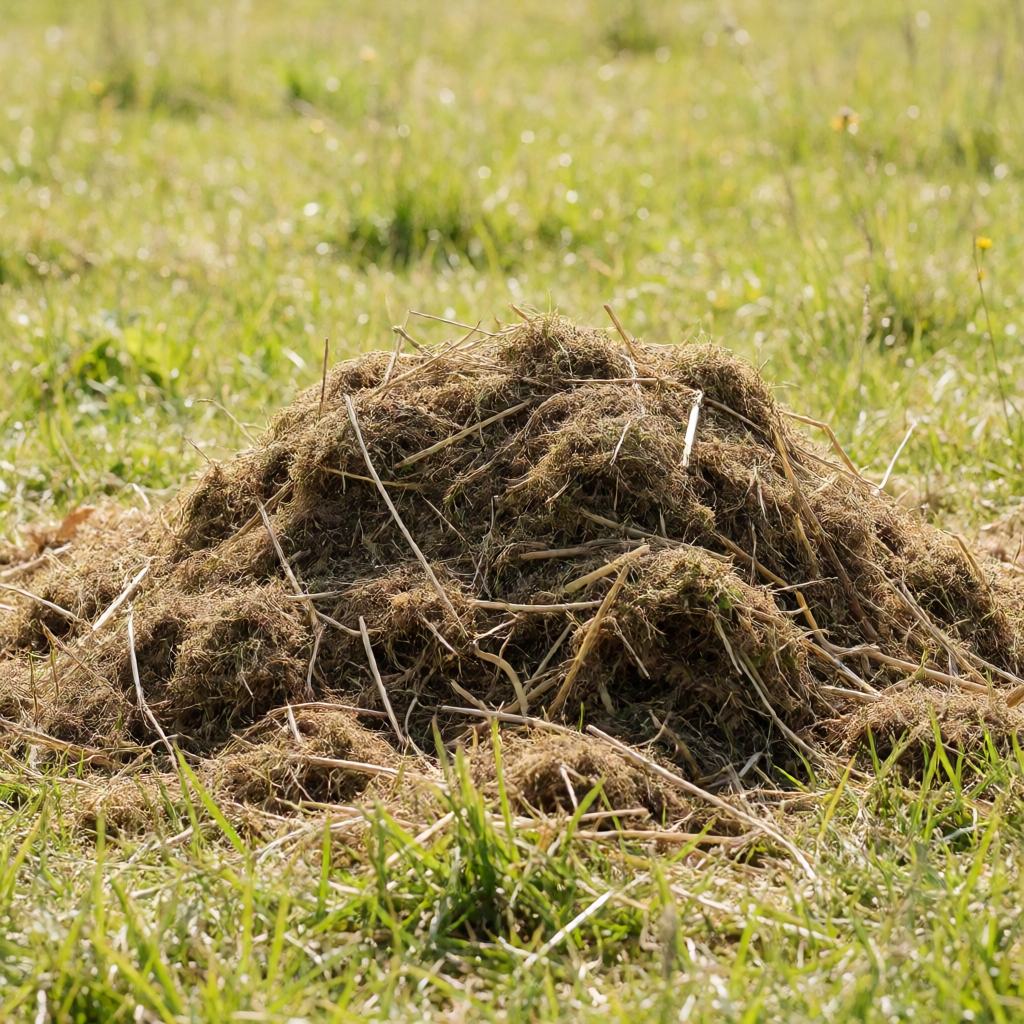
The fungus lives where large plant eaters graze. Cow and horse dung suit it best. New pats show the fungus within days. Warm, wet weather brings the best crops.
Pastures hold it too. This species is common across Europe and North America, though few people ever look for it. Soft dung is essential, since the threads must drink from it. Old pats dry out and lose the fungus within a week or two.
Because grazing animals wander across wide fields, the fungus has to travel with them or lose its ground entirely. This life is built around that journey, and the shot is only one part of it.
Dung, digested by threads
What it eats
The fungus feeds on dung, not on living plants. Threads dissolve the pat. They take sugars, salts and nitrogen from the waste.
Because the food is rich, growth is fast. A colony can ripen in less than a week when the weather stays warm. Water is the main need, since the cannon runs on pressure.
Dry spells stop the whole process, and the fungus waits in the dung. Nothing about the animal is wasted, and a single pat can become a small garden of these fungi.
Millions of caps in a season
The breeding cycle
Each cap holds thousands of tiny spores. They form without any partner. A sexual stage also exists, and it produces thick walled resting spores that survive a hard winter.
Those resting spores germinate when dung arrives. The shot spreads the clone far and wide. Each shot places spores on grass, which is exactly where a cow will feed.
Because the aim is good, most spores land on a leaf. A single pat can release millions of caps in a season, and each cap carries a full load of spores. That output explains why the fungus is so common, and why it appears so fast.
Not Evaluated, and still common
Conservation
No Red List entry covers this species. Fungi are rarely assessed. Numbers follow the number of grazing animals.
Cattle kept indoors all year leave little dung in fields. Fewer dairy farms mean fewer pats, and the fungus loses ground. Worming drugs also harm the insects that break dung down, although the fungus itself is not affected.
Modern pasture management can help, since a rotation of animals keeps dung coming. Populations are still widespread, and the species is not at risk today. Real value lies in the lesson, since the cannon shows how much a small pressure can do.
Side by side
How It Compares
| Trait | Dung Cannon Fungus | Candlesnuff Fungus |
|---|---|---|
| Home | fresh dung in grazed pasture | dead wood across the northern hemisphere |
| Height | 2 to 10 mm | 3 to 8 cm |
| Launch | fires one cap up to 2 m | releases spores in a white cloud |
| Aim | bends toward the light before firing | no aim at all, the wind carries them |
| Food | digests fresh dung | digests dead wood |
| Standing | Not Evaluated | Not Evaluated |
Common misreadings
What People Get Wrong
- A common tale says the fungus throws its cap by exploding, yet nothing burns. A swelling ball of liquid builds pressure until the wall fails, and the cap leaves in a fraction of a second.
- Many people believe the shot goes off at random, yet the stalk bends toward the light first. That aim sends spores onto grass, where a grazing animal will pick them up.
- Some guides call any mould on dung a dung cannon, yet the true species has a clear stalk and a black cap. The shape is unmistakable under a hand lens.
Going further
Sources and Further Reading
Quick hits
Five things to remember
- One launch can reach 20,000 times the force of gravity.
- It aims at the brightest patch of sky.
- A single cap flies about two metres from the pat.
- This stalk works as a lens as well as a support.
- Spores survive a trip through a cow’s gut.