 By Iris
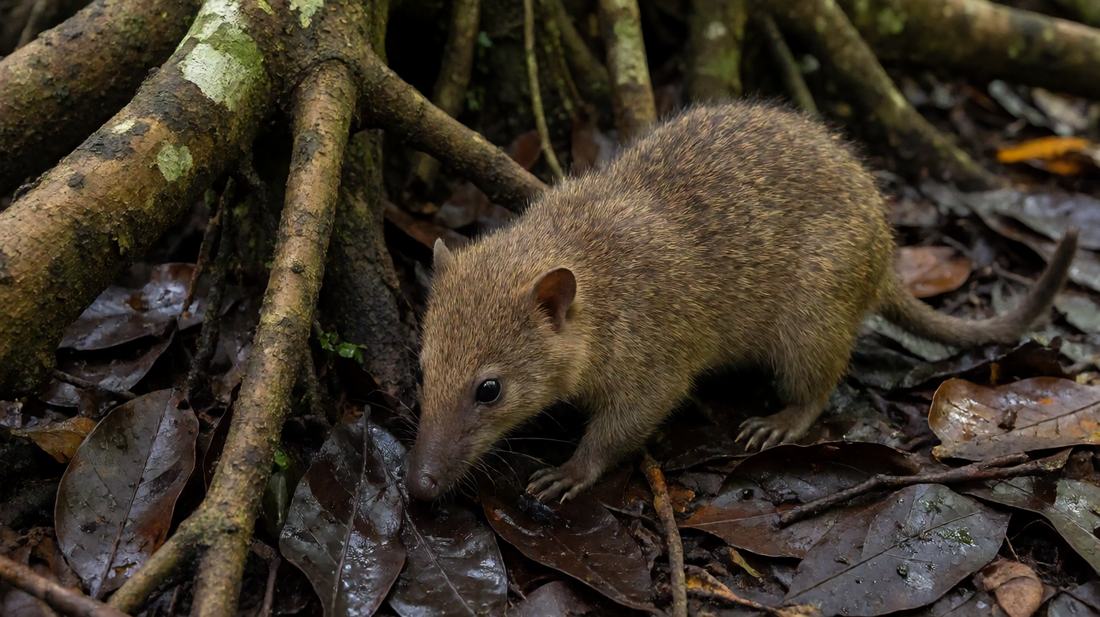
Solenodon paradoxus | Hispaniolan Solenodon
Species Profile · Solenodontidae
Hispaniolan Solenodon
A venomous, night-hunting mammal of Hispaniola that roots through leaf litter with a trunk-like snout and delivers venom through grooved teeth.
Least Concern (2020)
Body length
Weight
Tail
Venom
Young
Rating
A venomous mammal
The living fossil that bites
Something shaggy sniffs through dead leaves at night. This is the Hispaniolan solenodon. Its nose looks like a tiny trunk. Still, few people have seen one. By day it hides, and by night it hunts.
It roots for insects with that long snout. Then it bites. Grooved teeth in its lower jaw carry venom. That venom seeps into the bite. Solenodons are one of the few venomous mammals on earth, and their bite can stun the insects they hunt.
Locals once knew the beast well. Now it survives in small pockets of forest, and introduced hunters press it from every side. Conservation teams call it a living fossil.
Family tree
Solenodontidae, the solenodons
Its genus name means grooved tooth. Paradoxus means strange. Scientists once grouped it with shrews. One close relative is the Asian House Shrew, a small insect hunter of Asia. Another is the Blind Mole, a burrower of southern Europe.
A third, the Pygmy Shrew, ranks among the smallest mammals. All three eat insects. However, only the solenodon carries venom. That trait links it to a far older line of mammals. Fossil teeth show the family once ranged across the Caribbean.
Today just two species remain. Cuba holds the other living species. Its closest living relatives are not shrews at all, but a line of animals that predates most modern mammals. So the name paradoxus fits. Venomous, snuffling mammals that most people never see are puzzles worth keeping.
28 to 32 cm, 1,000 g
How to tell one
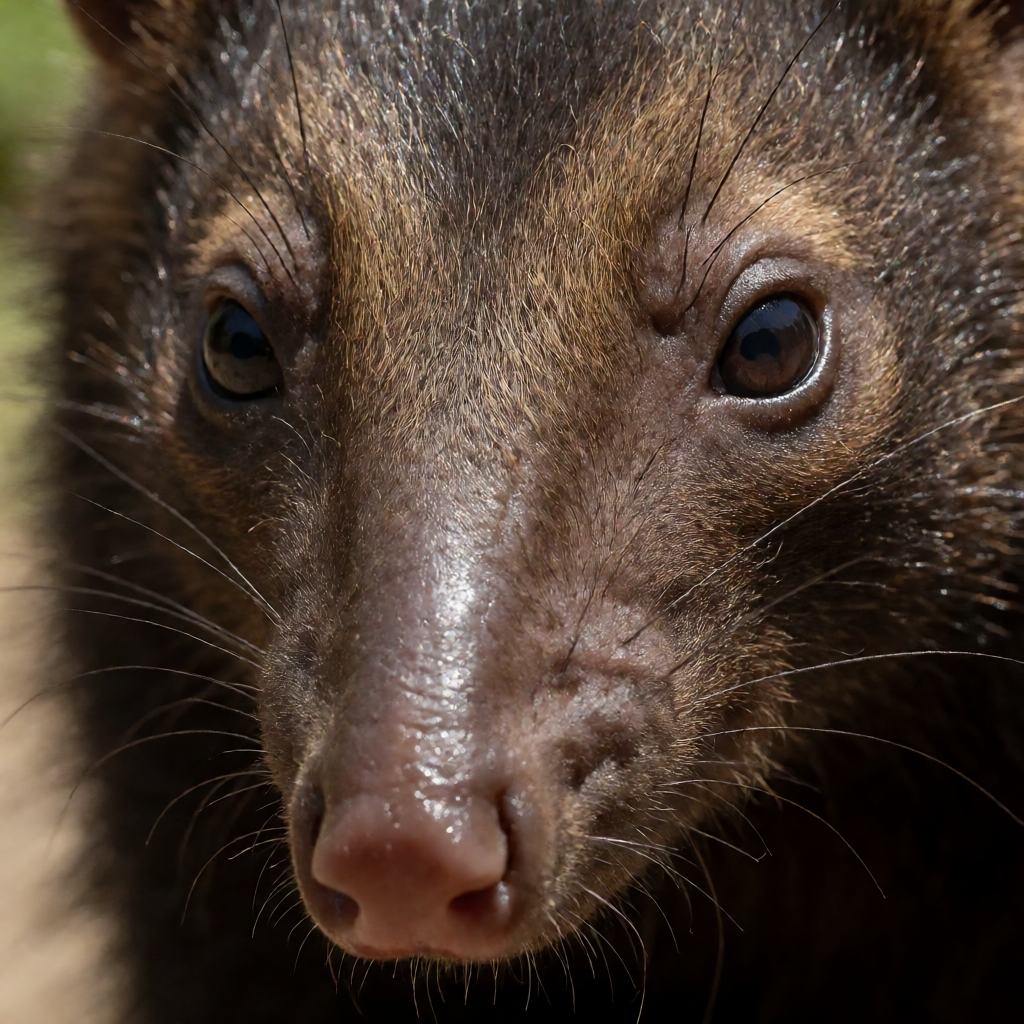
Adults measure about 28 to 32 cm from nose to rear. Weight runs from about 600 to 1,000 g. Coarse brown fur covers the body. Its bare tail adds another 20 cm or so. Small eyes sit on a long, pointed head. Long snouts are flexible and wet.
They bend to probe cracks and leaf litter. Sharp claws dig into soft soil. Back legs are stronger than front legs. It walks on the flat of each foot. Its walk is clumsy but quick. Venom flows through a groove in the lower incisor.
Because the groove channels the venom, a bite keeps working even after the animal lets the prey go. No antivenom is ever needed. Venom harms insects and small prey, not people. Still, a bite can swell. So field workers handle the animal with care.
1
2
3
One island, two countries
Where it lives
One island holds the whole species. Hispaniola spans Haiti and the Dominican Republic. Forests shelter the animal. Mountain forest works best. Caves and rock cracks offer daytime cover. Leaf litter provides the hunting ground.
Wet, shady floors suit it best. Dry scrub holds fewer solenodons. Logging has opened the canopy. Farms replaced much of the old forest. Because the animal hunts in deep leaf litter, a cleared field offers it no food at all. Coffee farms with shade trees still hold it.
So the species clings to forest edges. Introduced predators add pressure. Mongooses hunt it by day and night. Dogs dig it from its burrow. Meanwhile, the quiet nights grow less safe.
Insects and earthworms
What it eats
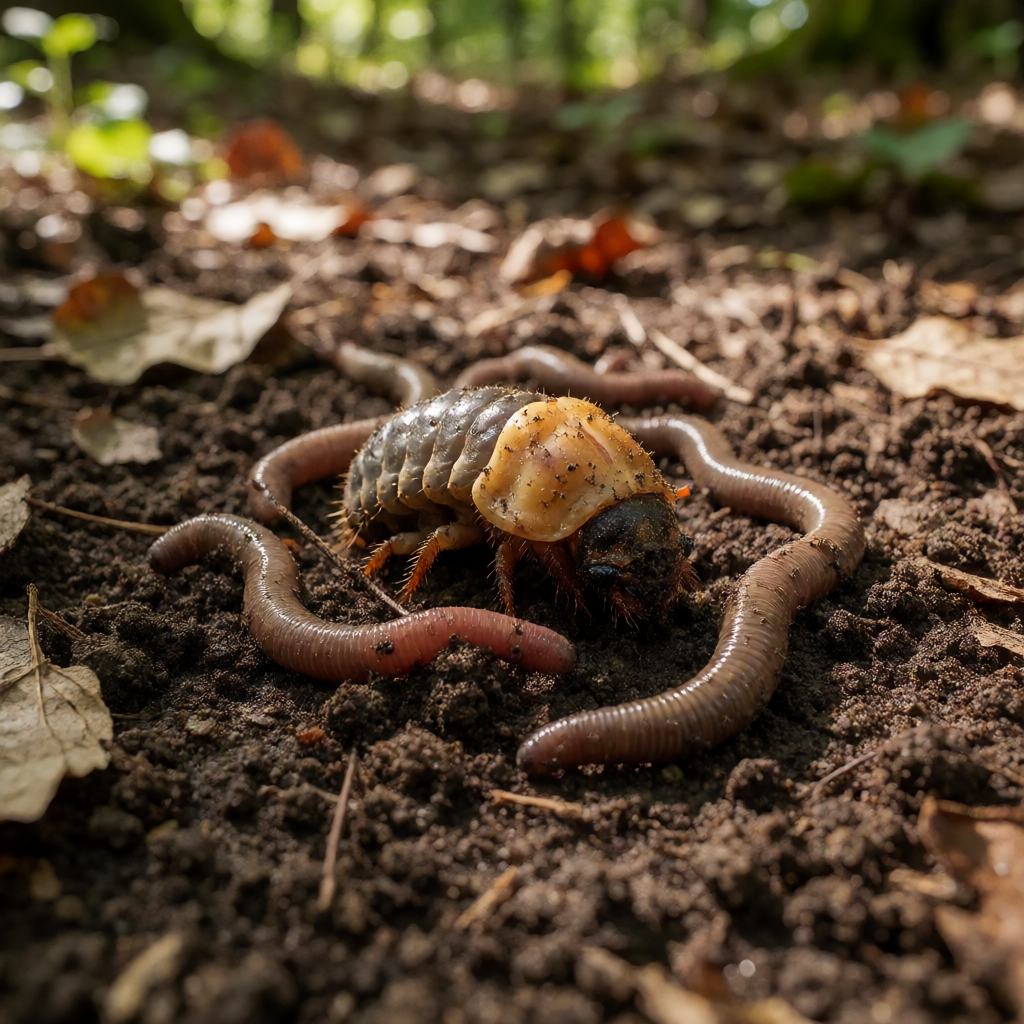
Insects form the main food. Earthworms come next. Spiders and millipedes follow. Small frogs and lizards add to the list. Fallen fruit rounds out the menu.
Snouts sniff out food under the leaves. Then the claws dig. A quick bite disables the prey. Because the venom works slowly, the animal can hunt again even before the first meal is fully eaten. Feeding happens only at night.
In turn, the animal rests through the day. That schedule keeps it away from hawks. Still, it does not hide from every hunter.
One or two young
The breeding cycle
Breeding has no strict season. Females may raise young at any time of year. Litters are tiny. One or two young is the norm. Young are born in a nest. Fur is already present at birth.
Eyes open within days. Milk feeds them for several weeks. Because the mother rears so few young, each single birth matters far more to the whole population. Both parents may help guard the young. Little else is known. This species hides its nesting so well that very few scientists have ever watched a birth at all.
Captive animals have bred. That success gave keepers a rare view. Meanwhile, the wild population stays hard to count. No reliable total exists.
Least Concern since 2020
Conservation
The IUCN global assessment lists the solenodon as Least Concern. Assessors published that verdict in 2020. Older lists had called it Endangered. Better surveys drove the change, not a true recovery. Population trend remains unknown. Many experts still worry. Habitat loss presses from one side.
Introduced predators press from the other. Cats and mongooses kill solenodons of every age. Because the animal has no defence against these hunters, a single cat can empty a small patch of forest. Disease from dogs adds another risk. Local groups now guard key forests. Traps remove some feral predators. Breeding programmes keep a safety net.
So the animal is safer than it once was. Yet the trend could still turn. Therefore regular counts matter. A proper census would settle the argument. For now the solenodon holds on. Quiet forests and patient rangers give it a future, and the venomous old mammal keeps sniffing through the leaves.
Side by side
How It Compares
| Trait | Hispaniolan Solenodon | Hedgehog |
|---|---|---|
| Group | a venomous mammal | a spiny insectivore |
| Snout | a long flexible snout | a short pointed nose |
| Venom | grooved teeth deliver venom | none |
| Coat | shaggy brown fur | a coat of spines |
| Young | one or two | four or five |
| Home | forests of Hispaniola | Europe, Asia and Africa |
| Rating | Least Concern, assessed 2020 | Least Concern |
Common misreadings
What People Get Wrong
- Most people expect a venomous mammal to be dangerous, yet the solenodon’s venom is aimed at insects. However, its bite can still swell on a human hand.
- Several guides group it with the shrews, though its closest living relatives are a far older line of mammals. In fact, its family once ranged across the Caribbean.
- Others assume the animal is safe now that its rating is Least Concern, since the label sounds reassuring. Of course, introduced cats and mongooses still kill it in its forest pockets.
Going further
Sources and Further Reading
- Wikipedia, Solenodon paradoxus
- IUCN. 2020. Solenodon paradoxus. The IUCN Red List of Threatened Species (Least Concern, assessed 2015).
- Animal Diversity Web, University of Michigan. Solenodon paradoxus, Hispaniolan solenodon.
- GBIF, Global Biodiversity Information Facility. Solenodon paradoxus Brandt, 1833.
Quick hits
Five things to remember
- Solenodons rank among the few venomous mammals.
- Its grooved teeth channel venom into a bite.
- It lives only on the island of Hispaniola.
- Night hunting keeps it hidden from hawks.
- No reliable count of its numbers exists.