 By st20113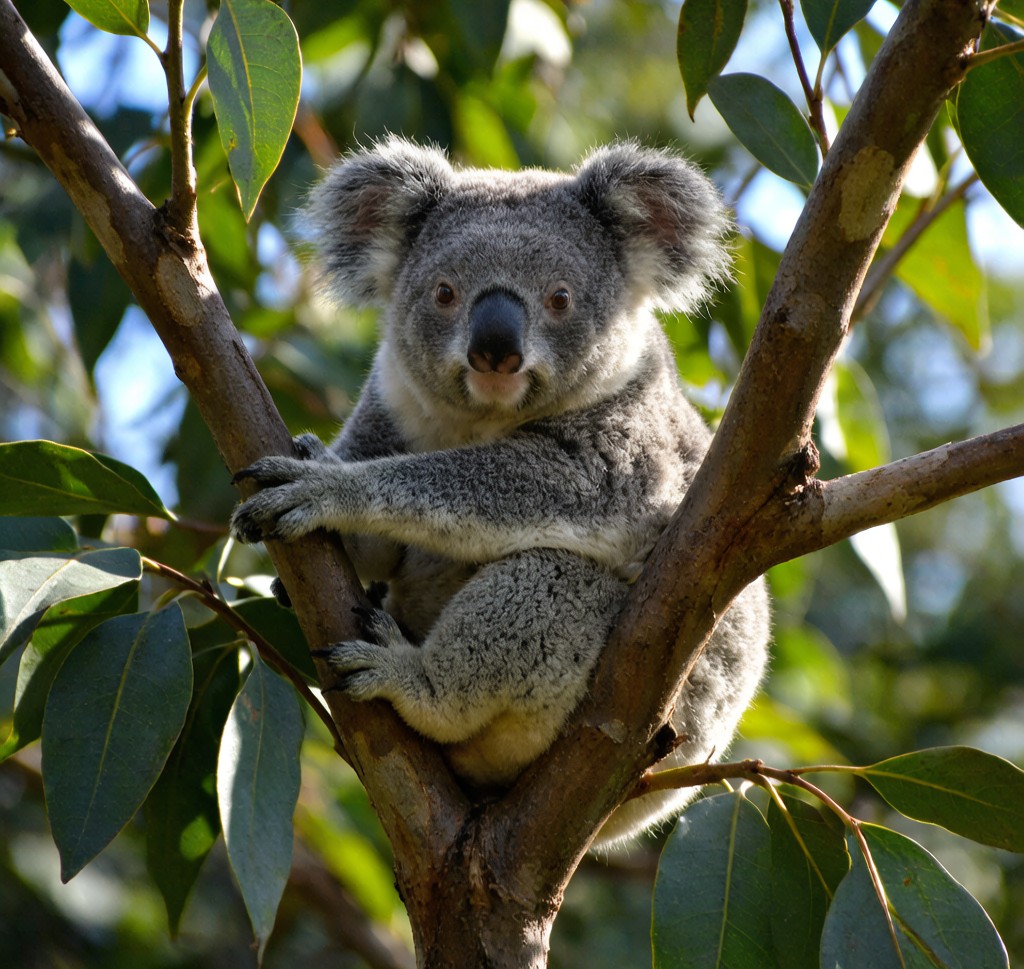
The Koala (Phascolarctos cinereus) is one of Australia’s most iconic and beloved marsupials – a round-bodied, fluffy-eared, grey-furred tree-dweller that spends most of its life in the branches of eucalyptus trees, feeding on leaves and sleeping for up to 22 hours per day.
Overview
The Koala (Phascolarctos cinereus) is one of Australia’s most iconic and beloved marsupials – a round-bodied, fluffy-eared, grey-furred tree-dweller that spends most of its life in the branches of eucalyptus trees, feeding on leaves and sleeping for up to 22 hours per day. Despite their cuddly, teddy-bear appearance, koalas are marsupials – not bears – and belong to the family Phascolarctidae, of which they are the sole surviving member. The species’ common name derives from an Aboriginal word meaning “no water” – a reference to the koala’s ability to obtain almost all of its water requirements from eucalyptus leaves, supplemented by occasional drinking from tree hollows or puddles.
Koalas vary considerably in size and coat color across their range: animals in the cooler, southern parts of their range (particularly Victoria and South Australia) tend to be larger and have thicker, darker grey-brown coats, while animals in the warmer, northern parts of their range (particularly Queensland) tend to be smaller and have thinner, lighter grey coats. Males are larger than females, with a more developed sternal gland – a scent gland on the chest that produces a dark, oily secretion used for territorial marking. Koalas have large, round, fluffy ears with distinctive white inner surfaces, and a large, leathery, roughly triangular nose – one of the most reliable indicators of individual identity, as the shape and color of the nose varies between individuals.
Diet and Adaptations
The Koala is one of the most specialized herbivores in the world: it feeds almost exclusively on the leaves of a few species of eucalyptus (gum) trees – typically only 3 to 5 of the more than 600 eucalyptus species in Australia – and the leaves of several additional trees including corymbia, angophora, and in some areas, the leaves of wattles and she-oaks. Eucalyptus leaves are low in nutrients and high in toxins (including tannins and phenolic compounds), making them a challenging food source that most animals cannot digest. The koala has evolved a suite of extraordinary adaptations to its eucalyptus diet, including an exceptionally large, complex cecum (more than 2 meters long) in which symbiotic bacteria ferment the eucalyptus leaves and neutralize their toxins, and a slow metabolic rate that allows it to extract maximum nutrition from the low-quality food.
The koala’s reliance on a narrow range of food trees makes it highly vulnerable to habitat loss and fragmentation: when eucalyptus trees are cleared for agriculture, logging, or urban development, koalas lose not just their food but also the interconnected tree canopy that they use to move between feeding trees without descending to the ground, where they are vulnerable to predation by dogs and vehicle strikes. Koalas are also highly sensitive to heat stress: their dark grey-brown fur – which provides excellent insulation against the cold – becomes a liability during heat waves, when koalas can die from overheating if they cannot find shade and water.
Behavior and Reproduction
Koalas are largely solitary and nocturnal, with home ranges that overlap with those of several neighboring individuals of both sexes. Within their home range, each koala uses a set of preferred trees as feeding stations, resting on the forks or in the hollows of the trees during the day and moving between trees to feed at night. Males establish territories that encompass the home ranges of several females, and advertise their presence using the scent from their sternal gland and a distinctive bellow – a deep, resonant vocalization that can carry for more than a kilometer through the forest.
Female koalas give birth to a single, underdeveloped joey after a gestation of approximately 35 days – the tiny, jellybean-sized infant immediately crawls into the mother’s pouch, where it remains for approximately 6 to 7 months, feeding on milk and then on a special substance called pap (a nutrient-rich, protein-rich fecal matter produced by the mother) that inoculates the joey’s gut with the symbiotic bacteria needed to digest eucalyptus leaves. The joey then emerges from the pouch and rides on the mother’s back for several more months, learning to feed on eucalyptus leaves and developing the specialized gut bacteria needed to survive on this diet.
Conservation
The Koala is listed as Endangered in some parts of its range (particularly in New South Wales and Queensland) and Vulnerable nationally in Australia, reflecting significant and ongoing population declines driven by multiple threats. The most significant threats to the koala include habitat loss and fragmentation (the clearing of eucalyptus forest for agriculture, urban development, and infrastructure), vehicle strikes (koalas frequently cross roads while moving between trees and are killed by thousands each year), dog attacks (free-ranging domestic dogs kill koalas in both urban and rural areas), disease (chlamydia infection, which causes blindness, infertility, and kidney disease, affects a significant proportion of koala populations), and climate change, which is increasing the frequency and severity of heat waves and droughts that kill koalas directly and reduce the quality of eucalyptus leaves as food.
Conservation efforts for the koala include the establishment and expansion of protected areas, the planting of wildlife corridors that connect fragmented koala habitats, dog control programs, vaccination programs against chlamydia, and research into heat-stress management. The koala has also become a flagship species for broader conservation efforts in Australia, and the species’ iconic status has helped to mobilize public support for habitat protection and restoration across its range. However, the cumulative and interacting impacts of the multiple threats facing koalas mean that the species’ long-term survival will require sustained, coordinated conservation action at landscape scales.