 By st20113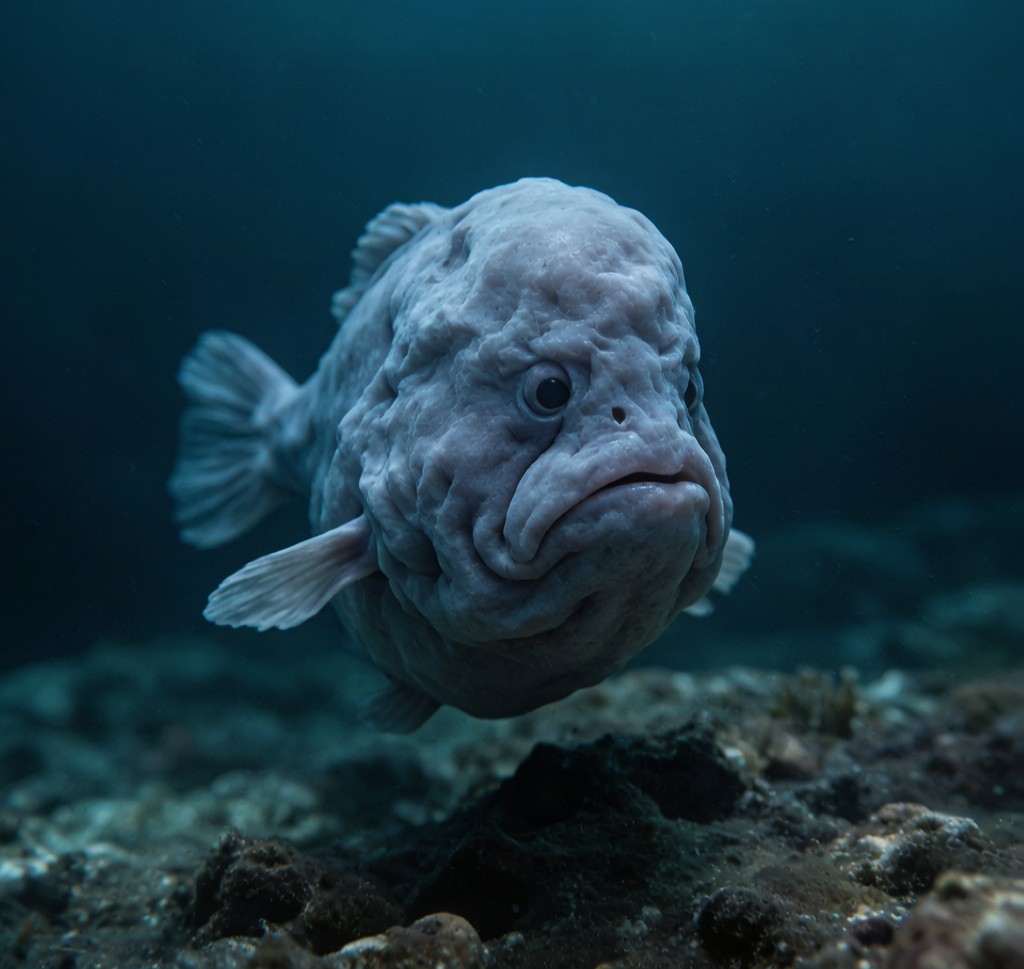
The Blobfish (Psychrolutes marcidus) is an extraordinary deep-sea fish that has become one of the most famous – and most misrepresented – animals in the world, largely as a result of a single photograph that went viral in 2013 and cemented its reputation as the “world’s ugliest animal.” In reality, the blobfish’s appearance is a perfect adaptation to its extreme environment: at the depths where it actually lives – 600 to 1,200 meters below the surface of the ocean off the coasts of Australia, New Zealand, and Tasmania – the immense water pressure allows the fish’s gelatinous body to maintain its shape.
Overview
The Blobfish (Psychrolutes marcidus) is an extraordinary deep-sea fish that has become one of the most famous – and most misrepresented – animals in the world, largely as a result of a single photograph that went viral in 2013 and cemented its reputation as the “world’s ugliest animal.” In reality, the blobfish’s appearance is a perfect adaptation to its extreme environment: at the depths where it actually lives – 600 to 1,200 meters below the surface of the ocean off the coasts of Australia, New Zealand, and Tasmania – the immense water pressure allows the fish’s gelatinous body to maintain its shape. It is only when brought to the surface – where the pressure drops dramatically – that the blobfish’s body loses its structural support and takes on the familiar, deflated, sad-looking appearance that has made it an internet celebrity.
The blobfish belongs to the family Psychrolutidae, a group of deep-sea sculpins that are found in waters worldwide. The species reaches approximately 30 centimeters in length and has a soft, fleshy body that is less dense than water – an adaptation that allows the fish to hover just above the seafloor without expending energy on swimming. The blobfish has large, bulbous eyes, a large mouth, and a distinctive downward-curving face that has been anthropomorphized into an expression of permanent sadness. The species’ flesh is almost entirely gelatinous – a watery, jelly-like substance that provides buoyancy in the deep sea and allows the fish to absorb the immense pressure of the deep ocean without being crushed.
Habitat and Adaptations
The Blobfish inhabits the deep waters of the continental shelves and slopes off the coasts of Australia, New Zealand, and Tasmania – a vast, dark, cold, and high-pressure environment that is among the least hospitable places on Earth for human exploration. At depths of 600 to 1,200 meters, the water temperature is close to freezing, sunlight is entirely absent, and the water pressure is 60 to 120 times greater than at the surface. The blobfish has evolved a body plan perfectly suited to this environment: its gelatinous, low-density flesh allows it to maintain neutral buoyancy, hovering just above the seafloor without needing to swim, while its lack of strong muscles is not a disadvantage in the still, dark environment where it lives. The blobfish simply opens its mouth and waits for prey – small crustaceans, sea urchins, and other invertebrates – to drift within range.
The blobfish’s lifestyle is one of the most sedentary of any vertebrate: the species spends most of its life hovering motionless just above the seafloor, conserving energy in an environment where food is scarce and every calorie is precious. The fish has no swim bladder – the gas-filled organ that most fish use to control their buoyancy – and instead relies on the buoyant, gelatinous composition of its body to maintain position in the water column. This is a common adaptation in deep-sea fish, as swim bladders become increasingly difficult to maintain as pressure rises with depth.
Ecology and Reproduction
As a benthic (bottom-dwelling) predator in the deep-sea ecosystem, the blobfish plays an important role in the deep-sea food web, feeding primarily on small crustaceans including crabs, lobsters, and sea urchins, as well as any other small invertebrates that drift within reach of its large mouth. The species is an opportunistic feeder that does not actively pursue prey but instead waits for food to come to it – a strategy that is highly energy-efficient in the food-scarce environment of the deep sea. The blobfish’s large eyes – which are disproportionately large for its body – are adapted to detect bioluminescent prey and the faint traces of light that filter down from the surface.
Very little is known about blobfish reproduction, as the species has never been observed mating or laying eggs in the wild. Based on studies of related species, it is believed that the blobfish lays its eggs in a nest on the seafloor, where the male guards the eggs until they hatch. The eggs are likely large and few in number – a common reproductive strategy in species that live in environments where juvenile survival is low and food is scarce. Like many deep-sea fish, the blobfish is thought to have a slow growth rate and a long lifespan, but the details of its life history remain largely unknown.
Conservation
The Blobfish is listed as Vulnerable on the IUCN Red List, reflecting growing concerns about population declines driven primarily by incidental capture in deep-sea trawl fisheries. The species’ deep-sea habitat places it directly in the path of deep-sea trawling operations – intensive fishing methods in which large nets are dragged along the seafloor to catch fish and shellfish – and blobfish are frequently caught as bycatch and brought to the surface, where they die as a result of the dramatic decompression. Deep-sea trawling is one of the most destructive fishing methods in terms of its impact on benthic marine ecosystems, and the blobfish is particularly vulnerable because of its sedentary lifestyle and limited ability to escape from trawl nets.
The blobfish’s rise to fame as the “world’s ugliest animal” – a title it won in a 2013 Ugly Animal Preservation Society campaign – has paradoxically become one of the most effective tools for raising awareness about deep-sea conservation. The campaign, which sought to highlight the plight of overlooked, unglamorous species, chose the blobfish as its mascot, and the resulting media attention has helped to educate millions of people about the importance of deep-sea ecosystems and the threats they face from overfishing, deep-sea mining, and climate change. Conservation organizations have used the blobfish’s notoriety as a powerful hook to draw attention to the broader issues facing deep-sea biodiversity.