 By st20113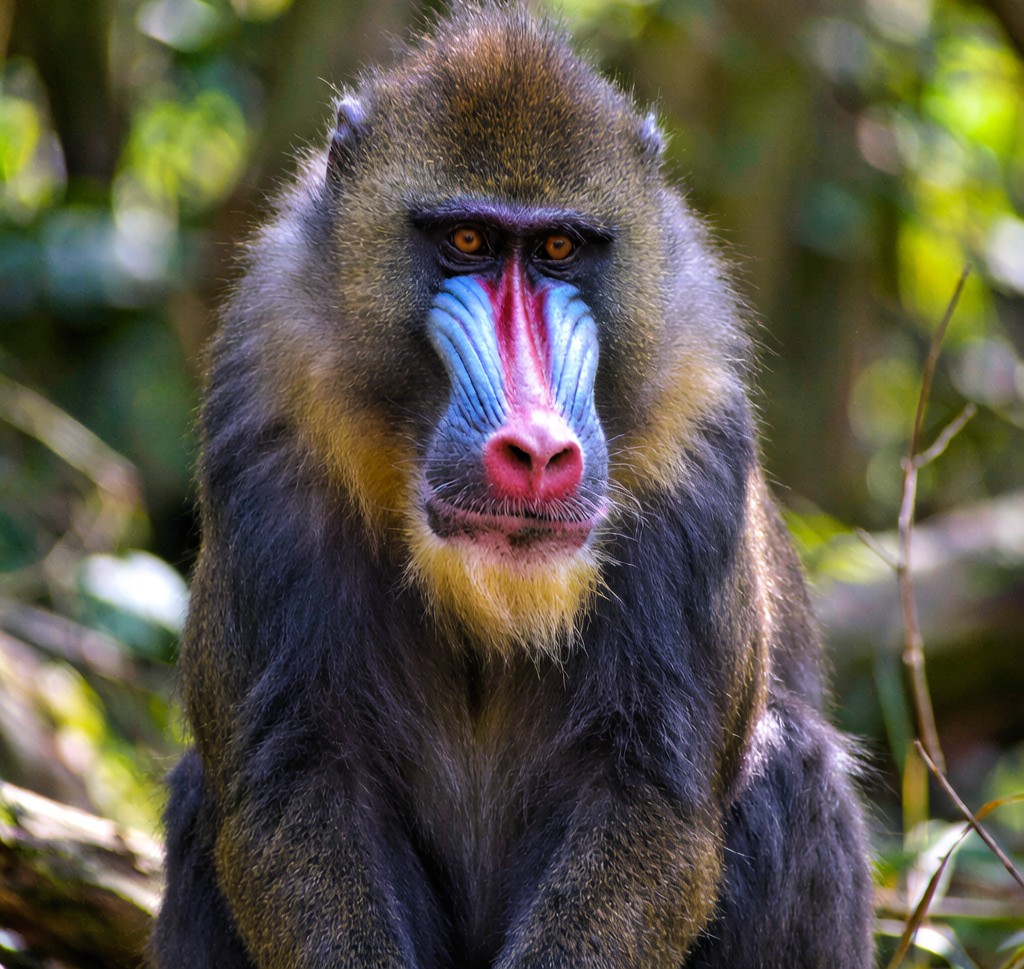
Overview
The Mandrill (Mandrillus sphinx) is one of the most spectacularly colorful of all mammals – a large, powerful Old World monkey that inhabits the tropical rainforests of equatorial West and Central Africa. The mandrill’s appearance is unlike that of any other primate: the male’s face is an extraordinary canvas of saturated color – a brilliant cobalt blue ridges along the sides of the nose, vivid scarlet in the center and along the grooves of the face, and a rich golden beard – set against a background of greyish-white fur. This remarkable coloration – which intensifies with dominance status in males – is one of the most striking examples of sexual selection in the primate world, and the male mandrill is considered by many to be the most colorful of all land mammals. Females are similarly colored but more subdued, with smaller facial ridges and less vivid coloration.
The mandrill is the largest of all Old World monkeys: adult males can weigh up to 35 kilograms and measure nearly a meter in length, while females are considerably smaller, weighing approximately 12 to 15 kilograms. Males are also distinguished from females by their larger size, longer canines, and the development of the colorful facial ridges and flamboyant coloration as they mature. The mandrill’s body is robust and powerfully built, with strong limbs adapted for both climbing in the forest canopy and foraging on the forest floor. The species is found in the tropical rainforests of Cameroon, Gabon, Equatorial Guinea, and the Republic of the Congo, primarily in the lowland forests of the Congo River basin.
Social Structure
The mandrill lives in large, complex social groups that are among the most sophisticated of any non-human primate society. A typical mandrill troop consists of a dominant male – the most colorful and physically impressive individual – surrounded by a harem of females and their offspring, along with a number of subordinate males that are typically younger and less colorful. Troop size varies considerably depending on habitat quality and food availability, but typically ranges from 20 to 50 individuals; some groups may contain over 100 animals. The troop moves through the forest as a cohesive unit, with the dominant male at the center surrounded by females and young, while subordinate males range on the periphery.
Within the troop, social relationships are maintained through an elaborate system of grooming, vocal communication, facial expressions, and body postures. Mandrills have a rich vocal repertoire that includes grunts, screams, and distinctively non-primate sounds including a two-phase bark. The vivid coloration of male mandrills serves as a social signal that communicates dominance status and health to other troop members: studies have shown that the intensity of facial coloration is positively correlated with testosterone levels, immune function, and competitive success, making it an honest signal of the bearer’s quality as a potential mate or rival. When two males compete for dominance, the brightness of their facial coloration is often the deciding factor in how the confrontation resolves without physical violence.
Diet and Foraging
The mandrill is an omnivorous forager whose diet reflects the incredible diversity of the African rainforest ecosystem. The species feeds on a wide variety of plant matter – including fruits, seeds, leaves, stems, bark, and roots – as well as animal prey including insects (particularly ants, termites, beetles, and caterpillars), spiders, scorpions, and occasionally small vertebrates including frogs, lizards, and birds. Mandrills are also known to occasionally hunt and eat small duikers (small forest antelopes) and other small mammals, making them among the most carnivorous of all primates.
Mandrills forage primarily on the forest floor, using their powerful limbs and hands to dig for tubers, roots, and invertebrates in the leaf litter and soft soil. They also climb into the canopy to harvest fruits, particularly when preferred fruit species are in season. The species’ foraging strategy is highly flexible, shifting in response to seasonal availability of different food types: during the wet season, when fruit is abundant, mandrills spend more time in the canopy; during the dry season, they spend more time foraging on the ground. Mandrills play an important ecological role as seed dispersers throughout the rainforest, swallowing fruit seeds whole and depositing them intact in their droppings as they move through the forest.
Conservation
The Mandrill is listed as Vulnerable on the IUCN Red List, reflecting significant population declines over the past 20 to 30 years driven primarily by habitat loss and hunting. The species’ rainforest habitat in equatorial West and Central Africa is under intense pressure from logging (both commercial timber extraction and artisanal logging for charcoal production), agricultural expansion (particularly for oil palm and subsistence farming), and mining. The construction of roads through previously inaccessible forest areas has also opened up the mandrill’s remote habitat to hunting by bushmeat hunters and the illegal wildlife trade.
Hunting for bushmeat is the most immediate and severe threat to mandrill populations in many parts of the species’ range. Mandrills are targeted for their meat, which is highly valued in rural markets throughout Central Africa, and the species is considered one of the most frequently traded primates in the bushmeat trade. Despite its official protected status across most of its range, the mandrill is hunted with snares, guns, and even dogs throughout its range, and populations near human settlements have been severely depleted. Conservation efforts focus on protecting the mandrill’s rainforest habitat through the establishment and effective management of protected areas, reducing hunting pressure through community-based conservation programs, and improving law enforcement against illegal hunting and wildlife trade.