 By st20113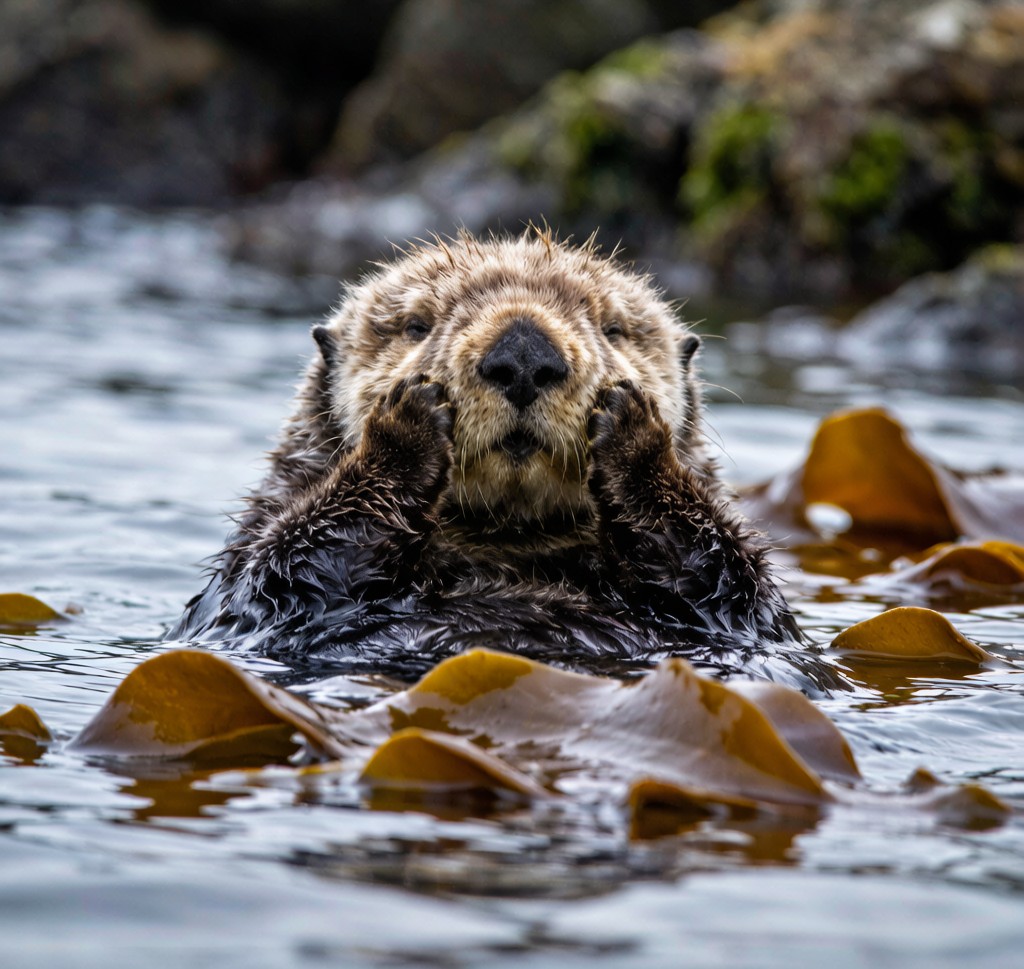
Overview
The Sea Otter (Enhydra lutris) is one of the most charismatic and ecologically important animals of the North Pacific Ocean – a marine mammal so distinctive and unusual that it seems to belong to another world entirely. The sea otter is the largest member of the weasel family (Mustelidae) and the smallest marine mammal, with adult males weighing 22 to 45 kilograms and females 15 to 32 kilograms. But what truly sets the sea otter apart is its behavior: the species is the only marine mammal that habitually floats on its back at the surface of the ocean – not just to rest, but to eat, to groom, to care for its young, and even to use tools. When resting, sea otters frequently wrap themselves in kelp to prevent drifting, fold their paws over their eyes, and allow themselves to bob gently with the swell: an image so endearing that it has become synonymous with the wild Pacific coast.
The sea otter’s fur is the densest of any mammal – up to 800,000 to 1,000,000 hairs per square inch – and it is this extraordinary fur that has been both the species’ greatest asset and its greatest curse. Unlike most marine mammals, which stay warm in cold ocean water using a thick layer of blubber, the sea otter relies entirely on its fur to provide insulation: air trapped between the dense underhairs and the longer guardhairs creates an insulating layer that keeps the animal warm even in near-freezing water. This remarkable fur – which was worth more than gold by weight in the 18th and 19th centuries – nearly drove the species to extinction.
Ecology and Foraging
The sea otter is one of the most important keystone species in the North Pacific marine ecosystem, playing a pivotal role in maintaining the health and structure of kelp forest communities. The species is a voracious predator of sea urchins, crabs, abalone, clams, mussels, and other marine invertebrates, and its foraging activities have a cascading effect throughout the kelp forest food web. In areas where sea otters have been removed – either through hunting or population collapse – sea urchin populations explode, and the resulting sea urchin barrens (areas where urchins have consumed all the kelp and reduced the seafloor to a virtual desert) can persist for decades. When sea otters return, they restore balance: urchin populations collapse, kelp re-establishes, and the entire ecosystem recovers.
The sea otter is one of the few mammal species known to use tools: individual otters regularly use rocks, shells, and other hard objects to crack open the shells of prey including clams, mussels, sea urchins, and abalone. An otter will float at the surface with a rock balanced on its chest, raise the prey item high above the water, and strike it sharply against the rock to break the shell. Different otters have different preferred tools and techniques, and this tool-use behavior is learned socially within local populations – young otters watch their mothers and other adults and acquire their local foraging traditions over months of practice. The sea otter’s diet varies by region and season, but sea urchins and crabs are typically the most important prey items in most parts of the range.
Behavior and Reproduction
Sea otters are highly social animals that typically live in groups called rafts – clusters of individuals that float together at the surface, sometimes numbering in the hundreds. Males and females typically form separate rafts, with male rafts generally being larger than female rafts. Within a raft, individual otters maintain some distance from one another and do not cooperate in foraging or other activities: unlike some marine mammals, the sea otter is largely solitary as a forager, with each individual hunting independently for the wide variety of invertebrate prey that constitutes its diet.
Sea otter reproduction is remarkably slow: females give birth to a single pup every one to two years after a gestation of approximately 6 to 8 months (delayed implantation extends the effective gestation), and the pup remains dependent on its mother for 6 to 8 months – learning to forage, to groom, and to use tools before becoming independent. At birth, the pup is covered in a fluffy, waterproof coat of natal fur that is so buoyant that it cannot dive: the mother must carry the pup on her chest while she forages, regularly leaving it at the surface while she descends to collect food. This slow reproductive rate – combined with the sea otter’s sensitivity to oil spills and other environmental disturbances – means that populations recover very slowly from population declines.
Conservation
The Sea Otter is listed as Endangered on the IUCN Red List, reflecting its historically catastrophic population decline and the ongoing threats to its recovery. The species was hunted to the brink of extinction during the maritime fur trade of the 18th and 19th centuries: within 200 years of the arrival of Russian, British, and American hunters in the North Pacific, the global sea otter population was reduced by an estimated 95 to 99 percent, and the species was extirpated from most of its original range. Today, the global population – which has recovered from a low of approximately 1,000 to 2,000 individuals to somewhere between 100,000 and 150,000 animals – remains less than a quarter of its historical size.
Contemporary threats to sea otter populations include oil spills (sea otter fur loses its insulating properties when coated in oil, causing animals to die of cold within hours), entanglement in fishing gear, disease (including the toxic algae blooms that produce domoic acid and cause fatal amnesic shellfish poisoning), and competition with fisheries for prey species. The sea otter is protected throughout its range under national wildlife laws and international agreements including CITES Appendix I. Conservation success stories – including the recovery of sea otter populations in parts of the Aleutian Islands and along the California coast following the translocation of individuals to areas where they had been extirpated – demonstrate that well-managed populations can recover given adequate protection and habitat.