 By Iris
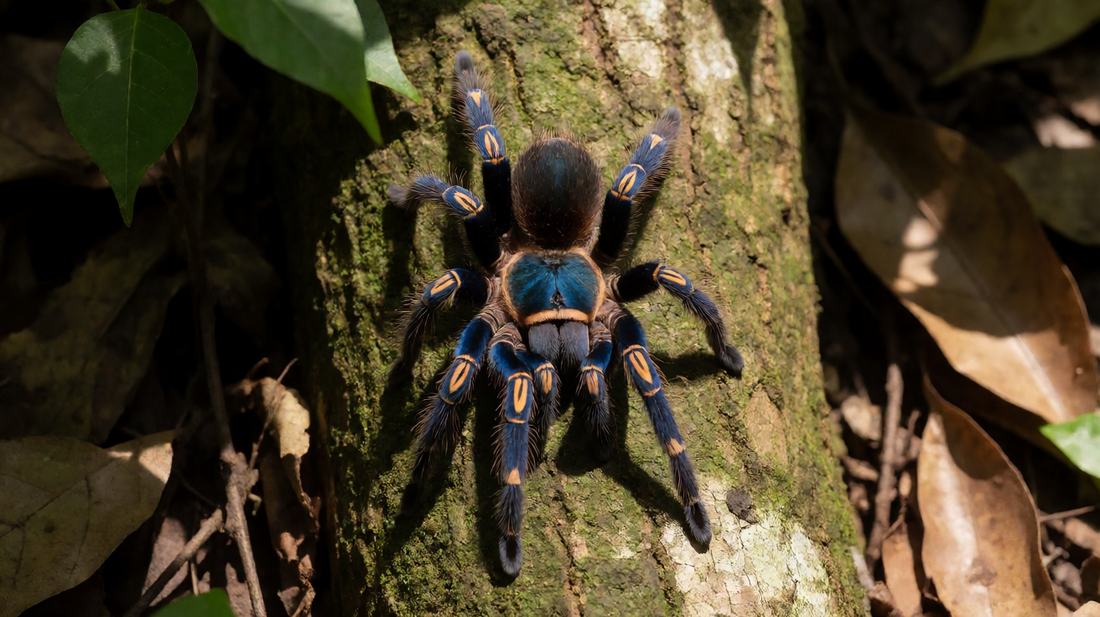
Poecilotheria metallica | Gooty Sapphire Tarantula
Species Profile · Theraphosidae
Gooty Sapphire Tarantula
A tarantula the colour of steel, confined to one Indian forest patch and hunted for the pet trade.
Critically Endangered (2008) 2008 assessment
Leg span
Female life
Egg sac
Range
Fangs
Rating
The Gooty Sapphire Tarantula
A spider the colour of steel
This tarantula lives in a small forest patch in southern India. Its legs shine a deep steel blue. No other spider in its genus carries that colour.
Adults spread 15 to 20 cm across. Females may reach 12 years of age. Males die at 3 or 4 years.
Because the whole group sits inside a single patch of fewer than 100 km², one bad fire or one new road could erase the species. Collectors pay high prices for a blue spider. As a result, that demand has made the animal rare.
Family tree
Theraphosidae, the tarantulas
Pocock described the species in 1899. A railway engineer found the first example near the town of Gooty. That accident gave the spider its common name.
This genus holds many ornate tree dwellers. However, only one of them is blue. A relative, the Tarantula, covers a far wider range and a far wider set of habits.
Although the family is old and common, most of its members live dull lives in plain brown or grey. Records from 2019 extended the known range into Tamil Nadu.
Blue by structure
How to tell one
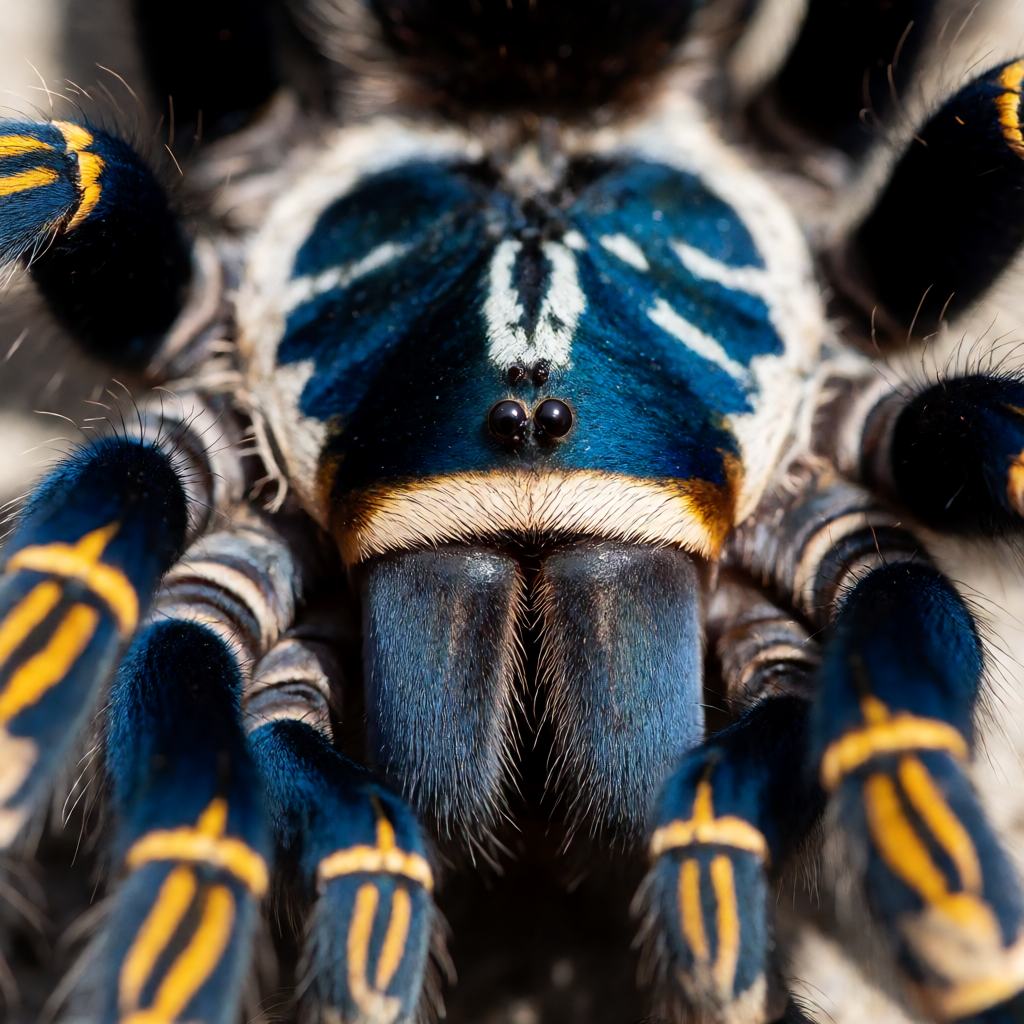
Leg span reaches 15 to 20 cm. Blue hairs cover the legs and the body. The colour comes from tiny structures, not from pigment. Those structures bend light in a fixed way.
Pale yellow bands mark the underside of the legs. A white pattern decorates the abdomen. Fangs can measure nearly 2 cm. Its bite hurts.
However, it has never killed a person. Because the blue is made by shape rather than by dye, it does not shift when the animal turns and it never fades with age.
1
2
3
One forest patch
Where it lives
The species lives in a reserve forest in Andhra Pradesh. It also turns up in the Eastern Ghats of Tamil Nadu. Tall trees with loose bark suit it best.
The spider hides in a hole by day. Silk lines seal the entrance. Several spiders may share one large tree.
Because the animal never crosses open ground, a cleared field of even 100 m can strand a whole group of spiders. Firewood cutting removes the old trees. Moreover, fires sweep the dry leaf litter each summer.
Flying insects
What it eats
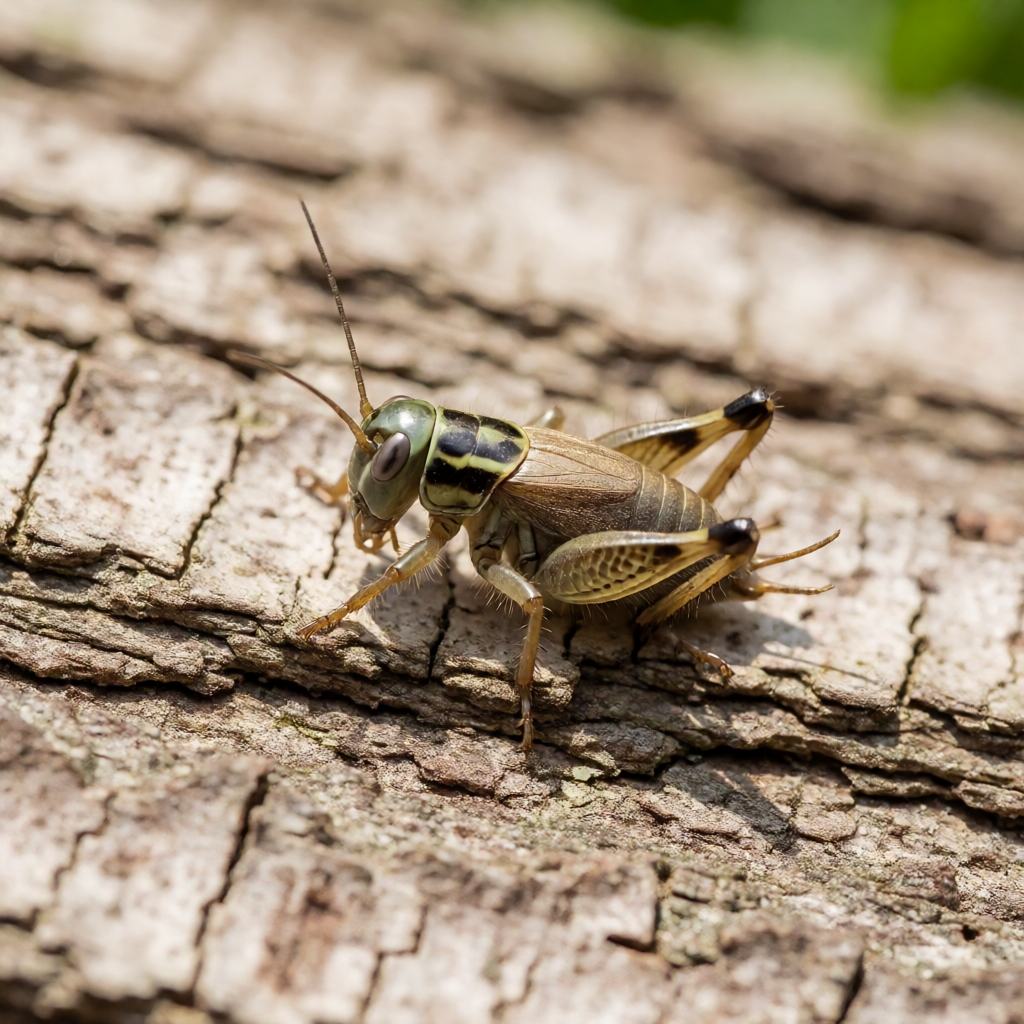
Flying insects form the main diet. Moths and butterflies are taken in mid-air. Crickets and roaches fill out the rest. The spider waits at the mouth of its hole.
Because it can move fast over bark and leaves, it can rush out and seize an insect before the prey can react. Prey is then carried back inside. In fact, nothing is left at the entrance.
One egg sac
The breeding cycle
A male approaches a female with care. He taps the silk and waits. If she accepts, mating follows.
The female then builds an egg sac. She guards it for weeks. A sac may hold 100 eggs or more.
Young hatch as small versions of the adults. Females mature slowly, therefore a group needs years to recover. Because only the female lives long enough to breed several times, a shortage of females can empty a forest patch within a few years.
Critically Endangered
Conservation
The IUCN lists the species as Critically Endangered. A world pact controls trade in the spider. Logging and firewood collection destroy the trees, since the spider needs old bark.
Meanwhile, collectors take animals for the pet trade. Only one small reserve holds a secure group. A second site was found in 2019.
Because the group is tiny, isolated and much sought after, protection depends on patrols that few guards have the staff to run. Captive breeding has eased some pressure.
Side by side
How It Compares
| Trait | Gooty Sapphire Tarantula | Mexican Red-knee Tarantula |
|---|---|---|
| Range | one forest patch in India | Pacific coast of Mexico |
| Colour | metallic blue | black with red knees |
| Leg span | 15 to 20 cm | 14 to 16 cm |
| Female lifespan | 11 to 12 years | 20 years or more |
| Bite | painful, never fatal | mild |
| Trade rule | Appendix II | Appendix II |
Common misreadings
What People Get Wrong
- The blue is said to come from pigment. It comes from the shape of the hairs.
- A bite is said to be fatal. No human death has ever been recorded.
- The species is said to live across India. Every record comes from one small region.
Going further
Sources and Further Reading
- GBIF Backbone Taxonomy, Poecilotheria metallica Pocock, 1899
- Molur, S., Daniel, B. A. & Siliwal, M. 2008. Poecilotheria metallica. The IUCN Red List of Threatened Species.
- World Spider Catalog. Natural History Museum Bern. Poecilotheria metallica.
- Pocock, R. I. 1899. Diagnoses of some new Indian Arachnida. Journal of the Bombay Natural History Society 12.
Quick hits
Five things to remember
- It is the only blue member of its genus.
- Females can live 12 years.
- Its blue comes from shape, not pigment.
- One egg sac can hold 100 eggs.
- Railway freight carried the first spider.