 By Iris
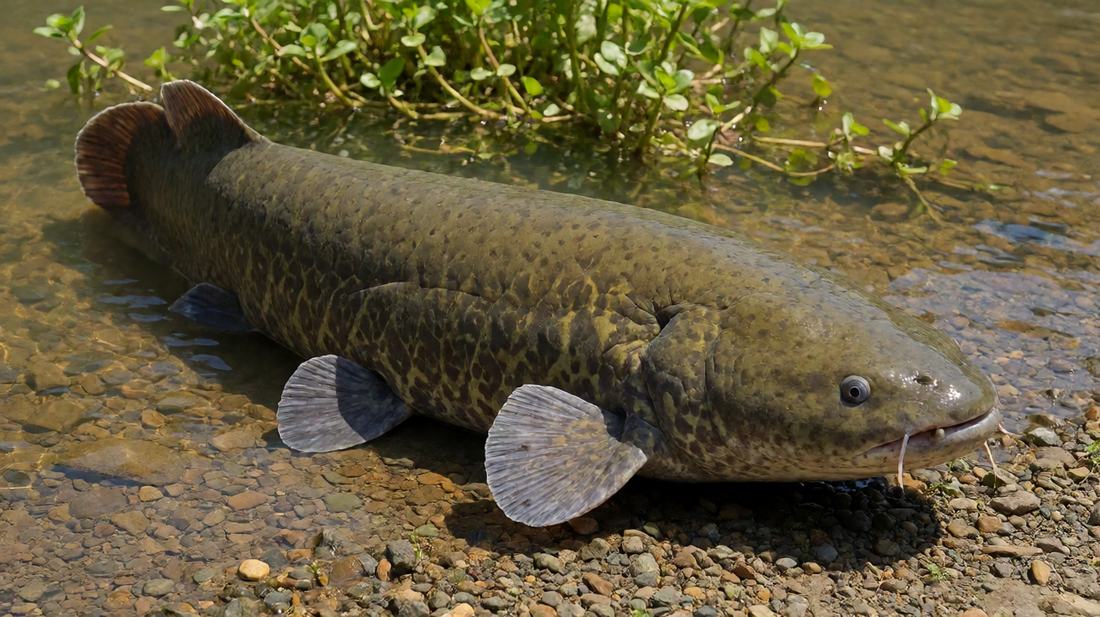
Neoceratodus forsteri | Queensland Lungfish
Species Profile · Neoceratodontidae
Queensland Lungfish
A living fossil from two Queensland rivers, with one lung, paddle fins and a family line that has not changed in 380 million years.
Endangered (2019) 2019 assessment
Length
Weight
Lungs
Maturity
Top age
Rating
The Queensland Lungfish
A living fossil with one lung
This fish lives in just 2 river systems in Queensland, Australia. It is the only surviving member of its family. A single lung sits above the gut. Most of the time the fish breathes with gills.
Fossils from the same line date back 380 million years. Because the species has changed so little over that vast stretch of time, scientists often call it a living fossil. Adults grow to 1.5 m and can top 40 kg. One captive animal reached 95 years of age.
Bright light sends the fish into cover. As a result, dams and weeds now press it hard.
Family tree
Neoceratodontidae, the Australian lungfishes
Krefft named the species in 1870. He honoured William Forster, a rancher and politician. Six lungfish species survive in the world today.
Four live in Africa and one in South America. The Queensland form stands alone in its own family. Gene work shows the line split from the others more than 180 million years ago.
A distant cousin, the Coelacanth, sits in another ancient branch of the same great group. In fact, both fish keep traits that other backboned animals lost long ago. Whereas the coelacanth hides in deep salt water, the lungfish lives in shallow fresh water and must rise to the surface for air.
One lung, paddle fins
How to tell one
Adults reach 1.5 m in length. Weight can pass 40 kg. Colour runs from olive to brown.
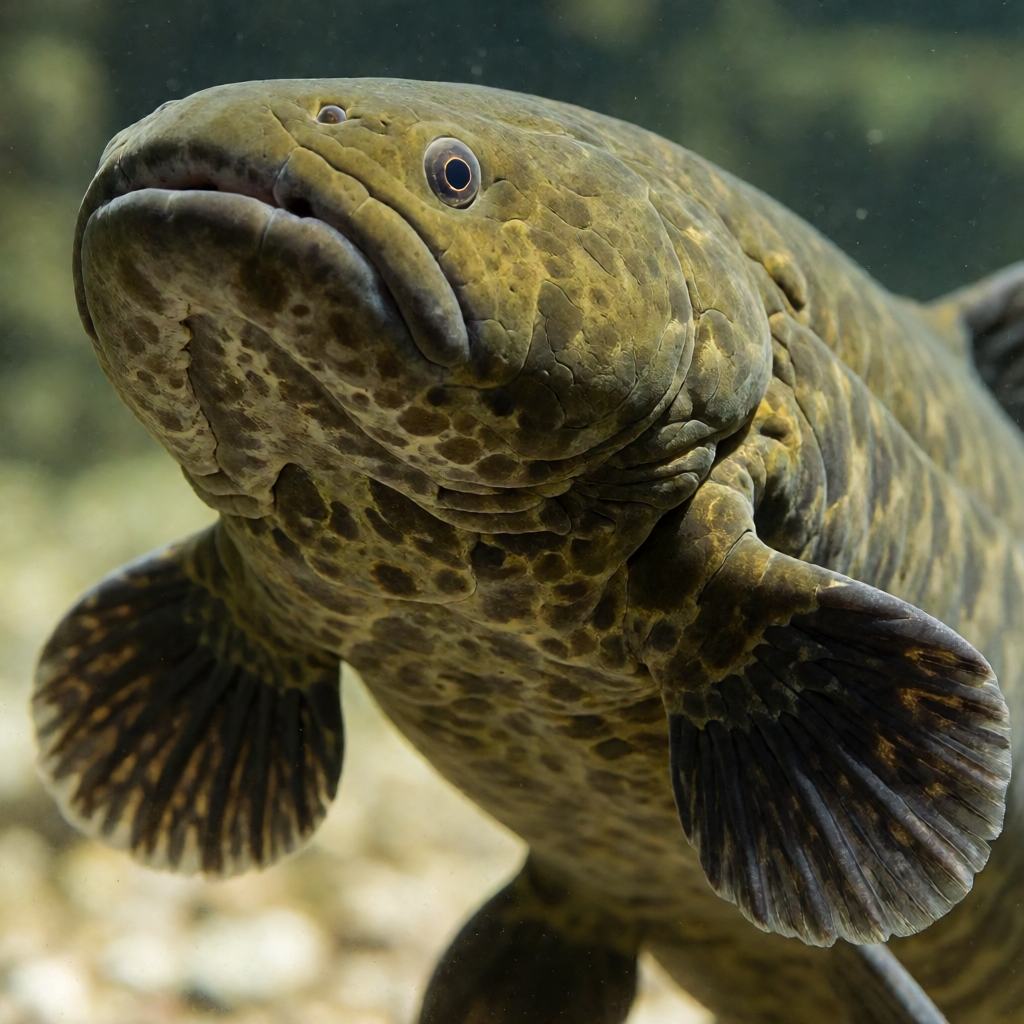
Large scales cover the flanks. Paddle-shaped fins carry the fish along the bottom. One lung sits high in the body and splits into 2 lobes.
However, gills still do most of the work. The fish surfaces for air when the water turns stale. Because the fins look like stubby limbs and the lung works like a simple version of our own, the fish offers a rare window on how the first backboned animals left the water.
1
2
3
Two rivers
Where it lives
The Burnett and Mary rivers hold the native population. People moved the fish to other Queensland rivers a century ago. Slow pools and deep bends suit it best.
Water plants give cover and shade. It also uses reservoirs behind weirs. Sand and gravel beds matter for spawning.
Moreover, weeds now choke many of the old pools. Because the species needs deep, clear water with plenty of plants, silt and weed growth can ruin a stretch of river that still looks healthy from the bank.
Frogs and snails
What it eats
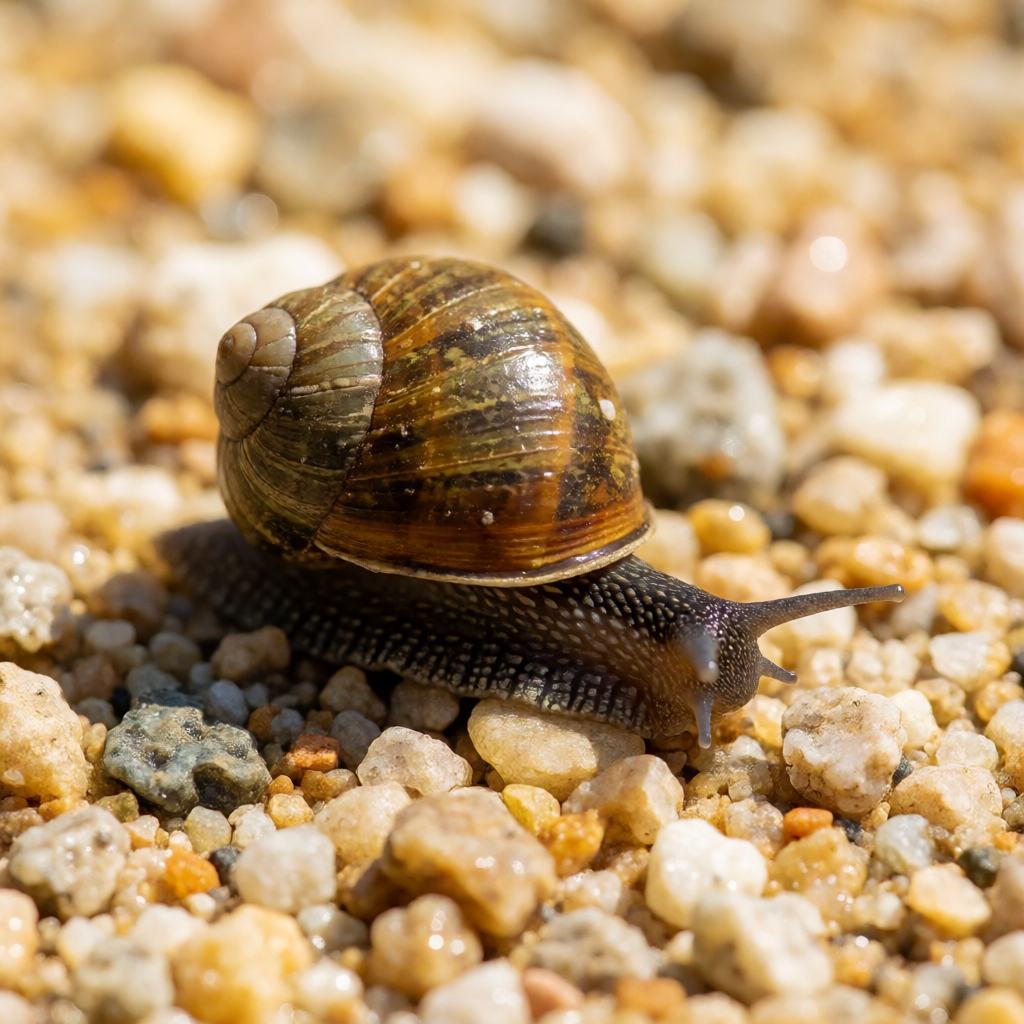
The fish eats frogs, tadpoles and small fish. Shrimp, worms and snails also go down. Water plants and fallen fruit add bulk. Electroreceptors on the snout find prey in murky water.
Therefore, hunting takes place at night. The fish browses along the bottom. Because the animal can sense the weak electric fields that living prey give off, it can hunt in total darkness without any help from its eyes.
August to October
The breeding cycle
Spawning runs from August to October. A pair roams the pool before they settle. Then the male follows her closely. Eggs come out in a long string.
Each egg looks like a small clear grape. Eggs stick to water plants. Young fish hide in the weed beds, since the adults offer no care. Growth is slow and steady.
Maturity therefore arrives at about 10 years. A female may breed only every few years.
Endangered
Conservation
The IUCN lists the species as Endangered. Australian law also protects the fish and bans any take. Dams block the routes between pools.
Introduced fish and weeds take a heavy toll. As a result, farmland sends silt into the rivers. Meanwhile, drought leaves the fish stranded in shrinking pools.
Because this animal grows slowly and breeds rarely, a single bad decade can strip a river of a whole generation. Captive breeding has produced young fish.
Side by side
How It Compares
| Trait | Queensland Lungfish | Coelacanth |
|---|---|---|
| Habitat | fresh water in Queensland | deep salt water off Africa |
| Lung | one, used now and then | a fat-filled relic |
| Fins | paddle-shaped | fleshy and lobed |
| Length | up to 1.5 m | up to 2 m |
| Young | eggs in weed beds | born live |
| Fossil line | 380 million years | 400 million years |
Common misreadings
What People Get Wrong
- The fish is said to burrow through droughts. Only the African species do that.
- It is thought to breathe air all day. Gills do the everyday work.
- The fish is called a salmon. Burnett salmon is only a local nickname.
Going further
Sources and Further Reading
- Queensland Museum, Australian lungfish
- Brookes, S. et al. 2019. Neoceratodus forsteri. The IUCN Red List of Threatened Species.
- Australian Government. National Recovery Plan for the Australian Lungfish.
- FishBase. Neoceratodus forsteri (Krefft, 1870).
Quick hits
Five things to remember
- One lung, not two, serves this fish.
- It can live for 95 years.
- Its family has no other living member.
- It senses prey with electric fields.
- Its fossils are 380 million years old.