 By Iris
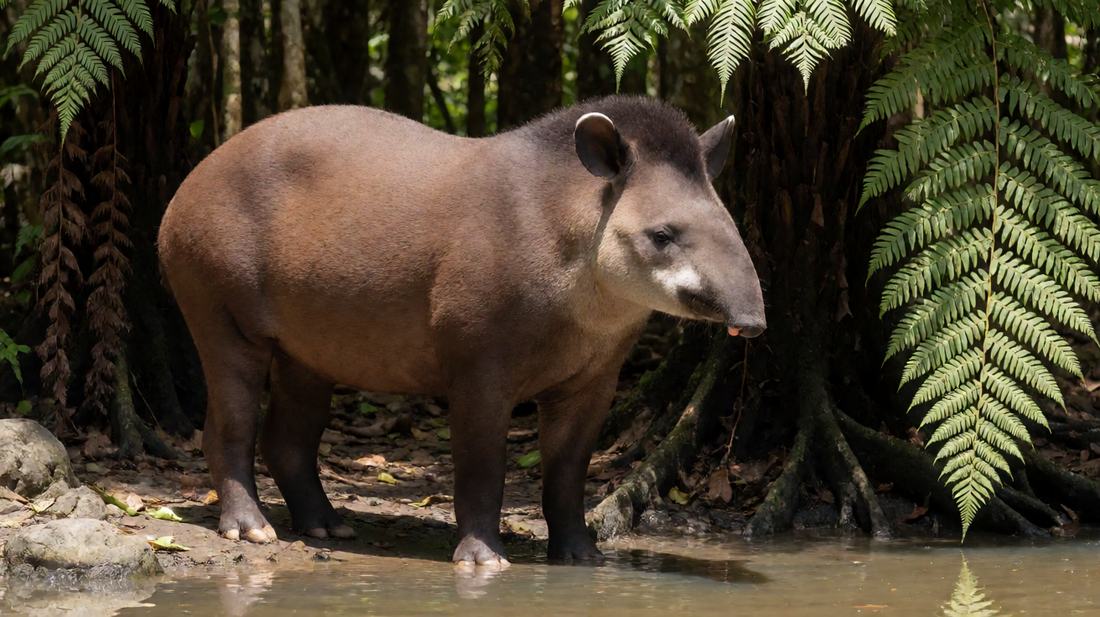
Tapirus bairdii | Baird’s Tapir
Species Profile · Tapiridae
Baird’s Tapir
The largest land animal of Central America, a forest swimmer with a short trunk and a calf marked in stripes.
Endangered global assessment
Length
Height
Weight
Gestation
Weaning
Rating
The Baird’s Tapir
The largest land animal of Central America
This tapir is the largest land mammal of Central America. A heavy body and a short trunk set it apart from deer and peccaries. The animal stands about 1.2 m at the shoulder.
Adults weigh 150 to 300 kg. A dark brown coat covers the body. Creamy white marks the lips and ear tips.
Because the animal swims well and dives to feed on water plants, it can use flooded forest that most large mammals avoid. People in Belize call it the mountain cow. Hunting and forest loss have therefore made it rare across most of its range.
Family tree
Tapiridae, the tapirs
The tapir family holds just 4 living species. Linnaeus described the first one in 1758. Baird’s form was named in 1865.
Its name honours the American naturalist Spencer Fullerton Baird. However, no subspecies are recognised today. Tapirs sit with horses and rhinos in one old group.
Gene work puts the odd-toed mammals together in a single branch of the tree. A relative, the Brazilian Tapir, lives across a far bigger slice of South America. Although the two look much alike, the northern animal is larger and carries a shorter coat that suits warm lowland forest.
Trunk and toes
How to tell one
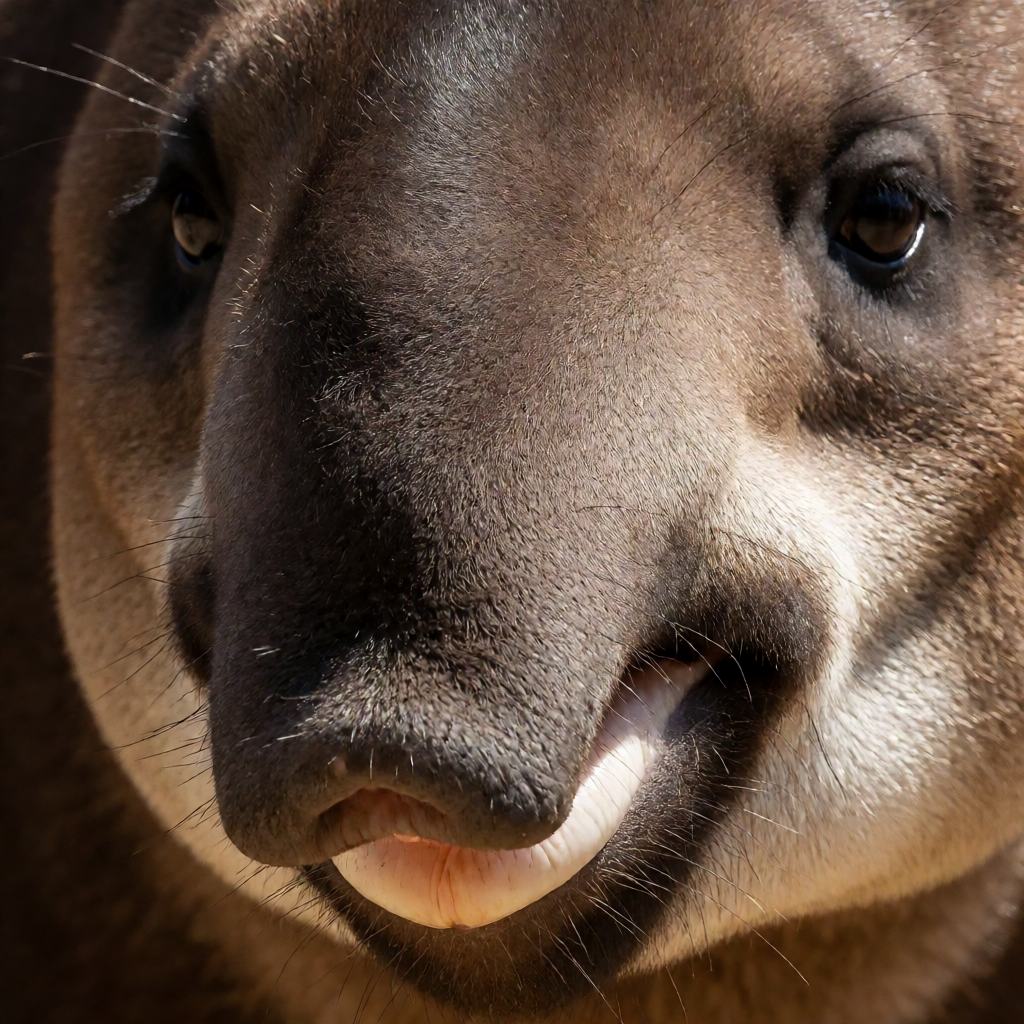
Adults measure about 2 m from nose to tail. Height at the shoulder runs 1.2 m. A short trunk is really a fused nose and upper lip. That trunk can grip leaves and shoots.
Four toes support each front foot. Three toes carry each hind foot. Each toe ends in a broad hoof. Skin stays thick and tough around the neck.
A loud whistle signals alarm. Because the animal must push through dense brush every night, a heavy build and tough skin serve it better than speed.
1
2
3
Rainforest pools
Where it lives
Rainforest is the main stronghold. Cloud forest and flooded lowland also hold animals, although numbers there are lower. Streams and ponds are a key part of the range.
The tapir swims across rivers and can dive out of danger. In fact, it follows the same trails year after year. Those paths become deep, worn tracks through the mud.
Each animal marks a trail with urine. Because a single tapir needs a large block of unbroken forest and a permanent water source, a road or a farm can split one home range in two.
Fruit and leaves
What it eats
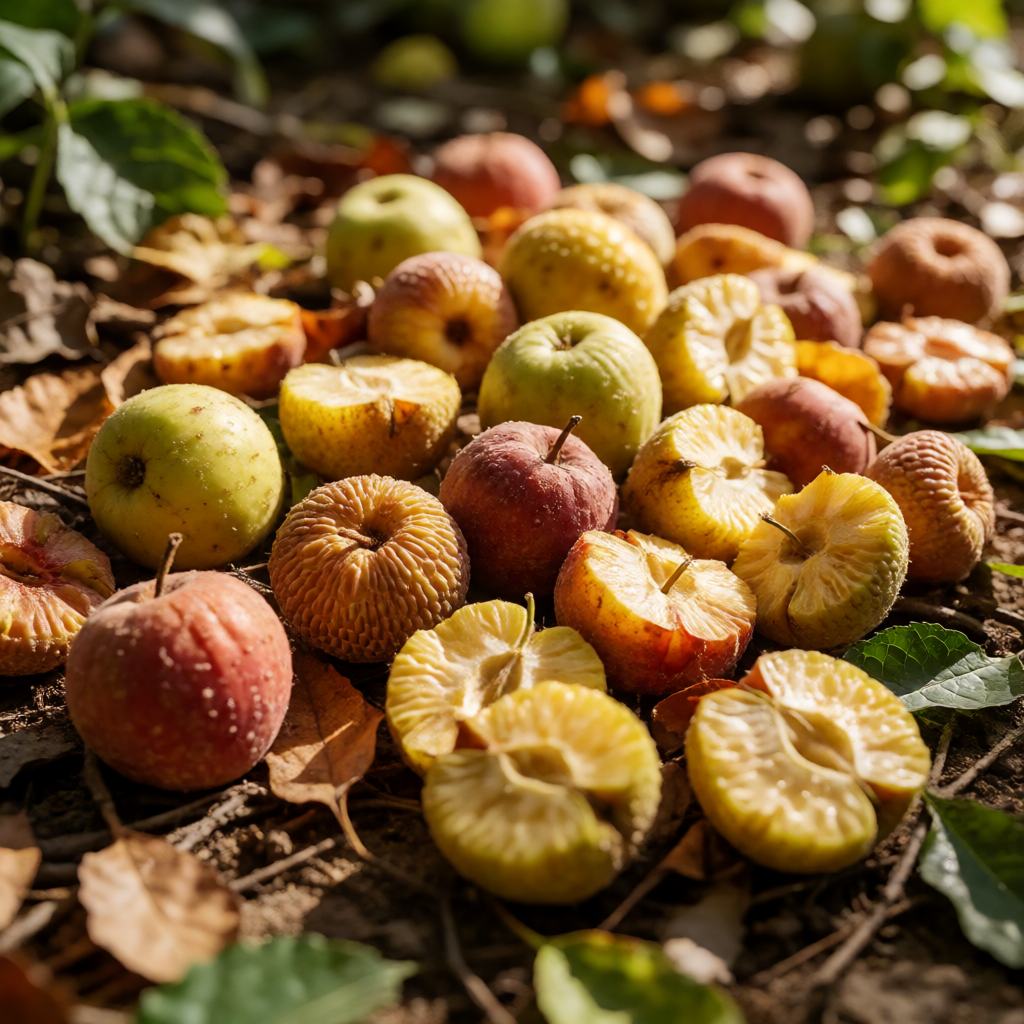
Leaves, shoots and twigs form the bulk of the diet. Fruit matters most from March to June, although leaves are eaten all year. Seeds pass through the gut intact.
That habit makes the species a valuable seed mover. A trunk pulls fruit from low branches. Because the animal can carry large seeds far from the parent tree, it helps to regrow forest that has been cleared.
Some meals come from water plants. Browsing goes on for hours after dark.
390 days
The breeding cycle
Females reach breeding age at about 3 years. Males mature a little later. Mating can happen at any time of year.
Pregnancy lasts 390 to 400 days. A single calf is born. The calf carries pale stripes and spots at birth.
Those marks fade within a year. Weaning therefore takes about 12 months. Young often stay near the mother far longer.
Endangered
Conservation
The IUCN lists the species as Endangered. Numbers fell by more than half in three generations. Forest clearance is the main cause.
Moreover, hunting adds heavy pressure. Meanwhile, cattle ranching takes over lowland forest. As a result, road building opens once-remote regions to hunters.
However, protected areas cover only part of the range. Because the species breeds slowly and needs vast tracts of forest, a local extinction is very hard to reverse. Captive breeding has produced a few calves.
Side by side
How It Compares
| Trait | Baird’s Tapir | Brazilian Tapir |
|---|---|---|
| Range | Central America and Colombia | most of South America |
| Coat | short and dark brown | longer and dark brown |
| Weight | 150 to 300 kg | 150 to 250 kg |
| Habitat | rainforest and cloud forest | lowland forest and flooded plains |
| Calf | stripes and spots | stripes and spots |
| IUCN status | Endangered | Vulnerable |
Common misreadings
What People Get Wrong
- The proboscis is a short trunk. It is a nose and upper lip fused into one.
- Tapirs are said to be related to pigs. They sit closer to horses and rhinos.
- A calf keeps its spots for life. The marks fade inside a year.
Going further
Sources and Further Reading
- Animal Diversity Web, University of Michigan – Tapirus bairdii
- IUCN. 2016. Tapirus bairdii. The IUCN Red List of Threatened Species.
- Emmons, L. H. 1997. Neotropical Rainforest Mammals. University of Chicago Press.
- GBIF Backbone Taxonomy. Tapirella bairdii (Gill, 1865).
Quick hits
Five things to remember
- It is the largest land animal in Central America.
- Calves are born with stripes and spots.
- Tapirs dive and swim well.
- Belize made it the national animal.
- One calf is born about every 2 years.