 By Iris
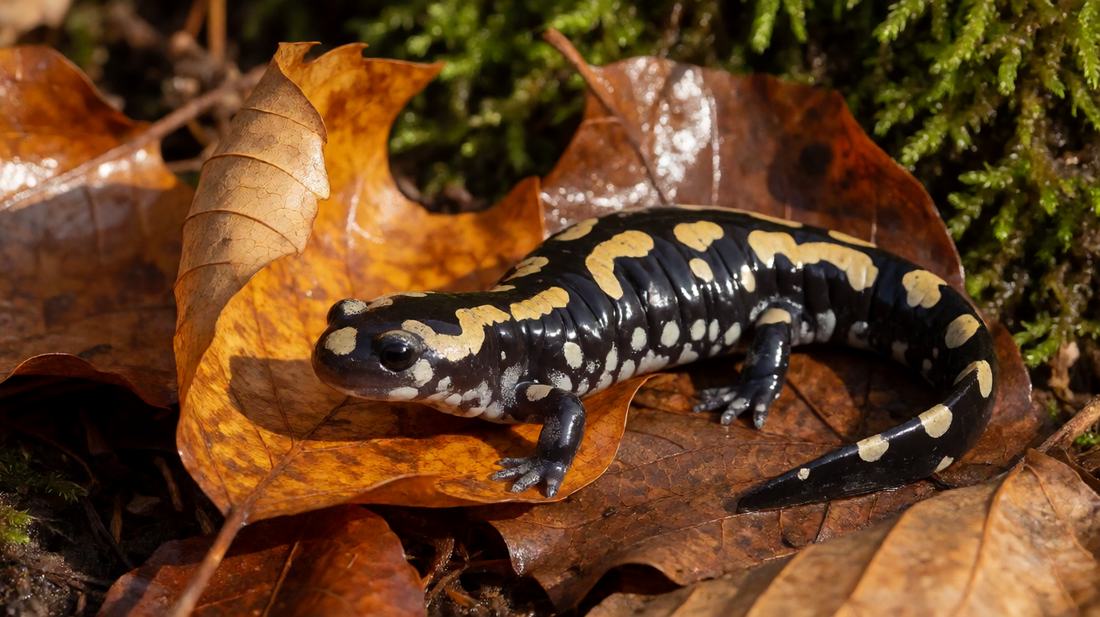
Ambystoma opacum | Marbled Salamander
Species Profile · Ambystomatidae
Marbled Salamander
A woodland salamander that nests in autumn, guards its eggs on dry ground, and lets its young start the pond race a season early.
Least Concern (2021) 2021 assessment
Length
Weight
Eggs
Breeding
Lifespan
Rating
The Marbled Salamander
A salamander that nests in autumn
This salamander lives in the oak woods of eastern North America. Adults stay out of sight for most of the year. They shelter under fallen logs or inside short tunnels in the soil. Autumn rain brings them up to the surface.
Other members of the family breed in late winter. This one nests in a dried pond bed instead. Silver bands cross a glossy black body. Because the female guards her eggs on dry ground, her young gain a head start over larvae that must wait for spring floods.
That single habit sets the animal apart from its closest relatives. As a result, the species is easiest to find in October, when rain and cool nights bring the whole lot above ground.
Family tree
Ambystomatidae, the mole salamanders
The animal belongs to the mole salamander family. Gravenhorst named it in 1807. He first placed it in the genus Salamandra. Later workers moved it to a new genus, Ambystoma.
Gene work backs that change, and the split is now settled. Members of the opacum group all breed in autumn, which is unusual. Its nearest relatives are the flatwoods salamanders of the coastal plain. Those southern forms now face severe declines.
A distant cousin, the Axolotl, keeps its larval shape for life. Both species share a heavy build, yet one never leaves the water and the other spends almost every month buried underground.
Black and silver
How to tell one
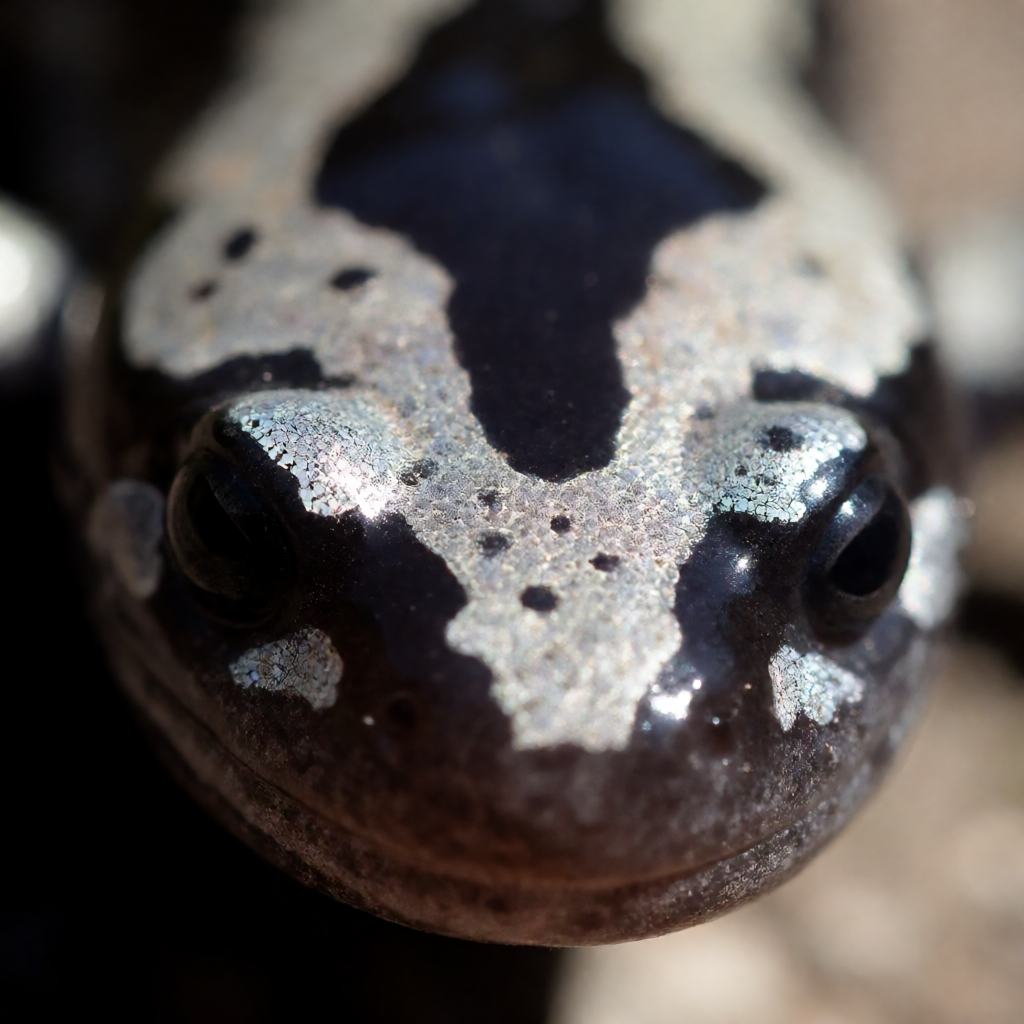
Adults reach 9 to 11 cm from snout to tail. Males carry bright white crossbands. Females show grey bands instead, and so sex is easy to read.
The belly stays plain dark, however. Skin looks smooth when wet. Glands along the back release a sticky fluid.
That fluid keeps most hunters away. Four short legs splay out to the sides, and a broad head holds a mouth wide enough to gulp a large beetle. Because the body is thick and the limbs are short, the walk looks clumsy, yet the animal can shift quickly through leaf litter once rain begins.
1
2
3
Woodland and pool
Where it lives
Damp woodland is the main stronghold. The species favours sandy or gravel soils. Such ground drains well and holds burrows open. Adults dig with their front feet.
They rarely travel far from a single log. Breeding ponds dry out each summer. That dry spell keeps fish away, which matters a great deal. Loss of small wetlands has cut many local numbers.
Forest clearance removes both the burrows and the ponds. Although the animal survives in logged woods for a while, it needs a dry nest site and a wet nursery within a short walk of each other.
Worms and beetles
What it eats
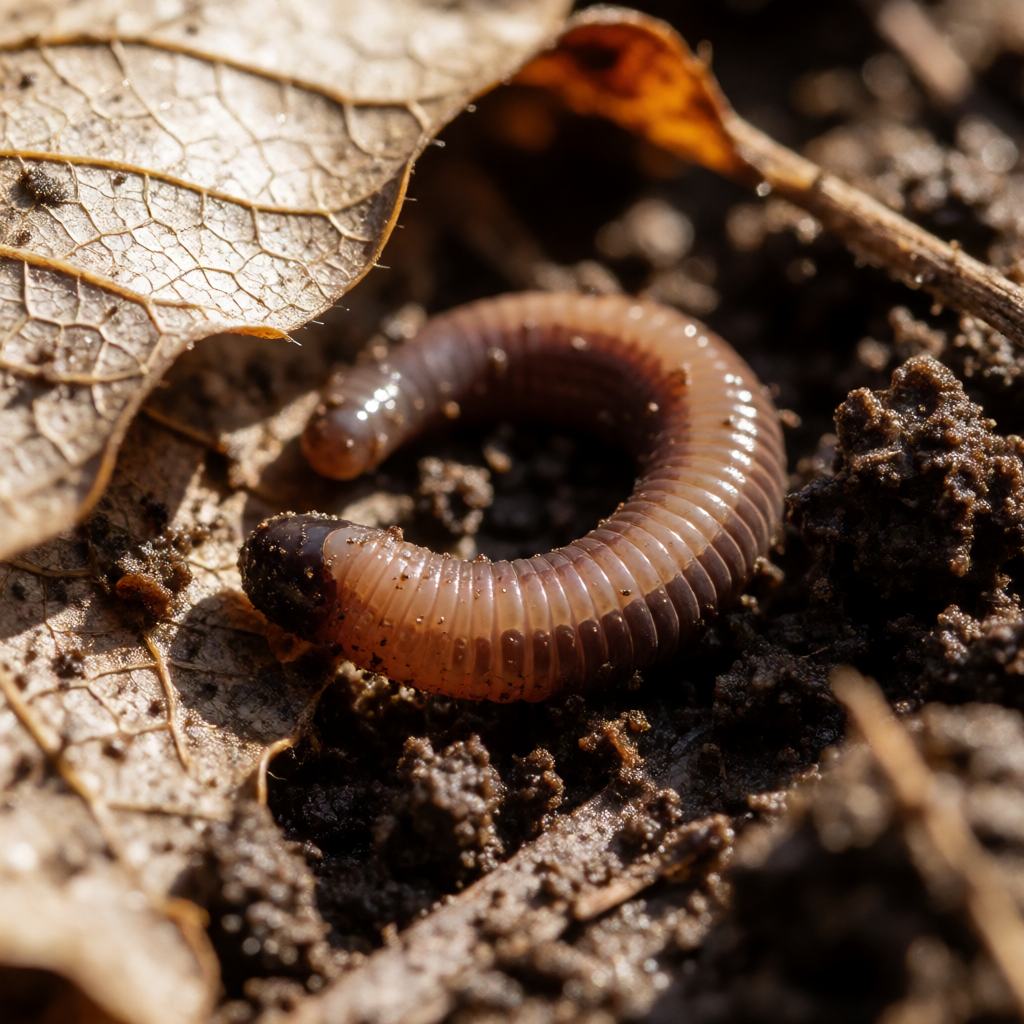
Almost any small animal will do. Beetles and their larvae are a staple. Earthworms and slugs also rate highly. Ants, spiders and snails fill out the list.
Hunting happens on damp nights. The animal waits at the mouth of a burrow. A quick lunge takes the prey. In fact, nothing is chewed before it is swallowed.
Young eat smaller food than adults do. Because this animal has no need to chase fast prey, it can live on whatever happens to crawl past the entrance to its tunnel.
Autumn eggs
The breeding cycle
Autumn is the breeding season. Males reach the dry pond bed first. They court females with nudges and tail waving. Each female lays 50 to 200 eggs.
She stays coiled around the clutch for weeks. Therefore, rain must flood the basin before hatching begins. Larvae then swim free in winter. They grow through cold months when few hunters are active.
The change to land form follows in spring or early summer. Young leave the water at about 5 cm.
Least Concern
Conservation
The IUCN rates the species as Least Concern. That rating reflects a wide range and large numbers. Some northern states list it as rare, however.
Roads kill many adults on wet nights. Ponds are also being drained for new building. Climate change may shift the timing of autumn rain.
A late flood can drown a whole clutch. Because the females nest in dry basins, a single failed rainfall year can wipe out the breeding effort of one whole local group.
Side by side
How It Compares
| Trait | Marbled Salamander | Spotted Salamander |
|---|---|---|
| Breeding season | autumn | early spring |
| Egg site | a dry pool bed on land | standing water, in jelly masses |
| Eggs | 50 to 200, hidden under cover | 100 or more, in one firm mass |
| Markings | silver white crossbands | round yellow spots |
| Parental care | the female guards the clutch | none at all |
| IUCN status | Least Concern | Least Concern |
Common misreadings
What People Get Wrong
- Most mole salamanders breed in spring. This one nests in autumn.
- The white bands look like a warning. They only mark species and sex.
- Adults are said to need permanent ponds. They use basins that dry out.
Going further
Sources and Further Reading
- IUCN Red List, Ambystoma opacum
- IUCN SSC Amphibian Specialist Group. 2021. Ambystoma opacum. The IUCN Red List of Threatened Species.
- Petranka, J. W. 1998. Salamanders of the United States and Canada. Smithsonian Institution Press.
- Animal Diversity Web, University of Michigan. Ambystoma opacum.
Quick hits
Five things to remember
- The species breeds in autumn, not spring.
- A female coils around her eggs for weeks.
- Bright white bands mark the males.
- Adults spend most of the year underground.
- One old genus name still lingers in field guides.