 By st20113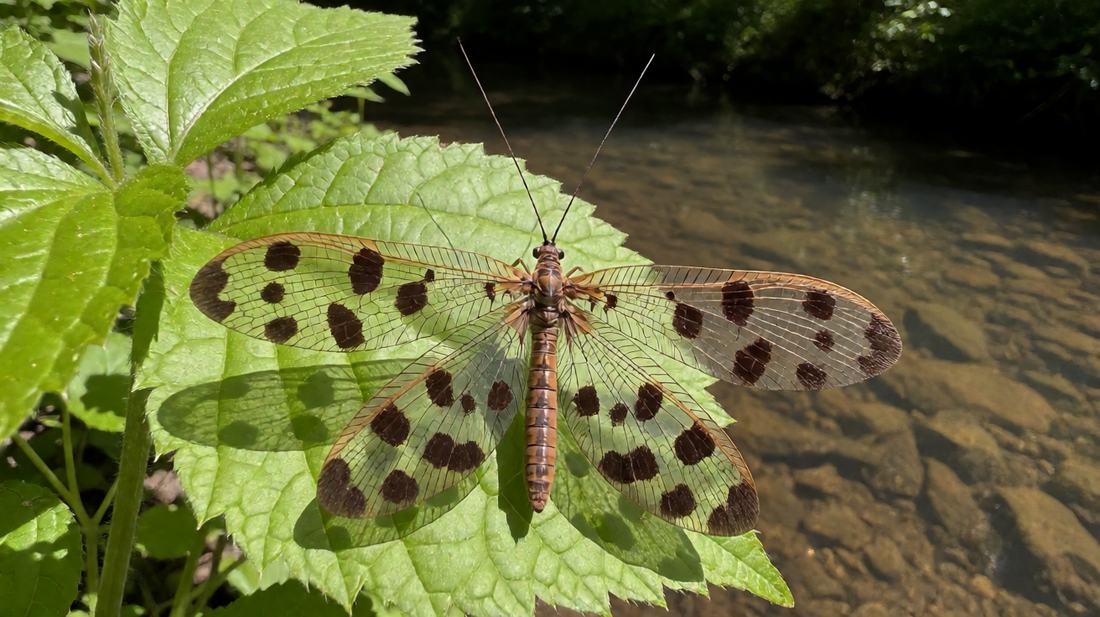
Osmylus fulvicephalus | Giant Lacewing
Species Profile · Osmylidae
Giant Lacewing
A large brown lacewing of damp shade that lays its eggs on leaves above streams and hunts in the leaf litter below.
Not evaluated
Wingspan
Eggs
Larvae
Adults
Lost
Rating
The Giant Lacewing
A hunter of damp shade
This is the largest lacewing in Europe. Wings span 20 mm to 26 mm. The head glows red brown.
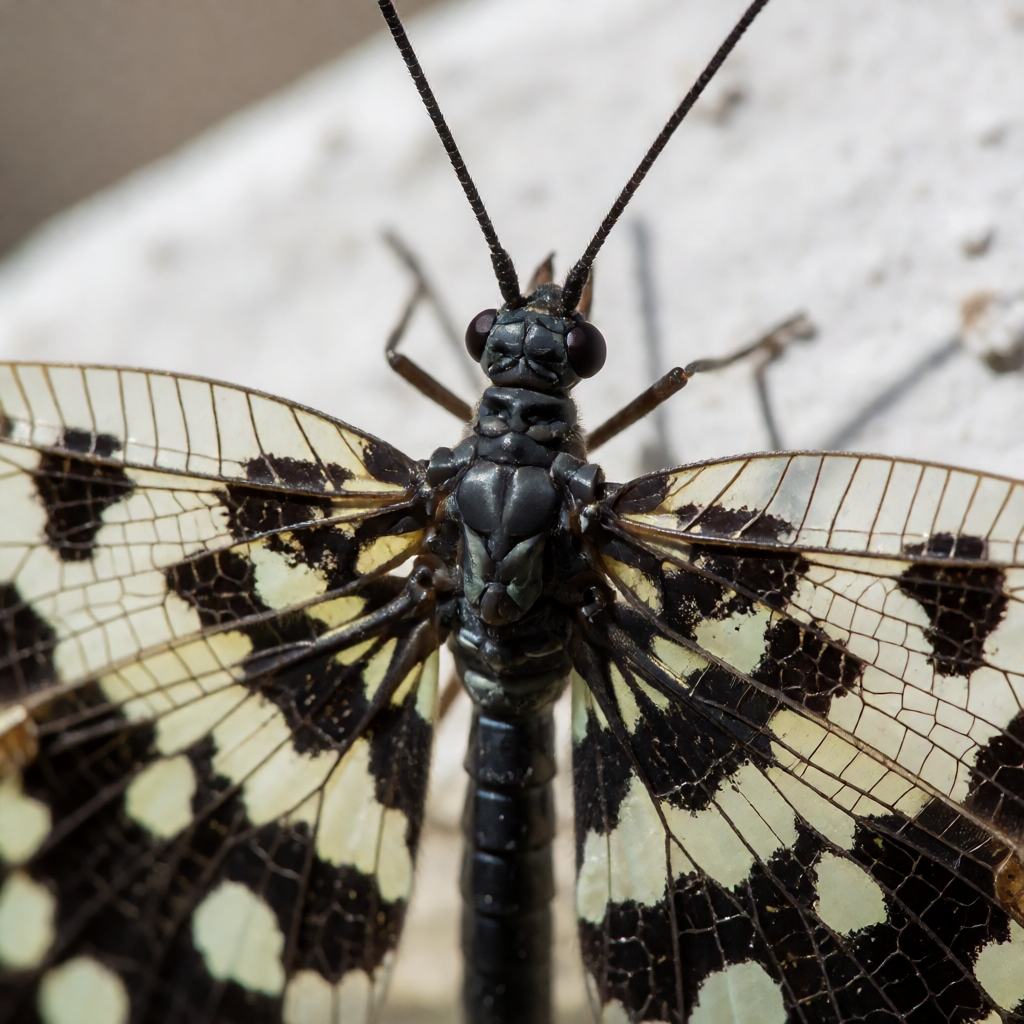
Its body is thin and black. Clear wings carry dark spots. A dense net of veins crosses each wing.
Because the insect hunts near streams, it rarely leaves the shade of bank side trees. Adults fly from May to July. Though the lacewing looks slow and weak, its fluttering flight hides a fierce hunter that spends its youth stalking prey underwater.
Family tree
Osmylidae, a small old family
This insect belongs to the order Neuroptera. Its family, Osmylidae, holds few species. Scopoli described it in 1763. He first placed it with the brown lacewings.
Later workers gave it a family of its own. Only one member of that family lives in Europe. This is it. The Green Lacewing is a distant cousin.
Both groups hunt other insects, though the methods differ. Because the lacewing order is an old, venomous line, its larvae inject poison through hollow jaws, and that habit sets the group apart from most other insects.
50 mm of spotted wing
How to tell one
A forewing runs 20 mm to 26 mm. The head is red or red brown. Fine antennae stretch longer than the body. Eyes are dark and round, while the head stays red.
Wings stay clear with brown marks, yet they look fragile. Many cross veins create a net pattern. Legs are long and thin. Larvae are slender and dark.
Short, stiff bristles cover them. Because the jaws are long, thin and hollow, a larva can seize prey far larger than itself and drain it without a struggle.
1
2
3
Stream sides and wet woodland
Where it lives
Clean, flowing water is the key. Small brooks and rivers both work. Trees and bushes must line the bank. Larvae hide in moss on stones.
They stay close to the water. Adults rest in the shade above. Bridges attract crowds of adults. Straightened channels destroy the moss, because the water runs too fast.
Pollution kills the prey. Although the insect still holds a wide European range, it needs shade and clean water, and both vanish when a stream is straightened and stripped of trees.
Small insects
What it eats
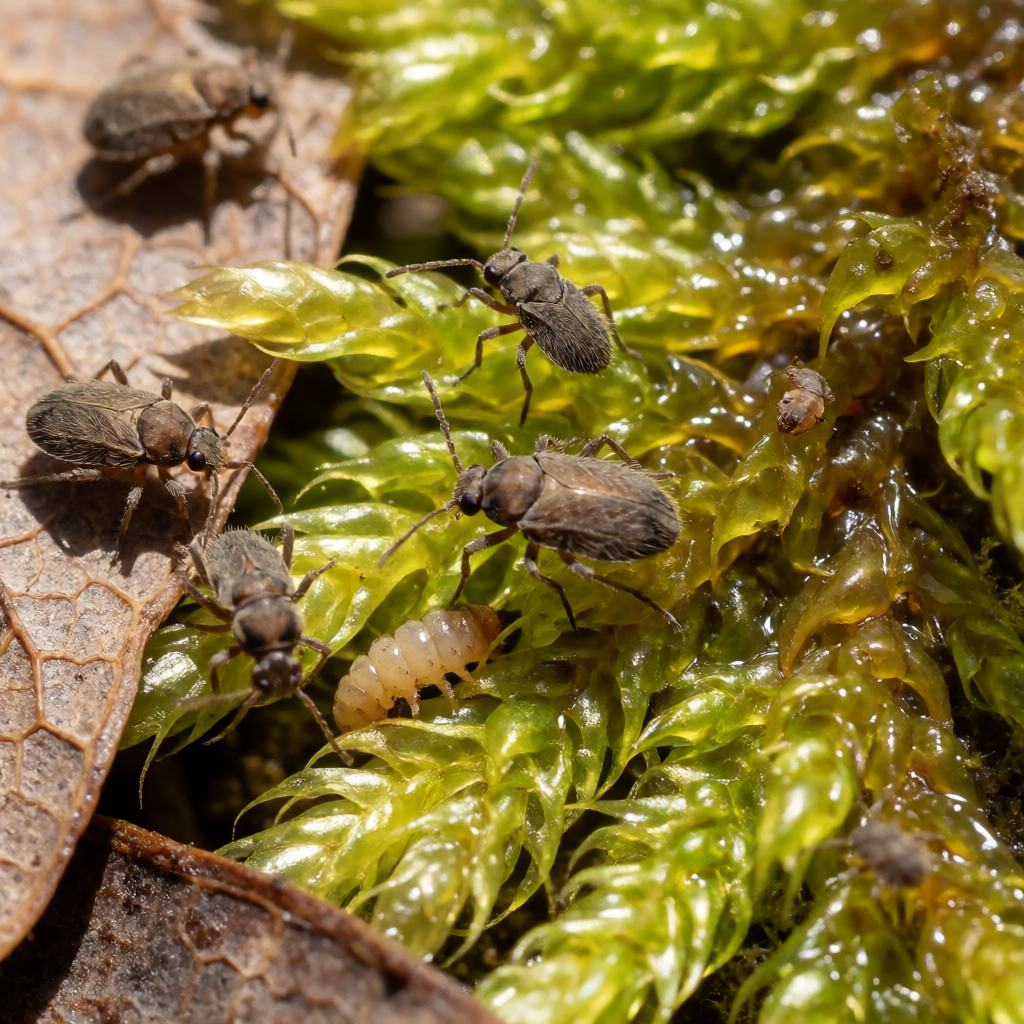
Both stages eat other animals. Larvae take small mites and springtails first. Older larvae hunt midge and cranefly larvae, while the youngest stick to mites. They also catch small shrimp.
A larva can dive for a moment. Because it has no gills, it cannot stay under long. Air bladders inside the gut keep it afloat. Adults hunt midges, mayflies and aphids.
Pollen and algae fill out the menu. Since the adult flies slowly over the water at dusk, it can pick insects straight off the surface without a chase.
Eggs on leaves over water
The breeding cycle
A female lays eggs near the water. She puts them on damp moss or stone. Larvae hatch and hunt at once. They pass through three stages.
The last one builds a silk chamber. Pupation happens on land, while the larva fed in water. Adults emerge in late spring. One generation appears each year.
The chamber hides the pupa from hunters. Adults live only a few weeks, though the larva took far longer to grow.
No global rating
Conservation
The IUCN has never assessed this lacewing. No international convention lists it. Sweden’s 2025 Red List calls it Near Threatened. Austria named it Insect of the Year in 2003.
Clean streams, however, have grown scarce. Canal straightening removes the moss banks. Farm runoff smothers the gravel. Shade trees are often felled.
Some countries now restore meanders. Because the species needs shade, clean water and a mossy bank at the same time, it makes a useful warning light for the health of a whole stream.
Side by side
How It Compares
| Trait | Giant Lacewing | Green Lacewing |
|---|---|---|
| Forewing | 20 mm to 26 mm | 10 mm to 15 mm |
| Colour | black body, red head | green body |
| Hunting ground | stream banks and moss | leaves and stems |
| Main prey | midges, craneflies and small shrimp | aphids and other small insects |
| Flight | slow and fluttering | weak but steady |
| Global rating | not assessed | not assessed |
Common misreadings
What People Get Wrong
- Lacewing larvae are harmless. They inject venom through hollow jaws.
- Adults of both groups bite people. Neither attacks humans.
- The larva can swim freely. It can only dip briefly.
Going further
Sources and Further Reading
- IUCN Red List entry for Osmylus fulvicephalus
- Wikipedia, Osmylus fulvicephalus
- Kusy, D. et al. 2024. Chromosome-level genome assembly of Osmylus fulvicephalus. Open Research Europe.
- Fauna Europaea. Osmylus fulvicephalus (Scopoli, 1763).
Quick hits
Five things to remember
- It is Europe’s only stream lacewing.
- Its family holds just one European species.
- The larva carries air bladders to stay afloat.
- Adults can gather in crowds under bridges.
- Its jaws are hollow venom syringes.