 By st20113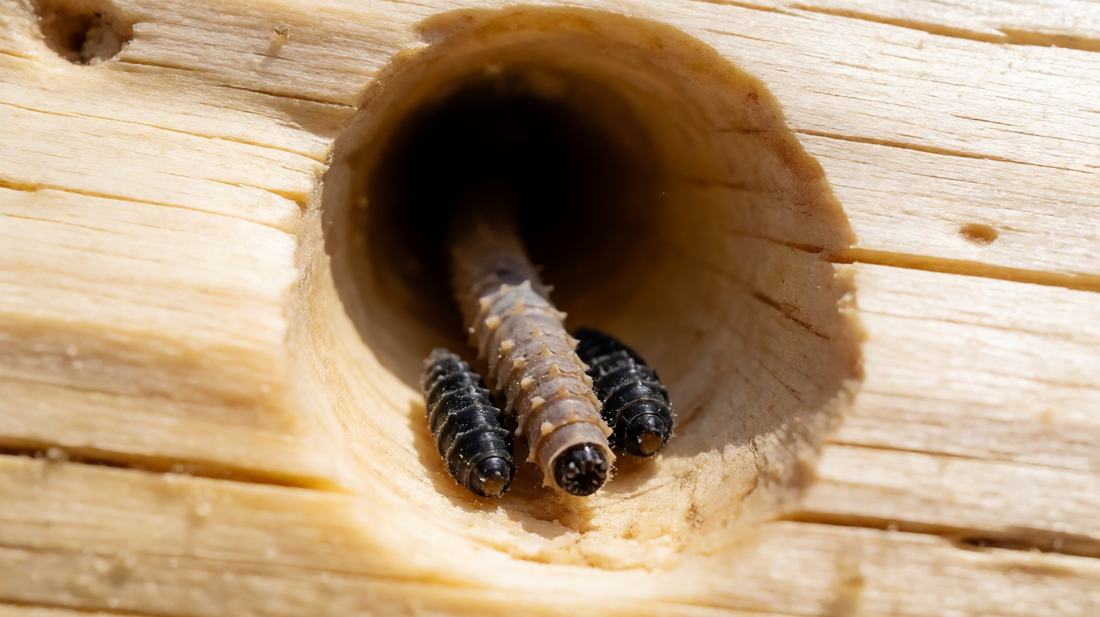
Lyrodus pedicellatus | Black Shipworm
Species Profile · Teredinidae
Black Shipworm
A clam shaped like a worm that grinds tunnels through solid timber and digests the wood with help from bacteria.
Not evaluated
Length
Tunnel
Shells
Pallets
Life
Rating
The Black Shipworm
A clam that eats timber
This animal is not a worm. It is a small clam with a long body. Two small shells cover only the head. Adults run 15 cm to 30 cm.
Its tunnel is just 3 mm wide. One clam never leaves the wood, though it eats it away. In fact, a colony can wreck a pier in a few years. Because the two shells work like a rasp, it grinds a smooth tunnel through solid timber and never stops.
Under water, that damage stays hidden. This is the black shipworm.
Family tree
Teredinidae, the shipworms
This clam belongs to the family Teredinidae. Quatrefages named it in 1849. He placed it in the genus Teredo. Later workers moved it to a new genus.
Common Shipworm sits in the same family. About 60 other species share the family. All of them bore into wood. That group has been revised many times, since old names often turn out to mean the same clam, and the true number of kinds stays unclear.
Others live in cool water, though they prefer warmth. Indeed, this family sits inside the bivalves.
30 cm of soft white body
How to tell one
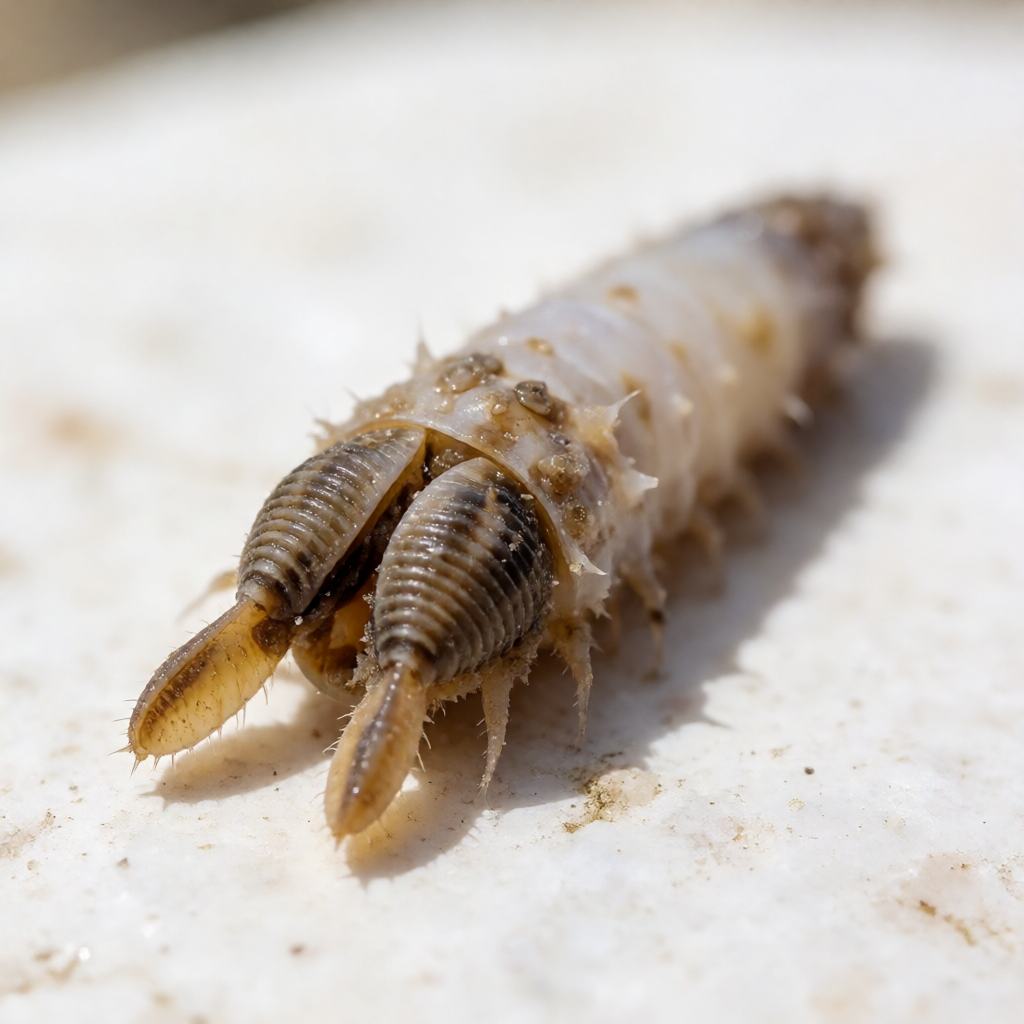
Its body is long and pale. It looks like a thick white thread. Only the front end carries a shell. Two small valves sit there.
Each valve bears fine ridges. It uses them as a file, while the body pushes forward. Behind the shell, the body stays soft. A pair of siphons reaches the tunnel mouth.
Two paddle-shaped pallets guard the entrance, since they plug the hole tightly whenever the siphons pull back inside. Its gills hold bacteria, while the gut handles the rest.
1
2
3
Harbours and floating timber
Where it lives
Warm seas suit it best. It also lives in cool water. Harbours and estuaries hold most. Floating timber carries it far, so that new colonies appear far from home.
Driftwood on a beach can start a new colony. Pilings and docks are prime targets. Brackish water slows it, but does not stop it. It bores from the tide line down to 37 m.
Wood is the only home it needs. Although the animal cannot swim far as an adult, its larvae drift for weeks and settle on any timber they meet.
Wood, digested with bacteria
What it eats
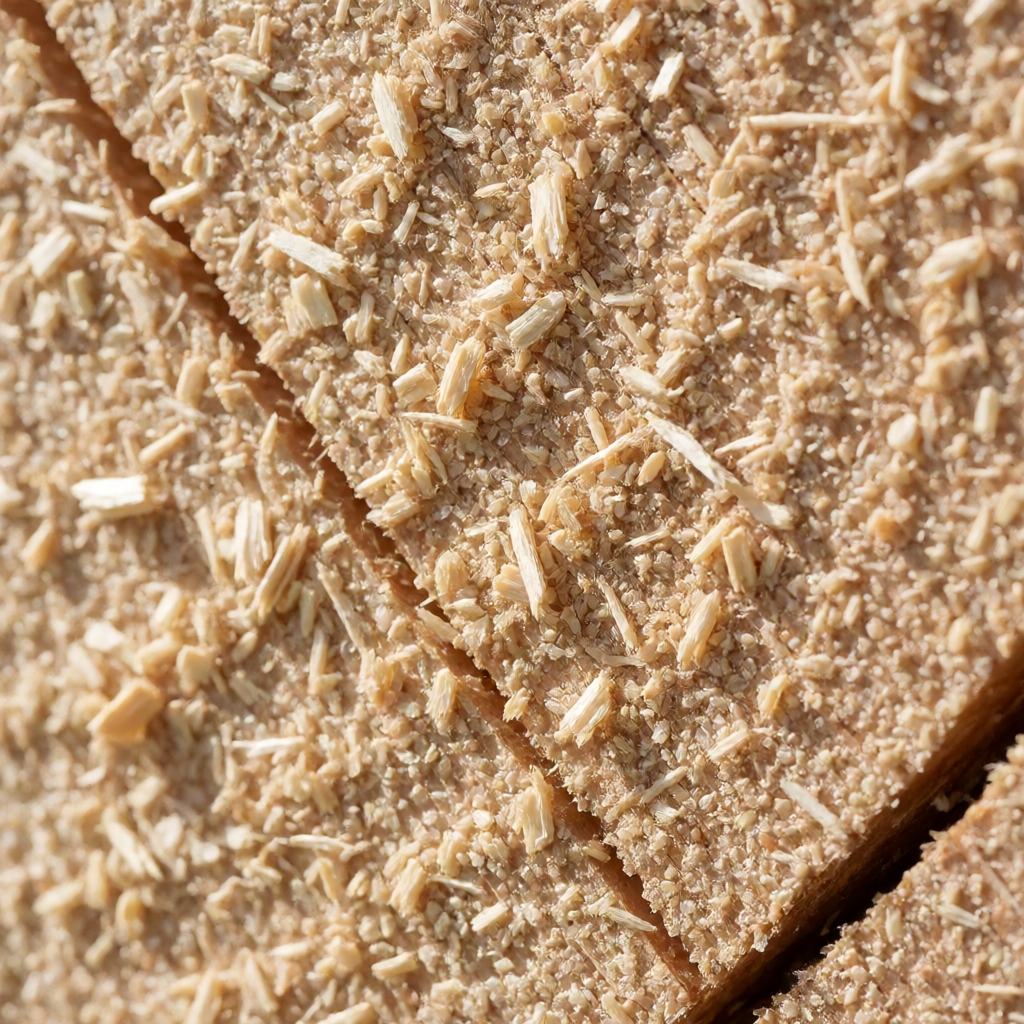
Wood is the whole menu. It rasps chips from the tunnel wall. Bacteria in the gills break the chips down. Moreover, those microbes fix nitrogen too.
Together they turn timber into food. That trick is rare among animals. Its siphons draw water in, while the gills sort out what to keep and what to pass along. Tiny plankton counts as a bonus.
Nothing goes to waste, since the tunnel itself is the meal. Hunting never happens.
Young brooded in the gills
The breeding cycle
This clam broods its young. Most shipworms release eggs into the sea, though this one keeps them inside. Fertilised eggs develop in the gills. Larvae stay there for a while.
They leave as tiny swimmers with a foot. That foot finds wood. Each larva settles fast. A new tunnel starts within hours.
Young clams mature in under 1 year. Because the young start life already settled, a single piece of timber can fill with them in months.
No global rating
Conservation
No IUCN rating exists for this clam. No country lists it. Numbers are thought to be huge. Nobody counts them.
This species travels in ballast water. That makes it invasive in many ports. Wooden boats suffer most. As a result, docks and pilings need constant repair.
Creosote and copper paint slow it, though they rarely stop the attack. Because this clam thrives wherever timber meets salt water, it ranks among the most costly marine borers in the world.
Side by side
How It Compares
| Trait | Black Shipworm | Termite |
|---|---|---|
| Group | bivalve mollusc | insect |
| Length | 15 cm to 30 cm | 0.5 cm to 1.5 cm |
| Legs | none | 6 |
| Home | salt water, inside timber | land, inside timber |
| Wood use | food and shelter | food and shelter |
| Digestion | bacteria in the gills | gut microbes |
| Damage | docks, pilings, boats | beams in buildings |
Common misreadings
What People Get Wrong
- A shipworm is a worm. It is a clam with a long soft body.
- The wood is only a shelter. The wood is also the food.
- Its shells cover the whole body. They cover the head alone.
Going further
Sources and Further Reading
- IUCN Red List search for Lyrodus pedicellatus
- Wikipedia, Shipworm
- Turner, R. D. 1966. A Survey and Illustrated Catalogue of the Teredinidae. Museum of Comparative Zoology.
- Quatrefages, A. de. 1849. Memoire sur le genre Taret. Annales des Sciences Naturelles.
Quick hits
Five things to remember
- Its tunnel is only 3 mm wide.
- One pair of pallets seals the tunnel.
- Wood is digested with help from bacteria.
- Larvae settle within hours of release.
- Adults can live for 3 years.