 By Iris
Amphiuma means | Two-toed Amphiuma
Species Profile · Amphiumidae
Two-toed Amphiuma
An eel shaped animal slides through swamp mud.
Least Concern
Length
Weight
Toes
Clutch
Hatching
Rating
The Two-toed Amphiuma
Four legs it cannot use
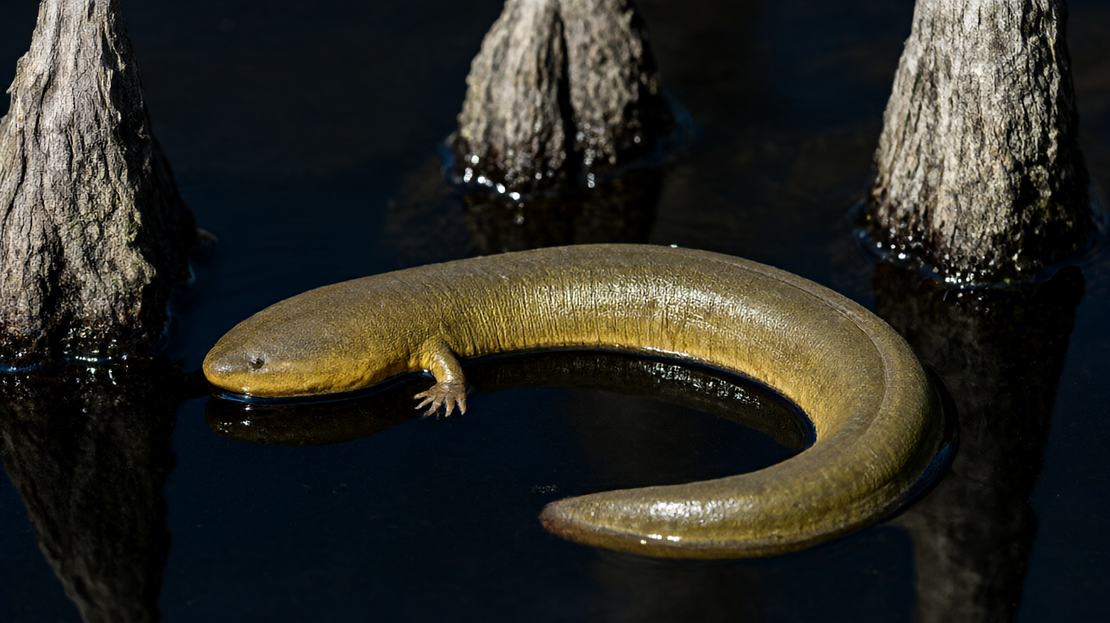
An eel shaped animal slides through swamp mud. It carries four tiny legs, and each one ends in two toes. Nothing about those legs helps it walk, yet the animal is an amphibian.
Most people who meet one mistake it for a snake. Its body reaches a metre, and the skin stays slick and dark. The two-toed amphiuma lives in slow water across the southeast of the United States, and it hunts at night in ditches and swamps.
Family tree
Amphiumidae, an old salamander line
Amphiuma means sits in the family Amphiumidae, and it shares the genus with two relatives. Its nearest relatives include the marbled salamander, though the two look nothing alike. The family split from other salamanders long ago, since the line has stayed separate for millions of years.
Amphiuma comes from a Greek word. It describes a creature that lives both ways. Means refers to the two toes, and the name fits better than most.
Three species share the family, and all of them live in the southeast. One relative, the Marbled Salamander, keeps four toes and lives under logs on land.
Two toes, no scales
How to tell one
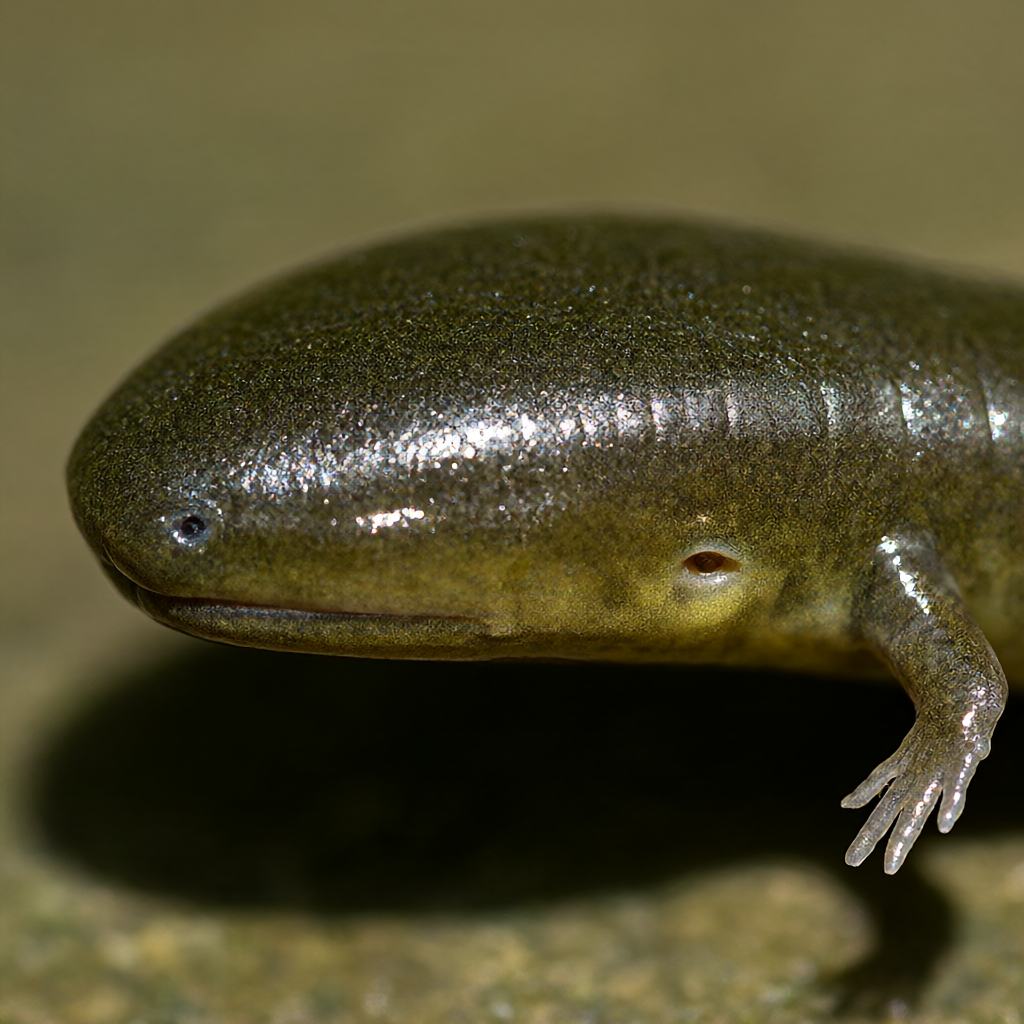
Adults run 50 to 100 cm, and a few pass that mark. Weight reaches 1 kg in large animals. Two toes sit on each foot, and the legs measure only a few centimetres.
Its skin stays smooth and dark, and it carries no scales. Gill slits close at metamorphosis, though adults keep a single slit on each side. Its tail flattens sideways, and it drives the animal through water.
Lungs work. Skin handles much of the breathing, yet the lungs still fill.
1
2
3
Slow muddy water
Where it lives
Swamps, ditches and slow creeks hold the species. Mud matters most, because the animal burrows when water drops. Its range covers the coastal plain, and it reaches from Virginia to Louisiana, where ditches run beside every field. Because the animal needs water, drought forces it deep into mud.
Rice fields carry it, though the animals drown when pumps run dry. Cover stays essential. Since plants block the light, the animal hunts where they grow thick.
Crayfish and worms
What it eats
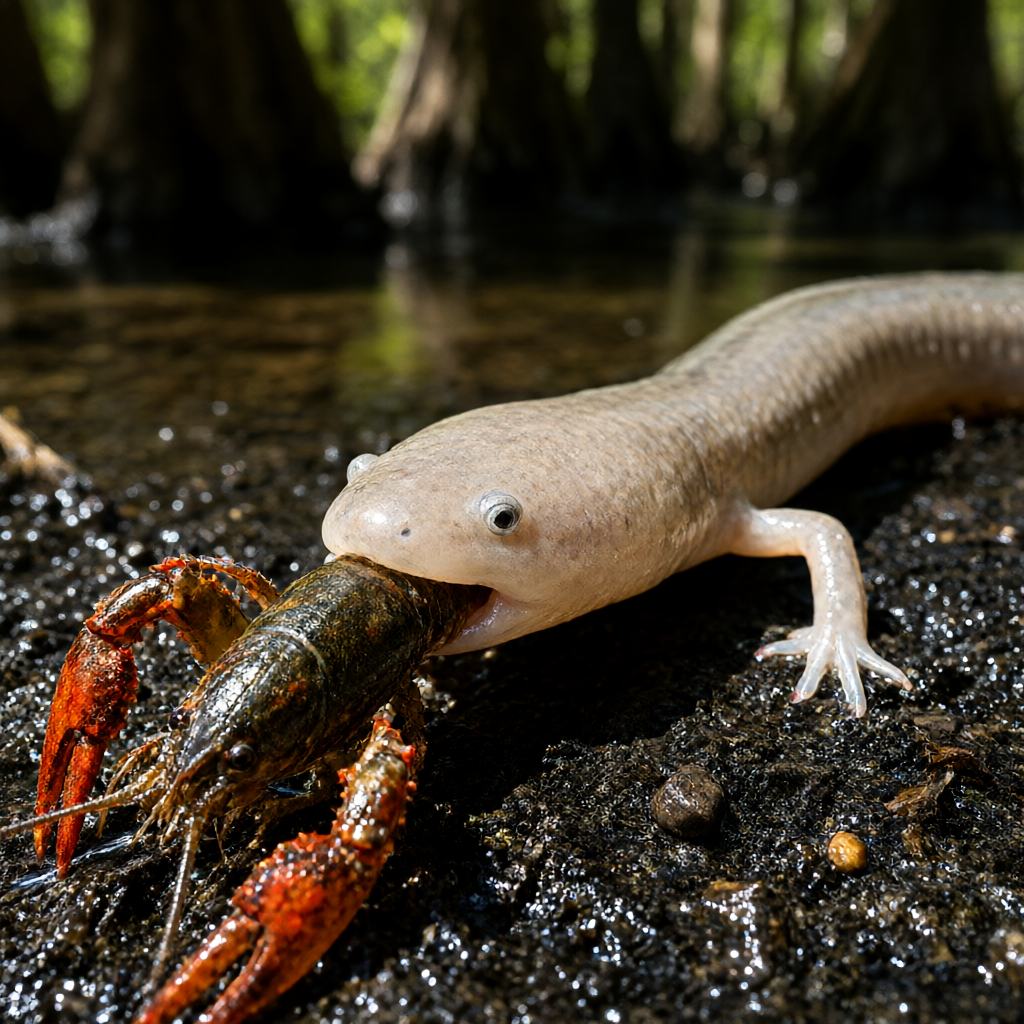
Crayfish form much of the food. Worms and insects fill the rest. The animal also takes frogs and small snakes, and it hunts through the night across shallow water.
Because it cannot see well, it finds prey by touch and by smell. A quick strike ends the hunt, and the jaws hold hard. Nothing gets chewed for long, since the teeth grip rather than cut.
Guarded clutch on land
The breeding cycle
Eggs go down on land under cover. The female coils around the clutch, and she stays until hatching. Because the eggs need moisture rather than water, the nest sits above the line.
Twenty to thirty eggs arrive at once, and they hatch near five months, which is long for an amphibian. Larvae carry gills at first, and they lose them within weeks. She leaves after hatching, since the young need no care.
Drainage and fear
Conservation
The Red List calls the species Least Concern. Its range stays large, and the population holds across the coastal plain. Drainage removes habitat, because wetlands disappear once ditches cut them, and the mud dries within a season.
People kill the animal on sight, since it looks dangerous. Because the species hides in mud, surveys give poor counts. Fishing baits take a share, though the losses stay small.
Side by side
How It Compares
| Trait | Two-toed Amphiuma | Marbled Salamander |
|---|---|---|
| Family | Amphiumidae | Ambystomatidae |
| Length | 50-100 cm | 9-11 cm |
| Toes | two per foot | four or five per foot |
| Lungs | small, skin does the work | well developed |
| Clutch | 20-30 eggs, guarded | 50-100 eggs, guarded |
| Rating | Least Concern | Least Concern |
Common misreadings
What People Get Wrong
- Not an eel. The animal carries four legs. Each leg measures a few centimetres and ends in two toes, which helps it steer through mud but never carries the body.
- Not a snake either. Snakes carry scales and no gill slit. Adults keep one gill slit on each side of the neck, and because the skin takes up oxygen the animal can stay under for hours.
- Not a safe animal to grab. The jaws hold hard. A bite lands without warning, and the teeth grip rather than cut, so the animal must be levered off rather than pulled away.
Going further
Sources and Further Reading
Quick hits
Five things to remember
- The animal can bite hard, and the jaws hold after the strike.
- Legs measure a few centimetres, and they do little beyond steering.
- A captive amphiuma lived more than 20 years.
- Skin takes up oxygen, so the animal can stay under for hours.
- Fossils from the same family turn up in Cretaceous rocks.