 By st20113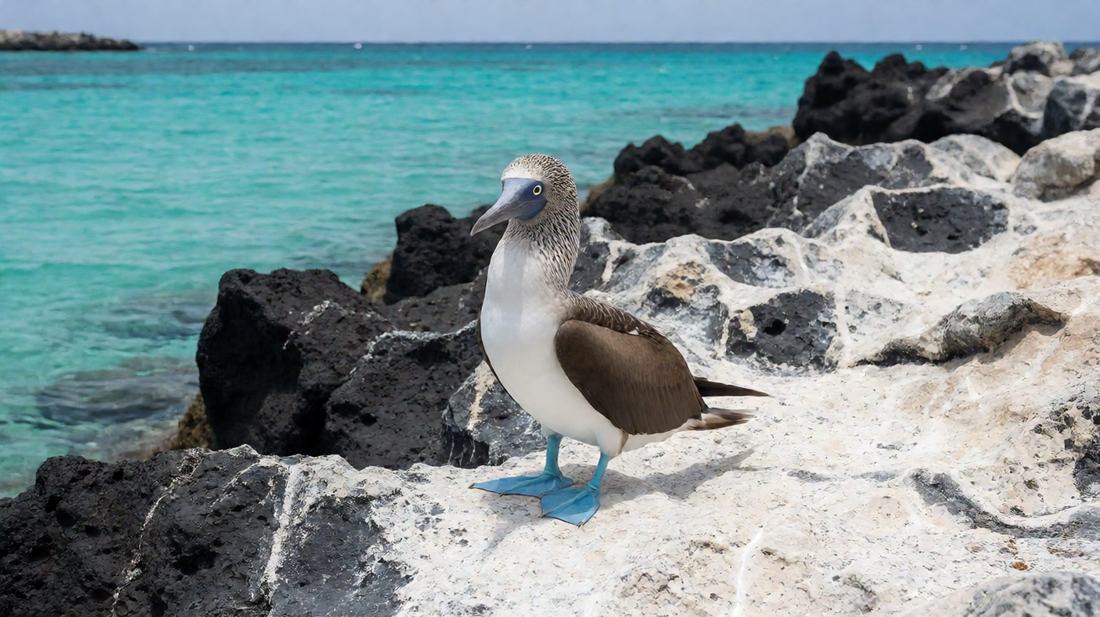
Sula nebouxii | Blue-footed Booby
Species Profile · Sulidae
Blue-footed Booby
A Pacific seabird that hunts by folding its wings and hitting the sea from thirty metres up at almost a hundred kilometres an hour.
Least Concern
Length
Wingspan
Weight
Eggs
Hatch
Lifespan
The Blue-footed Booby
Blue feet, fast dives
This sea bird is famous for its bright blue feet. It lives on warm coasts of the eastern Pacific. It hunts by diving into the sea from a height.
The bird nests on bare ground in large groups. It is a strong flier and a fine swimmer. Its brown and white plumage hides it from above.
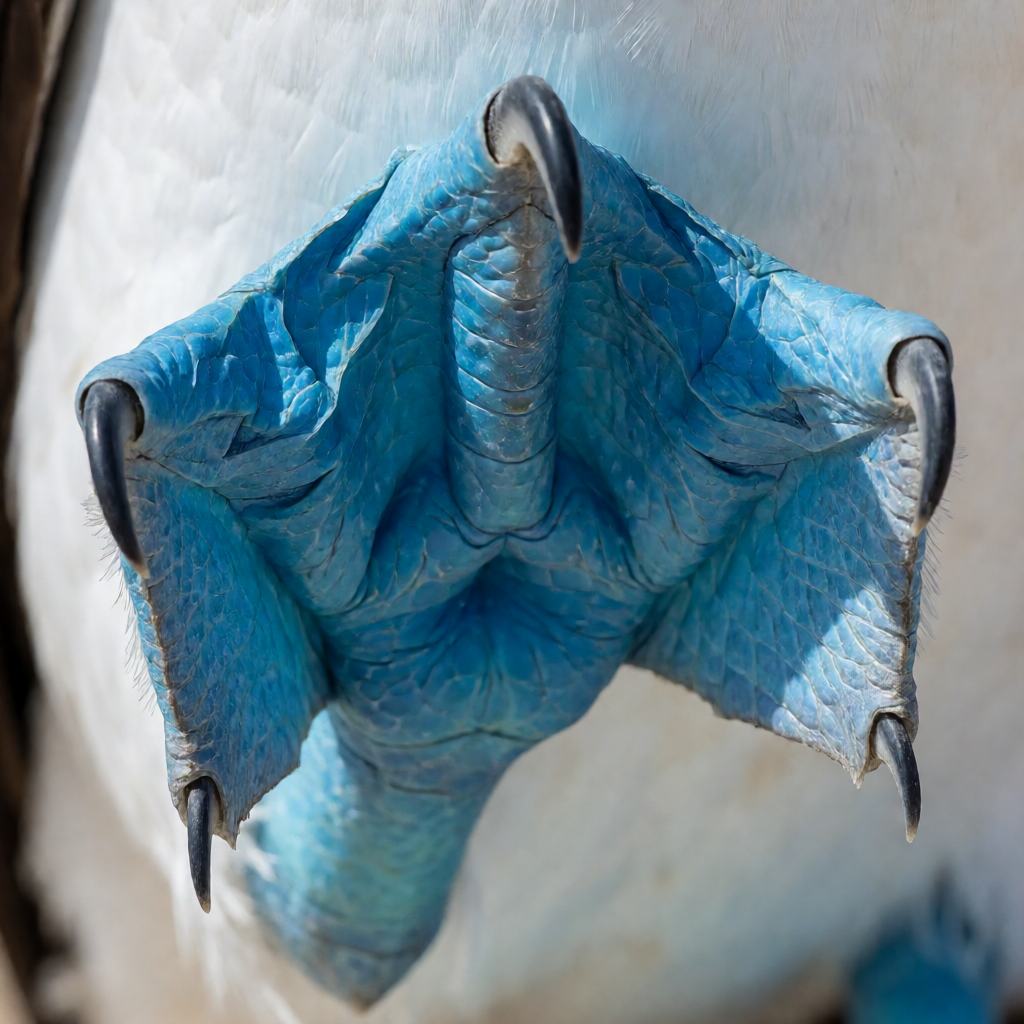
The feet are its most striking feature. Males show them off in a slow, high-stepping dance.
Family tree
Sulidae, the gannets and boobies
Sula nebouxii is its Latin name. The bird sits in the family Sulidae. That group holds the gannets and the boobies.
Six booby species are alive today. This one was named in the 19th century. Birds of the Galapagos form one distinct group.
Its nearest kin is the Peruvian booby. A Northern Gannet belongs to the same family and dives in the same way. Both birds fold their wings back before they hit the water.
76 cm of brown and white
How to tell one
An adult is 76 to 84 cm long. The wings span 152 to 158 cm. Males weigh 1.1 to 1.5 kg. Females are heavier at 1.3 to 2.0 kg.
The feet are webbed and vivid blue. The bill is long, cone shaped and saw edged. Males have a bright yellow bill. Females carry a dull green one.
The face is bare and dark grey. Head and neck show brown and white stripes. There are no nostrils in the bill. The bird breathes through its mouth.
1
2
3
Rocky islands of the eastern Pacific
Where it lives
This bird lives on tropical and warm seas. Its range runs from Mexico down to northern Peru. It breeds on rocky islands and dry coasts.
The largest groups sit in the Galapagos Islands. It nests on flat, bare ground. It does not build a nest of twigs.
A simple ring of droppings marks the spot. Outside the breeding season it stays at sea.
Sardines and anchovies
What it eats
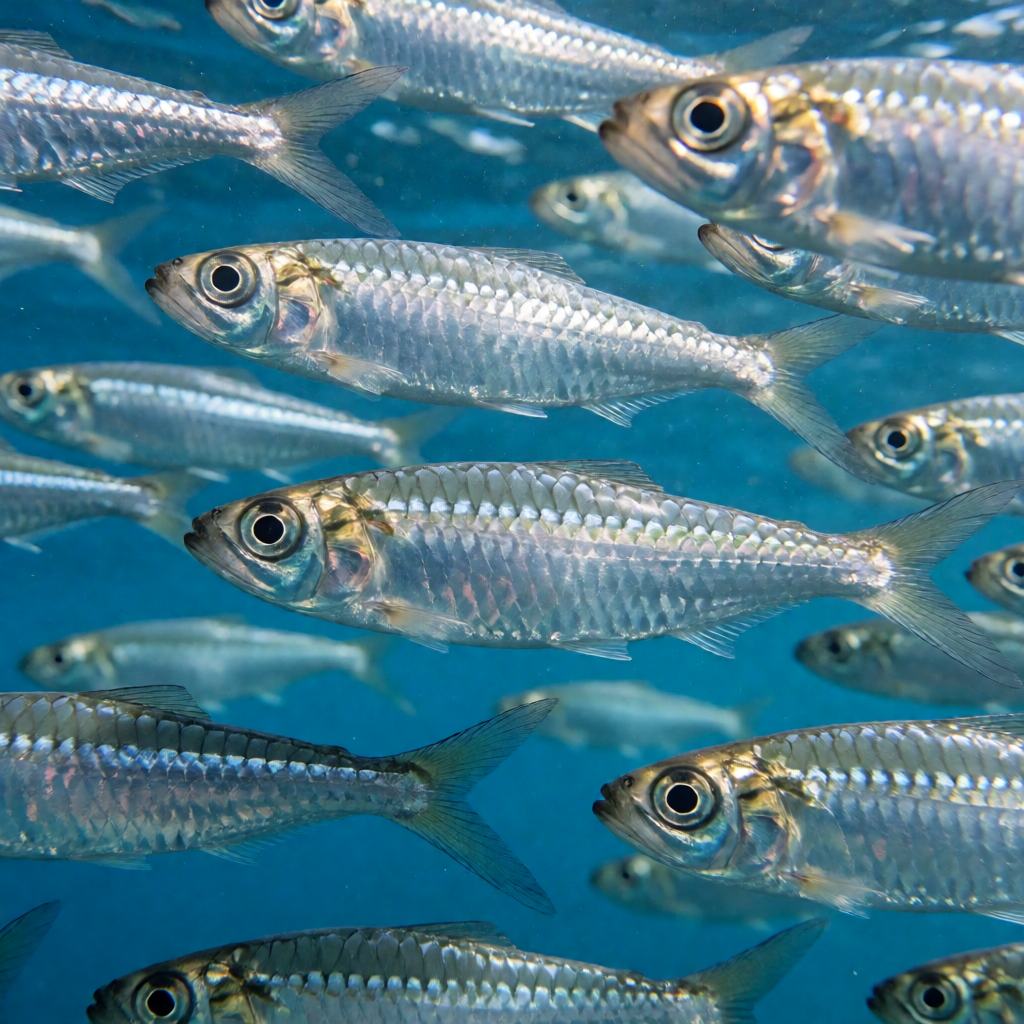
The main food is small fish. Sardines, anchovies and mackerel are all taken. Squid and flying fish are eaten too.
The bird dives from 30 to 100 m up. It hits the water at up to 97 km an hour. Special air sacs protect the head and neck.
The bird can swim under water with its wings. It often hunts in a group of 200 or more birds. Such a group can drive a shoal to the surface.
Three eggs on bare rock
The breeding cycle
Pairs stay together for more than one season. The male performs a display with his blue feet. He lifts each foot slowly in front of the female. The female lays 1 to 3 eggs on the ground.
Both parents keep the eggs warm. That job lasts 41 to 45 days. Both birds also cover the chicks with their feet. The young can fly at about 3 months.
Many pairs raise more than one chick. The birds live 17 to 20 years in the wild.
Least Concern
Conservation
The IUCN gives this bird a rating of Least Concern. The overall numbers appear to be steady. Nesting groups sit on a small number of islands.
Rats and cats take eggs and young birds. Fishing nets drown some adults each year. Warm sea events can cut the food supply.
In poor years many chicks starve. The birds are protected inside the Galapagos park.
Quick hits
Five things to remember
- The blue colour comes from pigments in the fish it eats.
- A healthier bird has brighter feet.
- It can stay under water for several seconds.
- A diving bird can hit the sea like a small missile.
- Both parents shade their chicks with their webbed feet.