 By st20113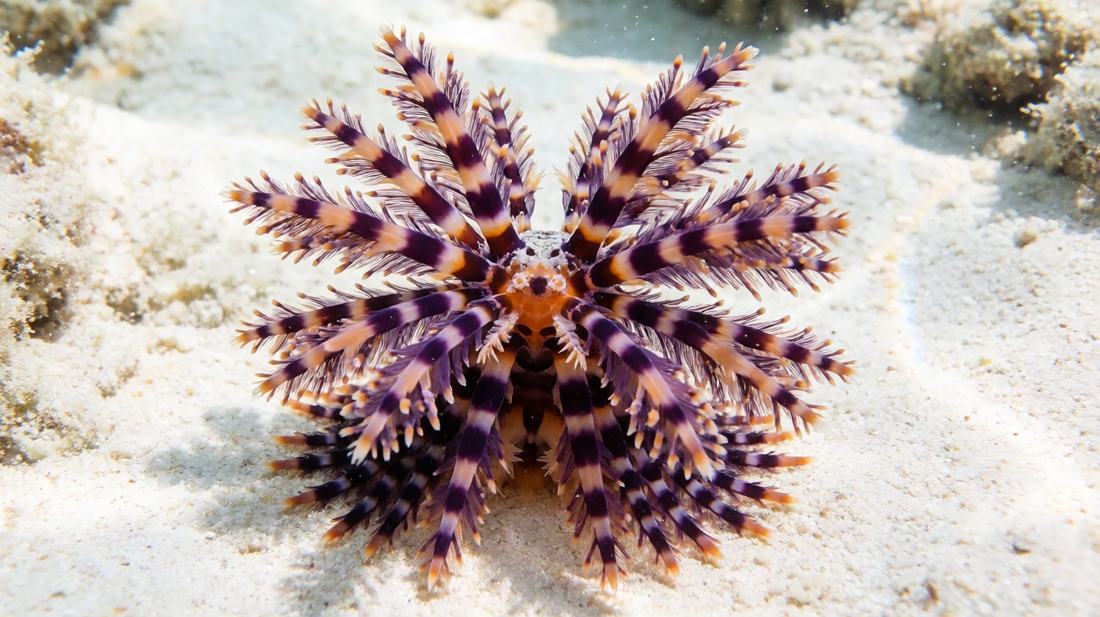
Myxicola infundibulum | Slime Tube Worm
Species Profile · Sabellidae
Slime Tube Worm
A marine worm that builds a soft tube in the seabed and spreads a banded fan of a hundred tentacles to feed and breathe.
No IUCN rating
Tube
Fan
Tentacles
Eyes
Retreat
Rating
The Slime Tube Worm
A fan in the mud
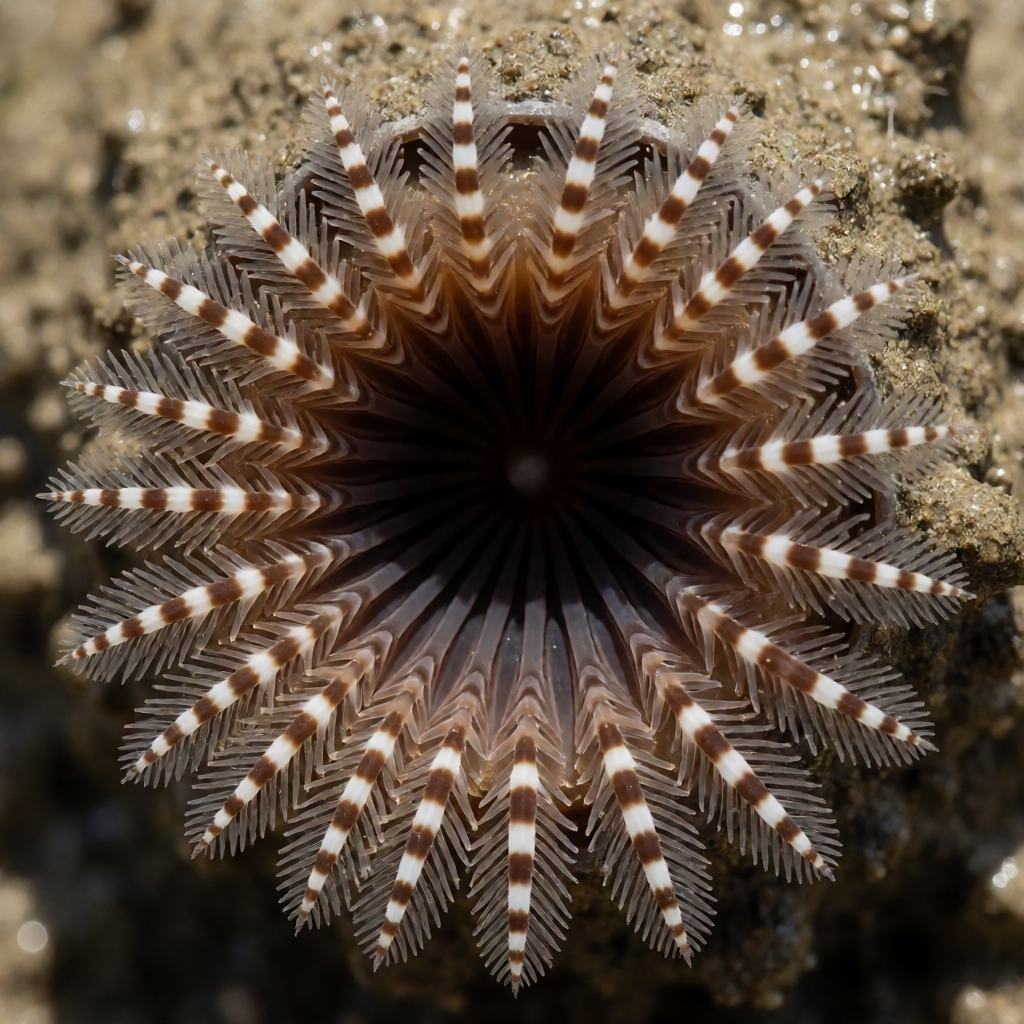
This sea worm lives inside a soft tube it builds in mud. A crown of fine tentacles spreads out from the tube mouth. The tentacles are banded in brown, purple and orange.
They form a round fan like a small flower. The worm uses them to catch food and to breathe. It can pull the whole fan inside in an instant.
It then releases a cloud of thick slime. That slime makes the tube very hard to grip.
Family tree
Sabellidae, the fan worms
Myxicola infundibulum is its Latin name. The worm sits in the family Sabellidae. Those worms are called fan worms or feather duster worms.
It belongs to the group of bristle worms. That group also holds the earthworms and the leeches. Its nearest kin live in the same sea floor mud.
A Lugworm lives in the same mudflats. Both worms build a burrow and feed on the tide.
20 cm of soft tube
How to tell one
The tube may reach 20 cm long. The worm inside is longer than its tube. The body is divided into many segments. Each segment carries a pair of small bristled feet.
The head carries a fan of up to 100 tentacles. Each tentacle holds tiny side branches. Those branches give the fan its feathered look. The fan is 4 to 6 cm across.
The worm has no eyes and no jaws. It cannot bite even when it is handled. Its body is soft and easily damaged.
1
2
3
Soft mud below the tide line
Where it lives
This worm lives in soft mud and fine sand. It builds its tube below the low tide line. It is found from shallow water down to deeper ground.
It needs water that is not too rough. The worm often forms dense groups. Dozens of fans may sit within a small patch.
It is found in the north Atlantic and the Mediterranean. It also turns up in sheltered bays elsewhere.
Particles in the water
What it eats
The worm feeds on tiny particles in the water. It catches them with the fine branches on its tentacles. Plant cells, animal eggs and small larvae are all taken.
The hairs on the branches move the food down. It travels along a groove to the mouth. The worm can sort the particles as they arrive.
Large grains are rejected and dropped. The fan also takes in oxygen from the water.
Eggs and sperm released together
The breeding cycle
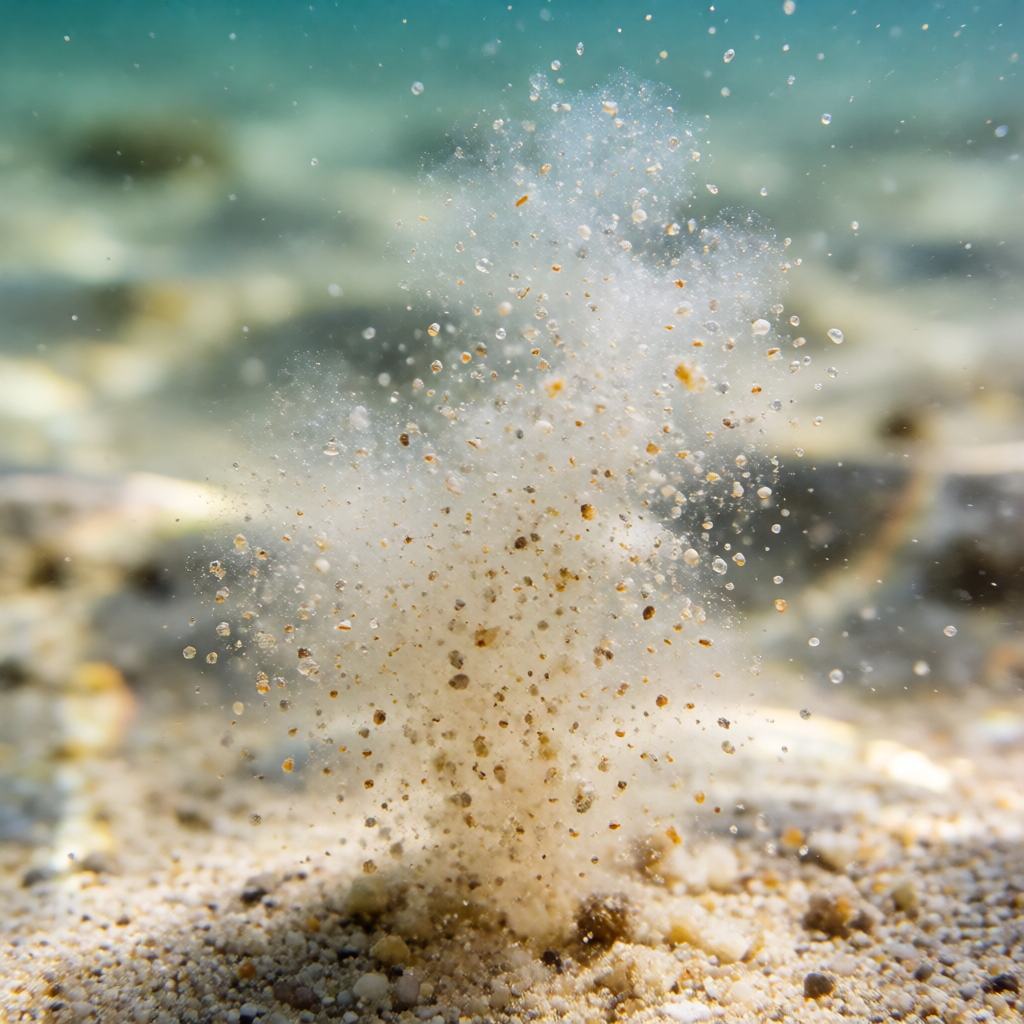
Males and females live in separate tubes. They release eggs and sperm into the sea. The release happens at the same time each year.
That timing raises the chance of fertilisation. The young swim freely at first. They are tiny and covered in fine hairs.
After some weeks they settle on the sea floor. Each one builds a tube of its own. A new tube starts small and grows with the worm.
No IUCN rating
Conservation
No IUCN rating exists for this worm. It has not been checked against the global rules. It is common in suitable mud in many seas.
Dredging is the main risk to its beds. Trawling breaks the fine tubes. Pollution and waste also affect it.
Coastal building can smother its habitat. No special protection is in place.
Quick hits
Five things to remember
- It can pull its fan inside in less than a second.
- It releases so much slime that the tube becomes slippery.
- The fan carries up to 100 tentacles.
- It has no eyes and no jaws at all.
- Its slime is being studied for use in medicine.