 By st20113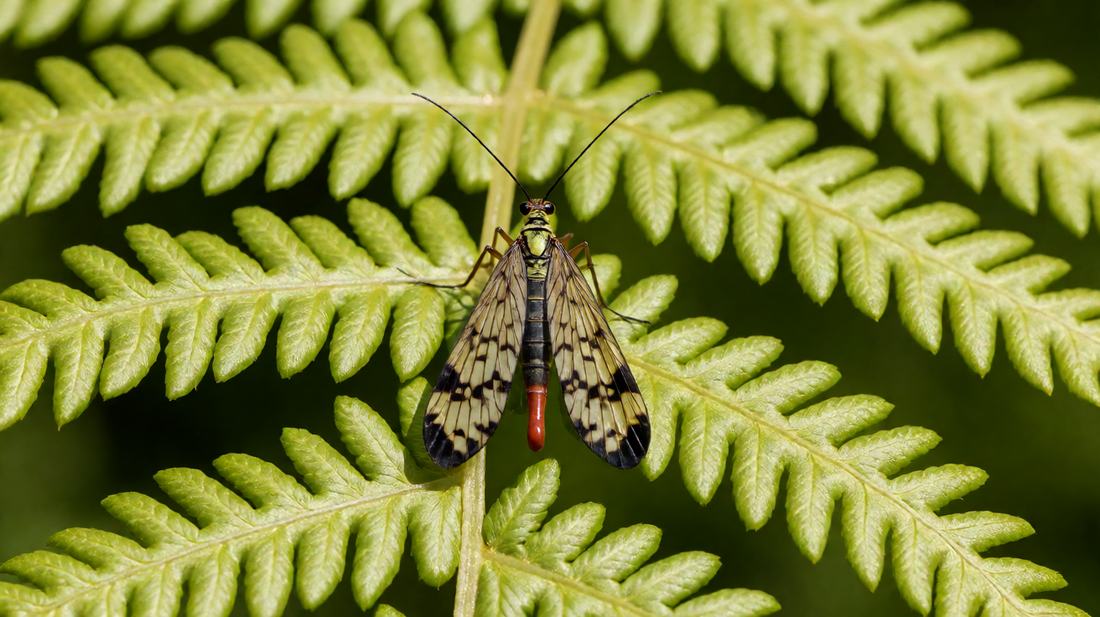
Panorpa communis | Scorpionfly
Species Profile · Panorpidae
Scorpionfly
A thin winged insect of hedges and nettle beds whose curved tail cannot sting and whose closest relatives turn out to be fleas.
A harmless insect with a tail like a scorpion and fleas for cousins
Length
Tail
Wings
Gift
Larvae
Family
The Scorpionfly
A harmless tail like a scorpion
This insect has a tail like a scorpion. The curved tail cannot sting at all. It belongs to a very old order of insects. Fleas are its closest relatives.
Family tree
Mecoptera, Panorpidae
The scorpionfly is a small insect. Its name is Panorpa communis. Fleas share this branch of the family tree. A thin winged relative is the Green Lacewing.
15 mm with a curved tail
How to tell one
The body is thin and yellow brown. An adult is about 15 mm long. Two pairs of narrow wings rest on the back. Dark marks sit near the wing tips.
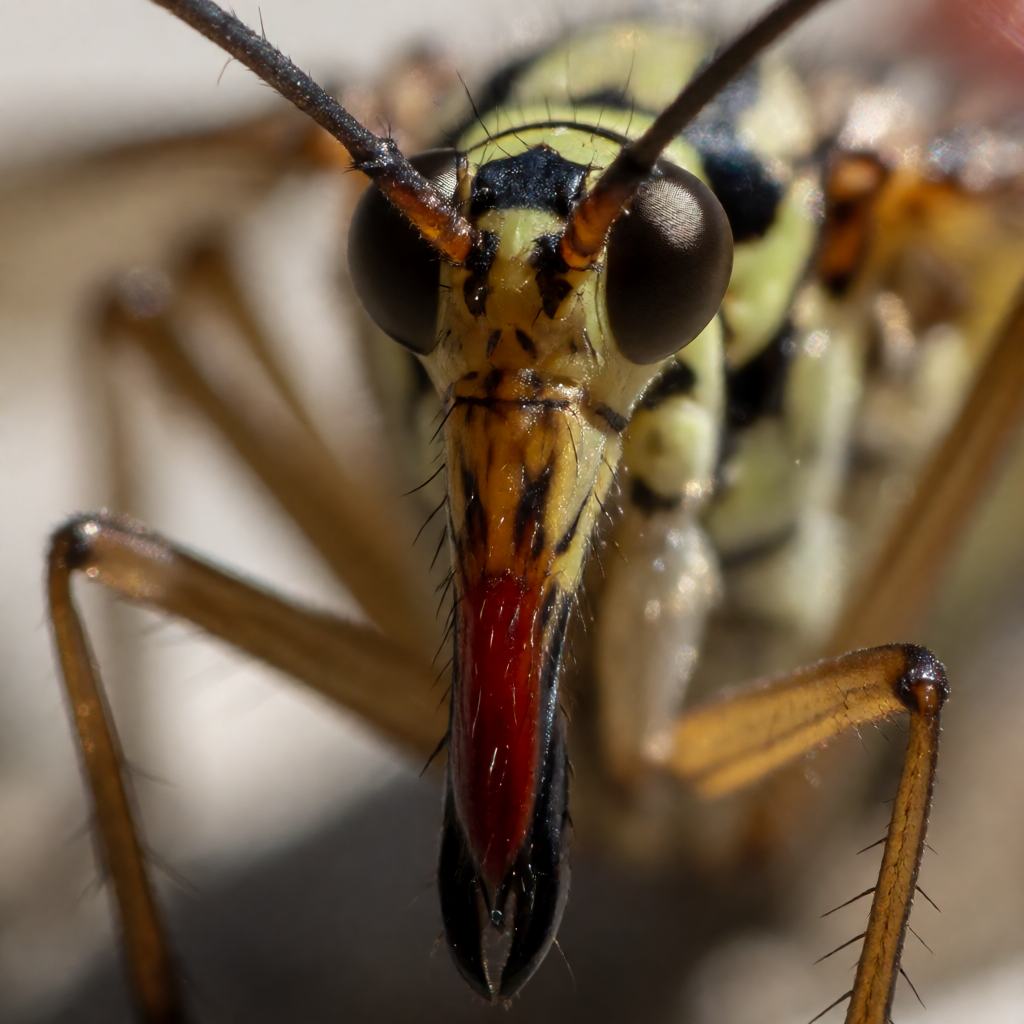
The head has a long beak. The jaws are tiny and sit at the tip. Males have a thick curved tail.
1
2
3
Hedges and nettle beds
Where it lives
You find it in hedges and nettle beds. It likes damp woodland edges. It rests on leaves in summer.
Adults appear from May to September. The larvae live down in the soil. They need soft ground and dead leaves.
Dead insects and fruit
What it eats
Adults eat dead insects and fruit. They also drink nectar from flowers. Some steal food from spider webs.
They move in while the spider is busy. The larvae eat dead insects in soil. They help to clear the ground.
A gift for the female
The breeding cycle
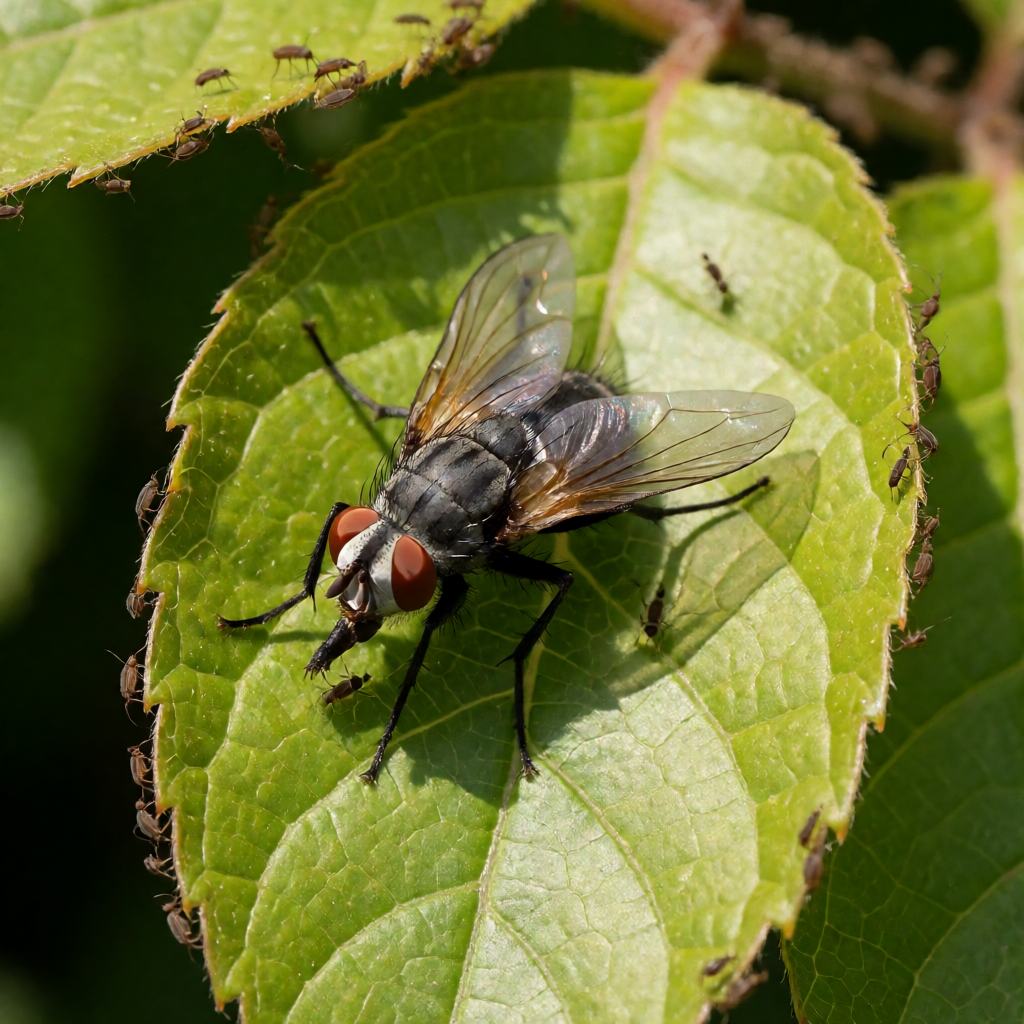
The male offers a gift to the female. It may be a dead insect. Or it may be a ball of saliva.
The female picks the best gift giver. Eggs are laid in damp soil. The larvae take a year to grow.
Pesticides and hedgerow loss
Conservation
These insects have no Red List entry. Pesticides reduce their insect prey. Hedgerow loss removes their shelter.
Yet they remain common in many places. Thick nettle patches suit them well. Leaving wild corners helps them survive.
Quick hits
Five things to remember
- The tail looks scary but cannot sting.
- The male may offer a ball of spit.
- Fleas are close cousins of this insect.
- It can give off a bad smell.
- It cannot fly far in one go.