 By st20113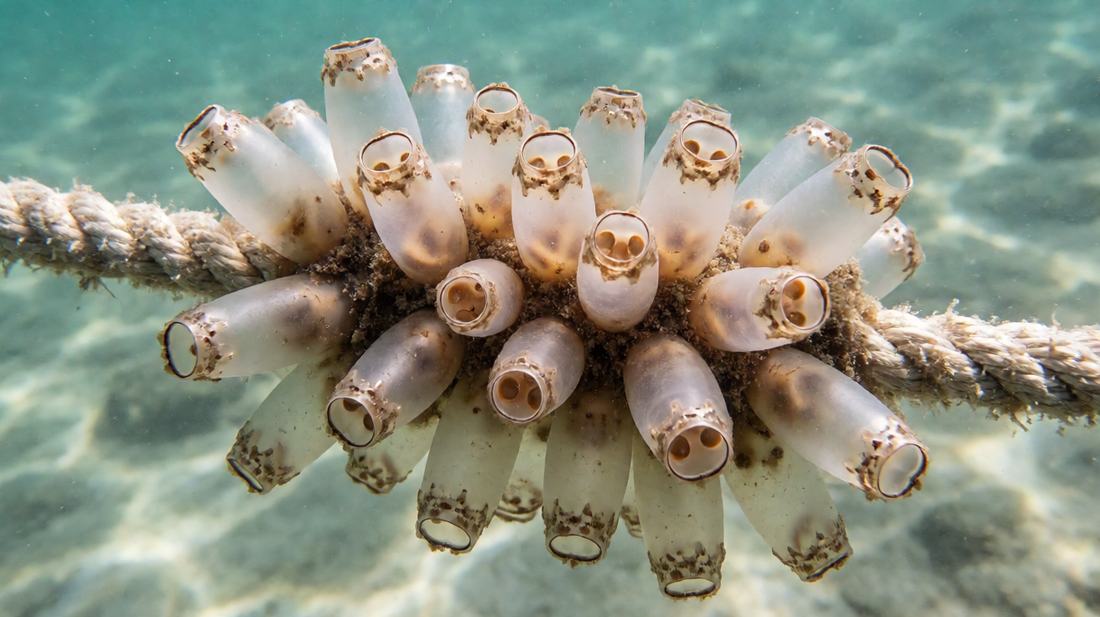
Ciona intestinalis | Vase Sea Squirt
Species Profile · Cionidae
Vase Sea Squirt
A soft see through animal of shallow coastal water whose young look like tadpoles and carry a stiff rod like a backbone.
A see through tube animal whose young carry a stiff rod like a backbone and then lose it
Height
Depth
Siphons
Free swimming stage
Genome read
Family
The Vase Sea Squirt
A backbone that swims away
This animal looks like a small, soft vase. It is fixed to a rock or a rope. Two openings sit at the top.
Water flows in one and out the other. It is a close relative of backboned animals.
Family tree
Ascidiacea, Cionidae
The vase sea squirt belongs to the class Ascidiacea. Its scientific name is Ciona intestinalis. Sea squirts sit inside the phylum Chordata.
Around 2000 species live in the sea. A relative from the same phylum is European Bullhead. The link sounds odd, but both animals carry a stiff rod at some stage of life.
15 cm and two siphons
How to tell one
The body is a soft tube, 4 to 15 cm tall. It is pale and see-through when young. The outer coat is called the tunic. That coat holds a material close to plant cellulose.
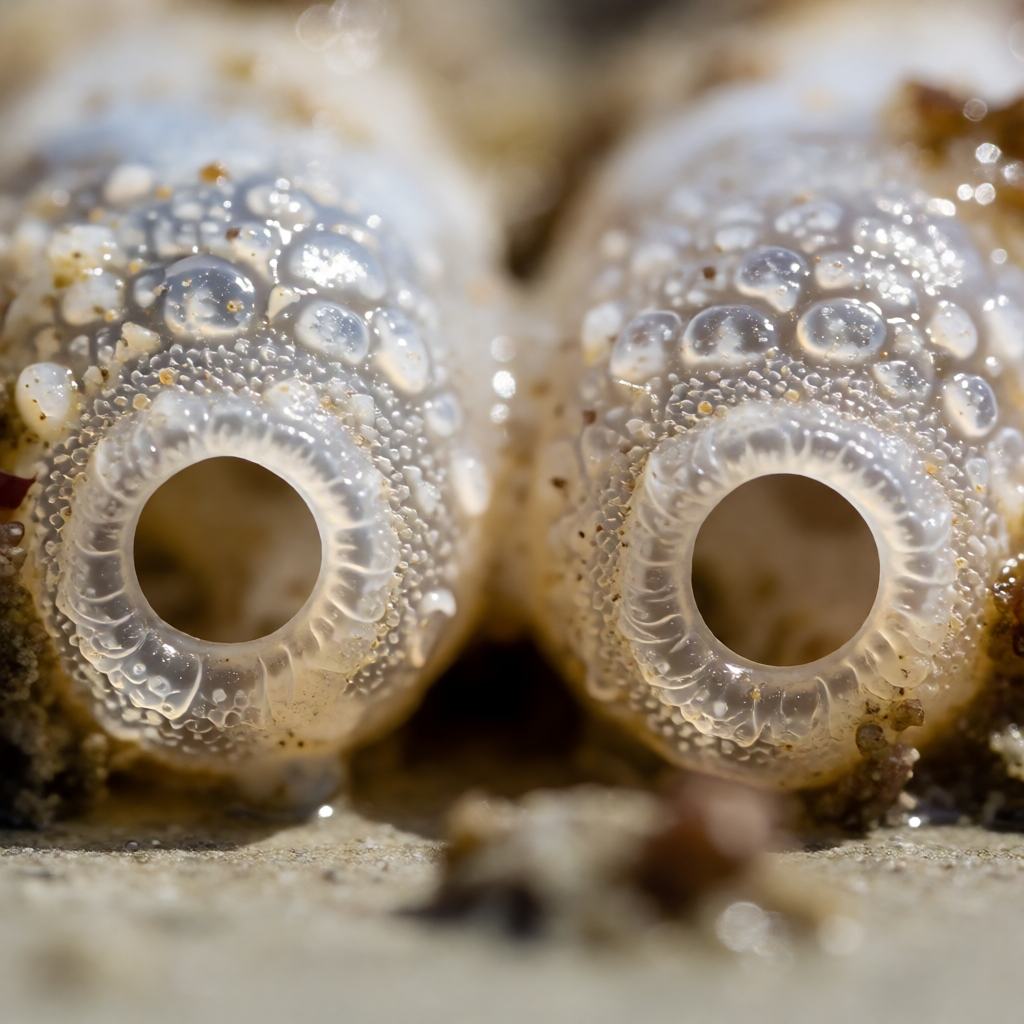
Two openings, or siphons, sit at one end. One takes water in and one lets it out. The animal has no head and no limbs.
1
2
3
Shallow coastal water
Where it lives
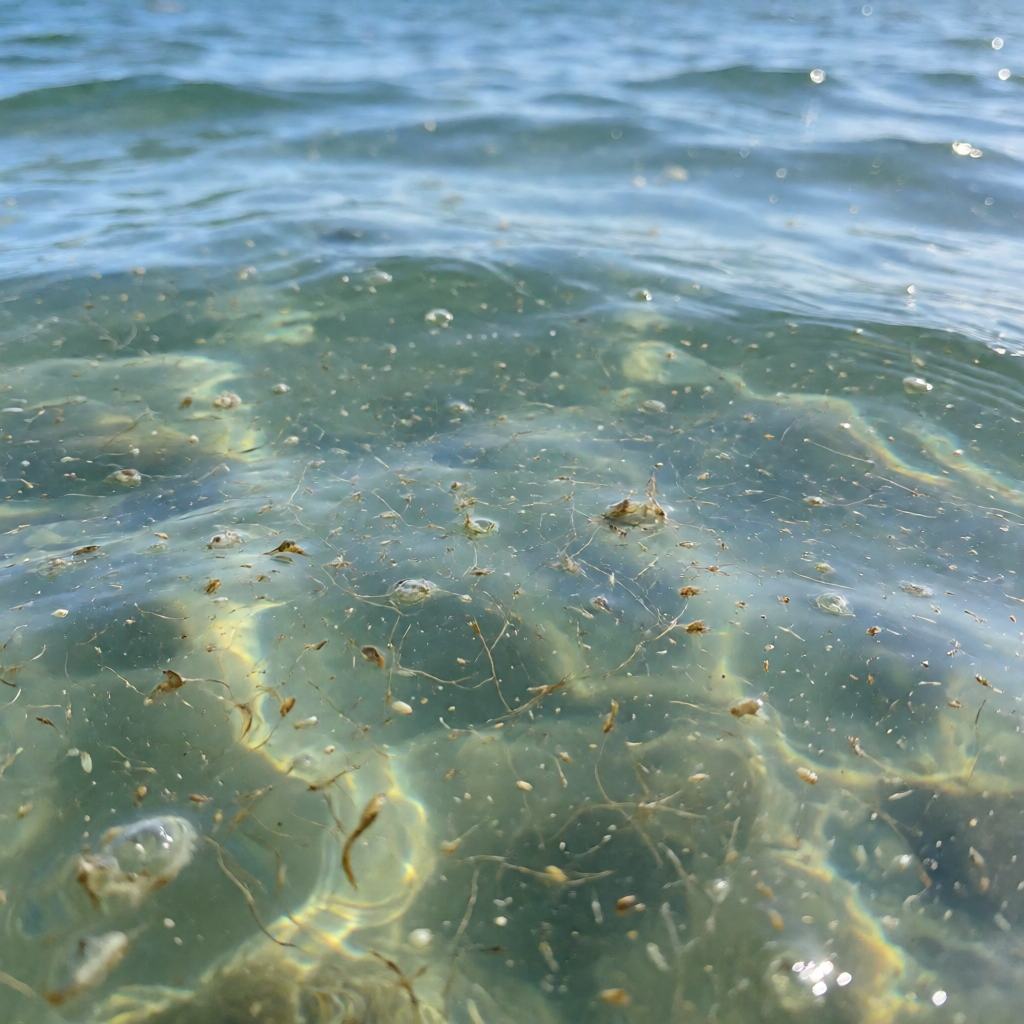
It lives in shallow coastal water. It can reach 100 m down but prefers less. Rocks, shells, piers and ropes all do.
It grows fast on ships and farm cages. It tolerates dirty, busy harbours.
Plankton caught in a mucus net
What it eats
The animal is a filter feeder. Water is drawn in through the upper siphon. A mucus net inside traps tiny plankton.
The net is then rolled up and swallowed. The strained water leaves through the lower siphon. Even a small animal can clear a good deal of water each day.
A larva with a tail and a rod
The breeding cycle
Every adult makes both eggs and sperm. It sheds them into the open water. A larva hatches with a tail and a stiff rod. That rod marks it as a chordate.
The larva swims for about 1 day. It then sticks to a surface and loses its tail. The body grows into the vase shape.
Common, and a fouling pest
Conservation
This species is not on the IUCN Red List. It is common around the world. In some ports it counts as a fouling pest.
Its genome was read in 2002, so labs study it closely. No protection is needed for this animal.
Quick hits
Five things to remember
- Its young look like tiny tadpoles with a tail.
- The larva sheds its tail within a day of settling.
- Its coat holds a fibre close to plant cellulose.
- It needs 2 openings to pump water through its body.
- Marine scientists use it as a model for early animals.