 By st20113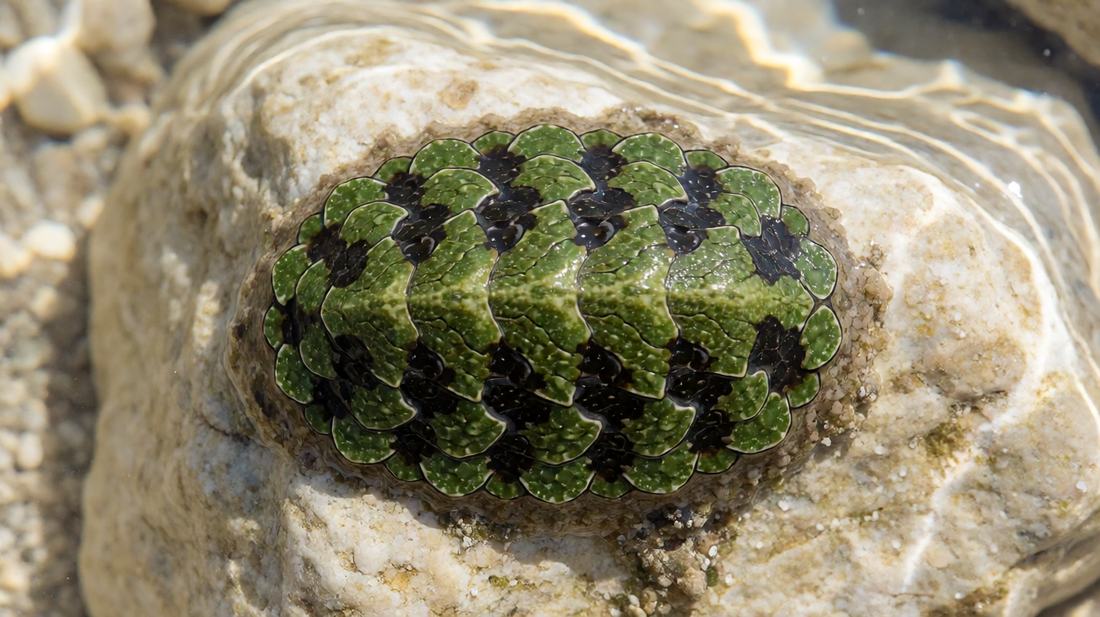
Chiton tuberculatus | West Indian Green Chiton
Species Profile · Chitonidae
West Indian Green Chiton
A flat grazing mollusc of warm rocky shores that clamps onto stone with a muscular foot and rasps algae away with iron coated teeth.
A flat shellfish with 8 plates and iron coated teeth
Length
Shell plates
Teeth
Class
Zone
Feeding
The West Indian Green Chiton
A flat shellfish in 8 plates
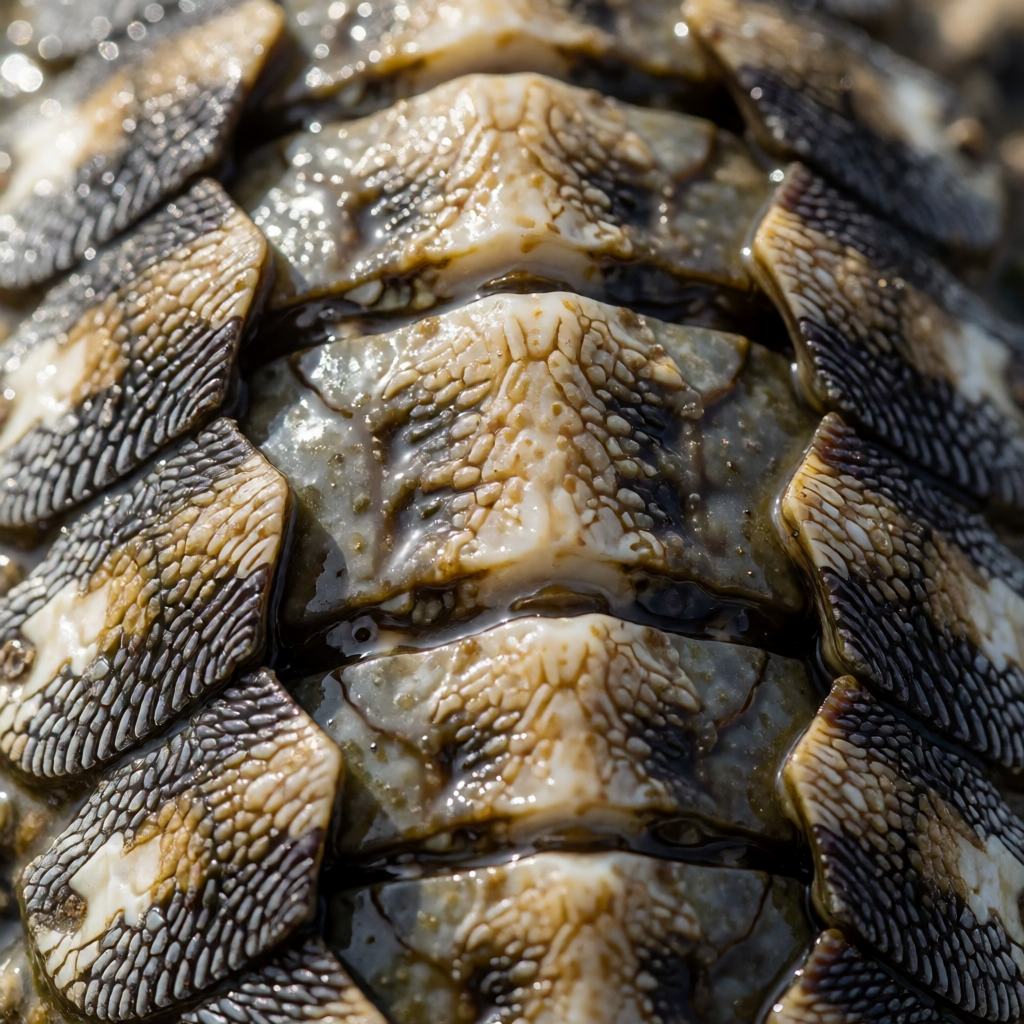
The West Indian Green Chiton is a flat shellfish of warm rocky shores. Its back carries 8 hard plates in a row. The plates fit together like tiles on a roof.
Around them sits a thick leathery band. The animal clings to rock with a strong flat foot. It grazes algae from the stone at night.
Family tree
Polyplacophora, Chitonidae
The species sits in the class Polyplacophora. Its family is the Chitonidae. The class holds about 1,000 species in all. It shares the phylum with the Common Whelk.
Both animals are molluscs with a soft body. A chiton differs in having 8 separate shell plates. Those plates let the body bend over rough stone.
8 plates and a leathery band
How to tell one
An adult measures about 6 cm in length. The 8 plates are dark green with lighter marks. The band around them is tough and grainy. The foot underneath is a broad flat muscle.
The mouth carries a ribbon with many rows of teeth. Those teeth are coated with hard iron minerals. The animal can hold fast against strong waves.
1
2
3
Warm rocky shores and breaking waves
Where it lives
The species lives on rocky shores in warm seas. It sits in the intertidal zone where waves break. It favours rough stone with plenty of cracks. It also settles on old shells and harbour walls.
It can survive short spells out of the water. The animal returns to the same resting spot each day. Clean water with strong wave action suits it best.
Algae scraped from the rock
What it eats
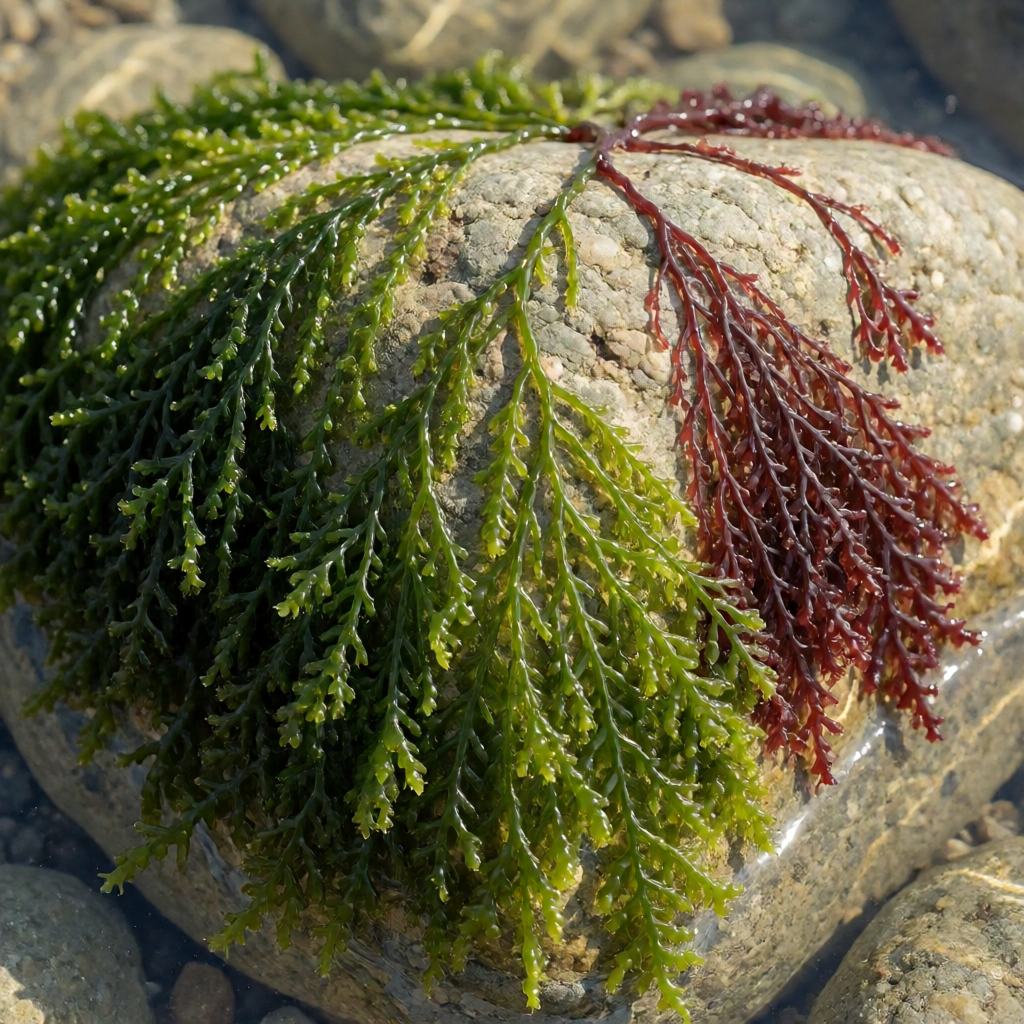
The animal rasps algae from the rock surface. It uses a ribbon of teeth called a radula. Iron minerals in the teeth make them very hard. The teeth wear down and are replaced as the animal grows.
It feeds mostly in darkness. Small animals on the rock are taken along with the algae. Feeding marks stay visible on the stone.
Free swimming larvae
The life cycle
The sexes are separate in this species. The female releases eggs into the sea water. The male releases sperm at the same time. The fertilised egg becomes a free swimming larva.
That larva drifts for some weeks before settling. It then changes into the adult form on the rock. Young animals grow slowly and live for several years.
Oil spills and coastal building
Conservation
The IUCN Red List does not cover this species. Pollution and oil spills harm shore animals of this kind. Coastal building work removes the rough rock it needs. Collectors take shells for the souvenir trade.
Warmer seas may drive the species into deeper water. Protected shores keep populations in good condition. Its hard teeth are studied for new materials.
Quick hits
Five things to remember
- The 8 plates let the animal roll into a ball when pulled off a rock.
- Its teeth are among the hardest materials made by any living thing.
- The animal can clamp down so hard that a knife will not lift it.
- The plates are held by a band that may carry fine bristles.
- It returns to the same hollow in the rock after feeding.