 By Iris
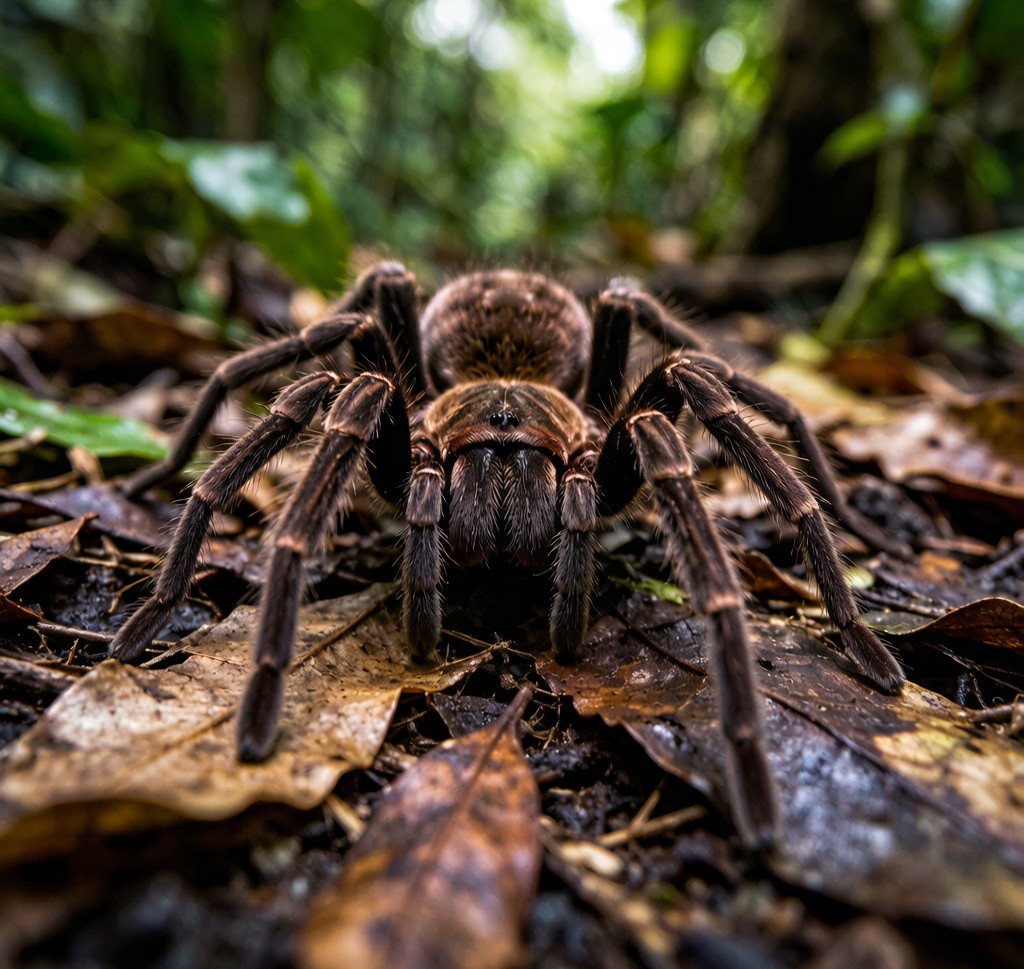
Theraphosa blondi | Goliath Birdeater
Species Profile · Theraphosidae
Goliath Birdeater
A burrowing tarantula that throws hairs, eats frogs and can live 30 years.
Not evaluated
Leg span
Weight
Fangs
Range
Egg sac
Lifespan
A spider the width of a plate
The heaviest spider in the world
One spider with a 30 cm leg span sits on the floor of the Amazon rainforest. Its body can weigh 175 grams. That makes it the heaviest spider alive today, by mass and by span.
The name promises birds. Insects, worms and frogs fill most of the menu instead. Fangs longer than 2 cm fold beneath the body, out of sight.
A bite hurts about as much as a wasp sting. Because the venom is weak, a person feels only swelling and local pain at the bite. Amazon forest gives the spider its range, because the trees decide where it can live.
One family, one genus
Where the tarantula sits
The spider belongs to the tarantula family and carries the name Theraphosa blondi. Tarantulas form one large group of big, hairy spiders, though most stay far smaller. Not every tarantula grows this heavy.
A Mexican Red-knee Tarantula stays far smaller and lives in dry scrub. Both share the same body plan, though one needs rainforest and the other needs dry ground. No other spider reaches this mass.
Mass settles the ranking more cleanly than leg span ever does. An old engraving of the spider eating a hummingbird fixed the common name for good. Maria Sibylla Merian drew that scene, and the drawing carried the name across Europe.
Hairs, fangs and bulk
What the body can do
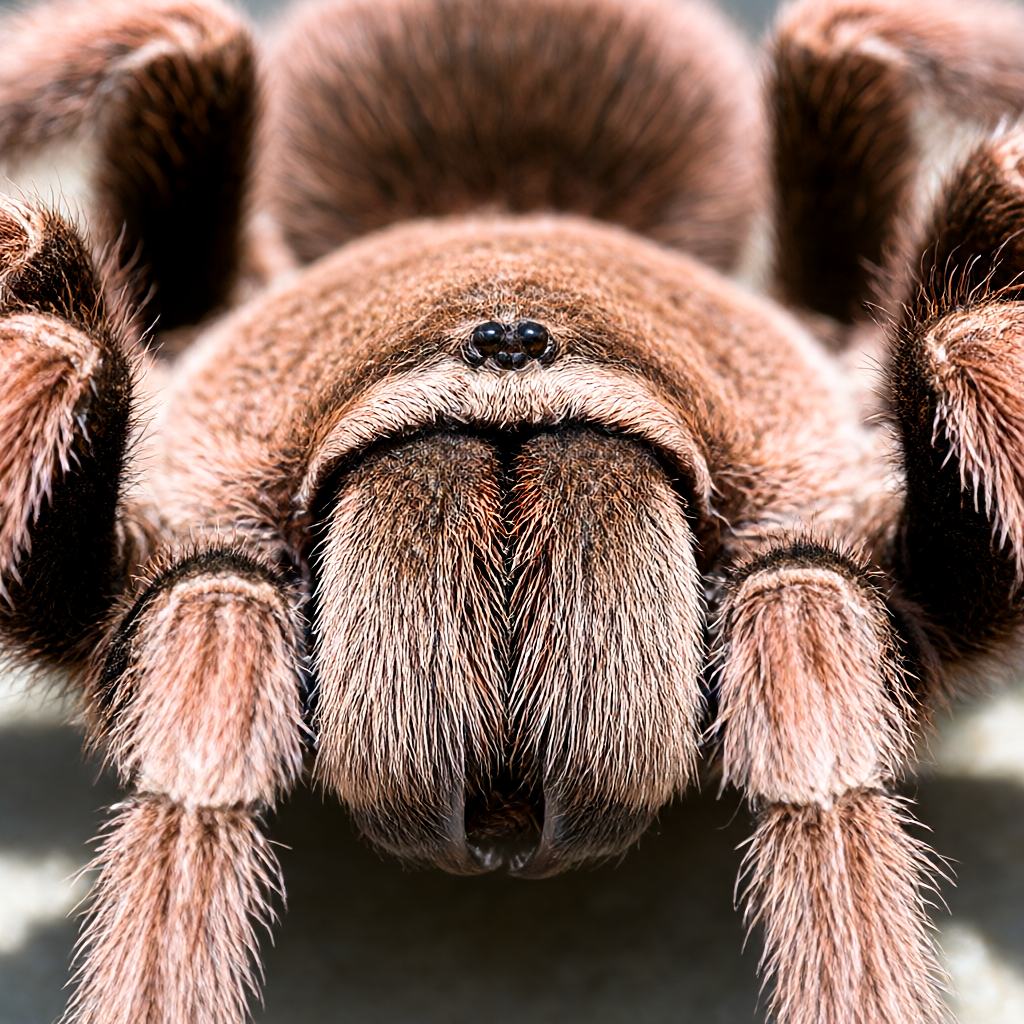
Adults spread 28 to 30 cm across the legs. Heavy females may pass 175 grams. Hair covers the body and the legs in a dense coat. Those hairs come loose at a touch, and the spider can throw a cloud of them at an attacker.
Barbed points on every hair catch in skin and in the nose. Barbed hairs burn for a while, though they do no lasting harm to skin. Fangs fold downward, and each one passes 2.5 cm in length. Cornered, the spider rears up and shows those fangs, although the bite stays mild.
That threat display shows two needles that look worse than they are. Pain from the bite ranks with a wasp sting, since the venom stays weak.
1
2
3
Burrows under the roots
Where it lives
The spider lives in the humid rainforest of northern South America. Brazil, Venezuela, Guyana, Suriname and French Guiana all hold it. Old growth forest suits it best.
Deep soil and heavy cover give the spider what it needs. Each animal digs a burrow under a root, a log or a rock. That burrow can run 1 m down, and it holds the air still and damp.
Burrows hide the spider from the wasps that hunt it, although some wasps still succeed. Clearance for cattle, crops and roads destroys the forest, so the animals end up cut off in small patches of woodland. Where the trees go, the spider goes too, since nothing brings it back.
Frogs, worms and mice
What it eats
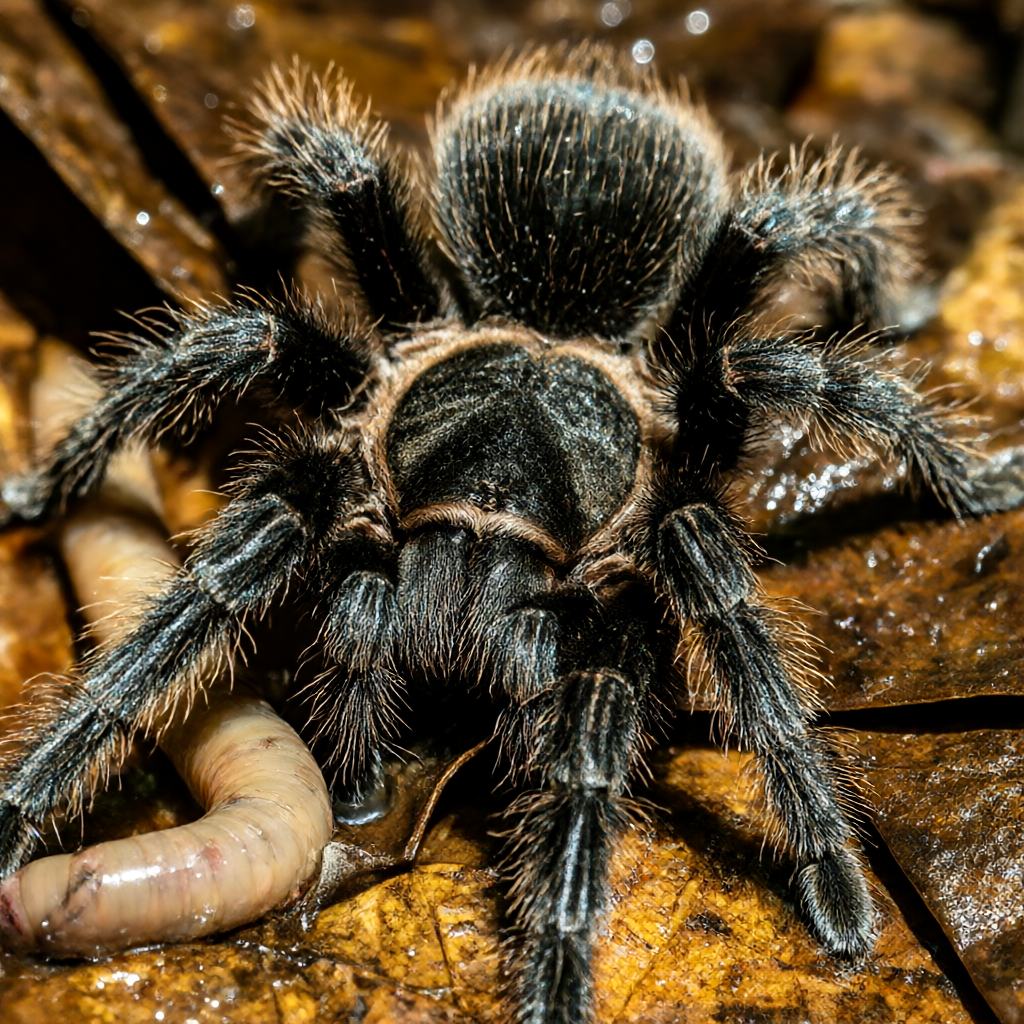
Most of the diet is insects, worms and other arthropods. Frogs, mice and small lizards go down as well. Small birds stay possible, though the spider seldom catches one. Bird eating oversells the habit, though the name has stuck for centuries.
Prey size depends on the strength of the spider, not on the species of the prey. Hunting happens at the mouth of the burrow. A touch on the silk brings the spider out, and the prey rarely gets away. That hummingbird in the old plate was real, yet such a meal stays rare.
Tree living cousins such as the Gooty Sapphire Tarantula take their prey in the branches instead. Big meals come rarely.
Thirty years, one sac
The breeding cycle
Females can live 25 to 30 years in the wild. Males reach 3 to 6 years and die soon after maturity. Hooks grow on the front legs of a mature male. Those hooks hold the fangs of the female during mating.
After mating, a male wanders in search of females and rarely survives the search. She makes one egg sac a year, and it holds 100 to 200 eggs. The sac stays in the burrow, where she guards it against intruders. Young hatch after 6 to 8 weeks and leave for burrows of their own.
Because a female produces just one sac a year, a group that loses animals takes many years to recover. Siblings scatter into the leaf litter and dig alone. No care follows the young.
Not evaluated
Conservation
No one has assessed the spider for the IUCN Red List, so its official status stays Not evaluated. Forest loss is the main threat, because the animal needs old growth. Cattle ranching, crops and new roads all remove the forest it needs.
Cut off in small patches, groups lose the deep soil that keeps a burrow damp. Healthy forest holds the spider and cleared land holds none, so biologists read the animal as a sign of forest health. Collectors want young animals, yet the trade adds pressure to a slow breeder.
Slow breeding makes every single loss count for the group. Large blocks of forest matter more than a few protected animals. Fragments that stay connected keep the species, while isolated ones lose it.
Side by side
How It Compares
| Trait | Goliath Birdeater | Mexican Red-knee Tarantula |
|---|---|---|
| Leg span | 28-30 cm | about 15 cm |
| Weight | up to 175 g | about 15 g |
| Body | brown, heavy, hairy | black with orange knees |
| Home | Amazon forest burrow | Mexican dry scrub |
| Defence | throws barbed hairs | throws barbed hairs |
| Standing | Not evaluated | CITES Appendix II |
Common misreadings
What People Get Wrong
- Popular stories call the spider a bird eater, yet birds form almost none of its diet. Insects and worms fill the menu, and a hummingbird counts as a rare accident.
- Many keepers expect a mild tempered giant, but the hairs reach further than the fangs. A threatened spider throws barbed hairs first, and the itch lasts longer than a bite.
- Some guides give the bite real danger, while the venom mostly causes local swelling. A wasp sting hurts about as much, and the swelling passes without lasting harm.
Going further
Sources and Further Reading
Five things to remember
Quick hits
- One egg sac a year is the whole reproductive output.
- Females outlast males by 20 years or more.
- Barbed hairs fly before the fangs come out.
- An old drawing of a hummingbird named the species.
- Tarantula hawks hunt it, and those wasps grow huge.