 By st20113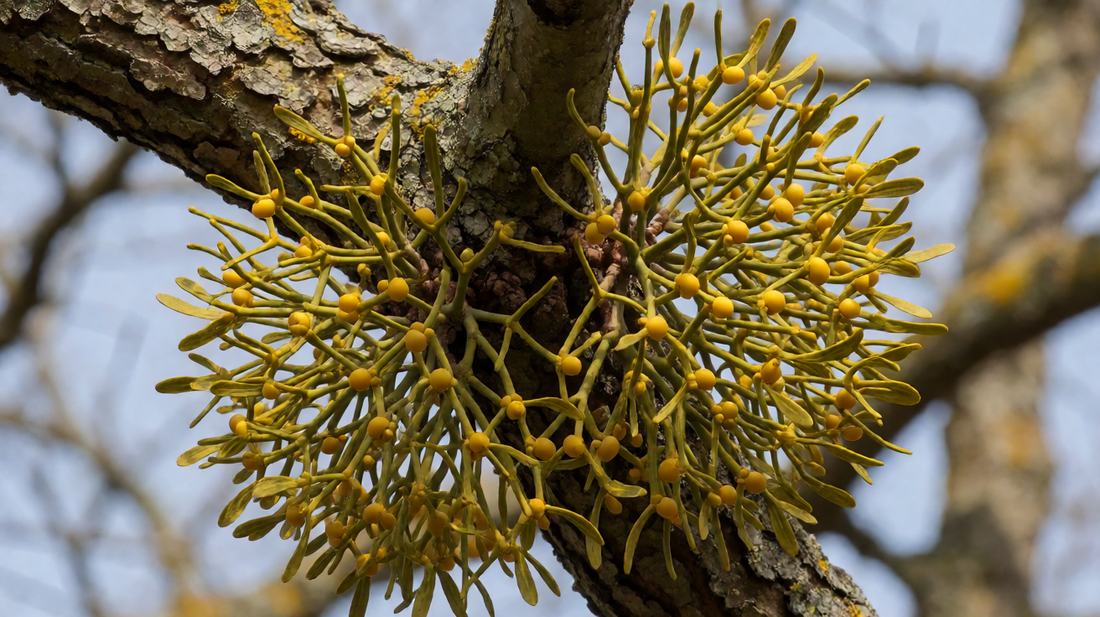
Loranthus europaeus | Yellow Mistletoe
Species Profile · Loranthaceae
Yellow Mistletoe
A bushy parasite of old oak branches that takes water from its host and sheds every leaf in winter unlike its white cousin.
A bushy parasite of oak branches that drops all its leaves in winter
Bush
Stems
Leaves
Berries
Host age
Family
The Yellow Mistletoe
A bushy parasite of old oak branches
The Yellow Mistletoe is a bushy parasite of oak branches. It is 1 of the few mistletoes native to Europe. It takes water and minerals from the tree it grows on. Unlike its white cousin, it drops all its leaves in autumn.
Its bare yellow stems and amber berries stand out in winter. It grows slowly and can live for many years. It is a striking sight on old oaks.
Family tree
Santalales, Loranthaceae
The Yellow Mistletoe belongs to the phylum Tracheophyta. Its class is the Magnoliopsida, the flowering plants. Its order is the Santalales. Its family is the Loranthaceae, the showy mistletoes.
Our plant shares the order with the Mistletoe of northern Europe. That plant stays green all year. Its berries are white and sticky. Our plant is bare in winter and its berries are yellow.
Both are parasites of trees. The family is large and mostly tropical.
50 cm of jointed stems
How to tell one
The bush grows about 20 to 50 cm across. Its stems are jointed and easy to break. They are yellow green in colour and carry no leaves in winter. Small leaves appear in spring and fall again in autumn.
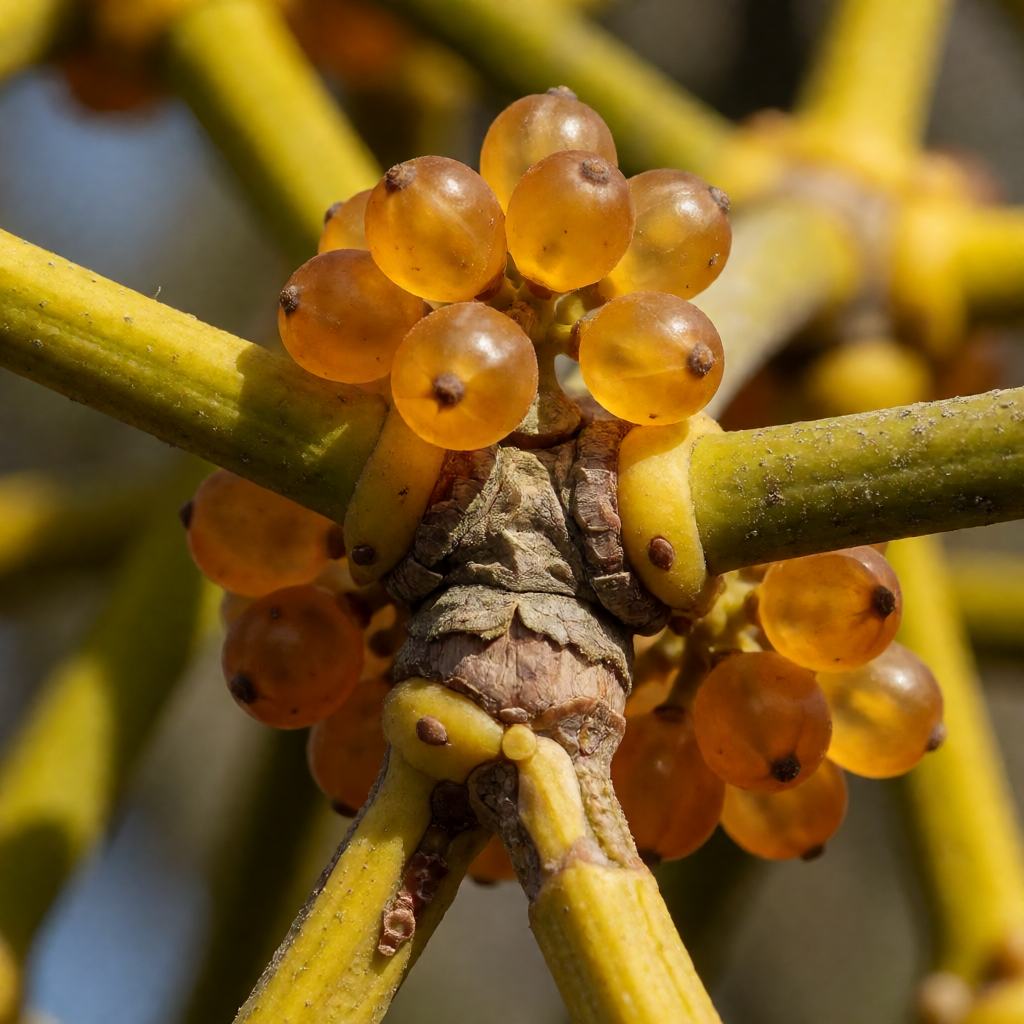
The plant holds no green leaves for half the year. Its flowers are small and greenish yellow. They grow in short spikes at the joints. The berries are oval and about 10 mm long.
They ripen to a clear amber yellow. Fine roots of the plant sit inside the oak branch.
1
2
3
Old oaks in warm dry woodland
Where it lives
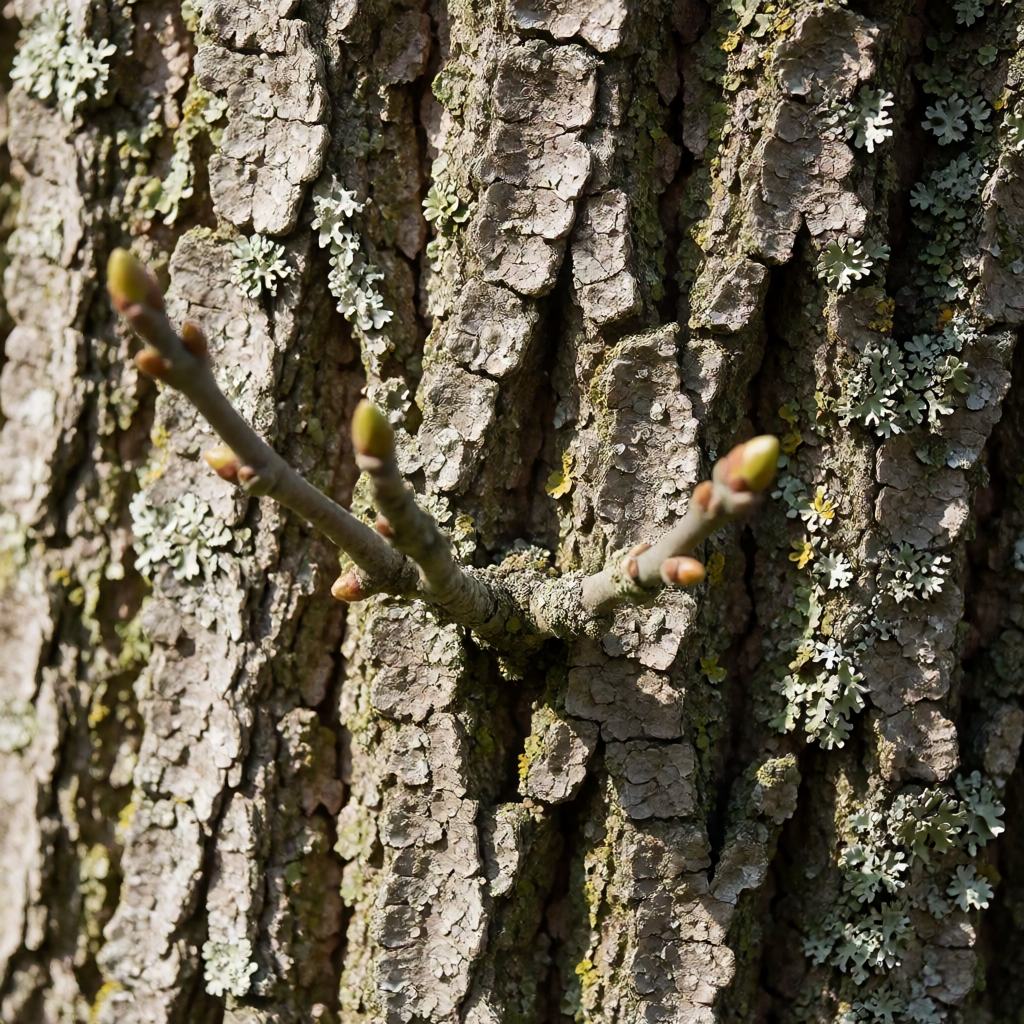
The species grows on the branches of old oaks. It is found in warm dry woodland across central Europe. It also grows on sweet chestnut in some places. It needs open woodland with plenty of light.
It prefers a warm summer and a mild winter. It is most common on trees of 2 or more centuries in age. It rarely grows on young trees. It dislikes deep shade and wet ground.
Heavy air pollution harms it. It is now rare at the northern edge of its range.
Water from the tree, food from sunlight
What it eats
The plant is a partial parasite. It makes some of its own food from sunlight. Its green stems carry out that work. It cannot get water from the ground.
Instead it takes water from the oak branch. Fine roots push into the wood of the host. They tap the water carrying tubes inside. The plant takes minerals with that water too.
It also builds sugar in its own green tissue. It stores water in its thick jointed stems.
Berries eaten by thrushes
The breeding cycle
The small flowers open in late spring. Insects visit them for nectar and pollen. The berries ripen in autumn. They stay on the bare stems through the winter.
Birds such as the mistle thrush eat them. The seed inside is covered in a sticky coat. The bird wipes the seed off on a branch. The seed sticks there and starts to grow.
It sends a small root into the oak. A new bush may take several years to appear.
Felling of old oaks
Conservation
The Yellow Mistletoe is not assessed by the IUCN. It has become rare in several northern countries. Its main need is old oak woodland.
Cutting old oaks removes its home. Clean woodland with no dead branches holds none. Air pollution has also reduced its numbers.
It is protected by law in a few countries. Some woodland trusts now plant seeds onto suitable trees. Old open woods with big oaks hold the most plants.
Quick hits
Five things to remember
- It is the only mistletoe native to much of central Europe.
- It loses all its leaves, unlike the white berried kind.
- Its seeds stick to a branch after a bird wipes them off.
- It takes water from the oak but makes its own sugar.
- Some plants live on the same branch for many years.