 By st20113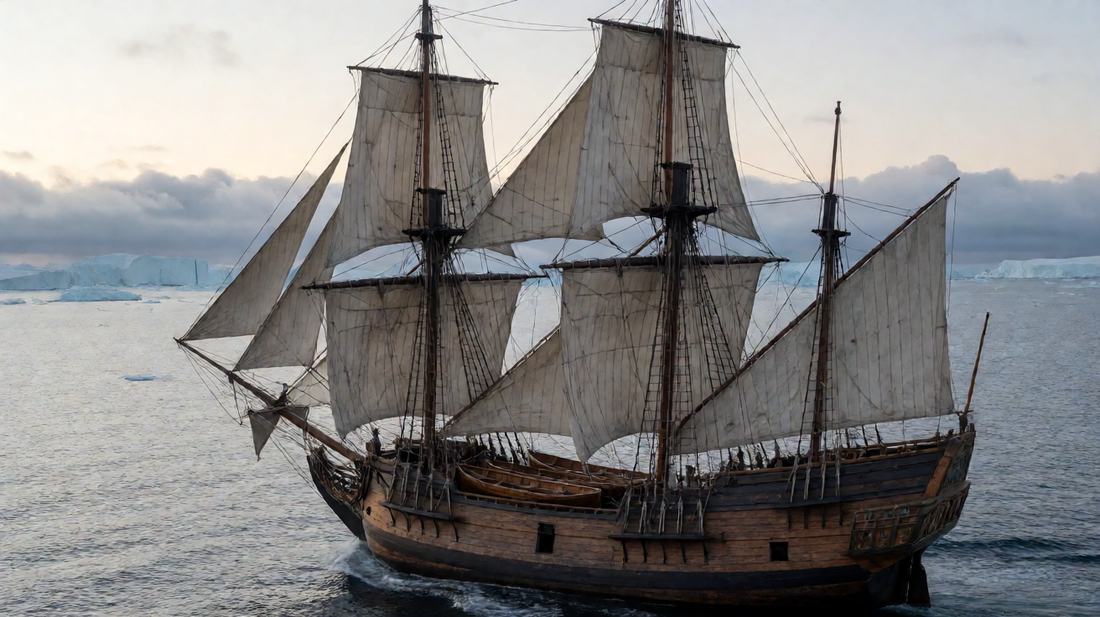
The Age of Whaling | Whaling Ships
Historical Profile · World oceans
The Age of Whaling | Whaling Ships
For two hundred years whaling lit the cities of the world, until cheap oil from the ground and empty oceans ended it.
c. 1700-1920
Period
US fleet
Crew pay
Oil replaced
Ban
The big picture
Introduction
For about two hundred years, from roughly 1700 to 1920, whaling was one of the great industries of the world. Ships sailed from New England, Britain, Norway and Japan into every ocean. They hunted whales for oil, bone and meat.
The trade lit the streets of the growing cities. It made fortunes. It also pushed some kinds of whale to the edge of dying out.
It gave us a body of writing and painting that has shaped how we picture the sea. The age ended only when the whales had almost gone, and when oil from the ground took the place of oil from the sea.
Setting
Historical Context
People have hunted whales for thousands of years. Old peoples caught them close to shore. Basque sailors were hunting whales in the Atlantic by the 11th century. But early whaling was coastal and small. Hunters used rowing boats and hand harpoons. They worked only in the season when the whales came near land.
Two things changed that. The first was the discovery that whale oil burned with a clean, bright light. That made it valuable for lamps in a world with no gas or power. The second was the ship. A strong sailing ship could stay at sea for years, carry the furnace for boiling oil, and hunt in the open ocean. From about 1700 the industry grew fast.
The north Atlantic was hunted out first. Whalers then rounded Cape Horn and moved into the Pacific. By the 19th century the Pacific was the centre of the trade. Ships worked the grounds off Chile, Japan, Australia and the Arctic. They often stayed out for three or four years at a time.
Turning points
Key Events
The early whalers of the 17th and 18th centuries hunted the slow, coastal right whale and the bowhead. These animals float when dead, which made them easy to handle. They carried a lot of oil and long plates of baleen. Baleen is the bendy strip used to stiffen corsets and umbrellas. So many were taken that the right whale almost went from the Atlantic. From about 1712 whalers in New England learned to hunt the sperm whale. It lives in deep water and swims fast. Fast, strong swimmers such as the sperm whale and the blue whale sink when they die. That made them much harder to catch and to cut up. Catching a swimming whale with a hand harpoon, from a small boat, in open water, was one of the most dangerous jobs of the age.
The industry peaked in the middle of the 19th century. In 1850 the United States had more than 700 whaling ships. The port of New Bedford was one of the richest towns in the country. Whale oil lit homes and oiled machines. Spermaceti, a waxy oil from the head of the sperm whale, was the finest lamp fuel and the best oil for fine machines. Then the trade fell. In 1859 the first oil wells were drilled in Pennsylvania. Kerosene from the ground did the same job as whale oil at a fraction of the price. At almost the same time, the American Civil War destroyed many whaling ships. A run of disasters in the Arctic ice crushed more.
The old sailing fleet was finished within twenty years. But whaling did not end. Norway invented the modern harpoon gun in the 1860s. Steam ships could chase and kill the fast whales that sailing boats could never catch. From about 1900 the industry moved to the Antarctic. Factory ships cut up the whales at sea. In the 20th century millions of whales were killed, far more than in the whole sailing age. Only in 1986 did most countries agree to stop commercial whaling.
1
2
3
Who held power
People and Powers
A whaling ship was a hard and crowded place. A large ship carried a crew of about thirty or forty men, packed into a small space for years. The captain was in charge of the ship and of the hunt. He could be a cruel master. Officers took a share of the profits. The crew was paid a smaller share, called a lay. A sailor might work three years and come home with almost nothing.
The crew was mixed. Many were young men from poor farm families. Many were recent arrivals from other lands. A large number were Black and Native American sailors. In the 19th century the American whaling fleet was one of the most mixed workplaces in the country. Whaling towns such as New Bedford and Nantucket drew people from all over the world. The work was built around the boats.
When a whale was seen, small boats were lowered and rowed toward it. The harpooner threw his iron. The whale often dragged the boat for hours. When the whale tired, it was killed with a lance. The body was towed back to the ship and cut up. Everything that could be used was used: oil, bone, and for the sperm whale the spermaceti and the ambergris found in its gut.
Everyday world
Daily Life and Society
Life at sea was dull and dangerous in equal measure. Sailors ate hard bread, salted meat and dried peas. They were often short of fresh food and water. Ships stopped at Pacific islands to take on water, fruit and vegetables. That contact brought disease to island peoples and changed their societies for good. The trips lasted years. A sailor might not see his family for a very long time.
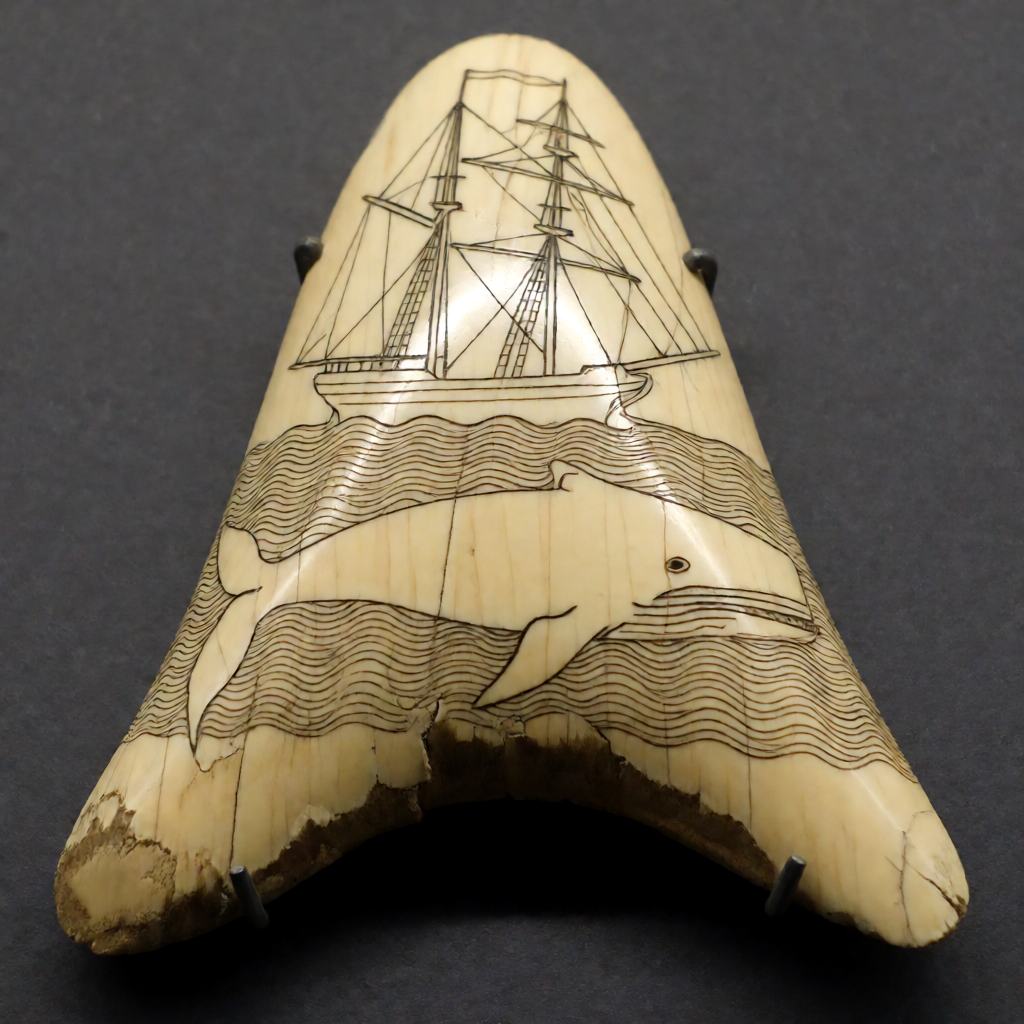
There was time for craft as well as work. Sailors carved whale teeth and bone into pictures and ornaments. The craft is called scrimshaw, and many of these small works are of real beauty. Island communities were drawn into the trade. In the Pacific, men were hired or forced onto ships as crew. Island ports became supply bases. In some places the arrival of a whaler meant trade and money.
In others it meant disease, violence and the loss of young men. The effect on the islands was mixed and often harsh. Whale goods went into daily life in ways that are easy to forget. Whale oil lit lamps and made soap and candles. Baleen stiffened umbrellas, corsets and brushes. Spermaceti made the finest candles and oiled watches and sewing machines. Ambergris, a rare substance from the sperm whale, fixed the scent in perfume and was worth more than its weight in gold.
Craft and ideas
Trade, Technology and Ideas
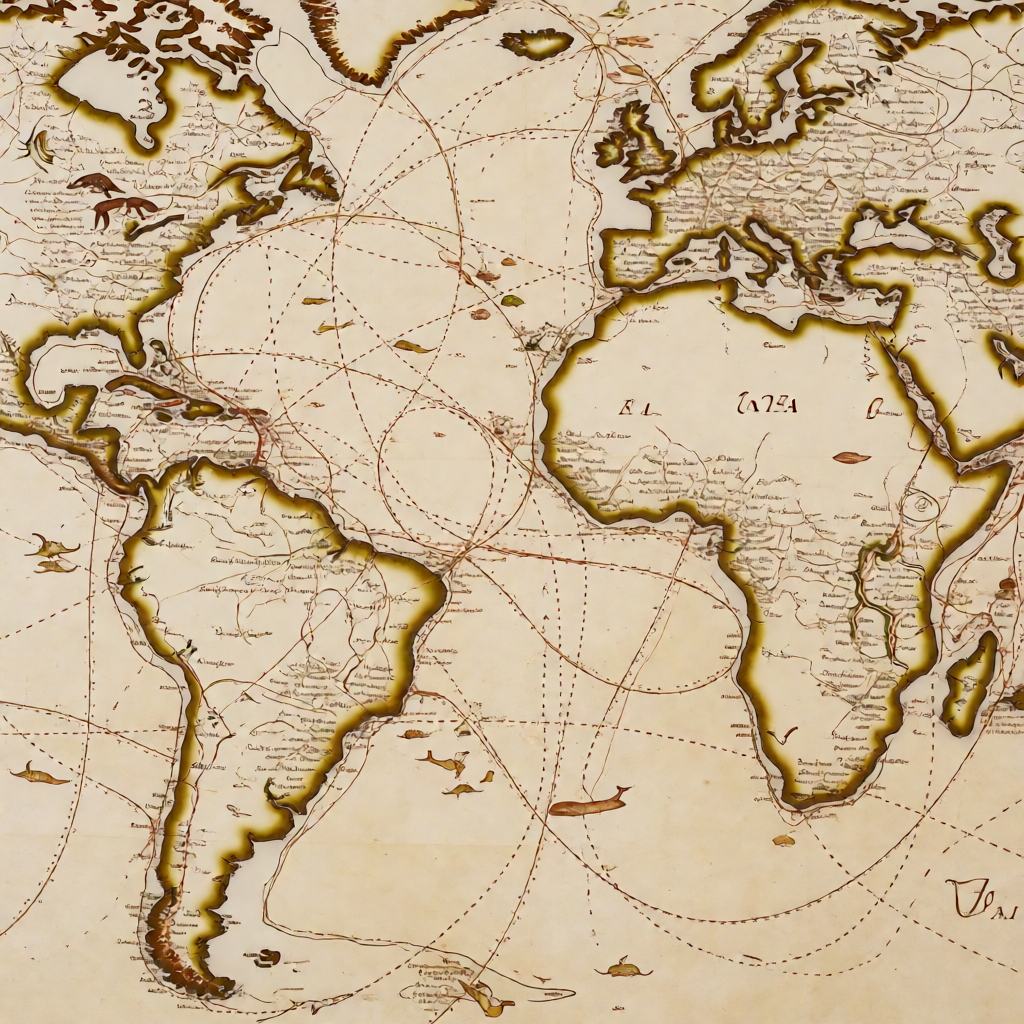
Whaling was a business before it was a science, but the two grew together. Ships needed good charts. The search for whales drove exploration of the Pacific and the polar seas. Whalers were often the first outsiders to visit a far island. Their reports filled in the map of the world. The sperm whale was the prize of the deep-sea fleet. It is the largest of the whales with teeth.
It dives to great depths to hunt squid in the dark, using sound to find its prey. Its head holds a large case of spermaceti oil. That oil made the animal so valuable. Because it swims fast and fights hard, the sperm whale also gave whalers their most famous stories. It is the sperm whale that stands at the centre of Herman Melville’s novel Moby-Dick, published in 1851. Science learned from the hunt. The logs and journals of whalers gave naturalists their first real news about how whales live, what they eat and where they go.
The same industry also showed, slowly and painfully, how little was known and how fast a species could be cut down. Studies of the Antarctic catch in the 20th century produced some of the first clear proof that a hunted group was falling. The technology of the hunt kept improving. Better ships, better harpoons, then factory ships and helicopters turned whaling into an industrial process. Each step made the killing more efficient and pushed more species toward the brink. In the end it was not the harpoon that stopped the industry, but the loss of the whales themselves, and a change in public feeling that made the trade unacceptable.
What lasted
Legacy
The age of whaling left a double legacy. It lit the modern city and helped to build some of the great ports of the world. It also killed whales on a scale that no one had thought possible. Several species, including the blue whale and the right whale, have never fully come back.
The ban of 1986 saved some groups. Numbers are slowly rising in places, but the damage is lasting. The cultural legacy is huge. Moby-Dick turned the sperm whale into a sign of the wild.
The story of the hunt has shaped the way the sea is written about. The great whaling ports, such as New Bedford, are now museums. Scrimshaw is collected as art. What was once a trade is now remembered as a warning, and as a story about how an industry can eat the thing it depends on.
Quick hits
Five Things to Remember
- The age of whaling ran from about 1700 to 1920, and it hunted the whales of every ocean.
- Whale oil lit the cities of the 19th century until cheap kerosene from oil wells replaced it in 1859.
- Crews were paid a share of the profits, and a sailor could work for years and come home nearly empty.
- The sperm whale gave the finest oil and became famous through Moby-Dick, published in 1851.
- Modern whaling with harpoon guns and factory ships nearly wiped out the whales, and only a 1986 ban stopped it.