 By st20113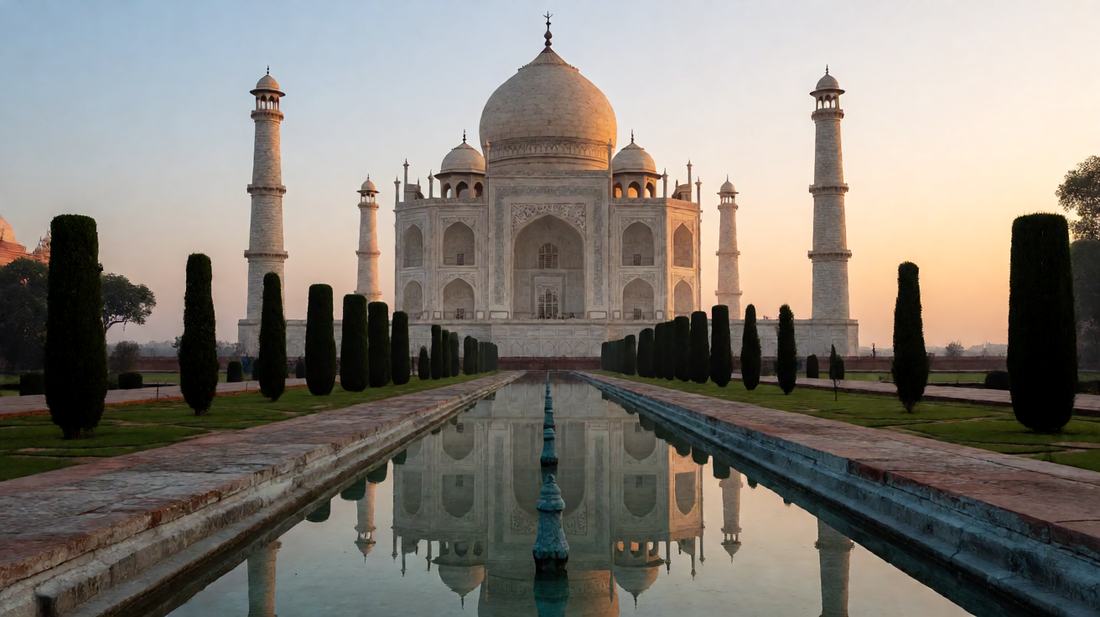
The Mughal Empire | The Mughals
Historical Profile · South Asia
The Mughal Empire | The Mughals
A prince who had lost his own kingdom founded an empire that ruled most of India for more than three hundred years.
1526-1857
Founded
Peak
Rank system
Throne
Ended
The big picture
Introduction
The Mughal empire ruled most of India for more than three hundred years. It was founded in 1526 by a prince from Central Asia who had lost his own kingdom. At its height it was one of the richest states in the world. Its kings built the Taj Mahal.
They ran the state with real skill. They also mixed Persian, Indian and Muslim culture in a way that shaped the region for centuries. It ended in 1857, when the last king was sent away by the British.
Setting
Historical Context
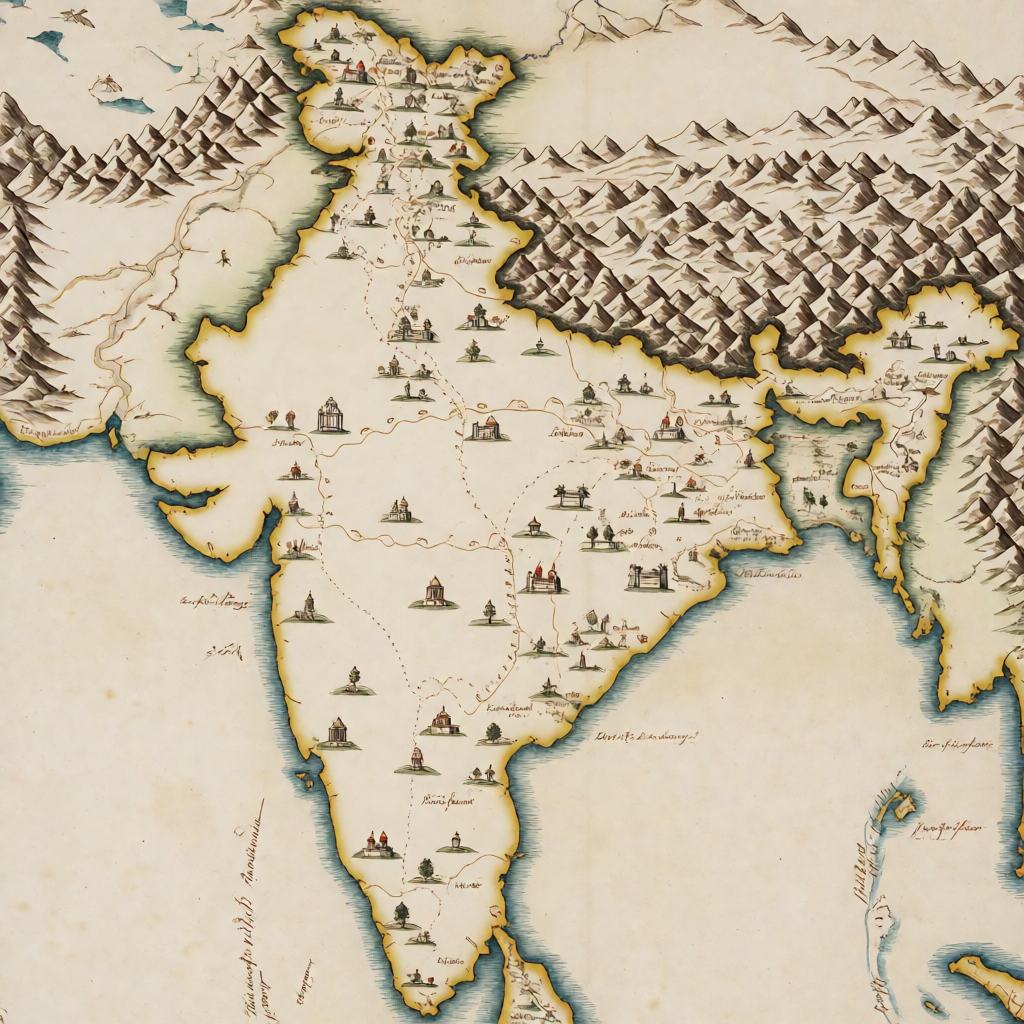
India is a land of great rivers, high mountains and a climate that swings from heavy rain to dry heat. The Ganges plain in the north is flat and very rich. It has fed large states for thousands of years. To the north-west, mountain passes lead into Central Asia.
Almost every invader of India has come through or near them. By the 15th century the land was split among many states. In the north, the Delhi rulers had once been strong but were now weak and divided. In the south, a Hindu empire was rich and strong.
Muslim states ruled in the Deccan. Rajput princes held much of the north-west. The stage was set for a new power to move in through the passes.
Turning points
Key Events
The founder was Babur. He was of the line of Genghis Khan and of Timur. He had lost his home in Central Asia and had taken Kabul instead. From there he looked south. In 1526 he met the far larger army of the Sultan of Delhi at Panipat. He won by using guns and a clever line of carts. In the next few years he took Delhi and Agra and broke the Rajput powers of the north. His heir lost the empire and had to flee to Persia. He won it back in 1555. His son Akbar took the throne in 1556 and was the greatest of the line.
Akbar took almost the whole of north and central India. He did it as much by deals as by war. He married Rajput princesses and gave Rajput chiefs high posts. He ended a tax on non-Muslims. He also invited Jesuits, Hindus and Jains to debate faith at his court. He tried to build one set of beliefs that could hold his people together. The son of Akbar, Jahangir, and his grandson Shah Jahan kept the empire strong. Shah Jahan is known above all for buildings. He built the Taj Mahal at Agra as a tomb for his wife. He built the Red Fort at Delhi and the great mosque beside it.
Aurangzeb took the throne in 1658. He was a strict Muslim and a hard ruler. He spent most of his reign at war, pushing the empire deep into the south. During his long campaigns the strain began to show. After his death in 1707 the empire fell apart fast. Lands broke away and new powers rose. The kings became prisoners in their own homes. In 1857 a great revolt broke out against British rule. The Mughal king was blamed for it. He was tried and sent to Burma, and the empire was ended.
1
2
3
Who held power
People and Powers
The king ruled with total power, but not alone. A council of ministers ran the offices of money, army, law and the household. Below them the empire was split into lands, each with a chief. The chief was watched by a separate man who reported straight to the king. That system of checks was one reason the empire worked so well for so long. The key to Mughal rule was a system of rank. Each rank fixed how many horsemen a man had to keep and how much land tax he could collect.
Rank was not fixed by birth alone. An able man could rise. Rajputs, Afghans, Persians and Turks all served. The court was mixed on purpose. More than half of the top nobles of Akbar were not born Muslim. Most people were farmers. Land tax was the main income of the state.
It was a share of the crop, well checked. Traders and bankers were also important. Rich merchants paid for trade across Asia and lent money to the state. Craftsmen in the cities made cotton cloth, silk, carpets, metalwork and jewellery. Indian cotton was sold from Africa to Southeast Asia.
Everyday world
Daily Life and Society
Village life was much the same as it had been for centuries. Farmers grew wheat, rice, millet and pulses. They kept cattle for milk and for pulling the plough. The village headman settled disputes and dealt with the tax man. Caste shaped daily life. It decided who could marry whom, what work a person could do and where they could live. In the towns, however, people of many backgrounds met in the markets. The great cities were crowded, noisy and full of movement.
The rich lived very well. Nobles had large walled houses with gardens, fountains and pools. They were carried through the streets in palanquins with servants around them. They ate rich food, wore fine cloth and enjoyed music and poetry. The court set the fashion. Persian was the language of the court and of high culture. Hindi and local languages were spoken by everyone else. Art and building flourished.
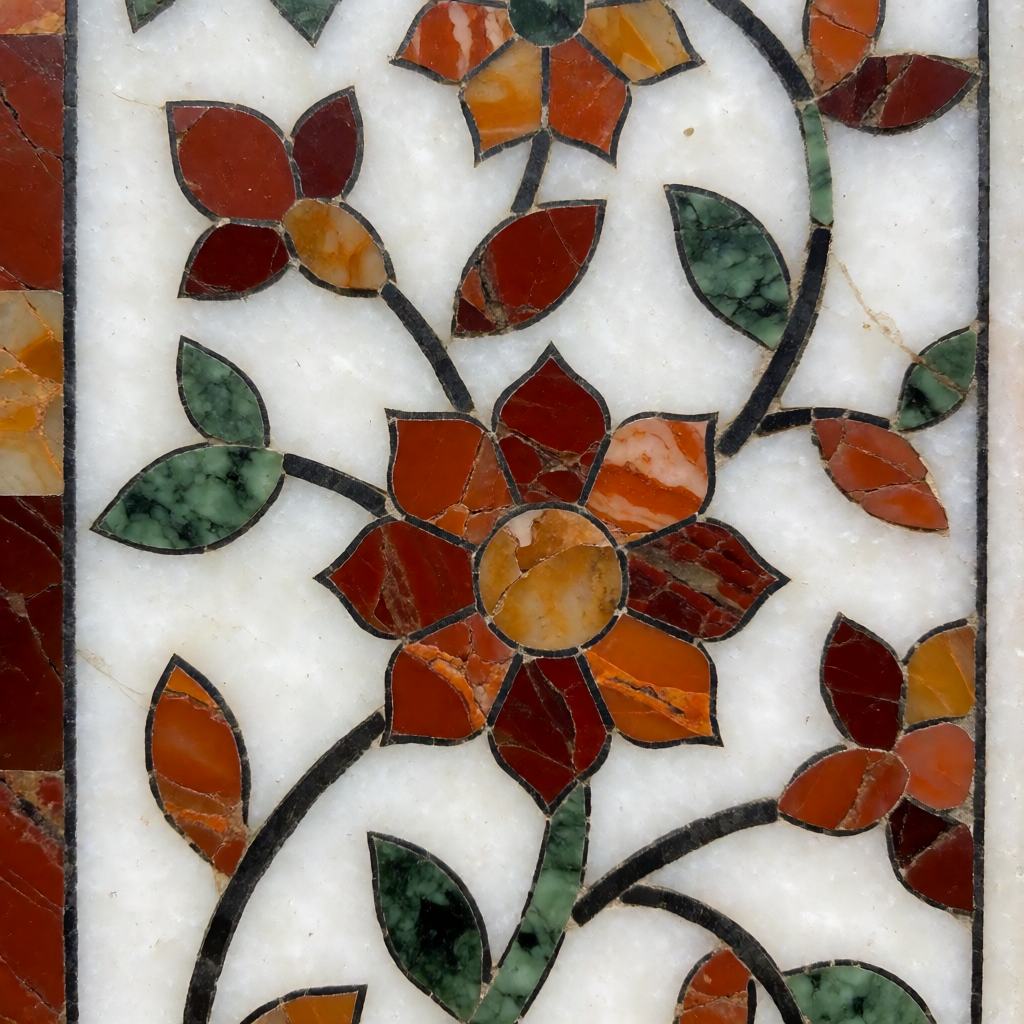
The Mughals built forts, homes, tombs, gardens and mosques. They used red sandstone and white marble with inlaid patterns of coloured stone. Their painters made albums of portraits, hunting scenes and pictures of animals and plants. In these albums the peacock is a top subject. The bird is native to India. Its beauty and its crown-like crest made it a natural image of royalty. The most famous throne in the empire was called the Peacock Throne. The Indian peafowl appears again and again in Mughal painting and in the walls of their buildings.
Craft and ideas
Trade, Technology and Ideas
India was the great workshop of the early modern world. Its cotton cloth was the best in the world. It was sold everywhere, from the markets of the Middle East to Southeast Asia. Indian cloth was so popular that traders came from far lands to buy it. Later, other lands tried to copy it at home. This helped to start the industrial revolution in Britain. Tax work was a Mughal strength. Tax men surveyed the land, took the size of crops and set the tax as a share of the harvest.
That was fairer and steadier than a fixed demand. The finance minister of Akbar, Todar Mal, built a system that lasted for many years. Later rulers studied it. The empire also built on paper. Records, letters and accounts were written on paper in Persian. The state ran on a flow of documents. Banks and credit worked well. A trader could borrow money in one city and repay it in another.
This made long-distance trade possible on a large scale. Science and learning had their own tradition. Indian mathematics had given the world the decimal system and the idea of zero centuries earlier. Indian study of the stars was strong. At the Mughal court, Persian and Indian scholars worked side by side. Medicine mixed older Indian practice with Islamic learning. Hospitals were built in the main cities. The empire did not lead the world in science, but it was well informed and open to outside knowledge.
What lasted
Legacy
The Mughals left India a shared culture and a set of buildings that are known around the world. The Taj Mahal is one of the most famous structures on earth. The Red Fort and the mosques of Delhi, Agra and Fatehpur Sikri still stand. In music, painting, dress, food and language, the court shaped the taste of north India.
That influence can still be seen today. The public legacy is more mixed. The empire was very good at ruling a society of many faiths. The policy of tolerance under Akbar was remarkable for its time.
Yet later kings moved away from it, and the empire finally tore itself apart. The British then took over and ruled India until 1947. The Mughals are known as the last great Indian empire before colonial rule, and as the builders of a culture that the modern region still shares.
Quick hits
Five Things to Remember
- Babur founded the Mughal empire in 1526, winning at Panipat with guns against a far larger army.
- Akbar, king from 1556, ruled by deals as much as by war and welcomed all faiths.
- The mansabdari system tied each man’s rank to his soldiers and his land tax.
- Shah Jahan built the Taj Mahal and the Red Fort, and the peacock stood for the throne.
- The empire ended in 1857, when the last king was sent away by the British.