 By st20113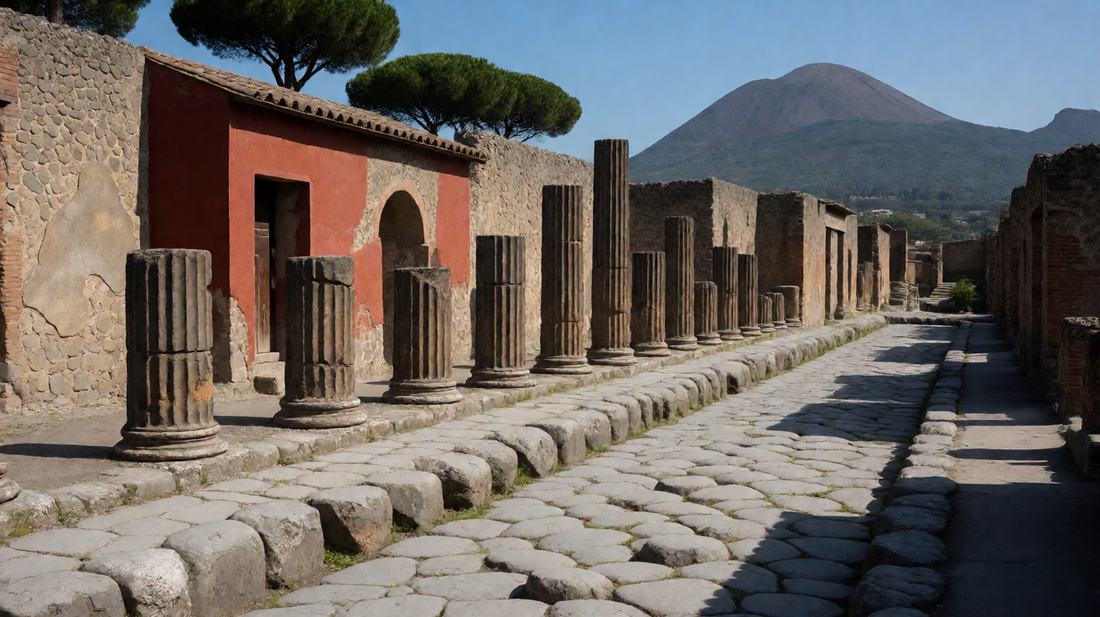
Pompeii and Herculaneum | The Buried Cities
Historical Profile · Bay of Naples
Pompeii and Herculaneum | The Buried Cities
When Vesuvius buried two ordinary Roman towns in AD 79, it sealed streets, kitchens, tools and bodies in place and left the clearest picture of daily Roman life anywhere in the empire.
AD 79
Eruption
Ash depth
Rediscovered
Site area
Bodies found
The big picture
Introduction
Pompeii and Herculaneum were two small towns on the Bay of Naples. Both were buried when Mount Vesuvius erupted in AD 79. That saved them.
Ash, pumice and mud sealed streets, houses, shops, food, tools and bodies in place. They lay hidden for nearly 1700 years. When they were dug out, they gave the world its best picture of daily Roman life.
Setting
Historical Context
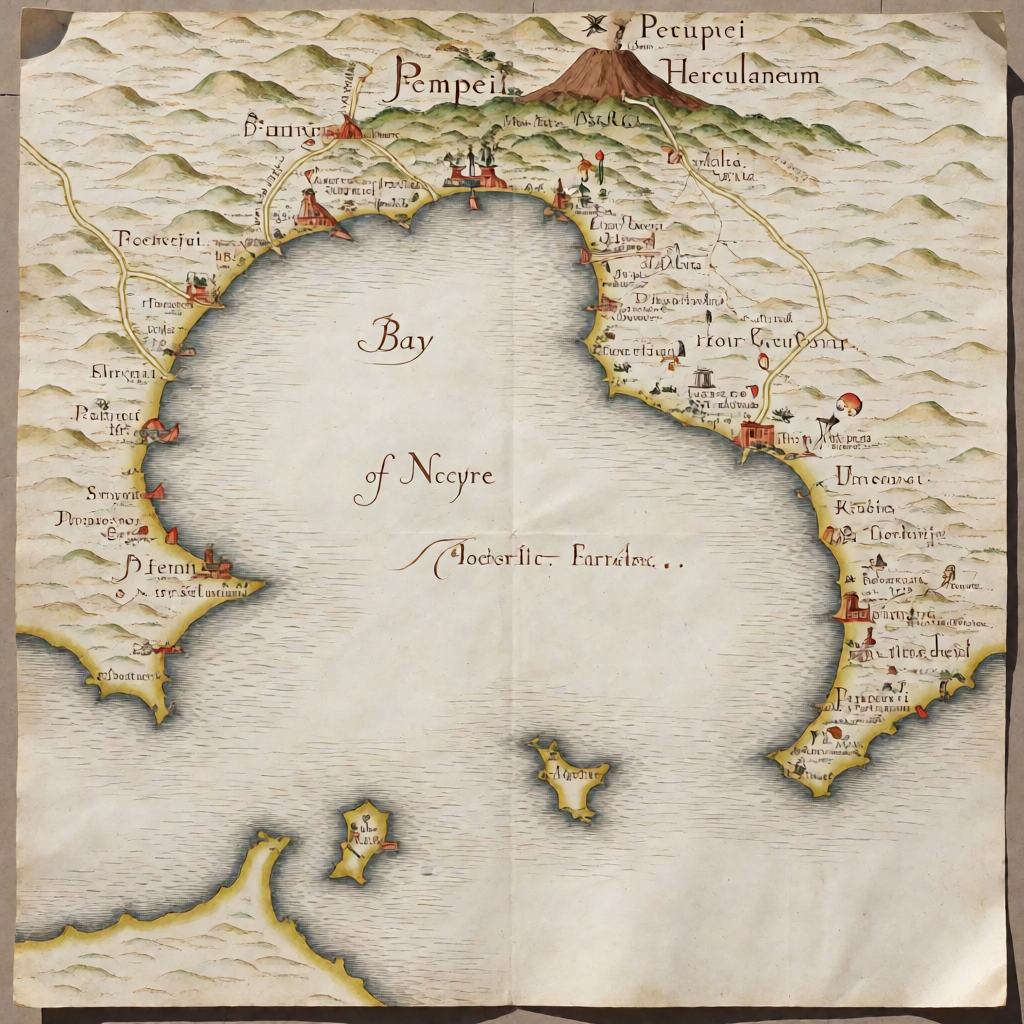
The Bay of Naples was one of the most sought-after parts of Roman Italy. It had a mild climate and rich volcanic soil for wine and olives. It had a busy harbour. Rich senators kept villas in the resort towns along the coast. Pompeii sat on a lava plateau above the river Sarno, close to the sea.
Between 10000 and 20000 people lived there. The other town lay a few km west. It was smaller, richer and closer to the mountain. Nobody in either town treated Vesuvius as a live danger. The mountain had probably been quiet for centuries.
Its slopes held farms and vineyards. Minor quakes in the years before AD 79 were noted but not understood. When it came, the first event was a tall column of pumice, not a flood of lava. Most deaths came from falling debris and then from surges of hot gas and ash.
Turning points
Key Events
The eruption began in AD 79 and lasted more than a day. For a long time the date was given as 24 August. That came from a letter by Pliny the Younger. A charcoal inscription found at Pompeii in 2018 points to October instead. Traces of autumn fruit in the ruins back up a later date. So the exact month is now in doubt.
Pliny the Younger was staying across the bay at Misenum. He left two letters describing what he saw. His uncle, Pliny the Elder, led the Roman fleet. He sailed towards the cloud to rescue survivors. He landed at Stabiae, was overcome by fumes and died there. His death, and the shape of the cloud he described, gave experts the term Plinian eruption.
Pompeii lay under 4 to 6 metres of pumice and ash. Herculaneum, on the far side of the mountain, was struck first by surges of hot gas. Then up to 25 metres of hardened mud sealed it. That is why wood, rope and food survived there as they did not at Pompeii. Both towns were forgotten. Robbers tunnelled into the ruins, and emperors later built over the site.
1
2
3
Who held power
People and Powers
Rome ruled the region through local officials. Pompeii had its own council and two elected officers called duumviri. It also had an assembly. Public life was fiercely competitive. Rich men paid for temples, baths, aqueducts and gladiator games to win votes and respect. Their names were carved on the walls.
The town was a working economy with sharp gaps between rich and poor. At the top were land owners and traders, some of them very rich. Below them were craftsmen, bakers, fullers, dyers and shopkeepers. At the bottom were slaves, who made up a large share of the people and did much of the heavy work. Inscriptions name a few slaves and many more freedmen. These men often carried on the same trades as their old owners.
An earthquake had already damaged the region in AD 62. Some of that damage was still being repaired when it came. Workmen’s scaffolds and piles of stone have been found in rich houses. Repairs to public buildings were plainly unfinished. The rebuilding is one reason the ruins tell us so much. It left tools, materials and unfinished work in place.
Everyday world
Daily Life and Society
Digs have produced a very close picture of daily life. Pompeii had paved streets with raised kerbs. Round stepping stones let people cross without walking in the gutter. There were bakeries with millstones and ovens. There were workshops for cloth. There were about 80 food and drink bars called thermopolia. Customers bought hot food and wine from counters set into the street. Graffiti on the walls record insults, jokes, election slogans and love notes.
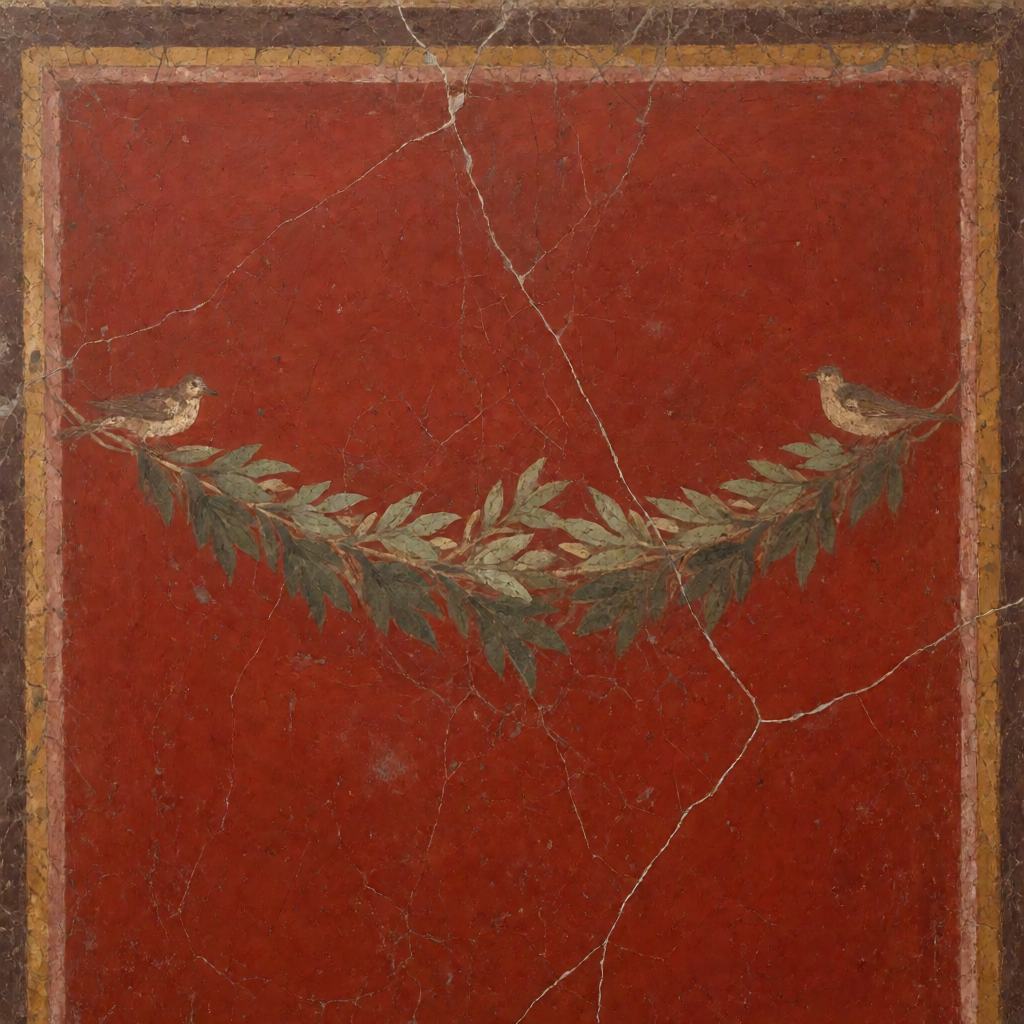
Houses were built around an open central yard with a shallow pool to catch rain. The richest had gardens, painted walls and mosaic floors. Their dining rooms were decorated with scenes from myth. Poorer people lived in small rooms above shops or in rented flats. Food was plain and salty: bread, olives, cheese, dried fish, eggs and wine, with meat for special days. Public life offered the other great pleasure of the Roman town, which was the baths. Pompeii had three sets of public baths, with hot, warm and cold rooms. They were supplied by an aqueduct and heated from below the floor by a wood fire.
Entry cost very little. People went not only to wash but to meet friends, swap gossip and do business. Animals were part of the household too. Romans commonly kept snails for the table. They built special pens called cochlearia in which the Roman snail was fattened on milk, bran and herbs before being cooked. Shells of these snails have been found in the kitchens and gardens of Pompeii. They were part of the same food culture that the town’s bars served daily.
Craft and ideas
Trade, Technology and Ideas
Both towns lived off the sea and the soil. Wine from the slopes above the bay was sent out in clay jars, along with olive oil and garum. Garum was a strong salty sauce that the Romans used in many dishes. Amphorae found in the ruins show goods coming in from Spain, Gaul, Greece and North Africa.
Roman builders worked to the smallest detail. Lead pipes and fountains carried water. Public baths had heated floors. Roman mortar kept out water.
Concrete set fast, so builders could raise harbour walls under water. Wall painting was a serious craft with national styles. The frescoes of Pompeii are now the main source for Roman painting.
What lasted
Legacy
The dig changed European taste. Herculaneum was found by accident in 1709 and formally dug from 1738. Pompeii was found and dug from 1748. The finds set off a fashion for classical style. It shaped building in Europe and America for a century.
From 1860 onwards the archaeologist Giuseppe Fiorelli brought in plaster casts. Workmen poured plaster into the gaps left by bodies in the hardened ash. That produced the images of victims that most people know today. More than 1000 bodies have been found at Pompeii. The boat sheds of the other town were dug in the 1980s, and about 300 people were found there.
They had taken shelter and died together. The dig also began a modern science project. The Villa of the Papyri held about 1800 burnt scrolls. Since 2023, researchers using X-ray scans and machine learning have begun to read them without unrolling them.
Quick hits
Five Things to Remember
- Vesuvius erupted in AD 79; the old date of 24 August is now doubted.
- Pompeii lay under 4 to 6 metres of ash, Herculaneum under up to 25 metres of mud.
- Pliny the Elder died at Stabiae while trying to rescue people.
- Plaster casts of the victims were made at Pompeii from 1860.
- About 1800 burnt scrolls are now being read by machine.