 By st20113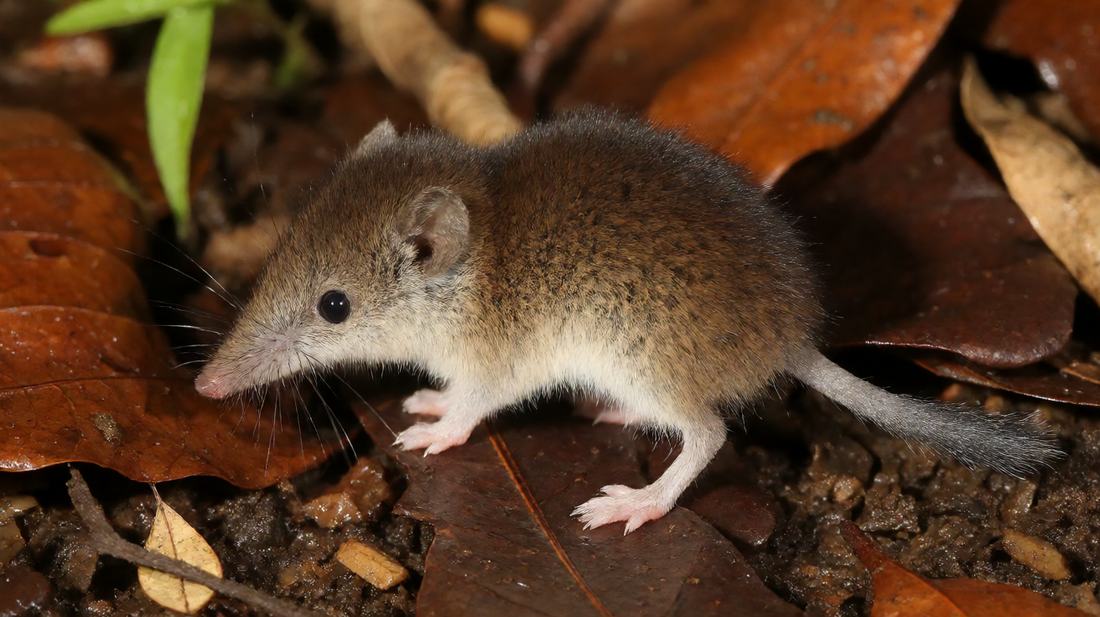
Sorex coronatus | Millet’s Shrew
Species Profile · Soricidae
Millet’s Shrew
One of the smallest mammals of western Europe, a hedgerow hunter that eats about every two hours and carries a red mark of iron on the tip of every tooth.
A tiny shrew with red tipped teeth and a huge appetite
Body
Tail
Weight
Litters
Young
Life
Millet’s shrew
A tiny hunter of thick hedgerows
Millet’s Shrew is a tiny hunter of thick hedgerows. It is 1 of the smallest mammals of western Europe. It lives under a cover of dead leaves.
It must eat almost without rest. It sleeps for only short spells. It hunts worms, insects and slugs.
It dies within about 18 months. It is very hard to see.
Family tree
Mammalia, Soricidae
Millet’s Shrew sits in the phylum Chordata. Its class is the Mammalia. Its order is the Eulipotyphla. Its family is the Soricidae, the shrews.
Our animal shares the family with the Common Shrew. That animal grows a little larger. It lives across most of Europe. Our animal stays smaller and darker.
It lives in the west of the continent. The 2 species look alike in shape. Only a study of the teeth can tell them apart.
7 cm and red tipped teeth
How to tell one
The body measures about 7 cm in length. The tail adds another 4 cm. The animal weighs only about 9 g. The back is a deep brown colour.
The flanks are much paler. The belly is a third pale brown shade. The snout is very long and pointed. Fine whiskers cover the snout.
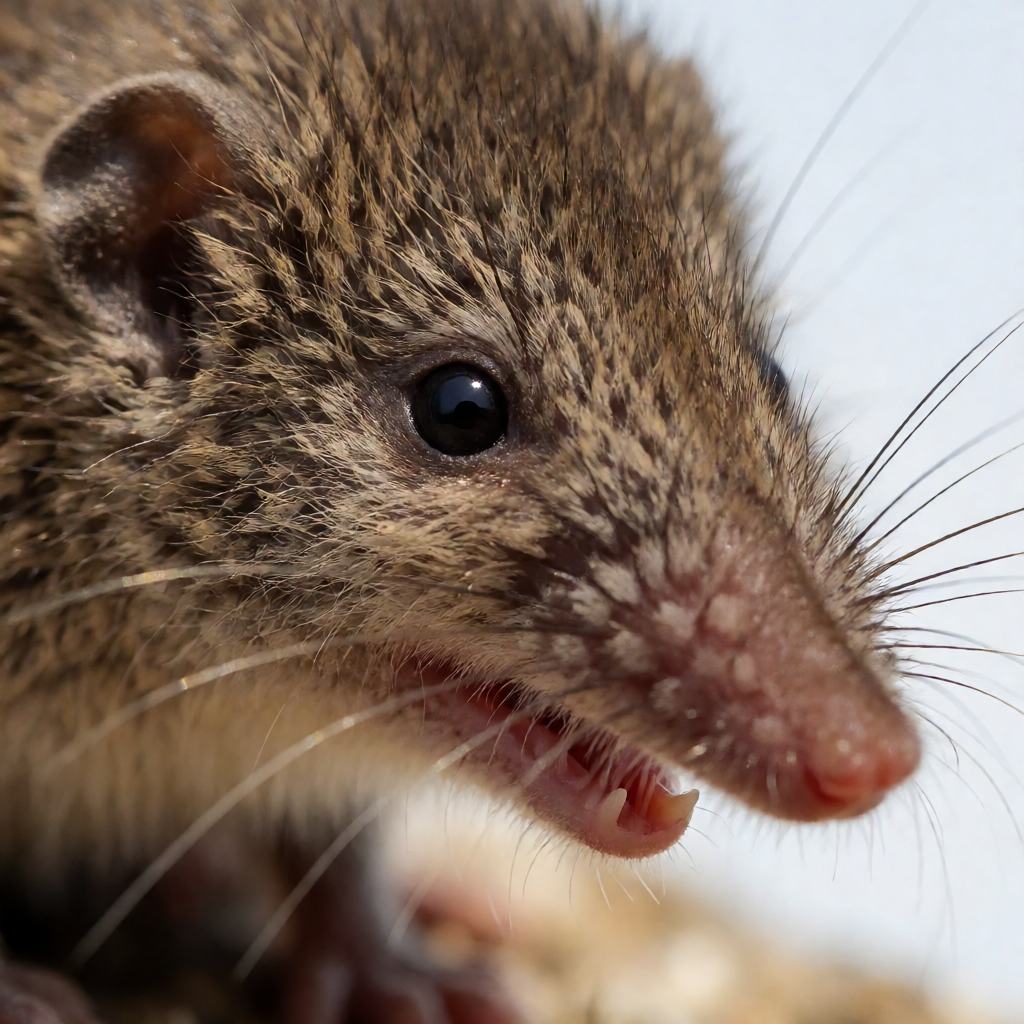
The eyes are tiny and black. The ears are small and almost hidden in the fur. The tip of each tooth carries a red mark. That mark comes from iron in the enamel.
1
2
3
Hedgerows and rough grass
Where it lives
The species lives in hedgerows and rough grassland. It favours a deep layer of dead leaves. It also lives at the edge of a wood. It needs cover against the cold and the rain.
It dislikes wet ground and bare fields. The animal makes a small network of runs. Those runs sit just under the leaves. It stays in a small area.
It rarely travels more than a few steps. A thick hedge gives it both food and shelter.
Worms, insects and slugs
What it eats
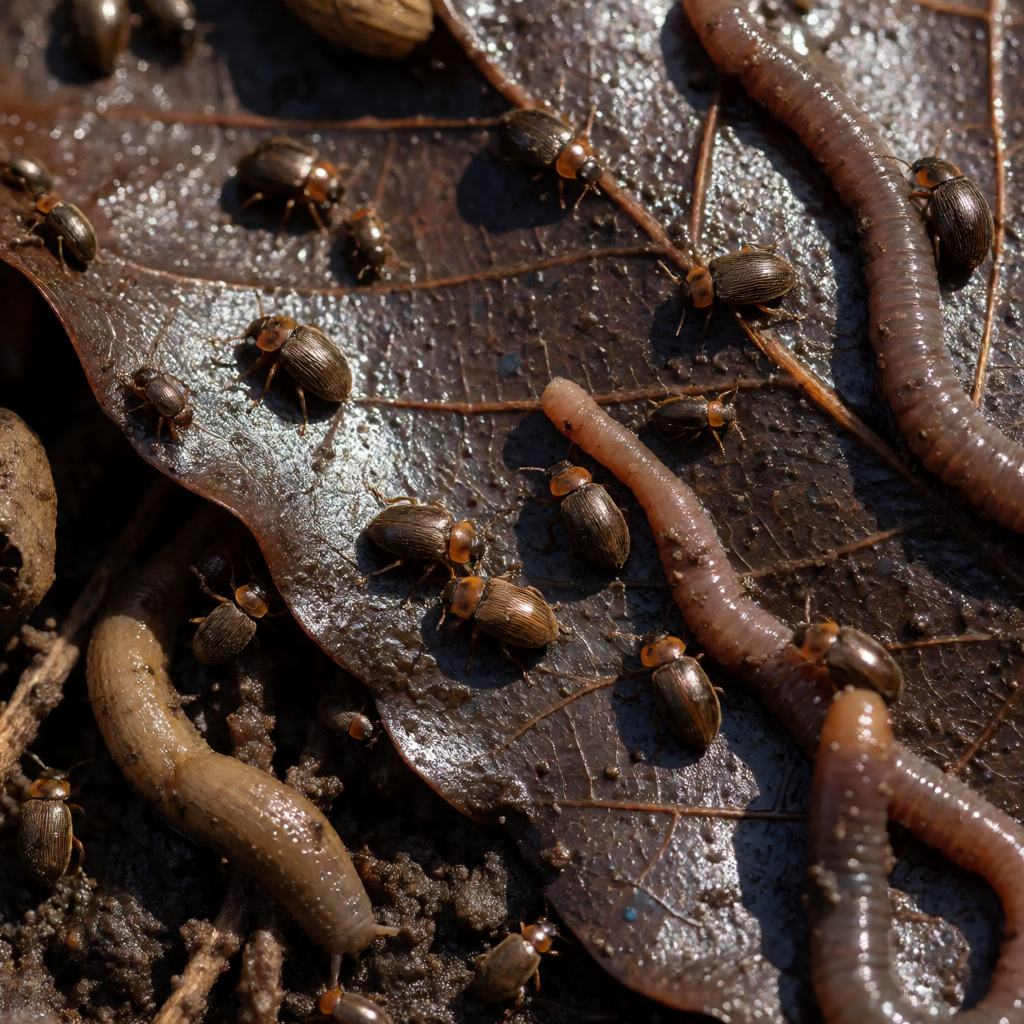
Millet’s Shrew is a hunter with a huge appetite. It eats worms and beetles. It also takes slugs, snails and spiders. It will take a young mouse if it can.
The animal must eat about every 2 hours. It cannot store fat in its body. It would starve within a few hours without food. It hunts by day and by night.
It finds prey with its sharp sense of smell. It also uses short clicks to find its way.
Litters in a nest under leaves
The breeding cycle
The breeding season runs from spring to late summer. The female may have 2 or 3 litters. Each litter holds 4 to 7 young. The young grow inside her for about 20 days.
They are born blind and hairless. They feed on milk for about 3 weeks. They then leave the nest and hunt. The young grow very fast.
A female may breed in the same year. Few animals live through a 2nd winter.
Hedges removed and ploughing
Conservation
Millet’s Shrew is not listed as threatened. It is still common in many places. It has no legal protection. It needs thick hedges and rough grass.
Removing a hedge destroys its whole world. Deep ploughing also removes its cover. Poison spread for other animals kills it too. A cold wet winter kills many of them.
The animal has a very short life. A thick hedgerow gives it the best chance.
Quick hits
Five things to remember
- Its teeth carry red tips made with iron.
- It must eat about every 2 hours to stay alive.
- It has very poor eyesight but excellent hearing.
- It makes short clicks to find its way in the dark.
- Most of them die before their first winter ends.