 By st20113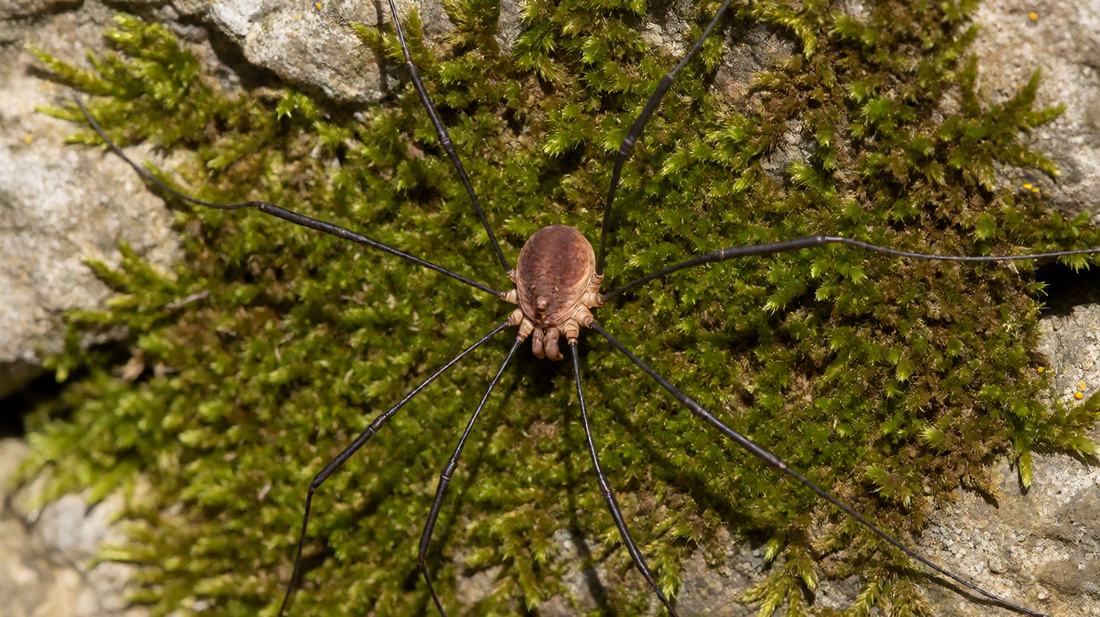
Leiobunum rotundum | Round-bodied Harvestman
Species Profile · Sclerosomatidae
Round-bodied Harvestman
A common harvestman of tree trunks whose tiny round body carries very long thin legs, and which makes no silk and carries no venom at all.
A long-legged harvestman that is an arachnid but not a spider
Body
Legs
Sections
Eyes
Silk
Life
The round-bodied harvestman
A long-legged animal of tree trunks
The Round-bodied Harvestman is a long-legged animal of tree trunks. It is 1 of the common harvestmen of Europe. It looks like a spider with thin legs.
It is not a spider at all. It makes no silk and it has no venom. It spends the day on bark or a fence.
At dusk it walks out to hunt. It gathers in groups in autumn.
Family tree
Arachnida, Sclerosomatidae
The Round-bodied Harvestman sits in the phylum Arthropoda. Its class is the Arachnida. Its order is the Opiliones. Its family is the Sclerosomatidae.
Our animal shares the order with the Harvestman. That animal has shorter legs. It lives on the ground and on low plants. Our animal has very long legs.
It spends most of its time on trunks. The 2 species both have a single body section. Neither one makes silk.
5 mm and 50 mm legs
How to tell one
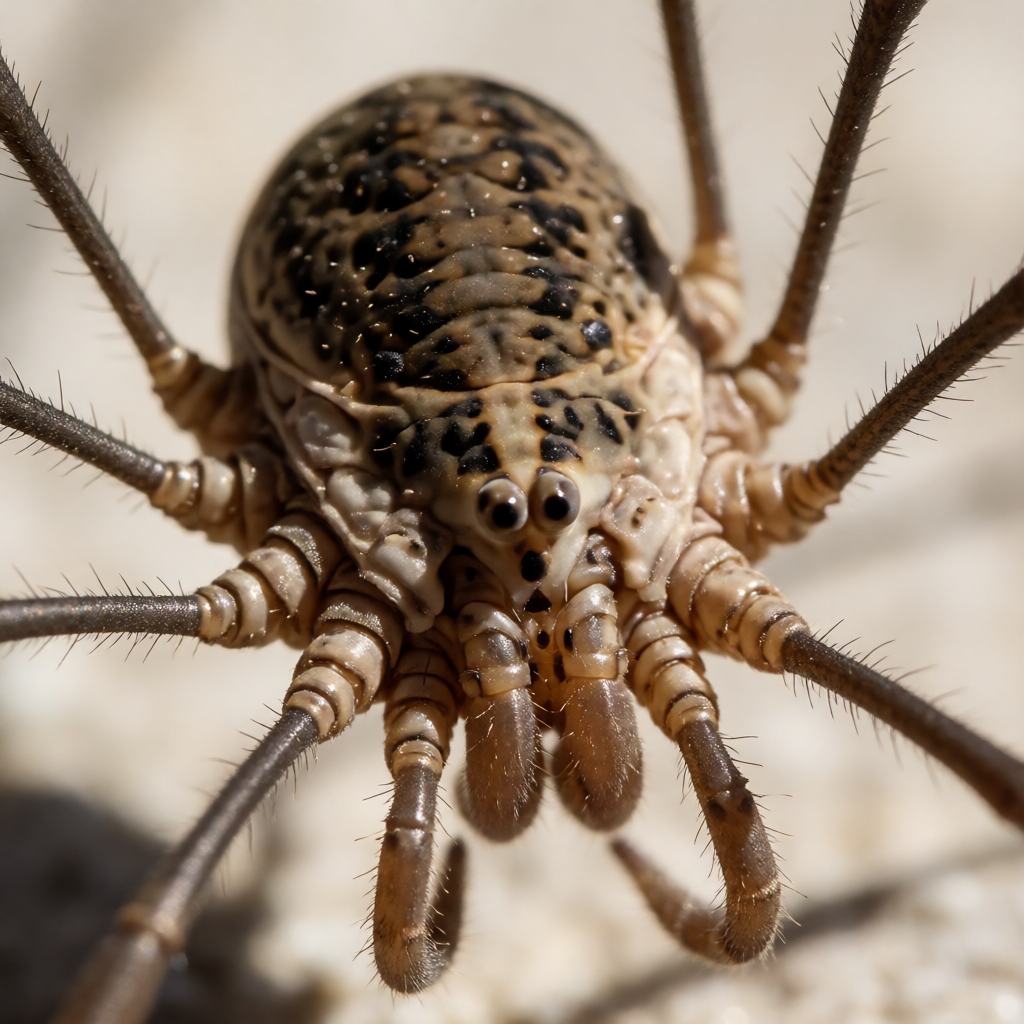
The body measures about 5 mm across. The female grows larger than the male. The body forms a single rounded shape. There is no narrow waist in the middle.
The colour is a warm red brown. A dark saddle mark covers the back. The legs are far longer than the body. Each leg may reach 50 mm.
The legs are thin, and they carry fine hairs. A pair of small eyes sits on a raised mound. The animal cannot move its eyes at all. A lost leg does not grow back.
1
2
3
Damp woodland and old hedges
Where it lives
The species lives in woodland and along hedges. It favours the trunks of large trees. It also lives on fences and stone walls. It needs a damp and shaded place.
It rests in a crack during the day. The animal comes out at night. It walks over bark and leaves. It also drops to the ground when disturbed.
It lives in parks and old gardens. It dislikes dry open ground. A thick hedge suits it very well.
Small prey and dead insects
What it eats
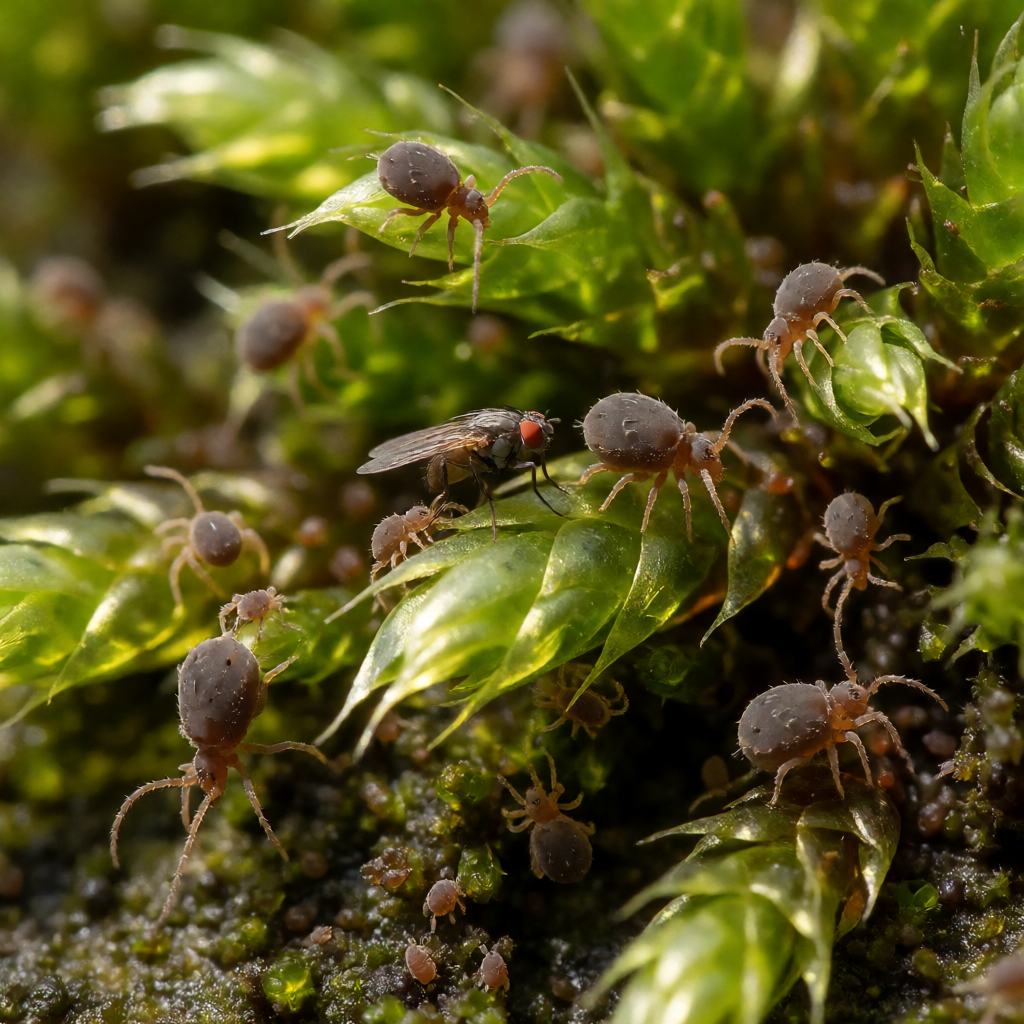
The Round-bodied Harvestman is a scavenger. It eats small insects and mites. It also takes springtails and tiny worms. It feeds on dead insects and soft fruit.
The animal has no venom at all. It holds the food with 2 small arms. Those arms sit beside the mouth. It tears the food into small pieces.
The jaws then pass the pieces inside. The animal also takes a drink of water. It hunts at night and rests by day.
Eggs laid in damp soil
The breeding cycle
The male and the female meet in late summer. The male passes sperm straight to the female. The female has a long egg-laying tube. She pushes it into damp soil.
She lays a cluster of eggs there. The eggs rest through the winter. The young hatch in the spring. They look like small adults.
They shed their skin several times. The adults die in the autumn. The animal lives for about 1 year.
Hedges cut down and gardens sprayed
Conservation
The Round-bodied Harvestman has not been assessed by the IUCN. It is very common in most of Europe. It has no legal protection. It does well in a garden with old trees.
It needs damp shade and dead wood. Cutting down a hedge removes its home. Spraying a garden also harms it. The animal helps to clear dead insects.
Its numbers are healthy at present. A pile of logs gives it shelter. So does a wall left unsprayed.
Quick hits
Five things to remember
- It is an arachnid but not a spider.
- It has no silk glands and no venom.
- Its legs can be several times the body length.
- A leg lost to a predator never grows back.
- It gives off a smelly fluid when threatened.