 By st20113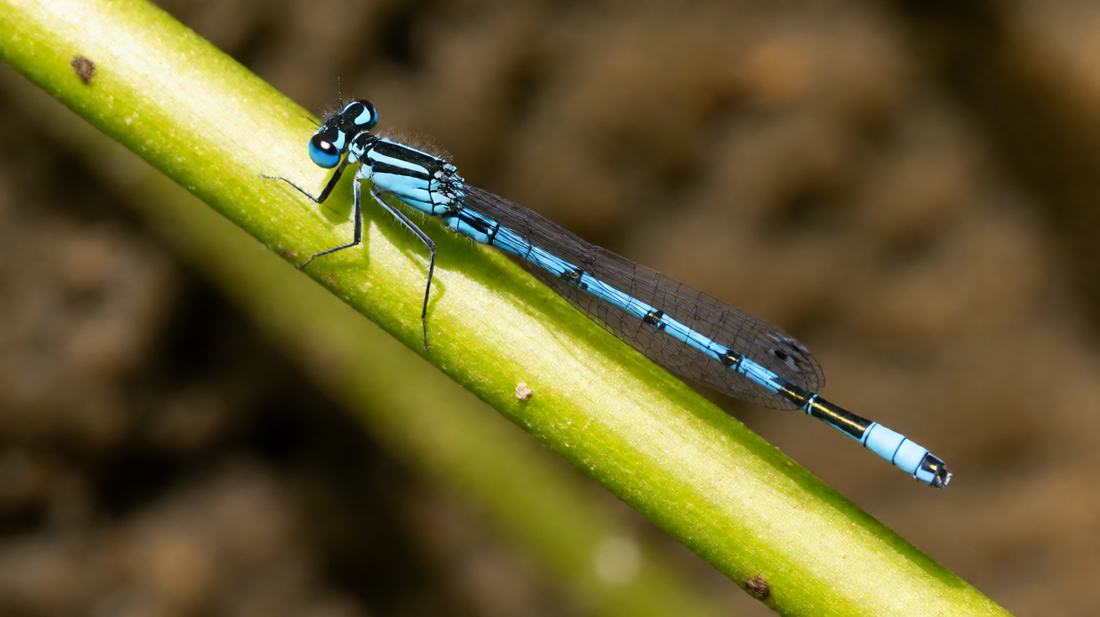
Coenagrion mercuriale | Southern Damselfly
Species Profile · Coenagrionidae
Southern Damselfly
A small blue damselfly of shallow lime rich streams that lays its eggs inside plant stems and now holds a place on the IUCN list of threatened species.
A small blue damselfly of lime rich streams
Body
Wings
Eyes
Eggs
Hatch
Status
The southern damselfly
A small damselfly of lime rich water
The Southern Damselfly is a small insect of blue and black. It lives beside shallow streams in open country. It is 1 of the rarest damselflies in Britain. The male is bright blue.
The female is much duller. Both fold the wings along the back when they rest. The animal never travels far from its stream. It needs water that stays cool in summer.
Its numbers have fallen over a long period. It now has legal protection. A few small groups survive in western Europe. Others live in North Africa.
Family tree
Odonata, Coenagrionidae
The Southern Damselfly sits in the phylum Arthropoda. It belongs to the class Insecta. Its order is the Odonata. Its family is the Coenagrionidae.
These are the narrow winged damselflies. Our animal shares that family with the Azure Damselfly. That insect is a brighter blue. It lives in still water.
Our animal is a little smaller. It needs water that moves. The 2 species look much alike. A close view is needed to tell them apart.
25 mm and a blue banded body
How to tell one
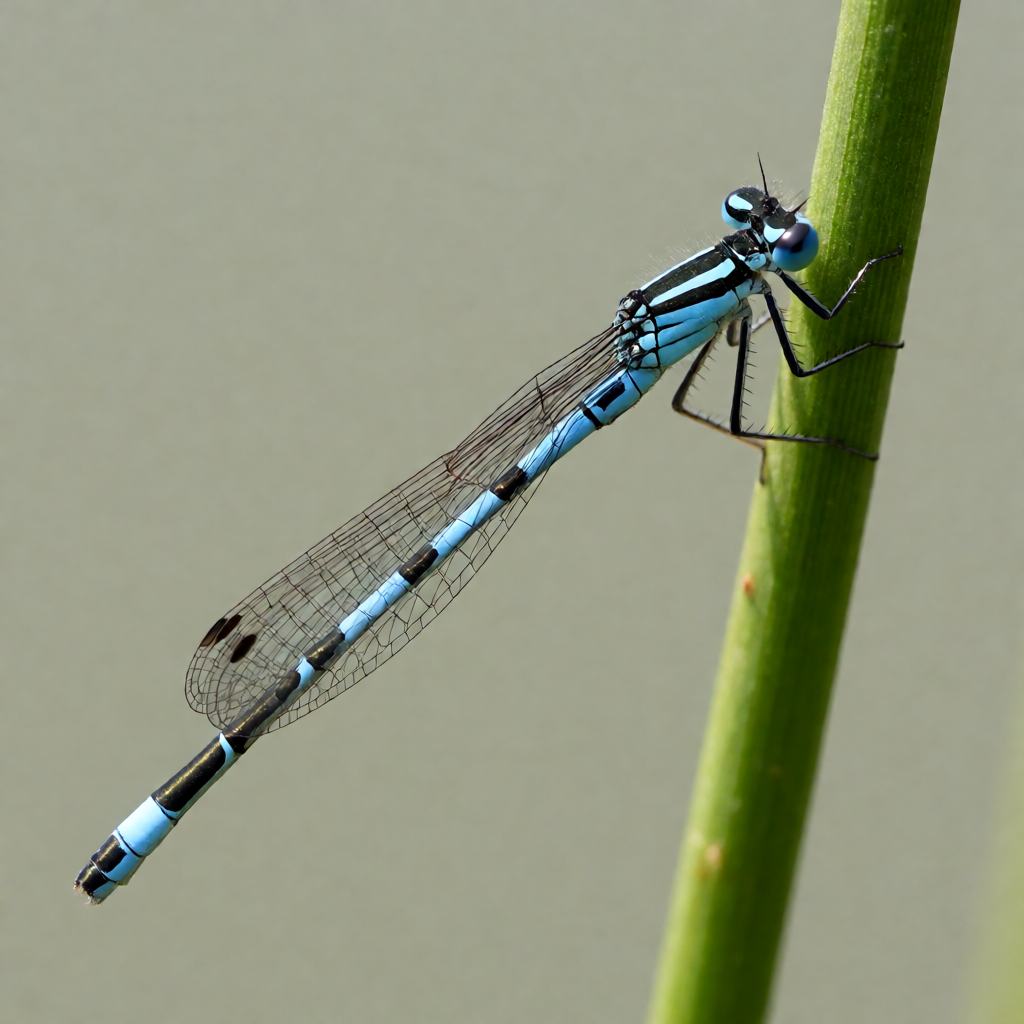
The body measures about 25 mm. The largest animal can reach 30 mm. The male is blue with black bands. The female is greenish black. Her colour is duller than his. The head carries 2 large eyes.
They almost touch. The animal has 3 pairs of legs. Each leg ends in a small claw. It also has 2 pairs of clear wings. These fold along the back. A dragonfly holds its wings open.
This insect does not. The body is long and thin. It looks rather like a needle. The legs are weak. The animal walks very badly. It uses the legs to grip a stem.
1
2
3
Shallow lime rich streams
Where it lives
The species lives beside shallow streams and small runnels. It needs water that is rich in lime. The water must also be low in pollution. The stream must be cool. It must hold water all year.
The animal needs plants that grow in the water. It rests on a leaf near the surface. It is found on wet heath. Old water meadows also suit it. It stays close to the bank.
It seldom crosses open ground. A stretch of stream with some shade is best. The loss of that habitat is the main danger.
Midges and small flies
What it eats
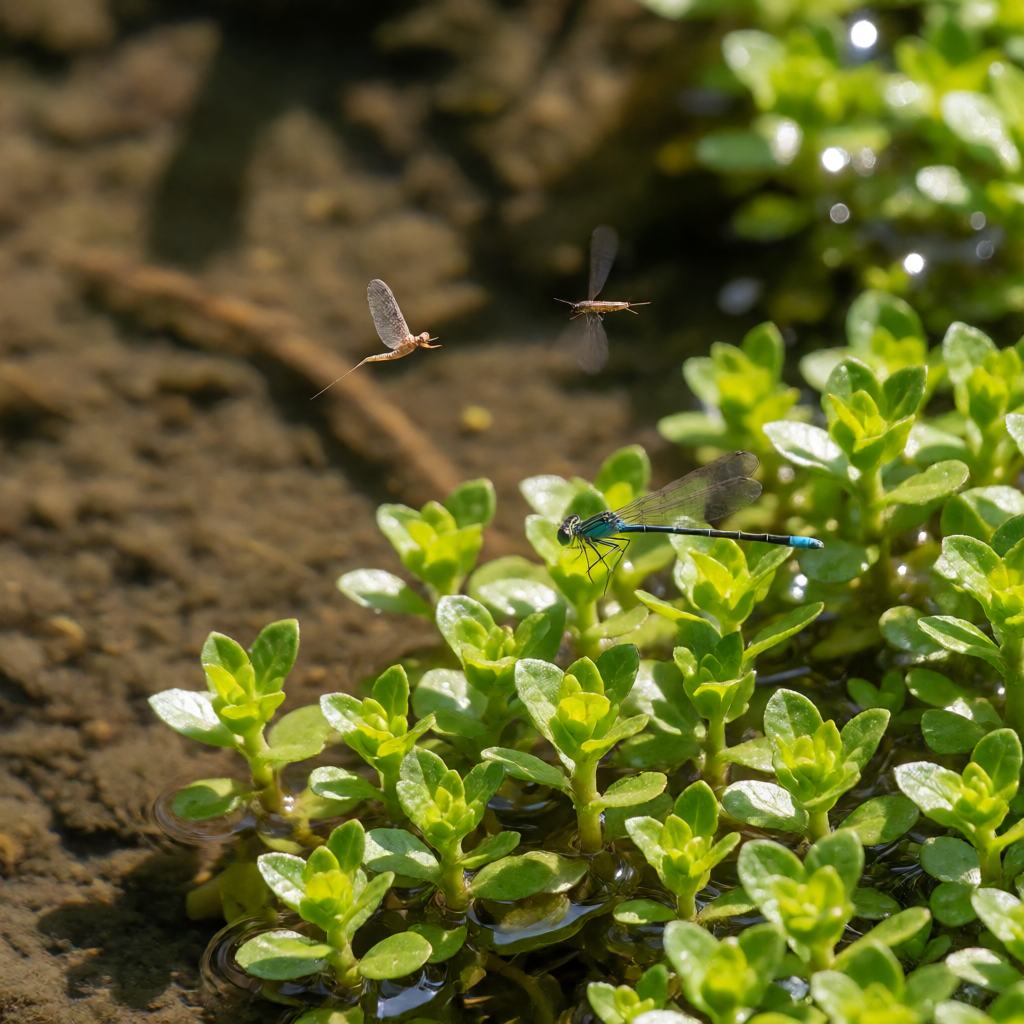
The adult hunts small flying insects. It takes a midge, a small fly and a mayfly. It catches the food in the air. Its spiny legs work as a basket. It hunts from a perch on a plant stem.
A short flight follows. It then returns to the same stem. The young live in the water. They eat small water animals. They take a water flea and a worm.
A very small larva also gets eaten. A young animal moults many times as it grows. It hunts with a hinged lower lip. The lip shoots out to catch a victim.
Eggs inside a plant stem
The breeding cycle
The male holds the female behind the head. The 2 fly in tandem. They settle on a plant in the stream. The female then cuts a slit in the stem. She lays her eggs inside the plant.
She may sink below the surface. She stays under water for several minutes. Then she climbs back up. The eggs hatch in about 4 weeks. The young live in the water.
They grow slowly for 1 or 2 years. They climb a stem at last. The adult breaks out of the old skin.
Near Threatened on the IUCN list
Conservation
The Southern Damselfly is listed as Near Threatened. That listing comes from the IUCN. Its numbers have fallen across much of its range. The main causes are habitat loss and dirty water. The draining of small streams does great harm.
In Britain it is a protected insect. It also has a national plan. It now lives in a few places in the south. A few more are found in the west. Careful grazing keeps the runnels open.
That work helps the animal. A small group can survive in a single good stream. A change in the water flow can wipe it out.
Quick hits
Five things to remember
- The male carries a mark on the body that looks like the sign for the planet Mercury.
- At rest the wings close over the back, not open as a dragonfly holds them.
- The eggs are tucked inside a plant stem, and not laid in open water.
- British law lists it among the creatures of special concern.
- The clear wings carry fine veins, and they are almost like glass.