 By st20113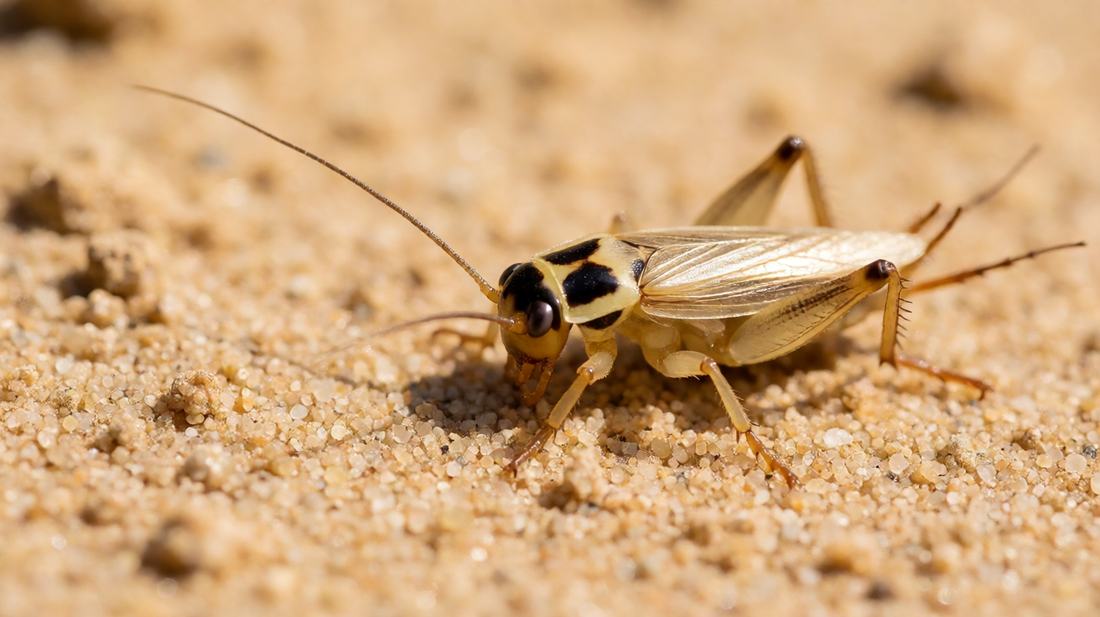
Acheta domesticus | House Cricket
Species Profile · Gryllidae
House Cricket
A soft pale cricket that lives in warm buildings, sings at night and is now bred on farms in great numbers as food for people and pets.
A pale cricket that sings indoors and is farmed for food
Body
Head
Antennae
Eggs
Hatch
Life
The house cricket
A cricket that lives with people
The House Cricket is a small pale cricket that lives with people. It is 1 of the few insects that is farmed for food. Its body is a soft yellow brown, and its head carries 3 dark bands.
It has very long antennae, and they reach far past the tail. The male chirps at night, and his song brings a female to him. The animal lives in warm places, and it cannot survive a cold winter outside.
It eats crumbs, plant matter and other small animals. It is also sold as food for pet reptiles and birds.
Family tree
Orthoptera, Gryllidae
The House Cricket is an arthropod, and it sits in the class Insecta. Its order is the Orthoptera, the crickets and grasshoppers. Its family is the Gryllidae, the true crickets.
It shares that family with the European Field Cricket of dry grassland. That animal lives in a burrow, and it sings from the mouth of the hole. The 2 species both sing with their wings, and both find a mate by sound.
Our animal is paler, and it lives in a building instead of a field. The family is large, and its members live in most parts of the world.
2 cm and 3 dark head bands
How to tell one
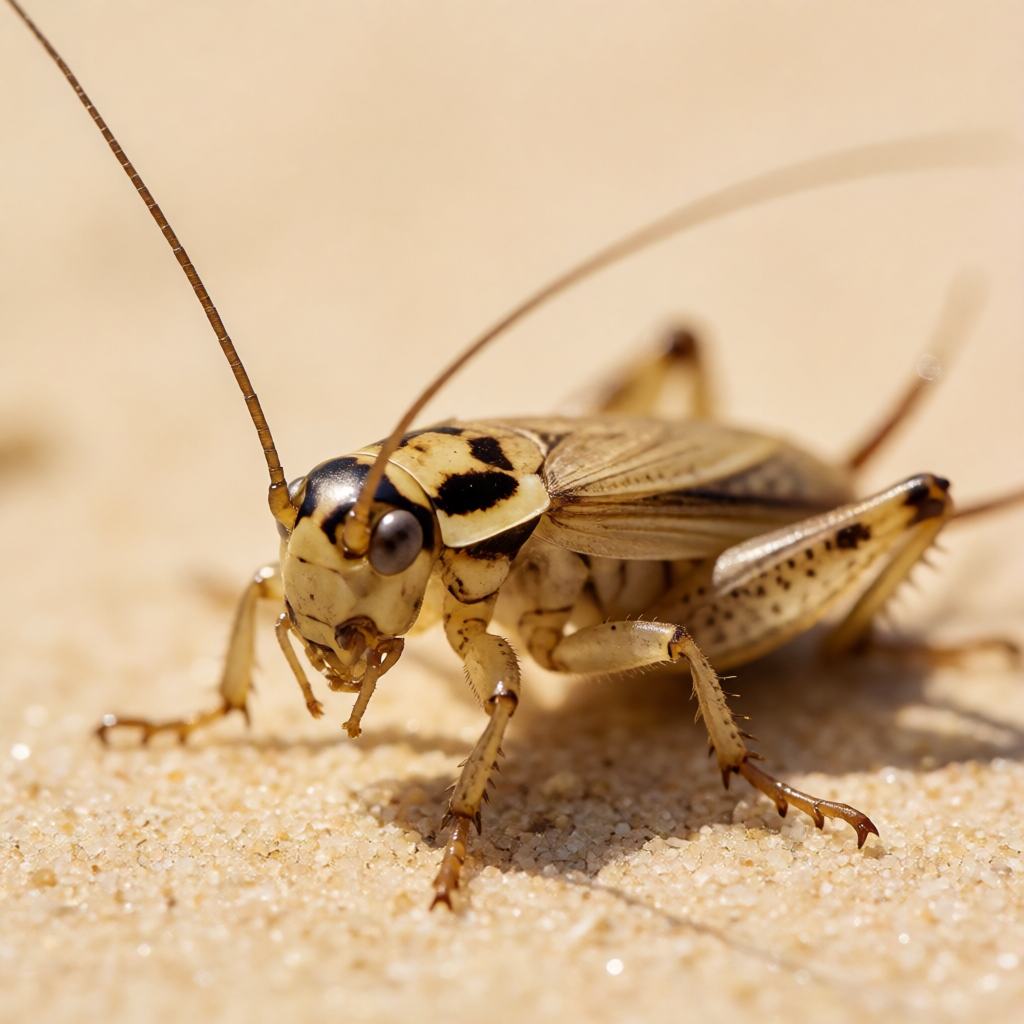
The body measures about 2 cm, and the female is a little longer than the male. The colour is pale yellow brown, and the body carries faint darker speckles. The head carries 3 dark bands between the eyes.
The antennae are very long and thin, and they work as organs of touch. The wings lie flat over the back. The female carries a long needle shaped ovipositor at the tail.
The legs are strong, and the back legs carry rows of spines. The animal can jump a good distance for its size. The skin is soft, and the animal loses water fast in dry air.
1
2
3
Warm buildings and food stores
Where it lives
The species lives in warm and dry places that people keep. It is found in a kitchen, a bakery, a greenhouse and a rubbish heap. It also lives in a warm cellar and near a boiler. In warm countries it lives out of doors.
It needs a warm temperature, and it cannot live through a frost. It hides in a crack by day, and it comes out at night. It gathers where the food is rich and the air is dry. The animal does not dig a burrow of its own.
A warm building gives the species a home all year. It has reached most parts of the world.
Crumbs, flour and dead insects
What it eats
The House Cricket is an omnivore. It eats crumbs, flour, grain and fruit. It also eats plant matter, paper and dead insects. It will attack a weak animal of its own kind.
It finds food by touch, and the antennae do much of the work. It feeds at night, and it hides by day. The animal needs water, and it takes a drink from a damp surface. A young cricket eats a great deal, and it grows fast.
An adult needs less food, and it lives for about 2 months. The animal does well on waste food, and that is why it lives near people.
A song, then eggs in damp soil
The breeding cycle
The male sings from a corner of the room, and the female comes to him. The song is made by the wings, and the sound carries a long way. After mating the female pushes her ovipositor into damp soil.
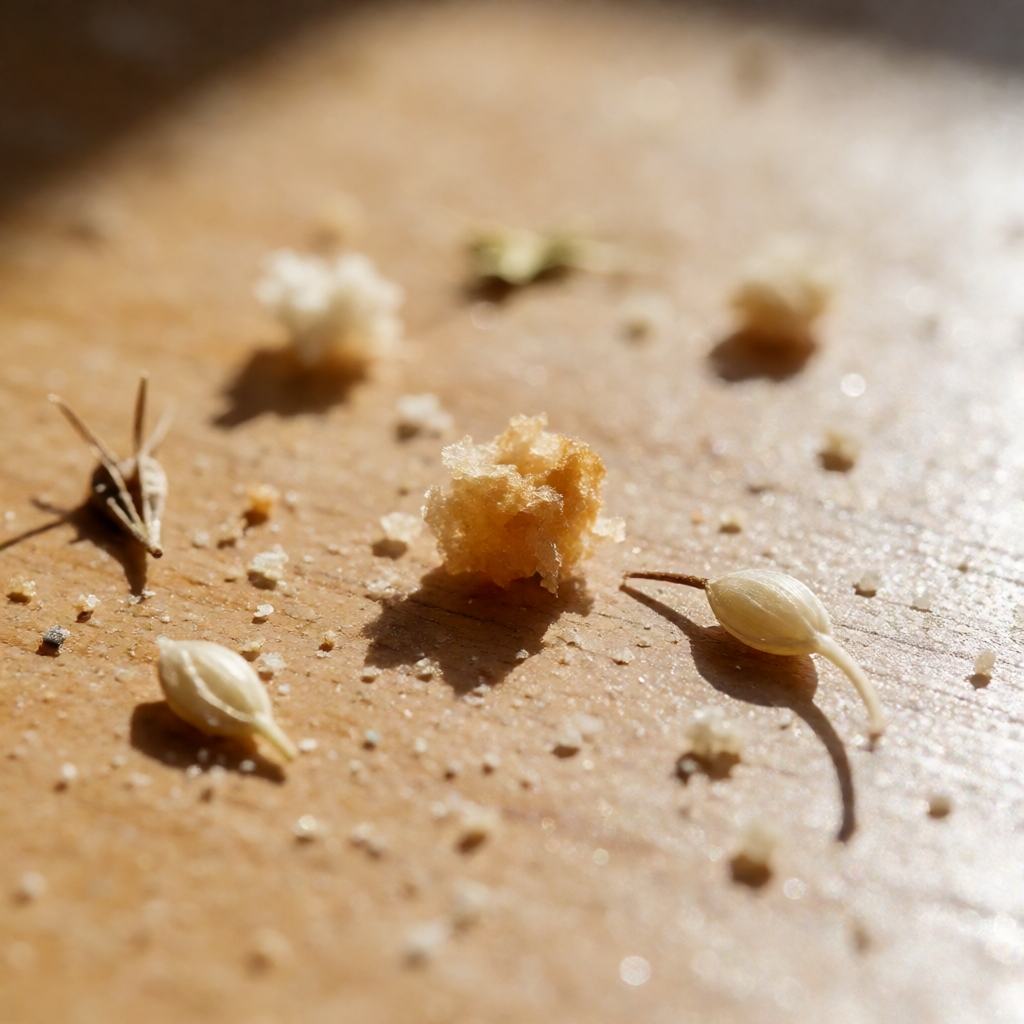
She lays her eggs in small groups, and she may lay several hundred in a season. The eggs hatch after about 4 weeks. The young look like small adults, and they moult as they grow.
They gain wings at the last moult. The adult lives for about 2 months. A warm room speeds up the whole cycle.
Farms hit by a virus
Conservation
The House Cricket has not been assessed by the IUCN. It is common in warm buildings, and it has no legal protection. In cool countries the wild animal is now rare, and most of them live in captivity.
Great numbers are bred on farms for food. Those farms have been hit by a virus, and whole groups have died. A farm that keeps clean stock can rebuild the numbers.
The species is in no danger as a whole. A warm house and a bag of flour will keep it going anywhere.
Quick hits
Five things to remember
- It carries 3 dark bands on the head between the eyes.
- The male sings at night by rubbing his wings together.
- The female lays her eggs in damp soil with a long ovipositor.
- The eggs need about 4 weeks to hatch.
- Farms breed it in great numbers for food.