 By st20113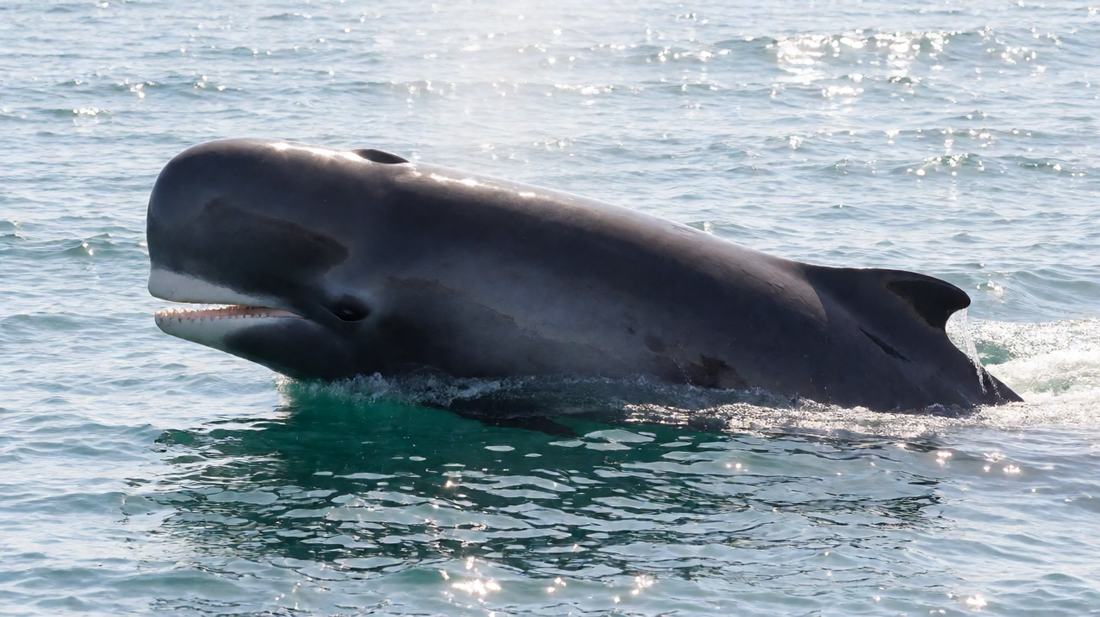
Ziphius cavirostris | Cuvier’s Beaked Whale
Species Profile · Ziphiidae
Cuvier’s Beaked Whale
A heavy deep water whale with a small goose like beak, a face of white scars and the record for the deepest and longest dive of any mammal.
The deepest diving mammal
Length
Weight
Dive record
Teeth
Breeding
The deepest diver
Rarely seen, widely spread
Cuvier’s Beaked Whale is the most widely spread of all the beaked whales. It also holds one of the great records of the animal world. It is a deep water whale that is rarely seen alive. It spends most of its time far from land. It hunts squid below the surface, where no light reaches. The body is heavy and cigar shaped.
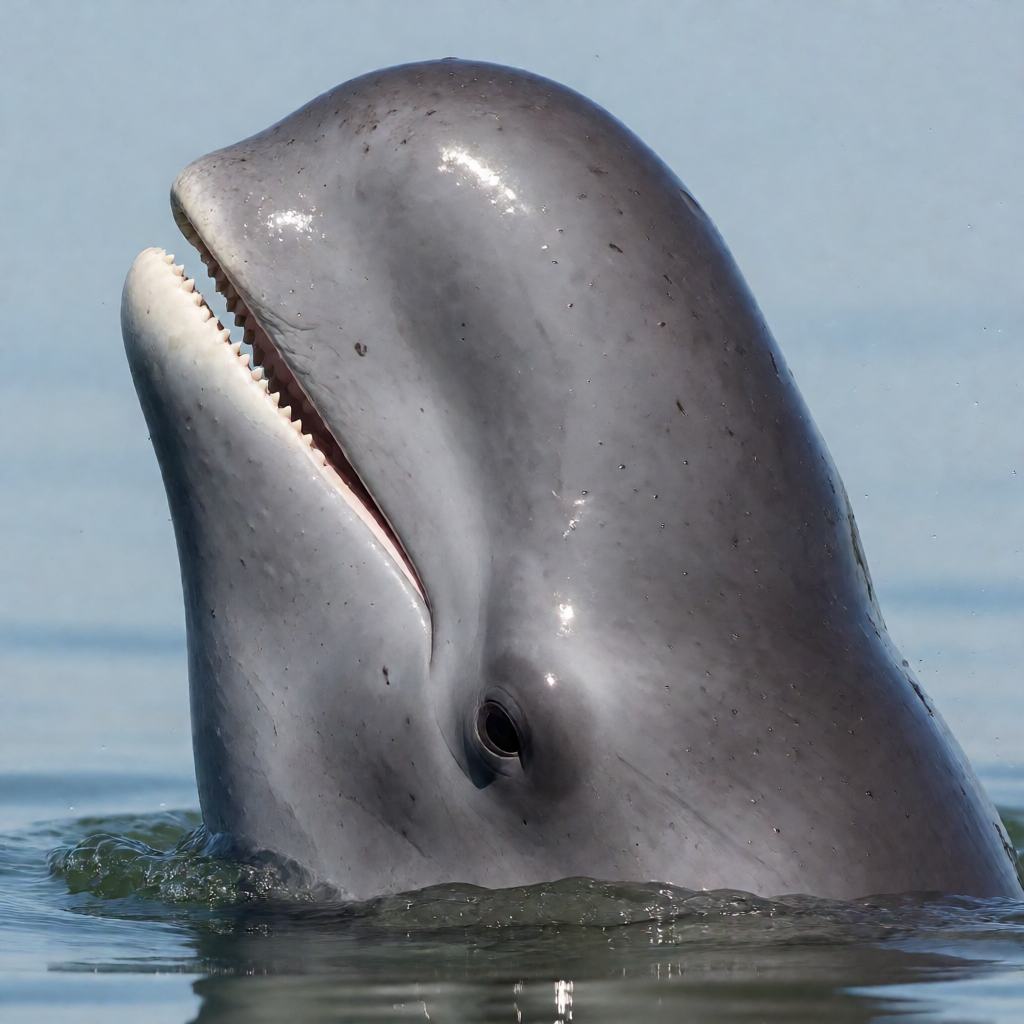
It is between 5.5 and 7 m long. It may weigh 1 to 3 tonnes. The head is small and slopes down to a short snout. The snout looks rather like the beak of a goose. In grown males the head turns pale or white. The mouth holds almost no teeth.
The animal has no need to chew. A pair of tiny teeth grows at the tip of the lower jaw. Those teeth appear in grown males only. They are used in fights between rivals, not for feeding. The skin is dark grey in young animals. It turns pale with age and is heavily scarred.
Family tree
Cetacea, Ziphiidae
Cuvier’s Beaked Whale is a mammal. It sits in the order Cetacea, which holds the whales and dolphins. It belongs to the family Ziphiidae, the beaked whales. That family holds about 20 species. Most of them are rare and poorly known. They live in deep water far from any shore.
Beaked whales are sorted from other whales by a set of features. The snout is narrow and beak like. There are 2 throat grooves rather than a single one. The flippers are small and set close to the body. The flukes carry no notch in the middle. Above all, the adults have almost no teeth.
They feed by sucking in their prey rather than seizing it. The species was named at the start of the 19th century. It was named from a skull found on a Mediterranean shore. The name cavirostris means hollow beak. The whale shares its order with the Minke Whale, a much smaller rorqual. That animal feeds near the surface.
Small head, many scars
How to tell one
Cuvier’s Beaked Whale is a strong animal between 5.5 and 7 m long. Its head is small for the size of its body. The forehead slopes down to a short, narrow snout. The lower jaw is short and sits behind the upper one. In grown males 1 pair of small teeth grows at the tip of the lower jaw. The body is thick in the middle and tapers to a narrow tail.
The flukes are wide and have no notch. The dorsal fin is small and curved. It is set far back, at about 2 thirds of the way along the body. The flippers are small and narrow. The colour changes with age. Young whales are dark grey or brown.
Older animals turn pale grey with white patches. The skin is covered with white scars. Some are small and round, from the bites of cookiecutter sharks. Others are long and parallel, from the teeth of rival males. A thick layer of fat stores energy for long dives.
1
2
3
Deep water in every ocean
Where it lives
Cuvier’s Beaked Whale lives in deep water in every ocean. It is found from the tropics to the cold seas of both halves of the world. It lives mainly beyond the edge of the shelf. It is found in water between 1000 m and 3000 m deep. It is rarely seen over shallow ground.
It also turns up in enclosed seas with deep basins. It is the most common beaked whale of the Mediterranean. The species needs a sea floor with steep slopes and valleys. Its squid prey gathers in such places. It is often found along the shelf edge and around islands.
It is a strong swimmer and a long diver. It does not need to stay in one area. Records show that animals move along the shelf edge with the seasons. The full pattern of their travel is still unknown. Most of what is known comes from animals that have stranded.
Squid taken in the dark
What it eats
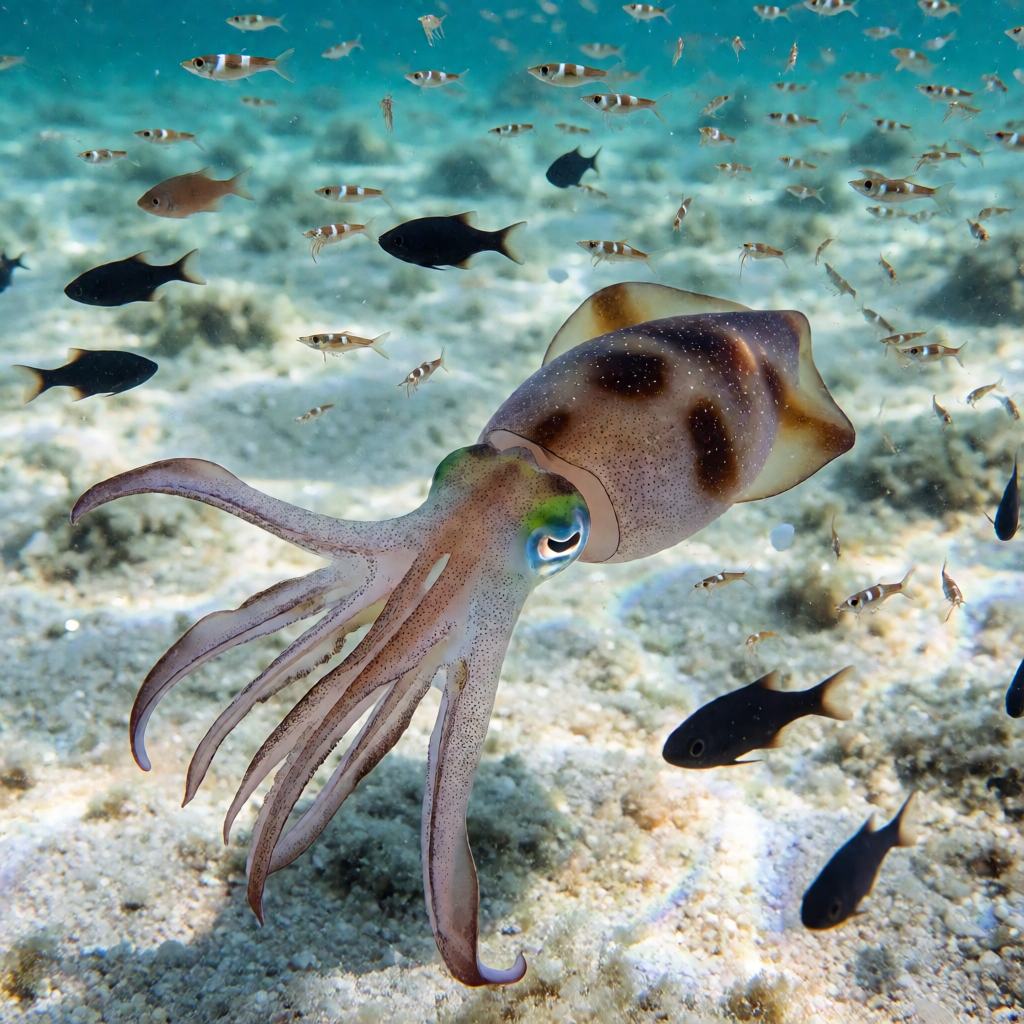
Cuvier’s Beaked Whale feeds in the deep sea. It hunts at depths that no light reaches. Its food is made up largely of squid. The stomachs of stranded animals have held squid of many kinds. They have also held deep water fish and a smaller share of crustaceans.
The whale feeds by suction. It has almost no teeth, so it does not bite its prey. It drops its tongue to make a sudden fall in pressure. The squid is drawn in with a rush of water. The throat grooves help the mouth to open wide.
This way of feeding suits soft animals such as squid. It lets a whale take several small prey in a single rush. The hunt is carried out in darkness. The whale finds its food by sound. It makes a rapid set of clicks and waits for the echo.
A slow and steady cycle
The breeding cycle
Little is known of the breeding life of Cuvier’s Beaked Whale. The animals are so rarely seen. The picture built up from strandings is fairly steady. Females can breed at about 8 to 10 years of age. Males can breed a little later.
The female produces 1 calf at a time. The pregnancy lasts about 12 months. She feeds the calf on milk for about a year. Young animals are born in warm water in summer. The calves are about 2 to 3 m long at birth.
The gap between one calf and the next is thought to be 2 to 3 years. So the birth rate of the species is low. Grown males carry the scars of fights with each other. The small teeth at the tip of the jaw are used in these contests. Females may live for 60 years or more.
Loud noise and mass strandings
Conservation
Cuvier’s Beaked Whale is not one of the most threatened whales. It is spread across every ocean. Its total numbers are thought to be large. Its habits, however, put it in real danger. It lives in the deep sea and comes to the surface rarely.
It depends on sound to find and to catch its food. Noise from ships and from oil and gas surveys is one problem. Naval sonar is a worse one. Mass strandings of this species have followed loud sounds in several places. The whales rise to the surface too quickly.
They then suffer damage like that caused by a fast rise in a diver. Bubbles of gas form in the blood and the tissues. Other dangers are the catching of whales in drift nets. Plastic bags can also block the gut. Cutting loud noise under water is the step that matters most.
Quick hits
Five things to remember
- A Cuvier’s Beaked Whale was recorded diving to 2992 m. It stayed under water for 137 minutes on that dive.
- The extreme record for breath holding is a dive that lasted 3 hours and 42 minutes.
- Grown males have 1 pair of small teeth at the tip of the lower jaw. They use them to fight rather than to eat.
- The animal feeds by suction, so it has almost no need of teeth.
- The flukes carry no notch in the middle, which sorts them from other whales.