 By Iris
Claviceps purpurea | Ergot
Species Profile · Clavicipitaceae
Ergot
The black horn that replaces the grain — the fungus behind Saint Anthony’s fire, and today the source of drugs that treat migraine and stop bleeding after childbirth.
Not a conservation concern
Range
Body
Host
Poison
Limit in food
The black horn in the rye
Feared for centuries, used today
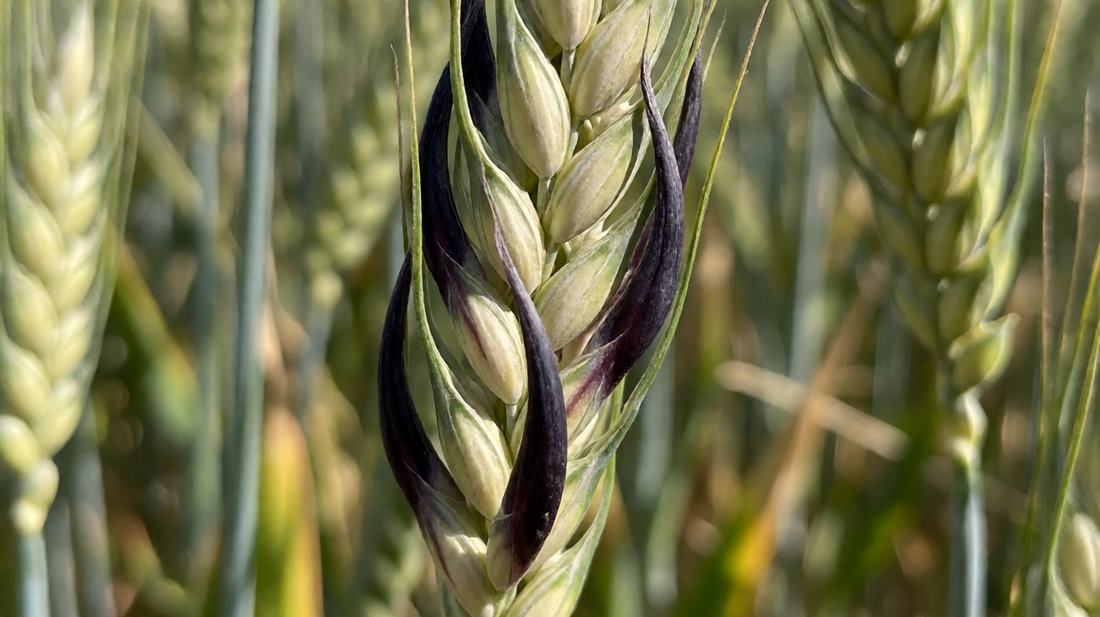
Ergot is one of the most feared fungi in history. It is also one of the most useful in modern medicine. It is a small parasite of grasses and cereals. It takes over the seed head of its host. It replaces the grain with a hard, dark, curved body. That body looks like a black horn or a cockerel’s spur. It is called a sclerotium.
This is the most visible stage of the fungus. It holds strong poisons. They can kill a person who eats bread made from bad grain. For centuries Ergot caused a terrible disease in Europe. The victims suffered burning pain in the limbs, bad dreams and fits. In the worst cases dry gangrene turned the hands and feet black. The disease was known as Saint Anthony’s fire.
It killed many thousands of people in the middle ages and after. The same chemicals that caused that pain are now used in small doses. They treat migraine and stop bleeding after childbirth. Ergot grows wherever rye, wheat and wild grasses grow. It is most common in wet, cool seasons.
Family tree
Clavicipitaceae, the sac fungi
Ergot sits in the family Clavicipitaceae. It belongs to the phylum Ascomycota, the sac fungi. Tulasne described its sexual stage in 1853. The name Claviceps purpurea was given to the whole life cycle soon after. The sac fungi form the largest group of fungi. They make their spores inside small sacs called asci. The family Clavicipitaceae holds fungi that live on insects, on other fungi and on grasses.
Several of them matter both as plant diseases and as sources of drugs. The genus Claviceps holds about 40 species. Most of them attack one group of grasses. The species name purpurea refers to the dark purple-black colour of the body. The genus is set apart by the way it takes over the seed head of its host. It does not kill the plant. Instead it grows in the ovary.
It replaces the seed with its own tissue. Then it makes a sticky sugary liquid called honeydew. This drips from the infected flower head and draws insects. Ergot shares its phylum with the candlesnuff fungus. That is a small white-tipped fungus of dead wood. The 2 live in very different places. But they sit in the same great phylum and both free their spores from sacs.
Black curved body, pale grain
How to tell one
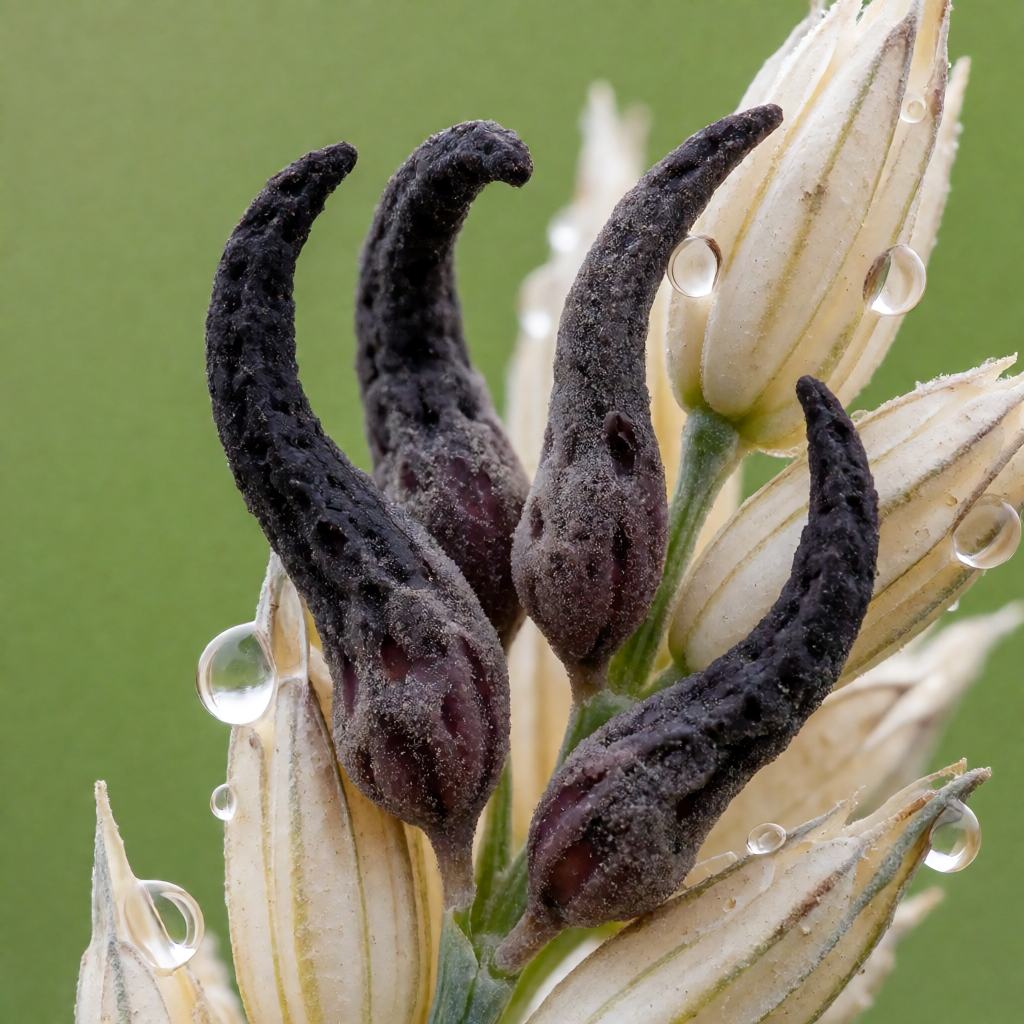
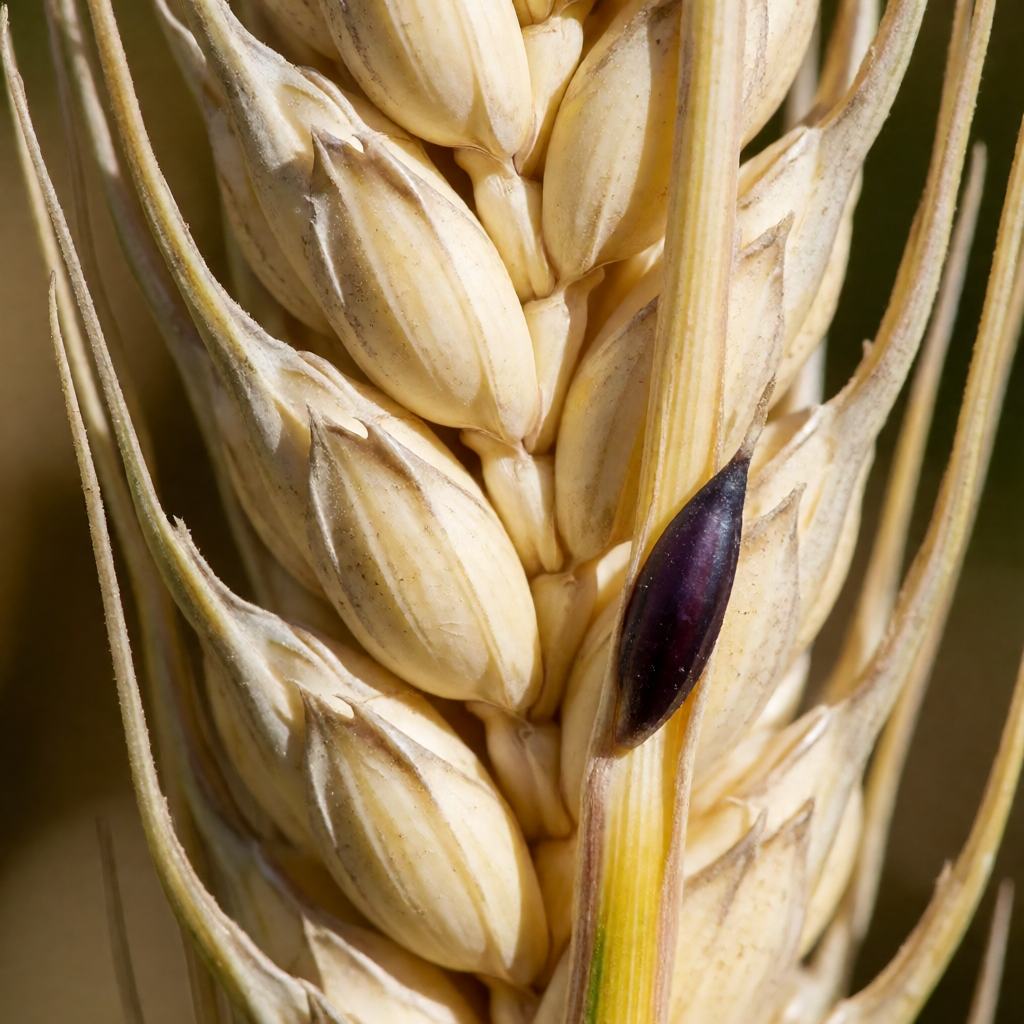
Ergot is seen most often in its hard black stage. The body is curved and dark purple-black. It is between 1 and 3 cm long. It pushes out from between the pale glumes of the rye head. It is longer and darker than the grain around it. So an infected head is easy to spot once a person knows the signs.
The surface is smooth and a little shiny. The shape may be straight, curved or bent like a horn. This depends on how much room it had to grow. Inside, the body is firm and pale. It is made of tightly packed threads, with a store of oils and sugars. The second stage appears only after the body has fallen to the ground.
It then spends the winter there. In the spring it grows 1 to several small stalks. Each one has a rounded purple head the size of a pin head. These heads hold the flask-shaped parts where the sexual spores are formed. The honeydew stage comes before the black stage.
1
2
3
Rye fields and wet grass
Where it lives
Ergot lives wherever its host grasses grow. Its main host on farms is rye. This cereal grows on poor, sandy and acid soils across northern and eastern Europe. The fungus also attacks wheat, barley, oats and triticale. It grows on a very long list of wild grasses. Ryegrass, cocksfoot, fescue and brome all carry it.
The fungus is found throughout the mild parts of the world. It lives in Europe, Asia, North Africa, both Americas and Australia. It is most common in cool, wet weather. The disease is worst in a wet spring and early summer. The spores need damp conditions to infect the open flowers of the host. It is also worse in crops grown from infected seed.
It is worse again on land where rye has been grown for several years in a row. In the wild the fungus is easy to find on tall grass heads at the edges of fields. It also turns up along roadsides in a wet year. It is not a woodland fungus at all. The pattern of the disease has changed a great deal over the last century.
The living plant, and its honeydew
What it eats
Ergot is a parasite. It takes its food from the living plant it grows inside. It does not kill the grass. In some ways it acts almost like a seed. A spore lands on the open flower of a rye plant. It comes up and sends a fine thread down into the ovary. From there it spreads through the tissue of the growing grain.
It then grows fast. It uses the sugars and nutrients that the plant was sending to its own seed. It turns that food into its own tissue. This is why an infected rye head carries a heavy black body where a light grain should be. The infected flower makes a sticky honeydew that is rich in sugar. This honeydew helps the fungus in 2 ways. It draws flies and other insects.
They pick up spores on their bodies and carry them to fresh flowers. It also feeds the fungus itself. The link with insects is a clever one. The fungus uses the very insects that visit healthy flowers for nectar. Once the black body has formed, the fungus stops feeding and rests.
Two stages, one long year
The breeding cycle
Ergot has a double life. It needs 2 stages to complete its cycle. The first stage is without sex, and it happens on the living plant. Spores carried by wind or by insects land on an open grass flower and infect it. The fungus then makes a second kind of spore in the honeydew. Insects and rain spread these spores to other flowers in the same field.
The second stage is sexual. It happens after the black body has fallen to the ground. The body rests through the winter. In the spring it grows 1 or more small stalked heads just above the soil. Inside these heads the fungus forms flask-shaped parts that hold the sexual spores. The spores are shot out into the air.
The wind then carries them to fresh grass flowers. The cycle begins again. The whole cycle takes about a year. It cannot be completed without the long rest on the ground. This is why ploughing the black bodies deep into the soil works so well. A single one can make hundreds of thousands of spores in one spring.
No concern, but strictly controlled
Conservation
Ergot is not a species of concern for conservation. It is abundant wherever its hosts grow. It is a plant disease of real economic weight. Most of the work on it aims at control rather than at protection. The main control measures are the cleaning of seed to remove the black bodies before sowing. Farmers also rotate crops, so that rye does not follow rye.
They plough infected stubble deep, and they grow cereal kinds that flower in a way that resists infection. In most countries there are strict legal limits on the amount of ergot allowed in grain for human food. The usual limit is no more than 0.05 per cent by weight. This is because of the danger of poisoning. The fungus has become more of a problem in recent years on organic farms. Chemical seed treatments are not used there, and seed cleaning is less thorough.
There have been serious outbreaks in rye grown for organic bread. There is also a growing trade in the ergot poisons themselves. They are taken from farmed fungus for the drug industry. Ergot poisoning in people is now rare in Europe. But it still occurs where badly cleaned grain is eaten.
Quick hits
Five things to remember
- The dark curved body that replaces the grain is called a sclerotium, and it is longer and darker than the rye grain around it.
- In the middle ages the disease it caused was known as Saint Anthony’s fire, and it killed many thousands of people across Europe.
- The same poisons that made bread dangerous are now used to treat migraine and to stop bleeding after childbirth.
- The infected flower makes a sticky sweet honeydew that draws insects, and the fungus uses them to carry its spores to fresh flowers.
- The black body must rest on the ground through a whole winter before it can make spores, so deep ploughing breaks the cycle.