 By st20113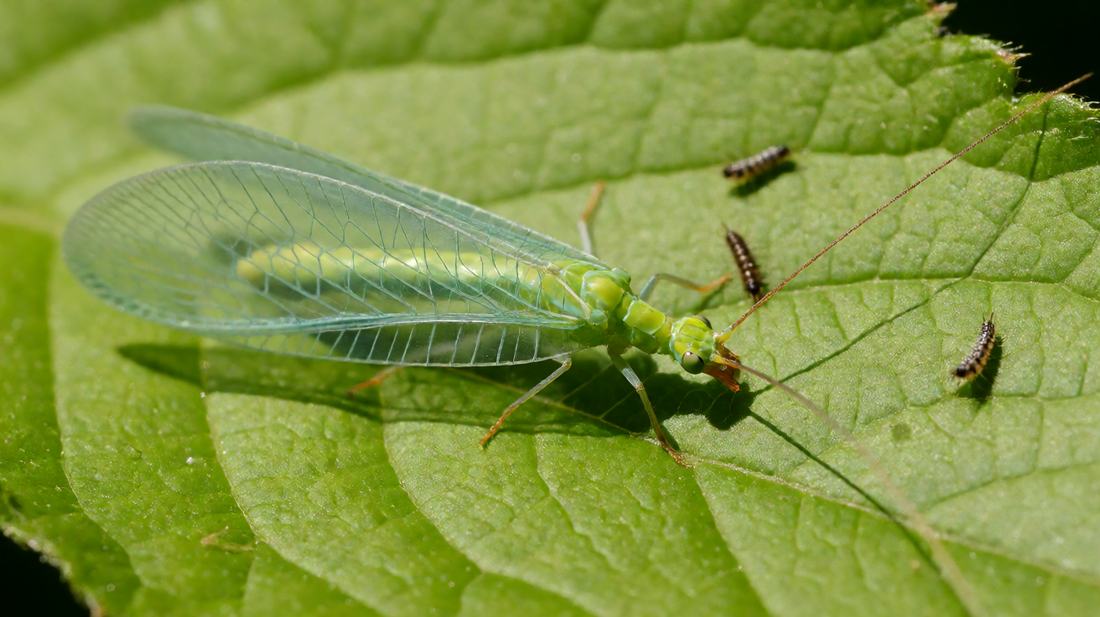
Chrysopa perla | Green Lacewing
Species Profile · Chrysopidae
Green Lacewing
The delicate green insect that flies low over the leaves at dusk — a fierce larval hunter of aphids, shipped to farms in quantity to keep soft-bodied pests under control.
IUCN: Least Concern
Range
Body
Aphids
Eggs
Generations
The green dusk hunter
A gardener’s quiet ally
The green lacewing is a delicate, long-antenned green insect. It flies low over the leaves at dusk. It is one of the most useful allies a gardener or farmer has. Most people have never learned its name. It belongs to the order Neuroptera. That order holds the antlions and the owlet flies.
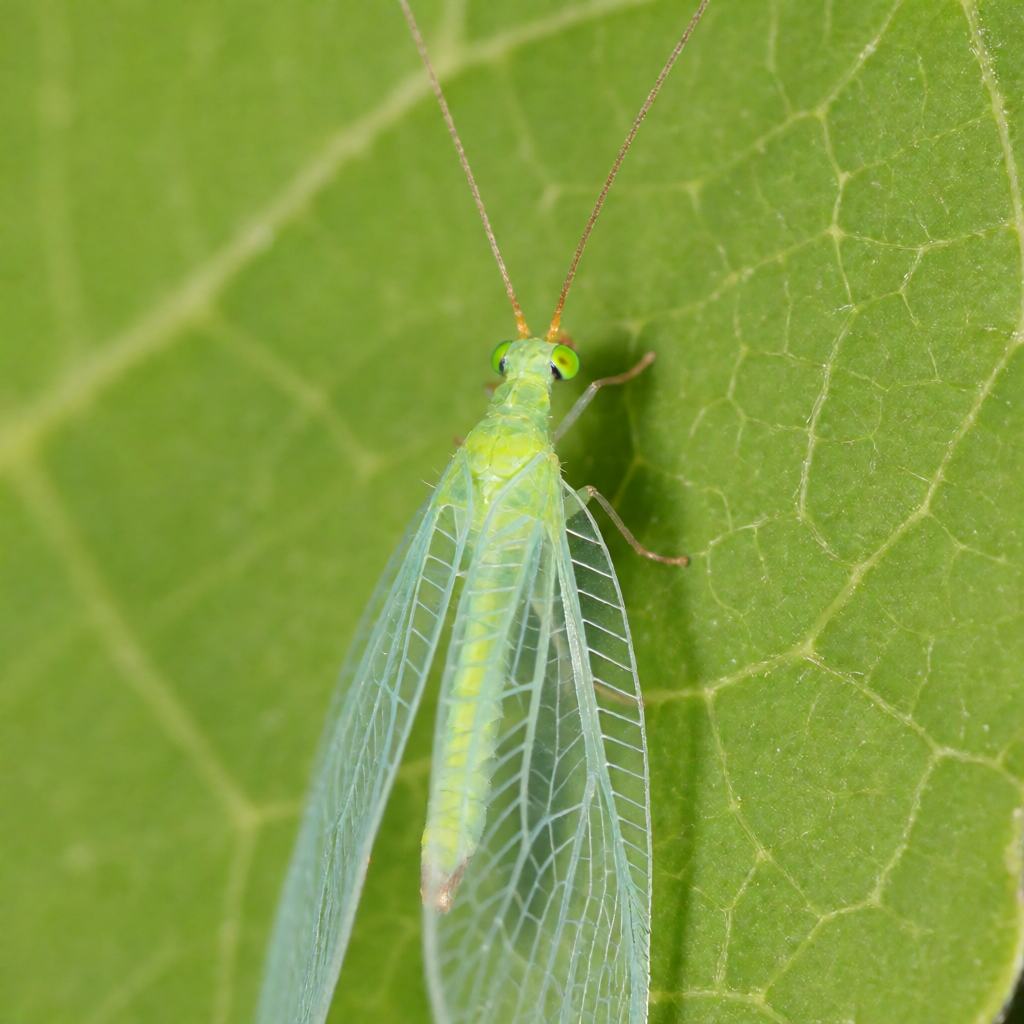
The family Chrysopidae carries the green lacewings. The adult is hard to mistake. It holds two long, clear wings roof-like over its back. It has two very long, fine antennae. It has two large eyes that catch the light. The animal looks fragile.
Its larvae are among the fiercest hunters in the whole insect world. A larva eats aphids in their thousands. Because of that, it is shipped in bulk to farms and greenhouses around the world. It keeps the small, soft-bodied pests under control. The species lives across Europe, across most of Asia and across North America. It is one of the commonest large insects of the meadow, the hedge and the edge of a wood.
Family tree
Chrysopidae, the lacewings
The green lacewing is in the order Neuroptera. It sits in the family Chrysopidae. The French entomologist Linnaeus named it in 1758. It has kept the name Chrysopa perla ever since. The order is defined by the shape of the wings. They are veined in a fine net. The animals are also named for the way they hunt.
The order carries the lacewings, the antlions and a few other groups. It holds them in a single family of the long-winged hunters. The green lacewing sits with the other members of the genus Chrysopa. It is one of the few of that genus that spreads across both sides of the Atlantic. Its close relatives are the gold and the green-antlered lacewings. They are told apart only by the small structure at the base of the wing. The green lacewing shares the order with the common green darner.
That is a much larger and faster winged hunter of the water’s edge. The two are in different orders. The dragonfly is an older and heavier-built insect. Both sit at the top of the small, soft-bodied insects. Both hunt in the open.
Clear wings, long feelers
How to tell one
The adult is small and long. Its body is 10 to 15 mm. Its wingspan is 20 to 30 mm. The colour is a clean green or a yellowish green. The two wings are clear and green-tinted. They fold roof-like over the back when the insect rests. The antennae are very long and fine.
They are almost as long as the body. The two eyes are large and sit on the sides of the head. The larvae are the reverse of the adult. They are thick, dark and armed. They have two large, curved jaws that pin down prey. Their whole body is covered in fine spines. A larva can hold a large aphid in its mouth.
It works its way through the next one while it does. The eggs are laid on the end of a long, fine stalk. That stalk lifts the egg away from the body of the insect. It keeps the newly hatched larvae from eating one another. This habit has been copied, in a way, by other insects that lay eggs near their own hatchlings.
1
2
3
Meadow, hedge, greenhouse
Where it lives
The green lacewing lives wherever there are soft-bodied insects to eat. That puts it in the meadow, the hedge, the orchard, the greenhouse and the flower bed. It is common across all of Europe and most of the temperate world. It lives in every one of those places from the lowland fields up into the mountains. The adult is a strong, short, low flier. It moves from plant to plant on a wind. The wind carries it more than its own flight does.
It is not a long-distance migrant the way the dragonflies are. A lacewing in one meadow spends most of its life close to where it hatched. It stays within a few hundred metres. The larvae are slow. They hunt on the spot. They walk up and down the leaves where the aphids are in their thousands. A meadow cut early and left short holds more lacewings.
That is true when it is not mown in summer. The larvae need the long, uncut, flowering plants to hunt on. The species is one of the commonest of the larger insects in the British Isles. It does not appear on any threat list. Its numbers will fall where the aphids have been killed by the spray on the crop.
Aphids, and the nectar too
What it eats
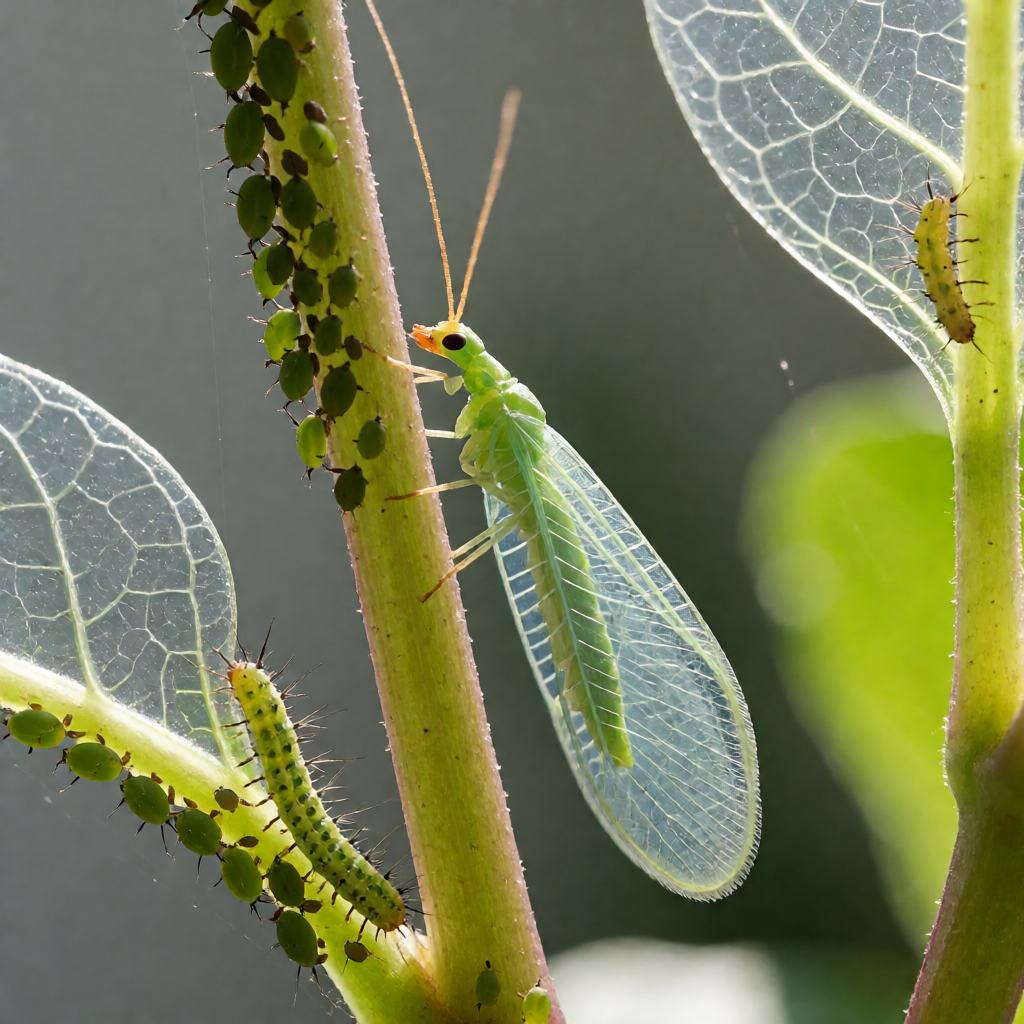
The green lacewing is a hunter at both stages of its life. The larva is the one that hunts. It is a relentless one. It sits at the bottom of the leaf. It strikes out with its curved jaws. It will take a large aphid that is many times the size of its head.
A single larva eats thousands of aphids before it grows up. It also takes the eggs of the other insects. The adult is a nectar drinker. It also takes the small flying insects it meets. Its eyes are what let it see them in the dark. The two parts of the life are joined.
Farmers have long understood this. The growers of greenhouses have now caught on to it too. The larvae are let loose on the crops in their thousands. The aphids are brought down before the spray is needed. The green lacewing is one of the insects that the farmers call a beneficial. It is the one that is easiest to keep.
Eggs on the stalk
The breeding cycle
The green lacewing breeds in the spring and again in the summer. The females lay the eggs on the stalks that were just described. The egg sits at the top of the stalk. It hatches within a few days. A larva drops down and begins to hunt. It feeds for a whole month or more.
It grows through 4 or 5 stages. It then finds a place on the leaf. It spins a small, clear cocoon. The adult comes out of that cocoon in early summer. It feeds on the flowers. It also mates.
A female can lay hundreds of eggs in her life. The larvae that come from them keep the aphids down through the summer. Winter is the one time the species is hard to find. The adults die off in the cold. The species has to start again from the eggs that were laid in the spring.
Least Concern, sprayed down
Conservation
The green lacewing is not in danger. It is one of the commonest of the larger insects in the British Isles. It does not appear on the Red List. Its range is still as wide as it has ever been.
The one real threat is the loss of the plants it lives on. The spray that is put on the crops to kill the aphids will also kill the larvae that are hunting them. A farmer who wants to keep the lacewings has to leave the wild plants in the hedge and the ditch. He has to cut the hay before the moths and the burnets have laid their eggs.
The species is a useful marker of the health of the meadow. It will not come back to a field that has been treated with the spray that kills the small, soft-bodied insects.
Quick hits
Five things to remember
- The green lacewing is one of the insects that farmers ship in bulk to the greenhouses to keep the aphids under control. It is the easiest of the beneficials to keep.
- The larvae are thick, dark and armed. They will take a large aphid that is many times the size of their head.
- The eggs are laid on a long, fine stalk. That stalk lifts the egg away from the body of the insect and keeps the hatchlings from eating one another.
- A single larva eats thousands of aphids before it matures. It takes the eggs of other insects as well.
- The species marks the health of the meadow well. It refuses the spray that kills the small, soft-bodied insects.
[…] The scorpionfly is a small insect. Its name is Panorpa communis. Fleas share this branch of the family tree. A thin winged relative is the Green Lacewing. […]