 By st20113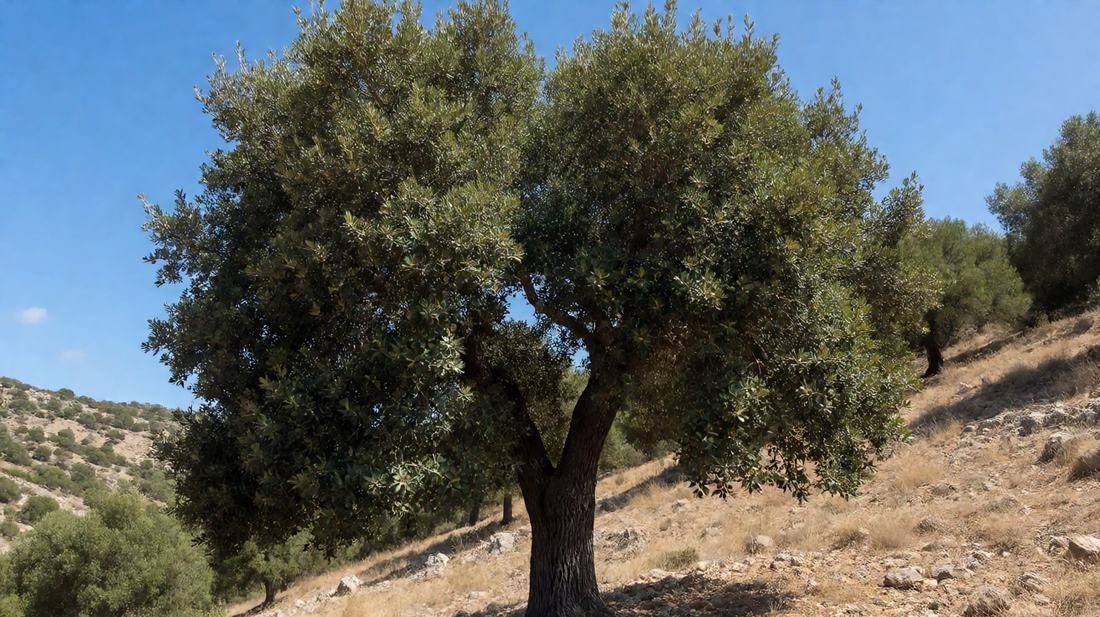
Quercus ilex | Holm Oak
Species Profile · Fagaceae
Holm Oak
The evergreen oak of the Mediterranean, with holly-like spiny leaves when young and a toughness that makes it a street tree from Spain to Britain.
IUCN: Least Concern
Range
Height
Leaves
Acorns
Age
The Mediterranean evergreen
The oak that keeps its leaves
The holm oak is one of the most characteristic trees of the Mediterranean. And the evergreen oak that gives the region much of its look. In full leaf all year, it stands as a dark. Rounded mass against the pale summer sky. And it is the tree that shades the dry hillsides and hot coastal plains from Spain to Turkey. It is not a tall. Straight forest tree like the English oak of the north. It is a broad, dense.
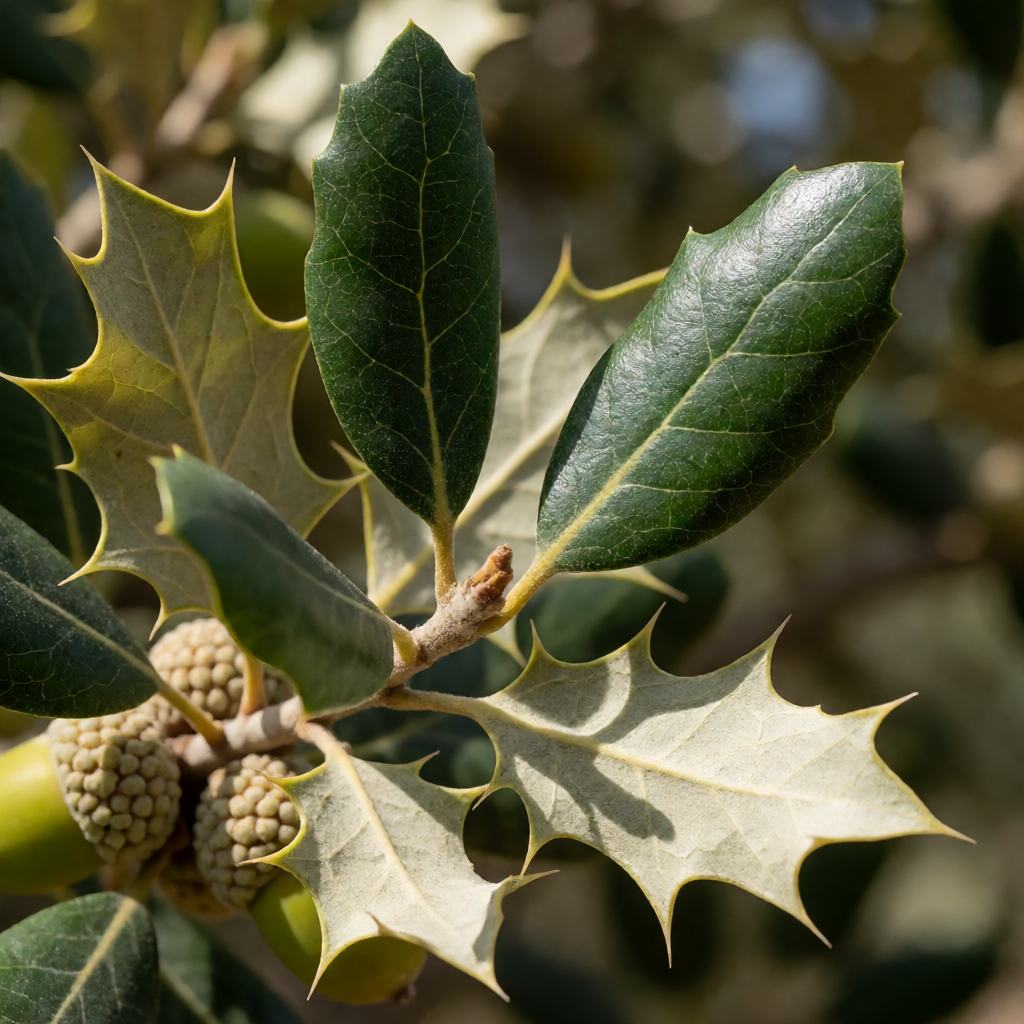
Long-lived evergreen that survives heat and drought that would kill most other oaks. It has been planted far beyond its native range. And in the mild. Wet climate of the British Isles it has become a familiar park and street tree. Valued because it shrugs off salt winds and clipping alike. The leaves are its most distinctive feature. They are dark and glossy on top and grey and felted underneath. And on young trees they are spiny like holly.
This is the source of the name holm. An old word for holly. The wood is hard and heavy. The acorns feed a wide range of animals. And the tree itself is a small world for insects. Birds and fungi. It is one of the most useful and most planted trees of warm Europe. And one of the toughest.
Family tree
Fagaceae, the oaks and beeches
The holm oak belongs to the family Fagaceae. The beeches and oaks. It sits in the genus Quercus. One of the largest groups of trees in the northern hemisphere. With several hundred species worldwide. Linnaeus named it in 1758 as Quercus ilex. The genus name Quercus is the old Latin word for oak. The species name ilex refers to the holly-like leaves of the young tree. Because the Roman word ilex was used for the holm oak and for holly both. The genus is split into two great groups.
The white oaks and the red oaks. And the holm oak is a white oak. That means its acorns mature in a single year and its leaf veins do not end in bristle tips. The holm oak is a close relative of the English oak. The deciduous oak of northern Europe. And the two share the same genus. The English oak sheds its leaves each winter and has rounded. Lobed leaves without spines. The holm oak keeps its leaves and has the spiny. Holly-like leaves of youth.
The two can be crossed in gardens. This shows how near they are. The holm oak is also near the cork oak and the kermes oak of the same region. And the three are often confused. The holm oak is the most widely planted of the Mediterranean evergreen oaks. And it has been moved by people across the world. It now grows wild in a band from the Iberian Peninsula and southern France through Italy. The Balkans and Turkey to the Levant. And it has been naturalised in the British Isles. Ireland and parts of Australia and the Americas.
Holly-like leaves, grey bark
How to identify one
The holm oak is a broad. Evergreen tree that grows to 20 to 25 m in height. With a short, thick trunk and a dense, rounded crown. In the open it is wider than it is tall. And it responds well to clipping. This is why it is used for hedges and topiary. The trunk can reach 1 m or more across in old trees. And the bark is grey and cracked into small squares. The leaves are the key feature. They are 3 to 8 cm long, stiff and leathery. Dark green and glossy on top.
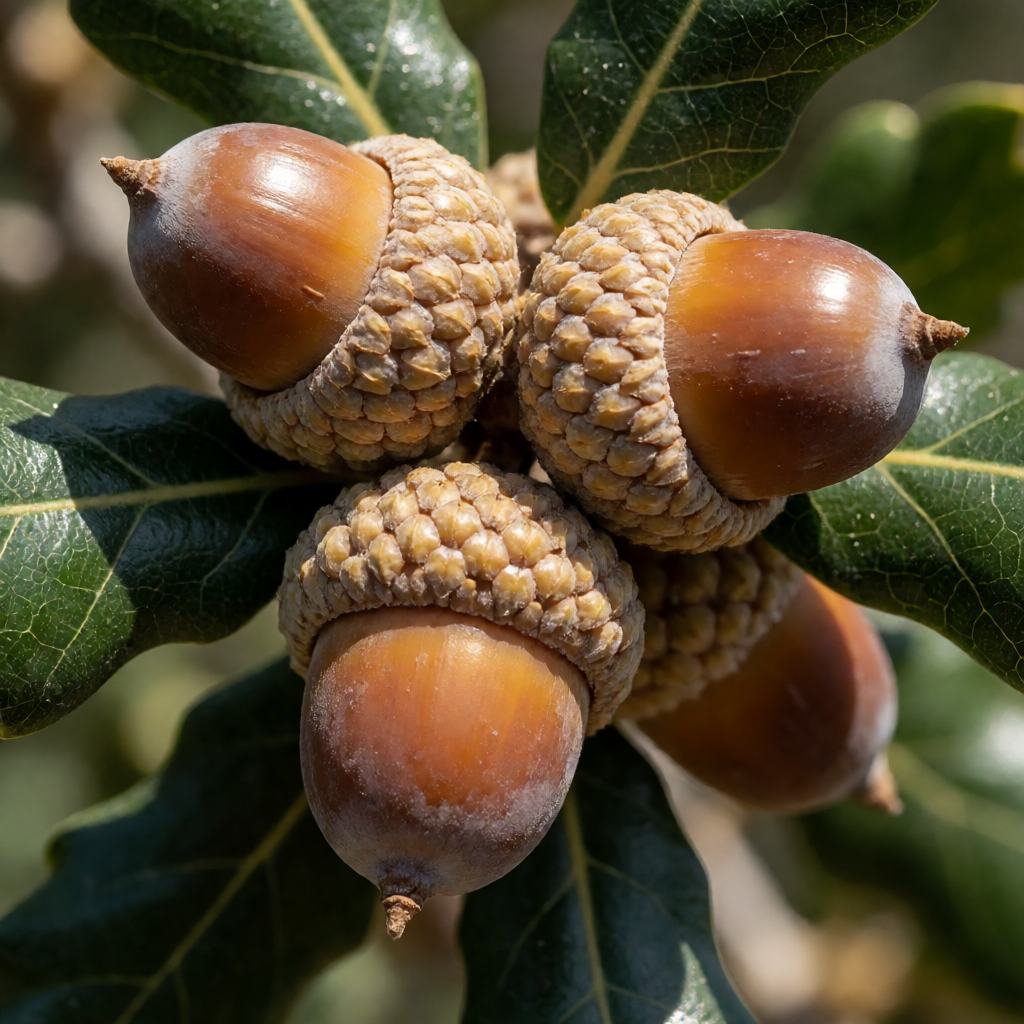
And covered beneath with a dense grey felt of tiny hairs. On young trees and on shaded shoots the leaves are spiny toothed like holly. On older trees in full sun the spines are lost and the leaf is a simple oval. This is one of the puzzles of the species. The two forms can appear on the same tree. The leaf is built to save water. The thick cuticle and the felted underside slow the loss of moisture in the hot. Dry summer. And the tree can keep its leaves through the worst of the drought. The flowers are small and wind-pollinated, and open in spring. The acorns are 2 to 3 cm long.
Set in a rough cup of grey scales. And ripen in the autumn of the same year. The wood is pale brown, very hard and heavy. And close-grained and strong. The root system is deep and wide. This lets the tree reach water far below the summer soil and stand firm in the wind. The tree is long-lived. And specimens of 500 years or more are known. The crown is so dense that it casts a deep shade. And little grows beneath a mature holm oak unless the tree is open.
1
2
3
Dry hillsides and coast
Where it lives
The holm oak is a tree of the Mediterranean climate. With hot, dry summers and mild, wet winters. It grows best on well-drained soils and tolerates lime and thin ground that would defeat many other trees. It is one of the most drought-tolerant of all oaks. And survives long rainless summers on south-facing slopes where the soil bakes hard. It is also remarkably tolerant of salt. This is why it is the standard tree of the coast in southern Europe and the standard windbreak in the British Isles. It needs sun. And does not thrive in the deep. Cool shade of a northern forest.
Its native range runs from sea level to about 1000 m in the mountains. And in the hottest parts it keeps to the cooler. Higher sites. It forms pure stands on dry ground. And mixes with pines. Olive and other evergreen oaks on better soil. It is found across the Mediterranean basin. From Portugal and Morocco in the west to Turkey and the Levant in the east. And it extends up the Atlantic coast of France. Outside its home it has been planted across the world in places with mild winters.
And in the British Isles and Ireland it is naturalised. Often forming dense thickets where birds have spread the acorns. It is a hardy street and park tree there because it stands the sea wind and the city smoke. The tree regenerates well after fire. This is useful in a region where summer fires are common. The stump and root both sprout again. And a cut holm oak often comes back as a clump of stems. That ability to coppice has been used by people for thousands of years to produce wood and fodder on a cycle of a few years.
It makes its own food
What it eats
The holm oak is a plant. And makes its own food by photosynthesis. But it is also a source of food for a long list of animals. The acorns are the main crop. They are rich in starch and oil. And are eaten by jays, magpies, woodpigeons, wild boar. Deer, mice and squirrels, among many others. The jay is the great planter of the species. Because it buries acorns and forgets some. And those buried acorns grow into the next generation of trees. The leaves are tough and low in value.
But are still eaten by caterpillars of many moths and by the larvae of the oak gall wasp. This raises the strange, round galls on the twigs and leaves. The flowers feed bees and other insects in spring. The tree is also a host for fungi. Both in the soil and on the wood. And some soil fungi form partnerships with the roots that help the tree take up water and minerals from poor ground. Humans have used the tree directly. The acorns were eaten in hard times. And fed to pigs. This is one of the oldest uses of the oak in Europe. The wood is valued for fuel and charcoal.
Because it burns hot and slow. And it is used for furniture. Tool handles and building where a hard, close grain is needed. The bark and the cup of the acorn were once used for tanning leather. Because they are rich in tannin. The tree yields little cork. This is the product of its relative the cork oak. But it is planted and managed for timber. Fuel and shade across its whole range.
Acorns spread by jays
The breeding cycle
The holm oak is a monoecious tree. This means each tree carries both male and female flowers. The flowers open in spring and are carried on the wind. And a single tree can pollinate itself or its neighbours. The acorns take the whole summer to fill and ripen. And fall in autumn. Each acorn sits in a cup of rough scales. And only one or a few ripen at the base of each year’s shoot. The seed is large and rich. And is dispersed mainly by animals.
Jays carry acorns away and cache them. And mammals eat them and drop them. Those that escape the eaters and land in a good spot germinate in the same autumn or the following spring. The seedling grows slowly at first. And needs some shade and moisture to start. But once established it is hard to kill. The tree reaches reproductive age at about 20 to 30 years. This is late for a planted tree but normal for a wild one. It then goes on producing acorns for centuries. The holm oak also spreads by vegetative means.
Coppiced stumps and damaged roots throw up new shoots. And a single tree can become a ring of clones around an old stump. This ability to regrow from the base makes the species resilient to cutting and fire. And is one reason it has been managed as a coppice for so long. Growth is slow on dry sites and faster on moist. Sheltered ones. A tree in a British park may put on more wood in a wet year than a wild tree on a Greek hillside does in five. But both are the same species. Shaped by the ground they stand on.
Least Concern, widely planted
Conservation
The holm oak is listed as Least Concern on the global Red List. It is a widespread and abundant tree across a very large natural range. And it is also one of the most planted trees of warm Europe. So its numbers are secure. The native holm oak forests of the Mediterranean have been much reduced by clearance for agriculture. By fire and by the spread of towns. But the tree itself is not at risk. Because it regrows from the stump and is planted on purpose. In many parts of its range it is expanding rather than shrinking. Thanks to planting for shade, windbreaks and firewood.
There is no global programme to protect the species. And none is needed. The concerns are local and ecological rather than about the tree as a species. The loss of old. Open holm oak woodland removes habitat for the insects. Birds and fungi that depend on mature trees. The replacement of mixed woodland by single-age plantations of holm oak or pine reduces the value of the ground for wildlife. Fire. This the tree can survive. Also kills the young shoots if it returns too often.
Climate change may push the tree uphill in the hottest parts of its range. And may help it spread north in the British Isles and elsewhere as winters warm. The species is in fact a useful tree for a warming world. Because it needs less water than most and stands heat and salt. It is also planted to hold soil on eroded hillsides and to shade crops and livestock in the dry summer. For all its toughness. The tree is best looked after as part of a mixed. Well-managed woodland rather than as a lone crop. Because only a mixed wood holds the full set of animals and fungi that the holm oak supports.
Quick hits
Five things to remember
- Its young leaves are spiny like holly, which is the source of the name holm, an old word for holly.
- It is one of the most drought-tolerant oaks, and survives the hot, dry summers of the Mediterranean on south-facing slopes.
- It is so salt-tolerant that it is the standard windbreak and street tree on the coasts of the British Isles.
- A holm oak can live for 500 years or more, and its stump sprouts again after cutting or fire.
- The jay plants the next generation by caching acorns and forgetting some of them.