 By st20113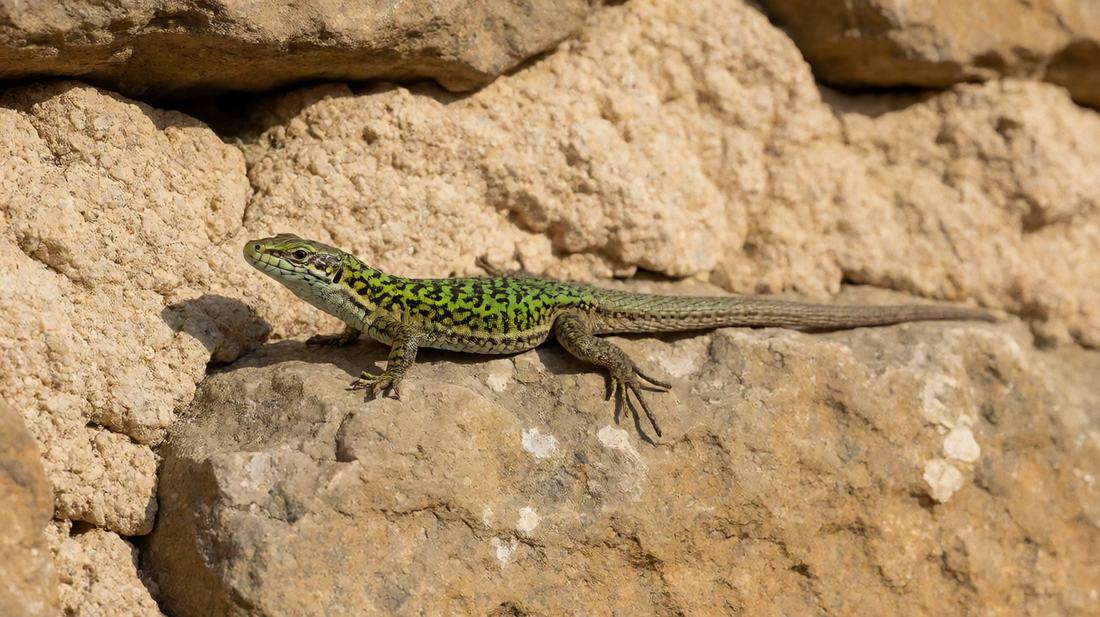
Podarcis siculus | Italian Wall Lizard
Species Profile · Lacertidae
Italian Wall Lizard
The commonest lizard of southern Italy, and the star of a famous experiment — five breeding pairs moved between islands rewrote its gut in a few decades.
IUCN: Least Concern
Range
Length
Genus
Introduction
Diet
The lizard of the sunny wall
Southern Italy’s commonest reptile, and a famous experiment
The Italian wall lizard is the most common lizard in southern Italy. It is also one of Europe’s most adaptable reptiles. It has a green back and moves fast. It lives happily on old walls, rocky shores and railway banks. Gardens, vineyards and rubbish tips suit it too. It comes from southern and southeastern Europe.
People have carried it far beyond that range. It now lives in Spain, Turkey and North America. There it is seen as a possible invader. Its name comes from the Greek words for agile and feet. That is fair. The lizard is fast, alert and hard to catch.
It is also the subject of a famous case of rapid evolution. In 1971, five breeding pairs were moved between two small Adriatic islands. The new island lay 3.5 km away. Within a few decades their young had a new part of the gut. They also had new head shapes and a new link with gut microbes. Teams who went back in the 2000s logged those changes in detail.
Family tree
Podarcis, about 20 Mediterranean wall lizards
The Italian wall lizard sits in the family Lacertidae. That family holds the true lizards of Europe, Asia and Africa. Its genus is Podarcis. That group holds some 20 species of small wall lizard. It is centred on the Mediterranean. Constantine Samuel Rafinesque named the species in 1810 as Lacerta sicula. It stayed in the genus Lacerta for most of the 19th and 20th centuries. It was later moved to Podarcis, first on anatomy and later on DNA.
The name siculus means of Sicily, where the first specimens came from. Both Podarcis siculus and Podarcis sicula are in use. Most recent authors prefer the masculine form. Podarcis is the main lizard group of the Mediterranean islands. The Italian wall lizard is its most widespread and most varied member. It is closely related to the common wall lizard. That species of the same genus occupies walls and rocky places across western and central Europe. The two overlap across northern Italy and the Balkans.
There they compete and sometimes interbreed. Dozens of subspecies have been named, many from single islands. One simple fact makes the taxonomy hard. Groups apart for only a few thousand years can already look and act differently. The Santo Stefano lizard was an island form. It died out in 1965. New predators arrived, and new wall lizards bred with it. That shows how fragile island groups of this genus can be.
Green back, long tail
How to identify one
The lizard is slender and agile. With the tail it reaches up to 25 to 30 cm. The body itself, from snout to vent, is usually 7 to 9 cm. The tail makes up most of the rest. It can be nearly twice the length of the body. The sexes look different. Males are usually larger and broader in the head. They are also brighter and more strongly marked. Colour varies enormously. Most have a green or brown back. It often carries dark brown or black mottling.
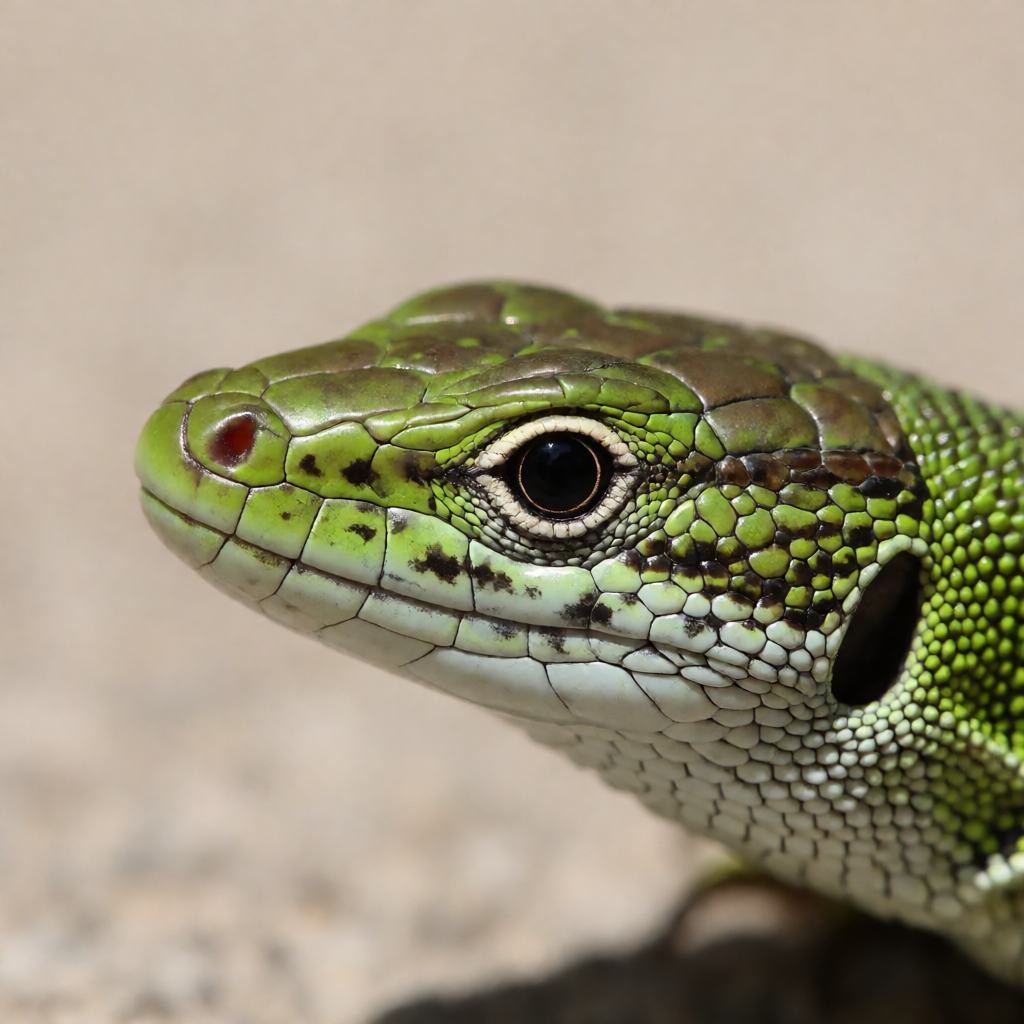
Some show lighter stripes along the body. The belly is white or pale green. A few groups are almost wholly green. Others are mostly brown. One famous blue form exists, Podarcis siculus klemmeri. It lives on one small island off the Italian coast. The head is narrow and pointed. A collar of enlarged scales sits under the throat. The limbs are long and thin. Sharp claws on the toes let the lizard run up vertical stone. Like many in this family, it can drop its tail.
If a predator grabs the tail, the lizard sheds it at a weak point in one of the vertebrae. The loose tail keeps twitching. That distracts the attacker while the lizard gets away. The tail grows back, but the new one is made of cartilage, not bone. It is usually shorter and scaled differently, and it takes months to grow. The skin is shed in patches several times a year. Adults are at their brightest in spring. Males then show brighter green flanks and a more strongly marked throat. Both are used in display.
1
2
3
Sun and small prey, anywhere
Where it lives
The lizard is not fussy about where it lives. It can live almost anywhere with sun and small prey. That is one reason for its success. Its natural homes include warm shrubland and the edges of temperate forest. It also uses rocky areas, cliffs, rocky and sandy shores and grassland. It is at least as common in changed landscapes. Field margins, pasture and plantations all hold it. So do vineyards, olive groves, gardens and ruins. Dry stone walls, road banks and waste ground suit it too.
It needs cover to retreat into and warm surfaces to bask on. A stone wall or a pile of rubble in full sun gives it both at once. It is native to Italy, Sicily, Sardinia, Corsica and much of the Adriatic coast and its islands. It also lives in parts of Slovenia, Croatia, Bosnia and Herzegovina and Montenegro. Its range takes in Serbia and southern Switzerland. People have brought it to Spain, southern France and Turkey. It has also reached the United States. Groups are settled on Long Island in New York and in parts of California. It has reached Canada too.
In those new lands it is seen as a possible invader. It is not fussy about food or shelter. It spreads fast and can push out native wall lizards. In parts of northern Italy its range has grown over the past century. Human transport and warmer weather both seem to help. Where it meets the common wall lizard the two often share the same places. The balance between them depends on warmth, height and the local ground.
Insects and fruit
What it eats
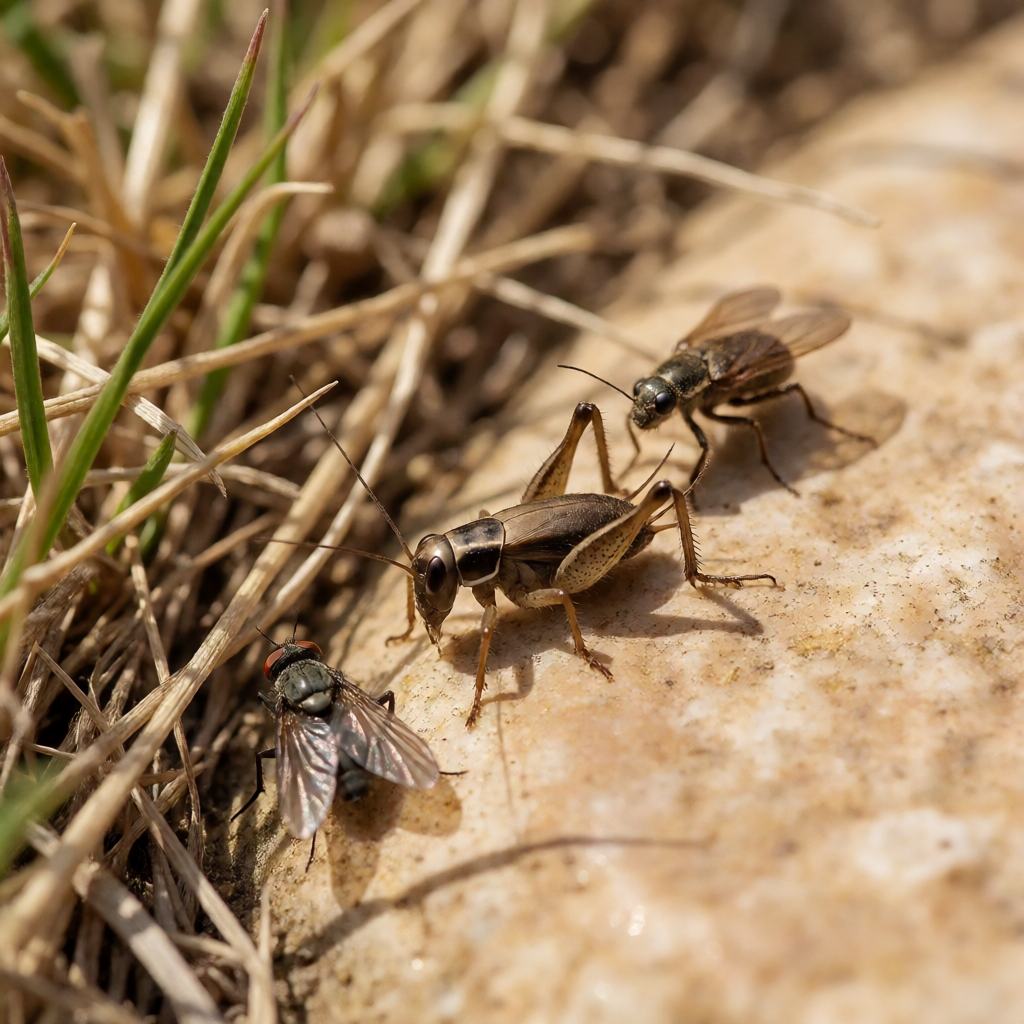
The lizard is not fussy. Small prey make up most of its diet. It takes beetles, flies, ants, grasshoppers and spiders. It also takes worms, snails and small lizards. Most importantly, it eats plants. So it is omnivorous. Adults eat fruit and berries, nectar and flower parts. In some groups plant matter is a large share of the diet. That is true mostly in late summer.
Insects are then scarce and fruit is plentiful. This taste for plants is central to its most famous story. The lizard hunts by sight. It moves in short bursts and stops to watch. Then it dashes at anything that looks like prey. It will also take dead animals and scavenge near people. Its bite is strong for its size. The head shape of a group reflects what it eats. Animals on hard, tough food need larger jaws and a stronger bite.
Animals on soft insects do not. Where the lizard is common it can change local insect numbers. Snakes and birds of prey eat it. Shrikes and cats take it too. Like others in this family it is active in the warmest part of the day. It retreats into cover when it turns too cold or too hot. In the north of its range it spends the winter asleep in deep cover. It comes out in early spring to bask.
Several clutches a year
The breeding cycle
The lizard lays eggs and, by lizard standards, is very productive. Females lay 3 or 4 clutches in a year. Each clutch holds 2 to 8 eggs. Laying runs from late spring through the summer. The eggs go into damp soil, cracks or under stones. Those places are warm and fairly stable. The eggs take about 6 to 8 weeks to hatch. Both sexes are present, so the species does not breed alone.
Males compete for ground and for females. Each one guards a small patch around a basking site. They display with head bobs, throat colour and a sideways squeeze of the body. Mating takes place in spring and again after the first clutch. Females can hold sperm for a period. Young emerge in late summer. They are small copies of the adults, about 25 to 30 mm from snout to vent. They are adult at 2 years old.
Many clutches a year, fast growth and an early start make the species a fast spreader. That is why a handful of animals let loose on a new island can build a group within a few years. In the wild they live 4 to 6 years. In captivity they can live far longer. Eggs and young are eaten in large numbers. The many clutches and the early start of females are an answer to one fact. Most young do not see their second year.
Least Concern, but islands are fragile
Conservation
The lizard is classed as Least Concern on the global Red List. The verdict rests on its very large range. It also rests on its tolerance of disturbed and man-made ground. Its numbers look stable or rising across most of that range. In several parts of its native range it is growing rather than shrinking. The same is true where it has been brought in. Its whole biology explains the verdict. It is not fussy about food or home.
It lays several clutches a year and grows up fast. It also spreads well, both on its own and with human help. It travels as a stowaway in cargo or as an accidental release. Local losses do happen. Island groups are the most at risk. New predators, changed ground and breeding with new wall lizards all take a toll. At least one island form has now been lost. Where the lizard is itself a new arrival the worry flips.
It becomes a threat to native lizards through competition and possible cross-breeding. Italian wall lizards are also collected for the pet trade in modest numbers. Heavy collecting plus loss of ground can affect small island groups. In practice, protecting this species means keeping the mix of warm, varied ground it needs. In the south that means stone walls, rubbly ground, field edges and old buildings. All of them have been going as farming has grown more intense.
Quick hits
Five things to remember
- In 1971, five breeding pairs moved to a new island. Their young soon grew cecal valves.
- Those valves occur in less than 1 percent of scaled reptiles.
- The species can shed its tail when grabbed, and the tail keeps twitching.
- It has been brought to Long Island in New York as a possible invader.
- A blue form, Podarcis siculus klemmeri, lives on one small Italian island.