 By st20113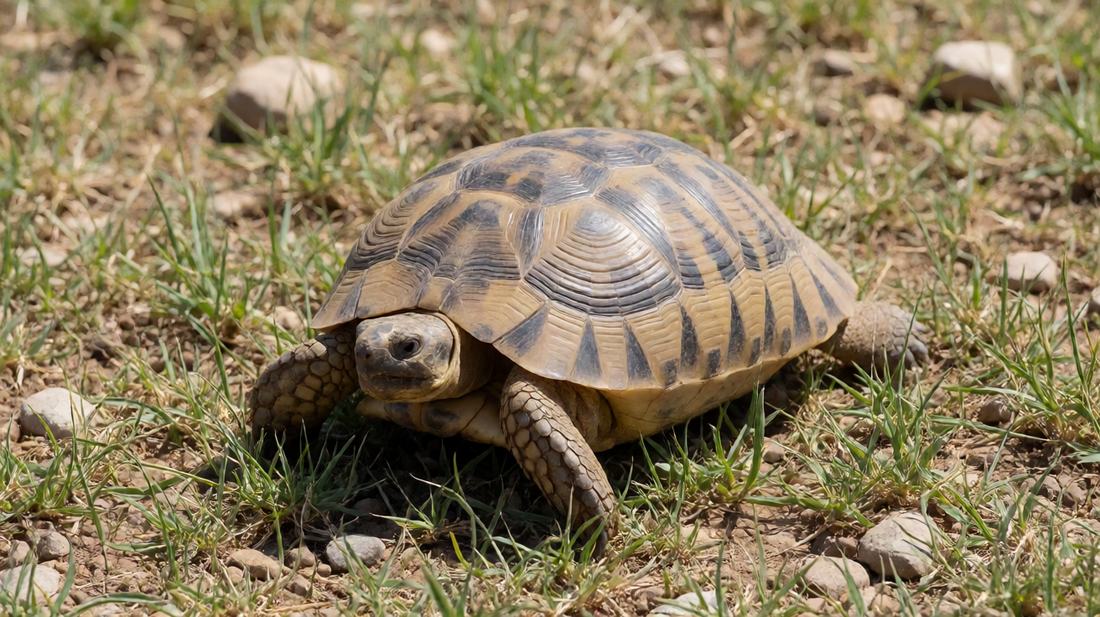
Testudo horsfieldii | Horsfield’s Tortoise
Species Profile · Testudinidae
Horsfield’s Tortoise
The four-toed tortoise of the Central Asian steppe, active for only a few weeks a year, and one of the most heavily traded tortoises on Earth.
IUCN: Vulnerable
Range
Shell
Weight
Claws
Burrow
The four-toed tortoise of the steppe
Weeks of spring, then back underground
Horsfield’s tortoise is the small, heavy-shelled tortoise of the Central Asian steppe. It lives in one of the harshest climates any tortoise faces. It lives in deserts, dry grasslands and rocky slopes. Its range covers Kazakhstan, Uzbekistan, Turkmenistan, Iran, Afghanistan, Pakistan and northwestern China. The growing season is short and the summers are scorching. It copes by coming out for only a few weeks of spring.
It wakes from its winter sleep as the first plants appear. It feeds and breeds quickly. Then it goes back underground. It waits out the summer heat and winter cold in its own burrows. It is easy to pick out among the rest. It has only 4 claws on each front foot.
Almost all others have 5. So it is often called the four-toed tortoise. It is also among the most heavily traded tortoises on Earth. Its fame as a pet has put wild numbers under steady pressure. Two of these animals became famous in 1968. They were sent around the Moon on a Soviet spacecraft and came back alive.
Family tree
Testudo, and the Agrionemys argument
This tortoise belongs to Testudinidae, the land tortoises. It is placed in Testudo. That group holds the Mediterranean spur-thighed, Hermann’s and marginated forms. John Edward Gray described it in 1844. He named it after the American naturalist Thomas Horsfield. Horsfield was a doctor and plant expert who worked for the East India Company in Java and later at the British Museum. The grouping is unsettled. The species differs from other Testudo in some ways.
They include the 4 claws on the front feet, the shape of the shell and its general build. The genus Agrionemys was set up for it in 1966. That name was widely used for years, though not by everyone. Recent DNA work places it back in Testudo. Some authors still use Agrionemys, a genus of one species. So the same form appears in print under two generic names. Some subspecies have been named. They include horsfieldii, kazachstanica, rustamovi, bogdanovi and kuznetzovi, and their validity is debated.
This species is closely related to the Greek tortoise, the widespread southern European species of the same genus. The two share the genus’ domed shell and the small spur-like scales on the thighs. They also share the same pattern of courtship and breeding. The link is practical as well as taxonomic. Keepers of Greek tortoises find that this one needs a much drier set-up. It also needs deep burrowing soil and a sharp yearly rhythm. Its biology is built around a very different climate.
Four claws and a domed shell
How to identify one
This is a small tortoise with a strongly domed, almost spherical shell. An adult carapace is usually 13 to 20 cm long. Females reach up to about 25 cm and males are generally smaller. Adults weigh about 300 to 500 g. The shell is olive-brown, olive-green or yellowish-green. Each shield carries dark brown or black markings, and the rim is pale yellow. The plastron carries irregular large black blotches. The front of the shell has a notch above the neck. The rear edge has a deeper notch above the tail. Those notches let the head and tail move freely.
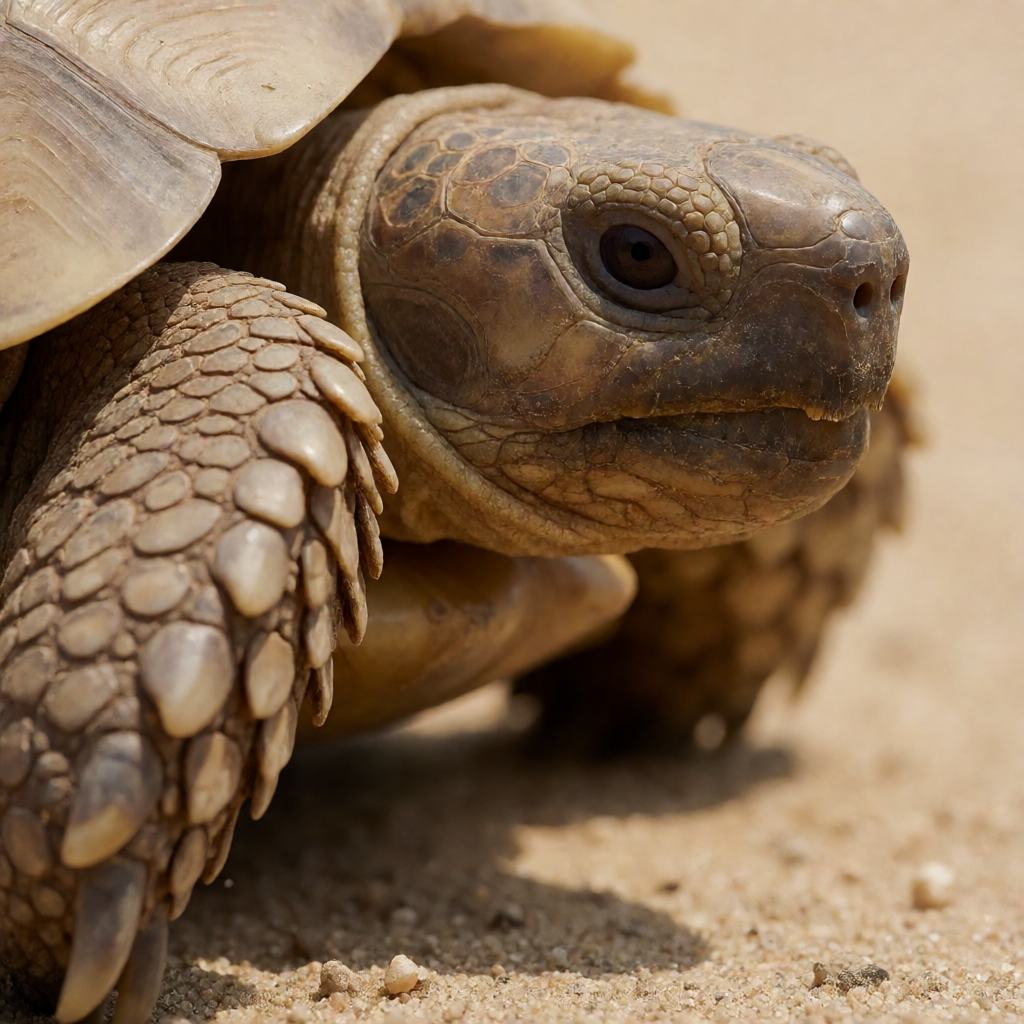
The head is small and brownish. Large even scales cover the crown. The snout is short and overhangs the lower jaw. The forelimbs are thick and flattened. A row of large, spiky scales runs along the outer edge. The hind limbs are rounder. The hind feet carry 4 claws, as do the front. That count is the quickest way to name the species. The male’s tail is longer and carries a horny spur at the tip. He uses it in courtship and in fights with other males.
Females are larger than males. They have a shorter tail and a flatter plastron. Males have a concave plastron, which helps them mount. Growth is slow and life is long. They reach full size over perhaps 10 to 15 years. They can live for many years. Wild ones often show growth rings on the shields. Those rings record the short growing seasons they have survived.
1
2
3
Desert, steppe and rocky slope
Where it lives
This tortoise lives on arid steppe, in semi-desert and on rocky hillsides. Its range runs across Central Asia. It stretches from the Caspian region eastwards through Kazakhstan into China. It also runs southwards into Iran and Pakistan. It lives in sandy and stony soils with sparse plants. It uses dry slopes and the foothills of mountains. It is often found in flat, open country with strong sun. The plant cover there is short but varied. The climate is strongly seasonal. Winters are cold, with frost and snow.
Spring is brief and wet, and plants grow and set seed. Summer is very hot and dry. Almost nothing green remains. Its year is built around that rhythm. It sleeps through winter in a burrow. It emerges in late winter or early spring. It feeds and mates in the few weeks when the steppe is green. Then the plants dry out. It digs a summer burrow and goes dormant again. That second rest period is called aestivation.
These burrows may be up to 2 m long. They keep it in a range of heat and damp it could not otherwise survive. It often keeps to the same burrow system. A good burrow is a valuable resource used for years. This is one of the most northerly and most continental of tortoises. Its whole plan answers one problem. The growing season lasts only weeks. The trade-off is slow growth, late breeding and few young.
A plant eater of a brief spring
What it eats
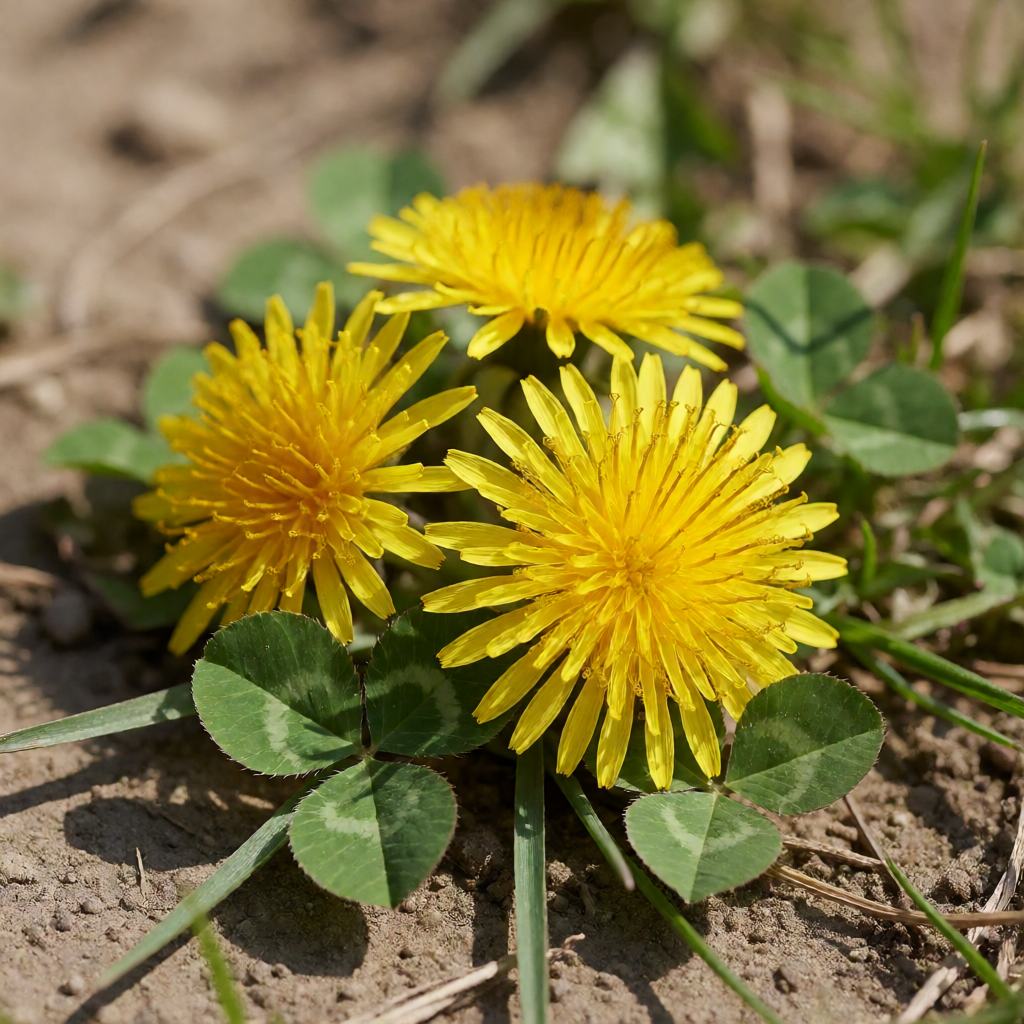
This tortoise is a herbivore. It feeds on the green material the steppe offers in its short active season. Its diet includes the leaves, stems, flowers and seeds of many low-growing plants. Wormwoods and other Artemisia species are taken. So are asters, bindweeds, oats and other grasses. It also eats the flowers of plants such as dandelion and clover where these are available. It takes roots and fallen fruit too. Now and then it eats insects and carrion.
So it is best described as a plant eater with omnivorous habits, not a strict one. It feeds most in the morning and late afternoon. It spends the middle of the day in shade or in its burrow. That is standard for a tortoise in a hot dry climate. It cuts water loss as well as heat stress. Water is a serious limit. It gets most of its moisture from its food and from dew. It can go for long periods without drinking.
It concentrates its urine and stores water in its bladder. Wild ones drink from puddles and streams when they can, mostly after rain in spring. It needs a diet high in fibre and calcium to grow its shell well. Plants of chalky soils are the most valuable for that reason. In captivity, soft fruit and protein-rich food are the commonest cause of ill health. Its gut is adapted to coarse, fibrous, low-energy plants. Its growth rate is set accordingly.
Two rests a year
The breeding cycle
They mate in spring, soon after they wake from their winter sleep. The male circles the female and rams her shell with his own. He bites at her legs before mounting. His concave plastron and the spur on his tail are both used. Females are mature at around 10 years and males earlier. A female produces one or sometimes 2 or 3 clutches in a season. Each clutch holds 2 to 6 eggs. The eggs are hard-shelled and white, about 3 to 4 cm long.
She digs a flask-shaped nest with her hind legs and buries them. In the wild the eggs take 60 to 90 days to hatch, depending on the heat. The young of late clutches often stay in the nest all winter. They emerge the next spring rather than digging out in autumn. That plan protects them from the cold. It also means a clutch can be lost outright if the winter is harsh or the nest is disturbed. The young are about 3 to 4 cm long, with a soft shell and a small yolk sac. They spend their first weeks hidden in plants, feeding on tender growth.
Growth is slow. The active season lasts only a few weeks a year. So a wild one may take over a decade to reach adult size. They may not breed until 10 or more years old. That slow rate of breeding is the central problem for the species. A group stripped of adults takes decades to replace them.
Vulnerable, and heavily traded
Conservation
This tortoise is listed as Vulnerable on the Red List. That status rests on a documented decline. Collection for the pet trade drives it above all. The species is also in Appendix II of CITES, as a member of Testudinidae. So trade in it is regulated. In China it is a first-class national key protected animal. A nature reserve at Huocheng in Xinjiang looks after it. The first successful captive breeding in China produced 7 hatchlings in 2021.
The scale of the trade is the problem. This is a small, hardy, long-lived and undemanding tortoise. It has been exported in huge numbers for years to Europe, North America and Japan. It tolerates cold and dry conditions better than most. So it survives transport and captivity well, raising demand. Loss of habitat adds to the pressure. Overgrazing by livestock and the loss of steppe to farmland both cut suitable ground. So do irrigation and the spread of roads and settlements.
Climate change may shift the edges of suitable steppe further. Protected areas cover part of the range. But enforcement is hard across the huge and thinly peopled region it occupies. Real conservation means controlling the export trade and protecting typical steppe. It also means monitoring wild numbers and captive breeding. That way demand can be met without more removals from the wild.
Quick hits
Five things to remember
- Each front foot carries only 4 claws, where other tortoises have 5.
- Two of these animals flew around the Moon on Zond 5 in 1968 and came back alive.
- It digs burrows up to 2 m long to escape summer heat and winter cold.
- Females grow larger than males and may not breed until 10 years old.
- It is one of the most heavily traded tortoises, and CITES regulates the trade.