 By st20113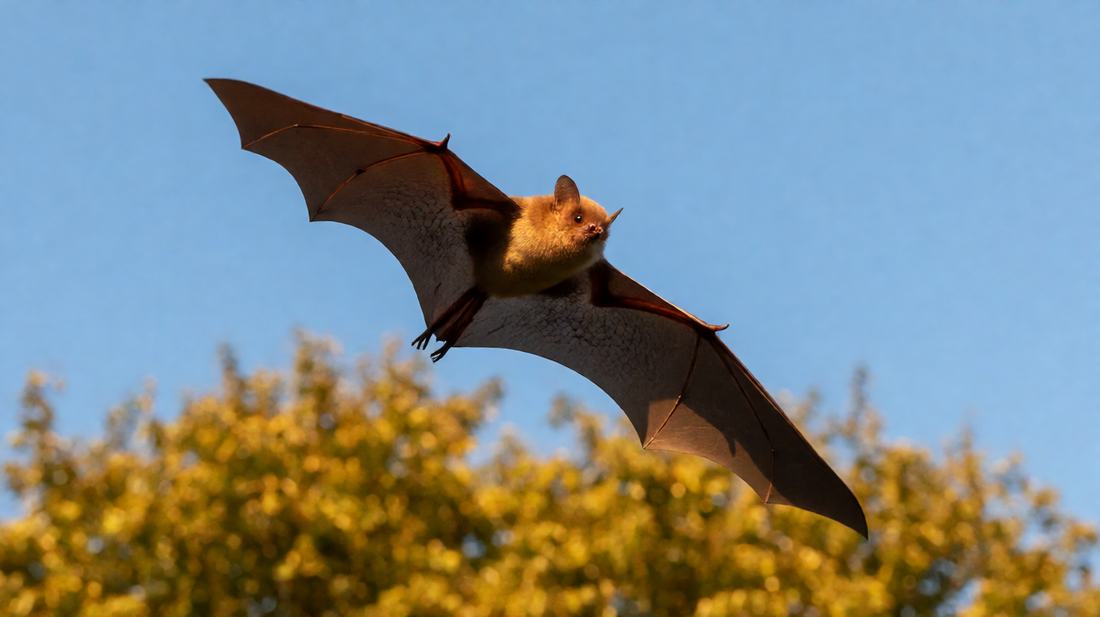
Nyctalus noctula | Common Noctule
Species Profile · Vespertilionidae
Common Noctule
Europe’s heaviest bat, and the one that hunts in broad daylight — its echo calls are low enough for people to hear.
IUCN: Least Concern
Range
Body
Wingspan
Weight
Roosts
The bat that flies by day
Europe’s heaviest bat, high above the treetops
The common noctule is one of the largest bats in Europe. It is also one of the most surprising to meet. It hunts in full daylight as well as at dusk. Its echo calls are low enough for many people to hear. It flies high and fast on long narrow wings, often above the treetops. It feeds on the biggest insects it can find.
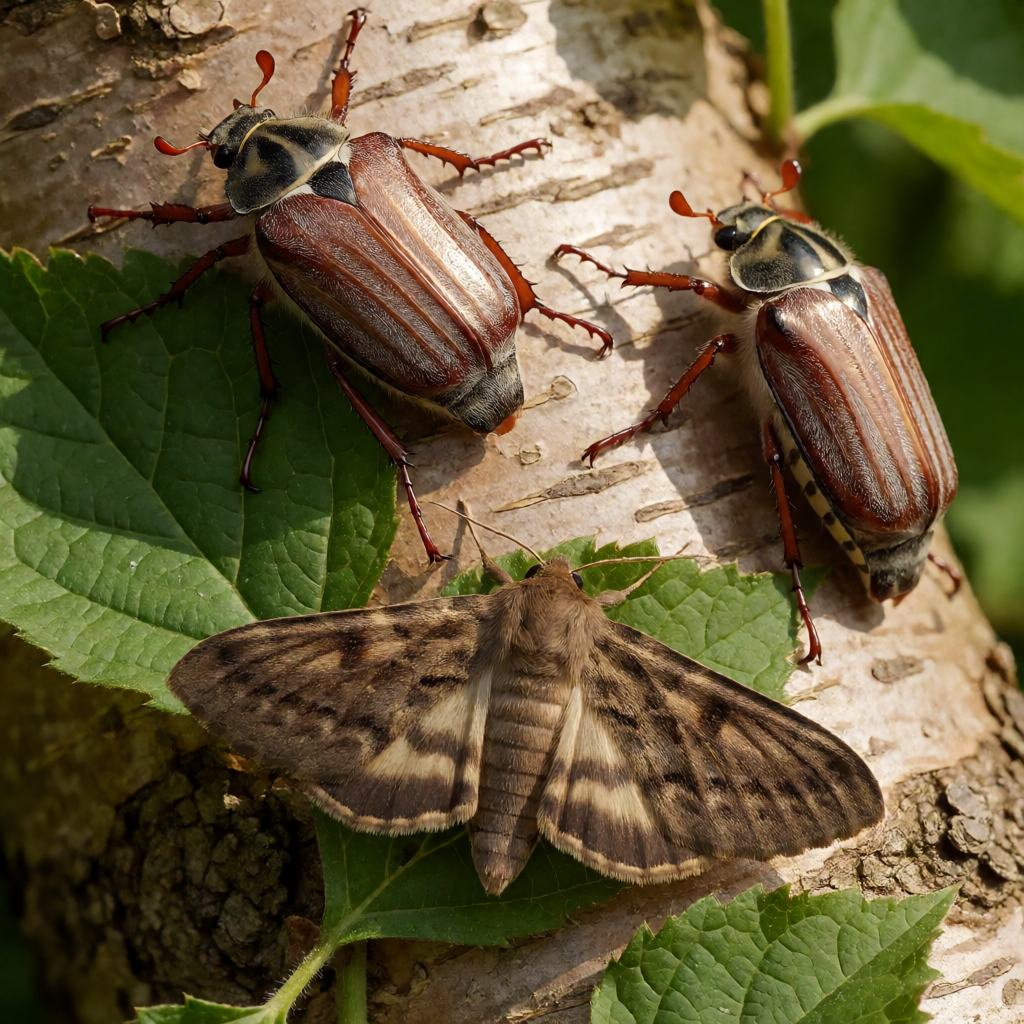
Cockchafers, dung beetles, large moths and flying ants all go into the diet. In the evening it often leaves its roost before any other bat. Sometimes the sun is still above the horizon. On autumn days it can be watched hawking insects in full sunshine, alongside swallows and swifts. The species is a long-distance migrant. Groups that breed in northeastern Europe fly south and west in autumn.
They winter in the milder parts of central and southwestern Europe. One ringed bat was seen to travel well over 1000 km. The common noctule is a bat of old trees. It lives in woodpecker holes and rot hollows. A wood left standing rather than tidied suits it well.
Family tree
Nyctalus, a small group of robust bats
The common noctule sits in the family Vespertilionidae and in the genus Nyctalus. The noctules are a small group of robust bats with broad wings. Their ears are short and rounded. Each ear has a mushroom-shaped tragus inside it. Johann Christian Daniel von Schreber described the species in 1774. He placed it in the genus Vespertilio. The name Nyctalus noctula has been in use since the 19th century.
The species is a close relative of the northern bat, a member of the same family. The two share a similar northern European range, size and build. Bat detectors often record them over the same woodland and parkland. Three noctule species live in Europe. The common noctule overlaps in size with none of them. The greater noctule is much larger and the lesser noctule much smaller. So a bat seen well is easy to name.
The wider picture is more complicated. DNA work and studies of mating calls show that groups differ more than people once thought. The species is now treated as a complex of close forms. The eastern Mediterranean groups are the most distinct. The genus as a whole is Asian, with more than 30 species. The common noctule is its westernmost member. It is the only one that has colonised western Europe in numbers.
Long wings, boxer’s face
How to identify one
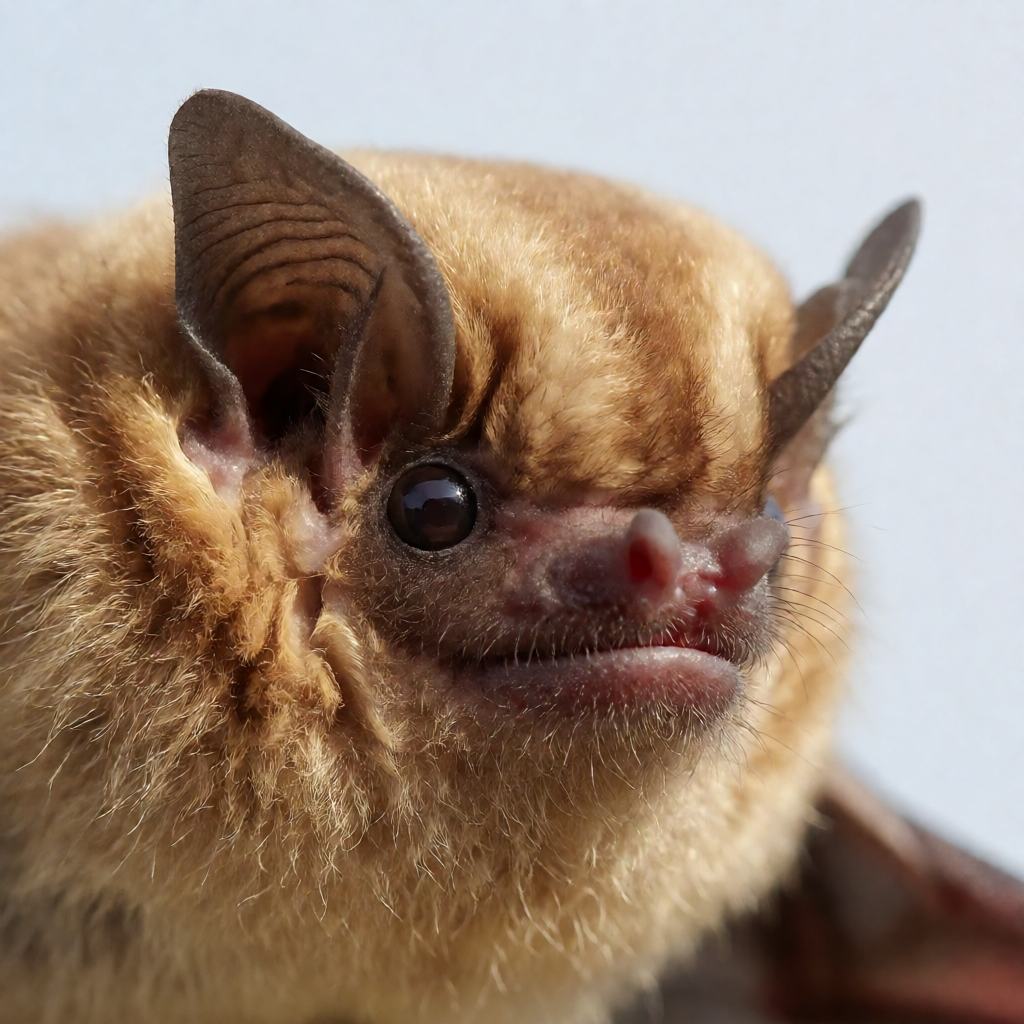
The common noctule is a heavy, powerful bat with the build of a fast flyer. The head and body measure 60 to 82 mm. The forearm is 47 to 52 mm. The wingspan is 320 to 400 mm. Adults weigh 18 to 40 g. That is five or six times the weight of a pipistrelle. In most of northern Europe no other bat is heavier. The ears are short, at 15 to 21 mm, broad and rounded.
A rounded tragus sits at the base of each ear. The snout is short, broad and blunt. The face looks rather like a boxer’s. The wings are long and narrow, with a high aspect ratio. They are built for fast straight flight, not for turning among branches. The tail is long, between 40 and 60 mm. The fur is short, dense and glossy. After the summer moult, males are dark chocolate brown and females a little richer.
By late autumn the coat has faded to a foxy red-brown. The species is one colour above and below. It lacks the sharp contrast of smaller bats. The skin around the eyes and at the base of the ears is pale. Body temperature when active is about 36.5 degrees Celsius. It falls sharply during the day, when the bat rests. The large size, the long narrow wings and the level flight are clear. A noctule crossing a clearing looks less like a bat than like a small falcon or a large swift.
1
2
3
Lowland wood and city park
Where it lives
The common noctule is a lowland bat of wooded country. It has also adapted well to cities and farmland. It prefers small and medium-sized woods, river forest, parkland, pastures with old hedgerow trees, wetlands and lake shores. It avoids conifer plantations. It hunts at heights that put it out of sight of most people. It often flies well above the canopy and over open fields. It will travel a long way to feed. Flights of over 10 km from the roost are routine. Some bats feed up to 20 km away.
In central European cities such as Hamburg, Vienna and Brno, groups live in parks and gardens. The bats use street lamps as feeding stations, because the lights gather moths. Day roosts are almost always in trees. The species uses old woodpecker holes and rot hollows. Roosts sit between 4 and 30 m up, with a strong preference for about 19 m. The bats favour ash, willow, beech, oak, alder and poplar. They take well to large bat boxes. They will also use cracks in buildings, mainly in the warmer parts of the range. Buildings are usually gathering or mating roosts rather than nurseries.
In winter the animals move to lower ground. They sleep through the cold in hollow trees, rock cracks and gaps in bridges and buildings. Often they form very large mixed groups. Winter groups of 100 to 200 bats are typical in trees. Up to 500 have been found in buildings. In southeastern Europe thousands have been counted in rock crevices, often with Daubenton’s bats and Nathusius’ pipistrelles. Noctules tolerate cold down to minus 7 degrees Celsius. They can live for nearly 4 months without feeding.
A specialist in big beetles
What it eats
The common noctule specialises in large flying insects. Its diet changes with the season. That is sensible for an animal active for only a short part of each day. In spring, big beetles have not yet emerged. The bat then feeds on small insects such as midges, mayflies and winged ants. From early summer it switches to beetles, mainly cockchafers and dung beetles. Later it takes moths and caddis flies. It catches prey on the wing and swallows small items in flight.
It will drop to the ground for a large beetle. Around towns the bats often hunt moths at street lamps. In one case a bat caught and ate a house mouse. Prey is found with echo calls that sweep from about 45 kHz down to 20 kHz. Most energy sits near 25 kHz. The low frequency carries a long way. That is why people can hear the calls, most easily those under 40, as a metallic chip-chop on a still evening. The bat flies fast.
It cruises at 20 to 40 km/h while hunting and up to 50 km/h in level flight. It dives steeply when it closes on an insect. Feeding comes in two short bouts. One lasts up to 2 hours around dusk. The other lasts about half an hour before dawn. That leaves the bat fasting for as much as 23 hours a day. Such a schedule is only possible for a large bat with a good layer of fat. It burns reserves slowly while it rests in torpor.
Woodpecker holes and rot hollows
The breeding cycle
The common noctule has an unusual mating and migration system. The two sexes live in different places for much of the year. Mating takes place in late summer and autumn in the wintering areas of central and southwestern Europe. Females store sperm in the uterus all winter. Fertilisation happens in spring, when the bats begin to move north. Males do not migrate in the same way. They spread out along the migration routes to meet returning bats. In early August each male takes up a mating roost, usually a tree hole.
From the entrance, or in flight, he sings a series of shrill calls. The calls carry a long way. They attract a harem of four or five females, often as many as 20. The bats stay with him for a day or two. He also gives off a strong smell, and he defends the roost against other males. Pregnant females reach the breeding areas of eastern and northern Europe by late April. There they gather in maternity colonies of 20 to 60, sometimes up to 150, in tree holes. Gestation lasts between 50 and 73 days.
The young, usually 1 or 2, are born from mid-June to July. A newborn weighs about a third of its mother’s weight, which is large for a bat. It is fed on milk for 3 to 4 weeks and is independent within 6 weeks. Mothers carry the smaller pups from roost to roost while they feed them. Some females breed in their first autumn, but many wait until their second year. Males begin mating at about 15 months old. Wild bats live about 8 years on average. The oldest recorded reached 12 years.
Retreating in the west
Conservation
The common noctule is classed as Least Concern on the global Red List. Britain also lists it as Least Concern in England, Scotland and Wales. It is, however, in retreat across much of western Europe. The reasons are a familiar list. Modern intensive farming has removed permanent pasture, rough grazing, hedgerows and the woodland edges that produce large beetles. The loss of old trees and standing dead wood has taken away both the roosts and the food supply at once. The species depends on old woodpecker holes and rot hollows.
That makes it unusually sensitive to the tidying of woodland. A wood can look healthy and hold almost no roost sites. The bats gather in autumn at mating roosts. In winter they form large groups. One felling or one disturbance can affect hundreds of bats. The noctule has two advantages. It travels far and uses many habitats within a year.
It also takes well to bat boxes, which have created new roost sites in managed woodland. British monitoring suggests the population has been roughly stable since the late 1990s, or slightly increasing. The species is still widespread in England and Wales. It is absent from Ireland. Good conservation means protecting old trees and woodpecker holes, keeping dead wood, holding on to insect-rich pasture and hedgerows, and putting up large boxes where veteran trees are scarce.
Quick hits
Five things to remember
- Its echo calls sit near 25 kHz, low enough for many people to hear without equipment.
- It can fly at 50 km/h in level flight and often feeds 20 km from its roost.
- It is a long-distance migrant, and the longest recorded move is well over 1000 km.
- Males do not migrate. They stay near the wintering areas and sing from tree holes to attract females in spring.
- It can survive for nearly 4 months without feeding during its winter sleep.