 By st20113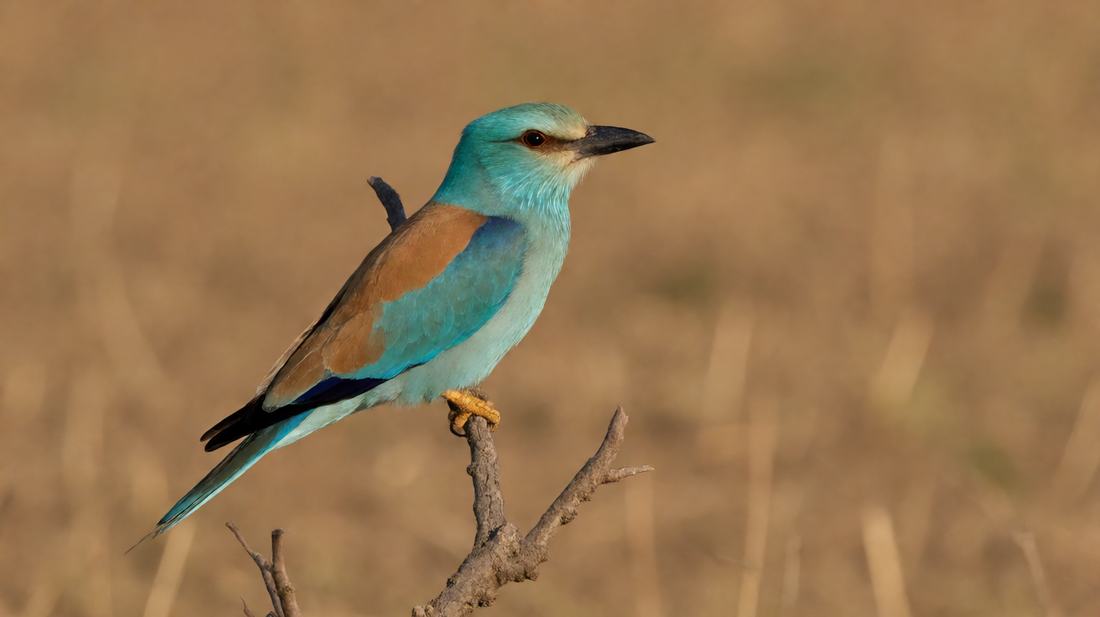
Coracias garrulus | European Roller
Species Profile · Coraciidae
European Roller
A bird of impossible blue that spends the summer in the dry farmland of Europe and the winter in the savanna of Africa — and whose numbers keep falling on both sides of the Mediterranean.
IUCN: Least Concern
Range
Length
Weight
Nest
Incubation
A flash of African blue
A summer bird of the dry farm
The European roller is a stocky and bright bird of the warm and open country of the south and the east. It is the only member of the roller family that breeds anywhere in Europe. Its plumage is a mix of turquoise and azure blue. The flight feathers are black. The back is a warm rufous-brown. The bird is one of the most striking birds of the whole of the western Palearctic. It is a sit-and-wait hunter. It spends much of the day on a bare perch above the grass. It watches for the movement of a large insect on the ground below.
Then it drops on the prey. Then it returns to the same perch to eat it. A single bird will use the same post for hours at a time. The species is a long-distance migrant. It leaves Europe and central Asia in the late summer. It crosses the Sahara to spend the winter in Africa. It winters in the dry savanna and the bushy plain south of the desert. The journey is made at night and in loose flocks. The migration is one of the most striking of any bird of the region.
The bird is a bird of the sunlit landscape. It has retreated from the north and the west of Europe over the last century. The farming and the climate of those regions have both changed. The bird has been lost as a breeder from Sweden and Germany and Denmark within living memory. Today it is a bird of the Mediterranean and of the steppe. It is a good example of a species that is not at risk as a whole. Its world total hides a great deal of local and very serious loss.
Family tree
Coracias, the true rollers
The European roller was described by Linnaeus in 1758. The modern treatment places it in the genus Coracias. The genus holds 8 species of bright sit-and-wait hunters of the open wood and the savanna. The genus belongs to the family Coraciidae. That family sits in the order Coraciiformes. The order is the group of the kingfishers and the bee-eaters and the hoopoes and the hornbills. It is one of the most distinctive groups of the warm parts of the world. The roller is a close relative of the European Bee-eater (Merops apiaster). The 2 birds share the same order and the same warm and open country. They are alike in their bright plumage.
They both hunt large insects. They both nest in holes in banks and walls. They differ in the shape and the weight of the bill. They differ in the way they take the prey. The bee-eater takes its insects in the air. The roller takes them from the ground. The family Coraciidae is an old one. Its members live in Africa and southern Asia and Australia. The European roller is the only one that reaches the western Palearctic. That fact alone gives the species a special place in the study of the birds of Europe.
The modern treatment recognises 2 subspecies. The difference is one of geography and of the depth of the colour. The nominate form lives in north-west Africa and the south and centre of Europe and the south-west of Siberia. It is the more intense of the 2. The eastern form lives in Iraq and Iran and central Asia. It is a little larger and clearly paler. The 2 forms mix in the region of the Caspian. The division between them is not a sharp one. No other subspecies is widely accepted.
Blue body, black wing
How to identify one
An adult European roller is between 29 and 32 centimetres long. Its wingspan is between 52 and 58 centimetres. Its mass is between about 100 and 160 grams. So the bird is about the size of a jackdaw. It is much bulkier in the body than its slender wings suggest. The plumage is a study in blue and brown. The head and the neck and the underparts are a rich turquoise. The colour deepens towards the azure of the wings. The mantle and the back are a warm rufous-brown. The flight feathers are black. The contrast between the black and the blue gives the bird its great brilliance in the air.
The bird looks best in its rolling display flight. That flight gave the whole family its English name. In the display the bird twists and turns and dives and rises. The wings are held half closed. The blue of the upper surface flashes against the black of the primaries. The 2 sexes are very much alike in the plumage. The female is a little smaller than the male on average. The gap is too small to be of any use in the field. The young bird is a duller and a browner copy of the adult. The blue of the body is washed with olive. The flight feathers are edged with brown.
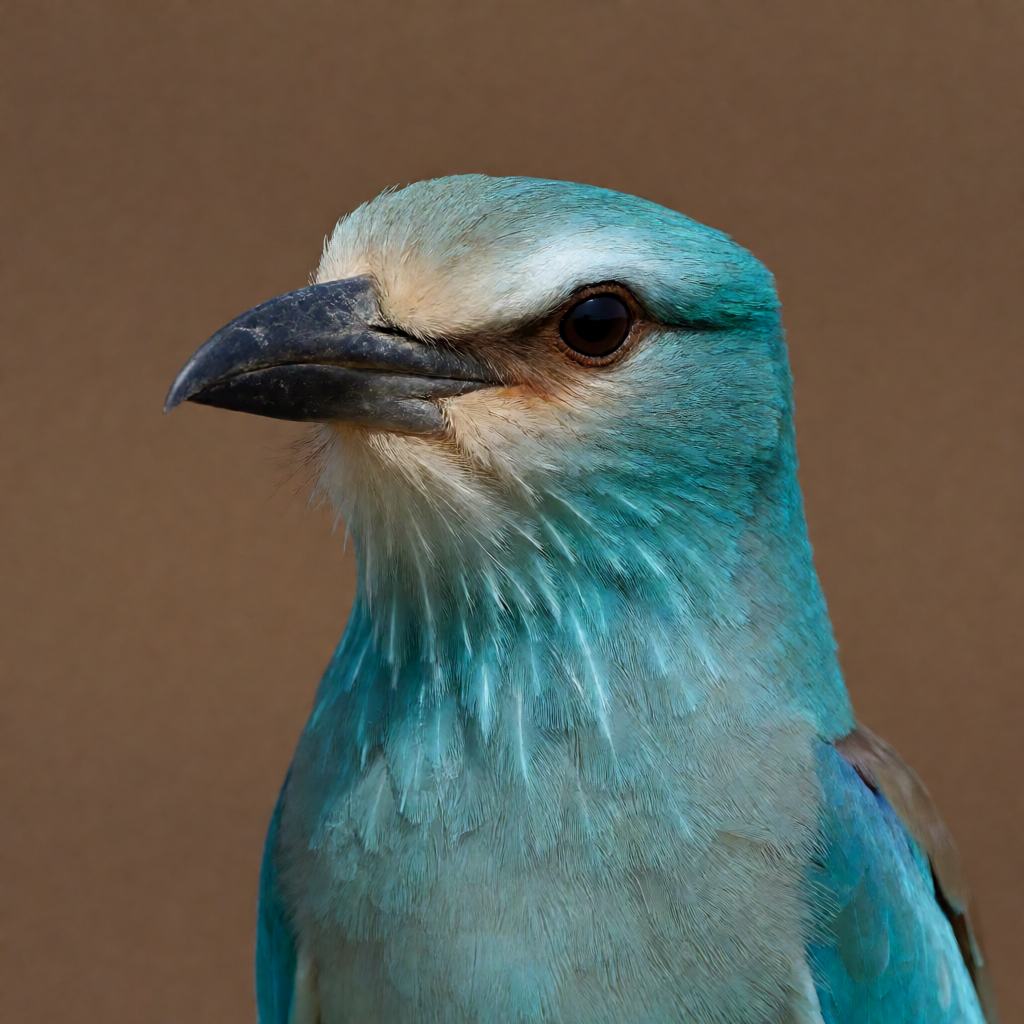
The young bird gains the adult plumage in its first winter and spring. The bill is strong and slightly hooked at the tip. The bill is black. It is the heavy bill of a bird that must break the shell of a beetle. The feet are short and the grip is weak. So the bird is a poor walker on the ground. It rarely moves far from its perch. The eye is dark. The tail is long and square-ended and marked with blue and black. The tail acts as a rudder in the twisting flight of the display.
1
2
3
Dry meadow and old tree
Where it lives
The European roller wants open and warm country. It wants bare ground for the hunting. It wants old trees or banks or buildings for the nesting. The bird is a species of dry grassland and steppe and scrub and Mediterranean farmland. It avoids the treeless plain because it needs a perch. It avoids the dense forest because it needs open ground to hunt. The ideal landscape is a mix of the 2.
Such a place has scattered large trees and pasture and hay meadow and the bare soil of the fallow field. The bird is commonest in the south and east of Europe and in the Balkans and in Turkey and in the south of Russia and in Kazakhstan. In those regions it is a bird of the lowland and the river valley and the edge of the village. It uses the wires of the power line as a perch where the big trees have been cleared. So in some districts the bird is now a bird of the roadside and the farm rather than of the natural steppe. In the west of Europe the bird is now a scarce and a local breeder. It is confined to a small number of warm and open districts of Spain and Portugal and the south of France.
The decline in the north is blamed on the cooling of the climate after the medieval warm period. The changes in the farming that followed it matter too. The loss of the insect-rich hay meadow has been damaging. The loss of the old and hollow tree matters as much. The bird now depends on the artificial nest site. The nest box has become one of the main tools of the conservation of the species in the north of its range.
A hunter of large insects
What it eats
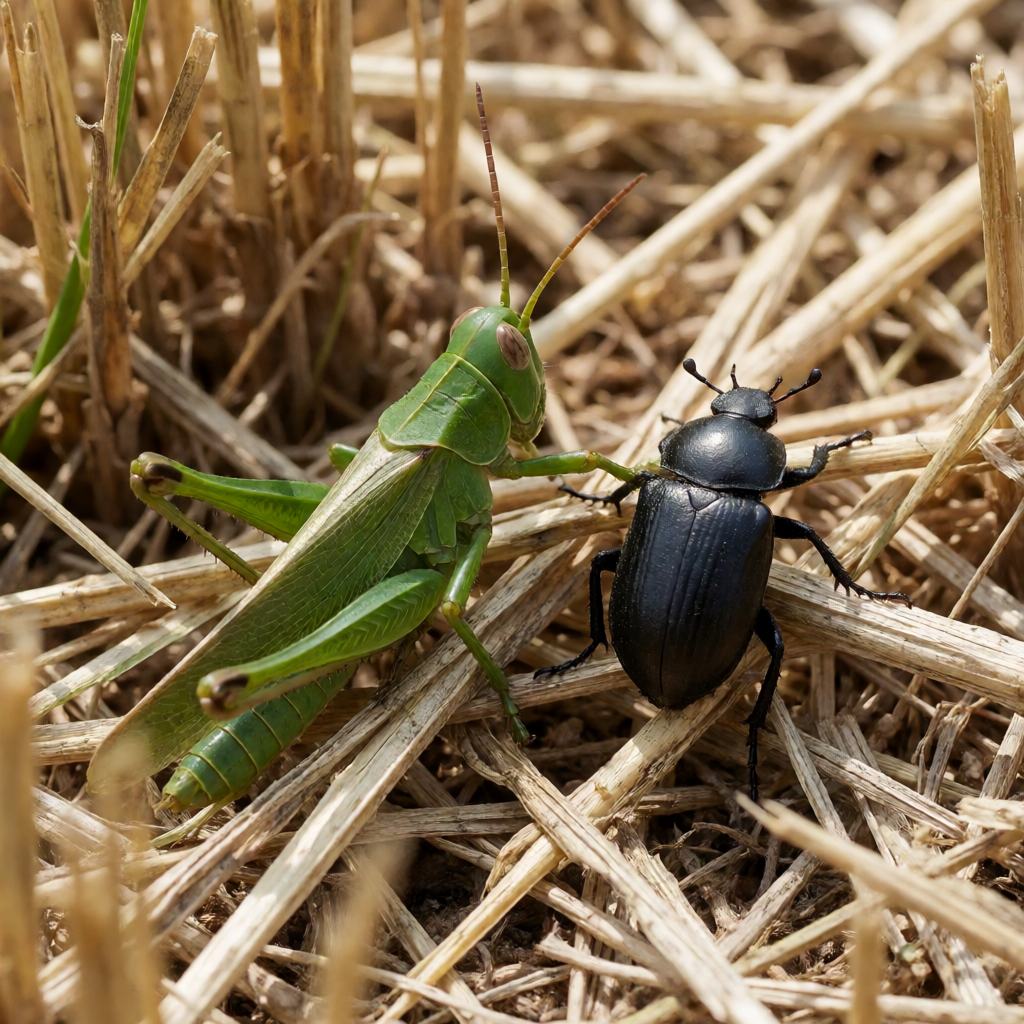
The European roller is a predator of the large invertebrates of the open ground. Most of the diet is made up of beetles and grasshoppers and crickets and the other heavy insects of the dry meadow. The bird takes scorpions and spiders and millipedes and centipedes. It takes small vertebrates as well. Lizards and frogs and mice are all within the range of the species. Small birds are taken now and then. The diet of the adult is dominated by beetles. The food brought to the growing young is dominated by grasshoppers and bush crickets.
The difference is thought to reflect the ease of feeding a soft insect to a small chick. The method of the hunt is the character of the whole family. The roller is a sit-and-wait predator. It spends much of the day on a raised perch and watches the ground below. The bird has the eyesight of a hunter. It can pick out the movement of an insect from many metres away. The attack is a short and a steep and a very sudden drop from the perch to the ground. The prey is seized in the bill.
It is carried back to the perch and swallowed there. The hard parts of the beetles are brought up later as a pellet. The bird hunts most in the early morning and the late afternoon. It rests in the heat of the middle of the day. So the species is easiest to see in the first hours after sunrise. The bird is a bold and a showy hunter. It will use the same post for hours and will return to it after every attack. One bird can be followed for a whole morning from a single point of view.
A hole in a dead tree
The breeding cycle
The European roller arrives on the breeding ground in the late spring. The birds of the south return in April. The birds of the north and the east return in May. The species is a hole nester and makes no nest of its own. The eggs are laid on the bare floor of the cavity. Sometimes they lie on a thin layer of chips and debris. The bird uses holes in the trunks and branches of old and dying trees. It uses holes in banks of sand and earth. It uses cavities in the walls of old buildings and the spaces under roof tiles.
The species has taken very readily to the nest box. The box has let the bird breed in districts where the old trees have all been felled. The clutch usually holds between 4 and 6 eggs. The eggs are white and glossy and nearly round. The incubation lasts between 18 and 19 days. It is carried out mainly by the female. The male feeds her at the nest through that period. The young are naked and blind at the hatching. They are brooded by the female for their first days.
The chicks grow fast on a diet of grasshoppers and crickets. The adults bring that food to the hole. The young leave the nest at between 26 and 30 days of age. The family stays together for a short time after the young fledge. The young are fed by the parents while they learn to hunt. The species raises a single brood in the north of the range. A second brood is laid in the south where the season is long. The bird reaches sexual maturity in its second year.
Brilliant, but falling
Conservation
The European roller is assessed as Least Concern on the global Red List. The world population is put at between 100,000 and 499,999 mature individuals. The trend of that total is a falling one. The species was downlisted to Least Concern. The rate of the fall is no longer thought to be fast enough to put the bird in the near threatened class. The better assessment reflects the recovery of some groups in the south and east of Europe. It also reflects the steady numbers of central Asia. The global total still hides a great deal.
The species has been lost as a breeder over the whole of the north of its range. It keeps falling in the west. The population of Europe is still a shrinking one. The main causes are the loss of the insect-rich habitat and the loss of the old and hollow trees. The farm chemicals matter too, both directly and at second hand. The change from hay meadow to silage crop has been very damaging. The early and the repeated cutting of the silage removes the grasshoppers and the other large insects. The same change removes the bare ground of the fallow field.
The loss of the old trees removes the nest sites at the same time. The bird is hunted on the migration route across the Mediterranean. It is killed in some numbers on the wintering grounds in Africa. The collection of the birds for the trade has been recorded in a number of countries. The species has gained a great deal from the nest box. The national recovery of the bird in Hungary and in some other countries of central Europe is one of the clearest proofs of the value of a cheap and simple measure.
Quick hits
Five things to remember
- The English name of the whole family comes from the display flight of the male.
- In that flight the bird rolls from side to side in the air as if it were falling out of control.
- The European roller is the only member of its family that breeds anywhere in Europe.
- The bird is a sit-and-wait hunter that returns to the same perch after every attack, so one can be watched for a whole morning from a single spot.
- The adult eats mainly beetles while the chicks are fed mainly on grasshoppers and crickets, and the gap is thought to reflect the ease of feeding a soft insect to a small nestling.