 By st20113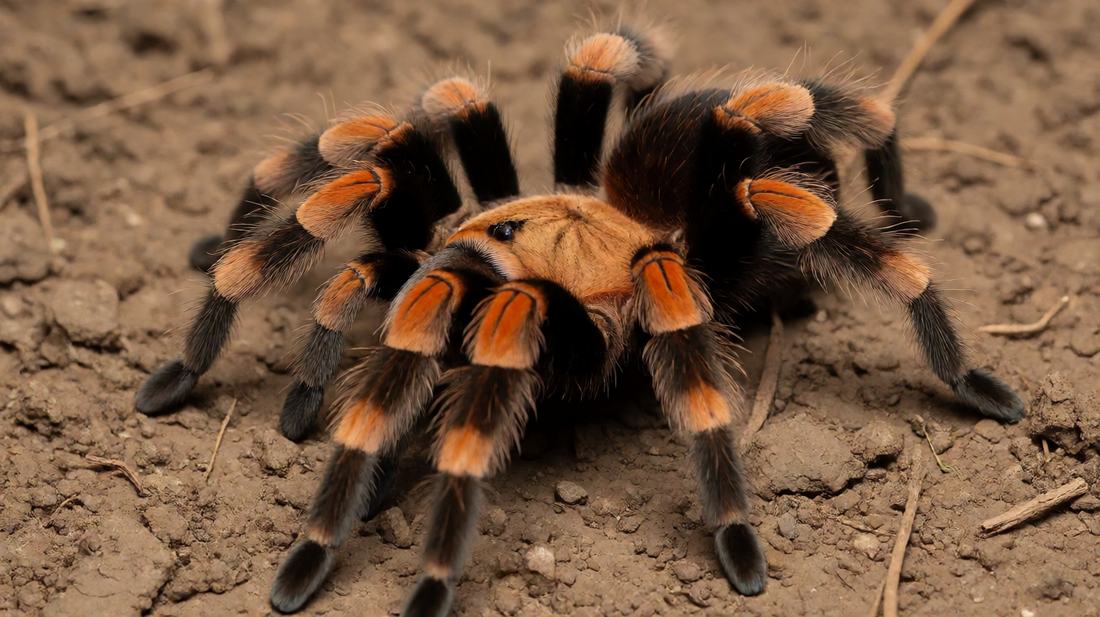
Brachypelma hamorii | Mexican Red-knee Tarantula
Species Profile · Theraphosidae
Mexican Red-knee Tarantula
A velvet-black spider with rings of orange fire at every joint, dug into the dry forest of Mexico’s Pacific slope — and one of the most heavily collected large spiders in the world.
IUCN: Vulnerable
Range
Body
Weight
Eggs
Maturity
Black velvet and orange fire
A spider of the dry forest
The Mexican red-knee tarantula is a large and very handsome spider. It lives in the dry forest of the Pacific slope of Mexico. It is one of the most familiar of all the tarantulas of the world. Keepers have held the spider in glass tanks for the whole of the last half century. It is one of the most numerous of the large spiders of the world pet trade. The animal is easy to know. Its body and its legs are velvet black. Rings of brilliant orange-red break that black at the joints. That pattern is one of the most striking of the whole of the group. The spider is a burrowing animal of the dry deciduous forest. It also lives in the scrub of the coast. It spends the greater part of its life in a silk-lined burrow.
The spider digs that burrow in the ground at the base of a tree or of a bush. It comes out at night to hunt the insects and the other small animals of the leaf litter. The female is one of the longest-lived of the spiders. She may live for more than 20 years in the wild. She lives even longer in captivity. The male lives far less long. He dies within a few months of the mating. The species is assessed as Vulnerable on the global Red List. The assessment rests on the very small range of the spider. The whole of the population is confined to a coastal strip of between 350 and 400 kilometres. That strip runs along the Pacific slope of the states of Jalisco and of Colima and of Michoacán. The extent of the occurrence is put at about 13,000 square kilometres.
The area of the occupancy is about 8,000. So 3 things together explain the vulnerable status. The range is very small. The habitat is still being lost. The collection for the pet trade adds pressure. The spider is also one of the most protected of the invertebrates. The whole of the genus Brachypelma is listed on the appendix II of the convention on the international trade in the endangered species. The collection and the sale of wild-caught animals is banned by the law of Mexico. So the trade in the species now rests mostly on captive-bred animals. Keepers across the whole of the world breed them.
Family tree
Brachypelma, the red-knee tarantulas
The Mexican red-knee tarantula was described in the year 1997. Modern work places it in the genus Brachypelma. That genus sits in the family Theraphosidae. That family is the group of the tarantulas. It holds the greater part of the largest of the spiders of the world. The whole of the group sits in the infraorder Mygalomorphae. The members of that group have the 2 pairs of the book lungs. Their chelicerae point downwards. So they are quite unlike most of the spiders of the order. The mygalomorph spiders are the ancient line of the group. Their fossil record goes back to the age of the dinosaurs. The genus Brachypelma is the group of the large and hairy and burrowing tarantulas.
It covers Mexico and the north of Central America. The genus holds the 20 or more of the living species. It is one of the best known of the whole of the family. The animal of the Pacific slope looks very like the species of the neighbouring part of the range. The 2 were confused with one another for the greater part of the history of the study of the group. That confusion is one of the most useful episodes of the modern taxonomy. An author named the species of the genus wrongly in the year 1992. He had been revising the group. He applied the name of the related species of the state of Guerrero to the animal of the Pacific slope of the states of Jalisco and of Colima and of Michoacán. The error passed into the whole of the literature of the pet trade and of the popular books. It stayed there for a period of 25 years. The mistake was finally corrected in the year 2017.
The correct name was given back to the spider. The whole of the trade and of the literature has had to be revised as a result. The spider is a close relative of the Tarantula (Theraphosidae) of the general account. The whole of the group shares the same general build and the same way of life. The study of the family is now one of the busiest fields of the modern work on spiders. The spider is one of the standard subjects of the research on the venom. It is used in work on the urticating hairs as well. It is used in the study of the behaviour of the group. The name of the genus comes from the Greek words for the short and the sole of the foot. It refers to the short and pad-like tarsus of the legs of the group. The species name honours the collector who provided the material on which the description of the species was based.
Three orange rings a leg
How to identify one
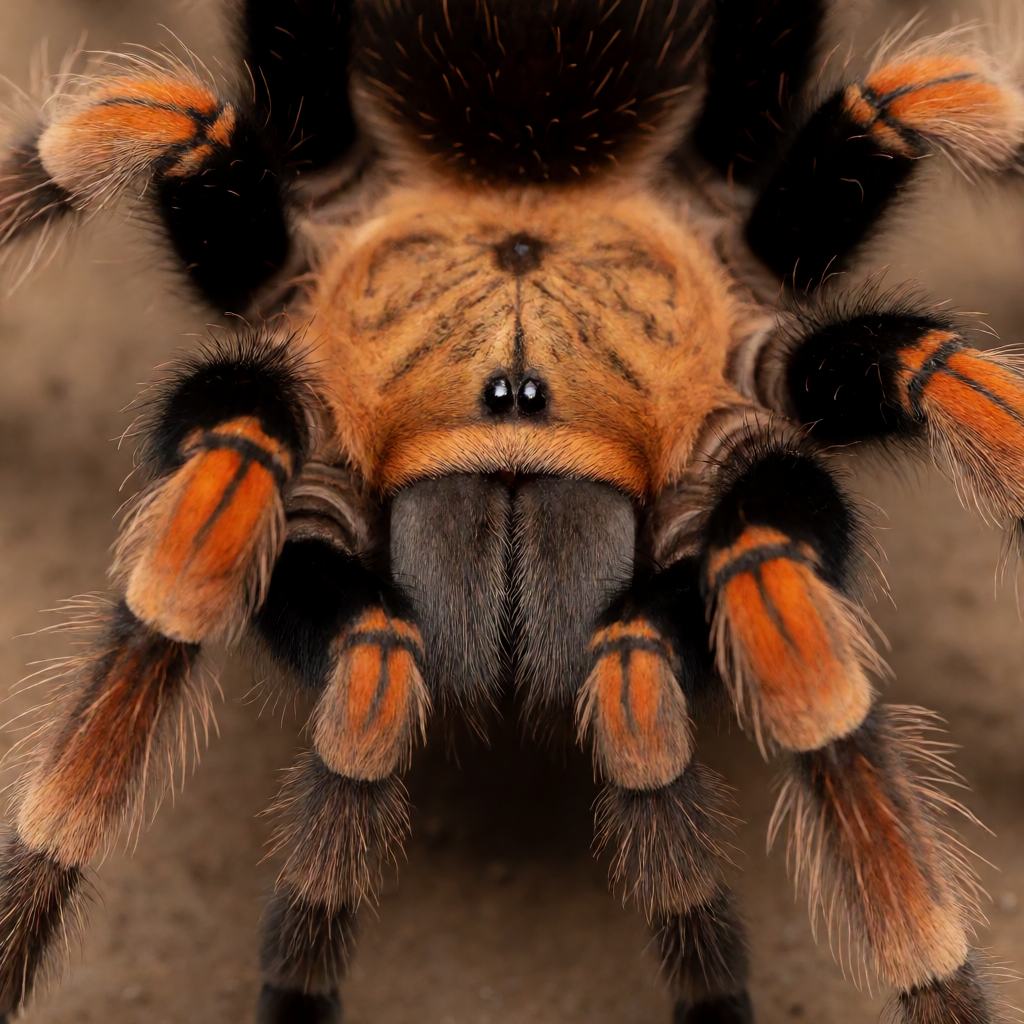
An adult female Mexican red-knee tarantula has a body length of between 52 and 54 millimetres. An adult male is slightly smaller in the body and slightly longer in the leg. The fourth leg of the male has been measured at 75 millimetres. The leg span of the adult female is between 13 and 15 centimetres. So the animal is a large spider. Its span is like a human hand. Yet it weighs only 15 or 30 grams. The whole of the body and of the legs carries dense velvet hairs. The colour of the greater part of the animal is a deep black or a dark brown-black. The most obvious character of the species is the pattern of the orange-red rings on the legs. Each of the 8 legs carries the 3 of the coloured patches. The deep orange sits on the part of the segment of the patella that lies closest to the body. The pale orange-yellow sits on the part that lies further away.
The yellowish-white sits at the end of the following segment. That pattern of rings is one of the most useful of the marks of the genus. It separates the species from the other members of the group. The abdomen carries longer and scattered hairs of a reddish-orange colour. The hairs on the upper surface of the abdomen are of a special kind. The family evolved them for defence. The spider can rub the abdomen with the hind legs. It then flicks a cloud of fine and barbed hairs into the air. Those hairs irritate the skin and the eyes and the breathing passages of an attacker. The urticating hairs are the main defence of the whole of the group of the New World tarantulas. The chelicerae are the large and powerful structures at the front of the body. They carry the fangs and are used to seize and to crush the prey. The fangs of the species point downwards in the manner of the whole of the Mygalomorphae.
The venom of the spider is a mild one. It is of little danger to a human being. It is used mostly to overpower small prey. The eyes are the 8 small and simple eyes. They sit in a cluster at the front of the carapace. The eyesight of the species is poor. The animal depends on touch and on vibration and on the chemical sense to find the prey and the mate. The sexes differ in size and in proportions. The male also carries swollen and changed tips of the pedipalps. Those are used in the transfer of the sperm. The male is the more slender of the 2. He changes his behaviour and his look very markedly when he reaches adult size. He then leaves the burrow in the search for the female.
1
2
3
Dry forest and coastal scrub
Where it lives
The Mexican red-knee tarantula lives in the dry deciduous forest and in the scrub of the Pacific coast of Mexico. Its country is the land of the thorn and of the small tree and of the dry season. The species is found mostly in the lowland and the foothill country. That lies on the western slopes of the 2 ranges of the mountains of the west of Mexico. It is rare above the altitude of about 1,000 metres. The animal digs its burrow in the ground at the base of a tree or of a bush. It also digs under a fallen log. The burrow is 30 or more centimetres deep. It is lined with silk. It has a single entrance that is often covered with silk and with leaves and with soil. The female spends the greater part of her life in the burrow. She leaves it only at night in the search for food and for a mate. The spider is most active in the period of the rains of the summer.
The ground is soft then and the insects are abundant. The species is a slow-moving and docile animal. It does not make the aggressive display of most of the Old World tarantulas. That behaviour is the reason for its popularity with the keepers. The animal will usually retreat to the burrow or flick the urticating hairs rather than bite. The bite of the species is not dangerous. The keepers compare it to the sting of the bee. The spider is most active at dusk and at night. It hunts on the ground and on the foliage of the low plants. It does not build a web for the capture of the prey. It relies on ambush and on the speed of the strike. The animal can go without food for long periods. It may fast for months in the season of the dry or in the period of the moult.
That fasting is one of the reasons that the species is so easy to keep in captivity. The species is very open to the loss of the habitat. The whole of the range is a small strip of the coastal country. That strip is very attractive for farming and for building and for tourism. The dry forest has been cleared. The ground has been ploughed. Hotels and roads have been built along the coast of the Pacific. All of that has removed a very large part of the habitat of the animal. Recent study has shown something serious. The extent of the occurrence of the spider is still falling. The remaining patches of the forest are broken up. That has isolated the small groups from one another.
An ambusher at the burrow mouth
What it eats
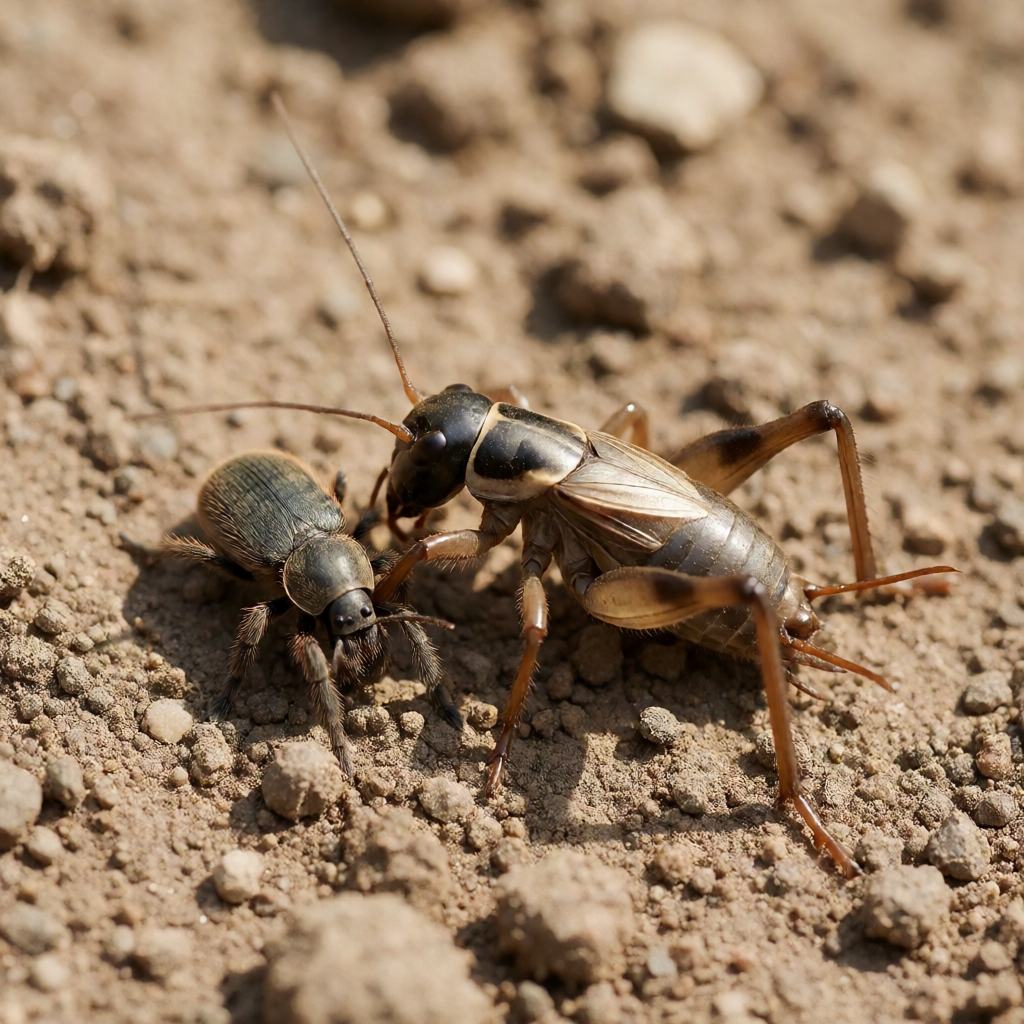
The Mexican red-knee tarantula is a predator of the insects and of the other small animals of the ground. The greater part of the diet is crickets and grasshoppers and beetles and caterpillars. It also takes the other large insects of the dry forest. Small vertebrates are taken when the chance appears. The young of the lizards and of the frogs and of the mice are all eaten. The animal can overpower prey that is much larger than itself. The record of the prey of the group includes small snakes and the young of birds. The method of the hunting is ambush. The spider waits at the entrance of the burrow or on the open ground. It detects the approach of the prey by the vibration of the ground. It also uses the touch of the hairs of the legs. The strike is very fast. The prey is seized with the chelicerae and the venom is injected. The body of the prey is then held.
The digestive fluid is released. The soft tissue is reduced to a liquid that the spider can take up. The spider does not chew its food. It must take the prey in liquid form. The spider feeds most heavily in the period of the rains of the summer. The insects are most abundant then. The animal builds up reserves in the body over the season. It lives on those reserves in the period of the dry. Study of the growth of the animal has shown something important. The female must feed very heavily in the periods between the moults. The moult cannot be completed otherwise. The spider is most at risk from a lack of food in the days just after the moult. The body is soft then and the animal cannot hunt. Water is needed as well.
The spider takes water from the dew and from the moisture of the soil. It also takes it from the body of the prey. The animal will drink from the drops of the rain on the leaves. Keeping the burrow moist is one of the reasons that the species is confined to a country with a clear period of the rains. The young spider feeds on very small prey. Young crickets and springtails are taken. So are the other small animals of the litter. The diet widens as the animal grows. The young of the species are the prey of the larger spiders and of the centipedes. Ants and lizards take them too. The rate of death of the young is very high. Very few animals reach adult size. That is the reason for the very large number of the eggs that the female lays.
A sac of a thousand eggs
The breeding cycle
The Mexican red-knee tarantula reaches adult size at the age of several years. The male matures at the age of about 7 or 8 years. The female matures at the age of about 8 or 10. The male leaves the burrow at that point. He wanders over the country in the search of the female. Those wanderings of the mature male in the late summer and in the autumn are one of the most typical events of the life of the group. The male finds the burrow of the female. He enters the silk of the entrance and taps on the ground. He performs the courtship with the shaking of the body and of the legs. The female is aggressive in the early part of the meeting. The male must be very careful. A female that is not ready to mate will try to take the male for prey. The male that succeeds in the courtship holds the female by the chelicerae with his own.
He inserts the tip of the pedipalp that carries the sperm into the opening of the female. The whole of the act is very brief. The male dies within a few months of the mating. He does not survive the season. The female may live for a much longer period. She can produce the several of the egg sacs in the course of the life. The female makes the egg sac some weeks after the mating. It is a large and white and round structure. It holds between the several hundred and the more than 1,000 eggs. The female guards the sac in the burrow. She turns it and cleans it and defends it against predators. She does that for the whole of the period of the incubation. The incubation lasts for the 2 or more of the months.
The female may fast for the whole of that period. The young hatch as very small and pale spiderlings. They are no more than a few millimetres in the body length. They have the 3 pairs of the legs at the hatching. They stay with the female for the first period of the life. The young then disperse. The greater part of them are taken by predators before they reach adult size. The female may produce the several hundreds of the young in the course of the whole of her life. Only a very small number of them will survive to breed. The species is one of the easiest of the tarantulas to breed in captivity. Breeding the spider is now routine in the collections of the enthusiasts. Captive-bred animals have largely replaced wild-caught ones in the trade. That change is one of the most important steps forward for the species.
A small range and a large trade
Conservation
The Mexican red-knee tarantula is assessed as Vulnerable on the global Red List. The assessment rests on the very small and very broken range of the species. The extent of the occurrence is about the 13,000 square kilometres. The area of the occupancy is about 8,000 square kilometres. The criteria are met on several grounds. The extent of the occurrence is less than 20,000 square kilometres. The population is severely fragmented. The extent of the occurrence and the area of the occupancy are still falling. So are the area and the quality of the habitat. So is the number of the mature animals and the number of the smaller groups. The loss of the habitat is the greatest of the causes of the decline. The dry deciduous forest of the Pacific slope of Mexico has been cleared very heavily.
It has gone for farming and for cattle and for the growth of the coast. The remaining patches of the habitat are small and isolated. They are very open to fire and to drought and to further clearance. The collection for the pet trade is the second great cause of death. The species is one of the most popular of the tarantulas of the trade. Wild-caught animals were removed in very large numbers in the period of the 1970s and of the 1980s. The trade in wild-caught animals is now banned by the law of Mexico. It is also banned by the listing of the whole of the genus on the appendix II of the convention on the international trade in the endangered species. The trade now rests mostly on captive-bred animals. The species is also affected by the use of the sprays. It is affected by the clearing of the ground for the crops. It is affected by the collection of the animals for the local market of curios.
Recent study has shown something useful. Two measures are the most effective for the species. One is the education of the local people. The other is the part that the villages play in the protection of the habitat. The most urgent tasks are 3. The remaining patches of the dry forest must be protected. The fragments must be joined by corridors of the habitat. The wild groups must be watched. The spider has become one of the flagship species of the conservation of the dry forest of the west of Mexico. The fame of the animal in the trade has been turned to the good of the work. Programmes use the species as the emblem of the protection of the habitat on which it depends.
Quick hits
Five things to remember
- The species is known by the rings of brilliant orange-red at the joints of the velvet black legs. The pattern of the 3 coloured patches on each leg is one of the most useful of the marks of the whole genus.
- The spider flicks a cloud of fine and barbed hairs from the upper surface of the abdomen at an attacker. Those urticating hairs irritate the skin and the eyes. They are the main defence of the group.
- For a period of 25 years the animal of the Pacific slope of Mexico was known by the name of the related species of the state of Guerrero. The mistake was not put right until the year 2017.
- The female may live for more than 20 years and may produce the several of the egg sacs in the course of the life. The male survives only a few months after the mating.
- A bite from the species is not dangerous. Keepers say that it feels like the sting of a bee. The animal usually retreats to the burrow rather than bite, and it may flick the urticating hairs instead.