 By st20113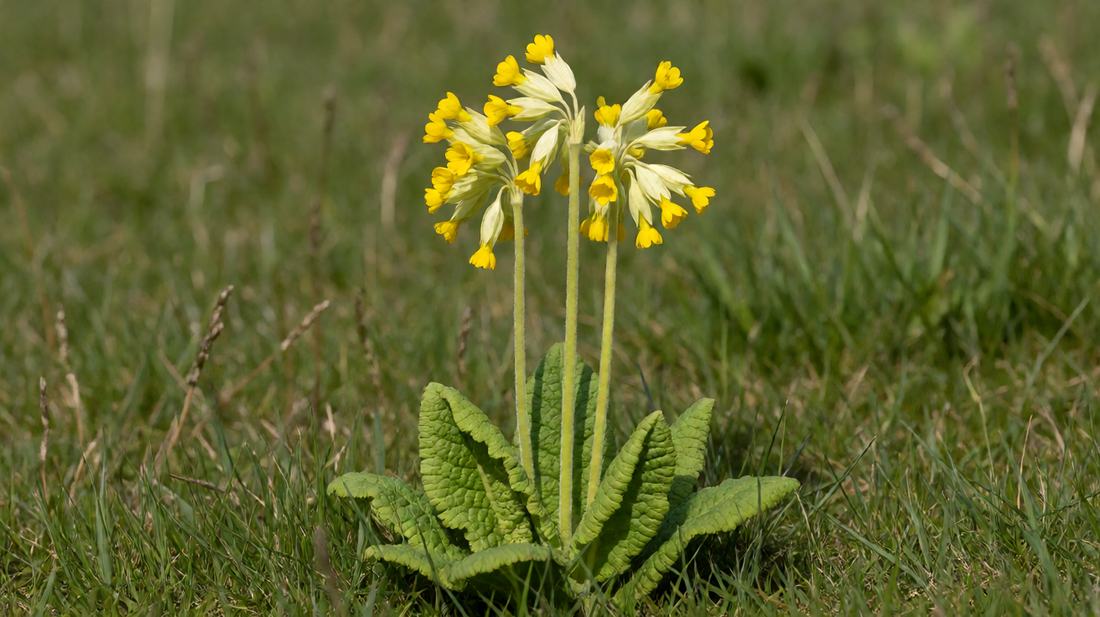
Primula veris | Cowslip
Species Profile · Primulaceae
Cowslip
A deep yellow spring flower of the old chalk meadow whose nodding cluster of bells made it a badge of the English countryside — and whose two flower forms are one of botany’s classic puzzles.
IUCN: Least Concern
Range
Height
Flowers
Flower forms
Bloom
The key of the meadow
A flower of the old grassland
The cowslip is a low plant that lives for many years. It belongs to the primrose family. It is one of the best loved wild flowers of European grassland. In spring it fills chalk meadows with deep yellow nodding blooms. Its range covers a large part of the continent. The plant is tied to the old way of farming.
Its presence in a meadow is a sure sign. It shows the ground has never been ploughed. It also shows the ground has never been given man-made feed. The family also holds the primroses, the cyclamen and the pimpernels. The cowslip shares a curious flower plan with them. The genus Primula makes flowers in 2 different forms.
That trick is a classic case of a plant that blocks its own pollen. It was one of the first such puzzles solved by naturalists in the 1800s. The plant wants open, sunny, well-drained grassland. So it has fallen sharply as old meadows have gone.
Family tree
Primula, the primroses
The cowslip sits in the genus Primula. This is a large group of low plants. Its members carry flowers in rings on one stalk. Their leaves gather in a rosette at the base. The genus also shows 2 different forms of flower. That feature marks the whole group. The genus is the largest in the primrose family. It is centred on the mountains of central Asia.
It also spreads through the cooler north. The cowslip is the close relative of the Primrose (Primula vulgaris). That plant belongs to the same genus. Its pale yellow flowers sit alone on their own stalks. The cowslip carries its flowers in a bunch on one stem. The two divide the countryside between them. The primrose grows in the shade of wood and hedge. The cowslip grows in the open, dry, sunny meadow.
Linnaeus named the cowslip in 1753. Today we accept several subspecies across its huge range. The plant crosses freely with the primrose and the oxlip. Those mixed plants have caused real trouble for experts. The genus has become one of the hardest in the European flora. The common name comes from old words for cow dung. The plant was linked with grazed pasture. Other old names record its use in wine and in medicine.
Nodding bells on one stem
How to identify one
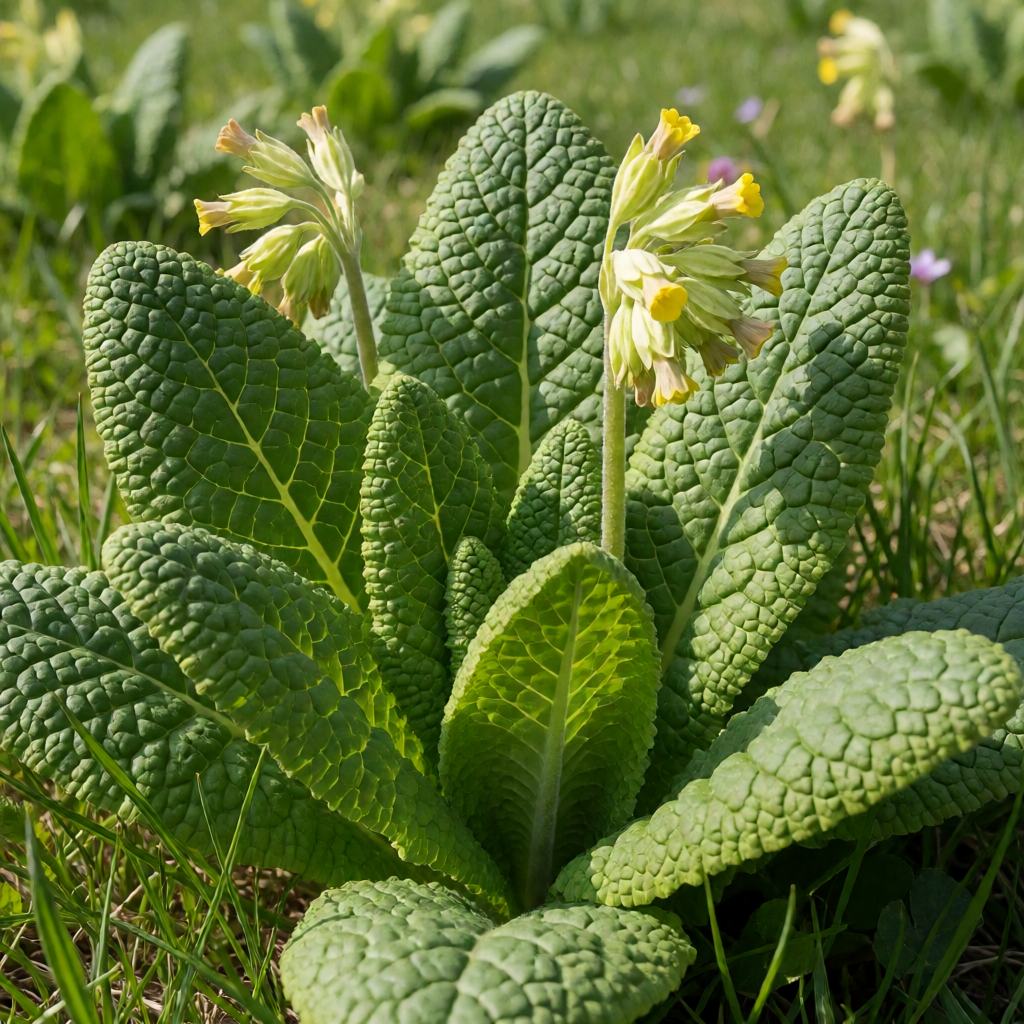
This is a low plant with soft, downy leaves. It reaches 15 to 30 centimetres in flower. The whole plant carries fine hairs. The leaves gather in a rosette at the base. They are deeply veined and wrinkled. Their shape is oblong and spoon-like. Those leaves look quite unlike the smooth leaves of the primrose. The flowers are what the plant is known for. They sit in a bunch of 10 to 30 on one erect, pale green stem.
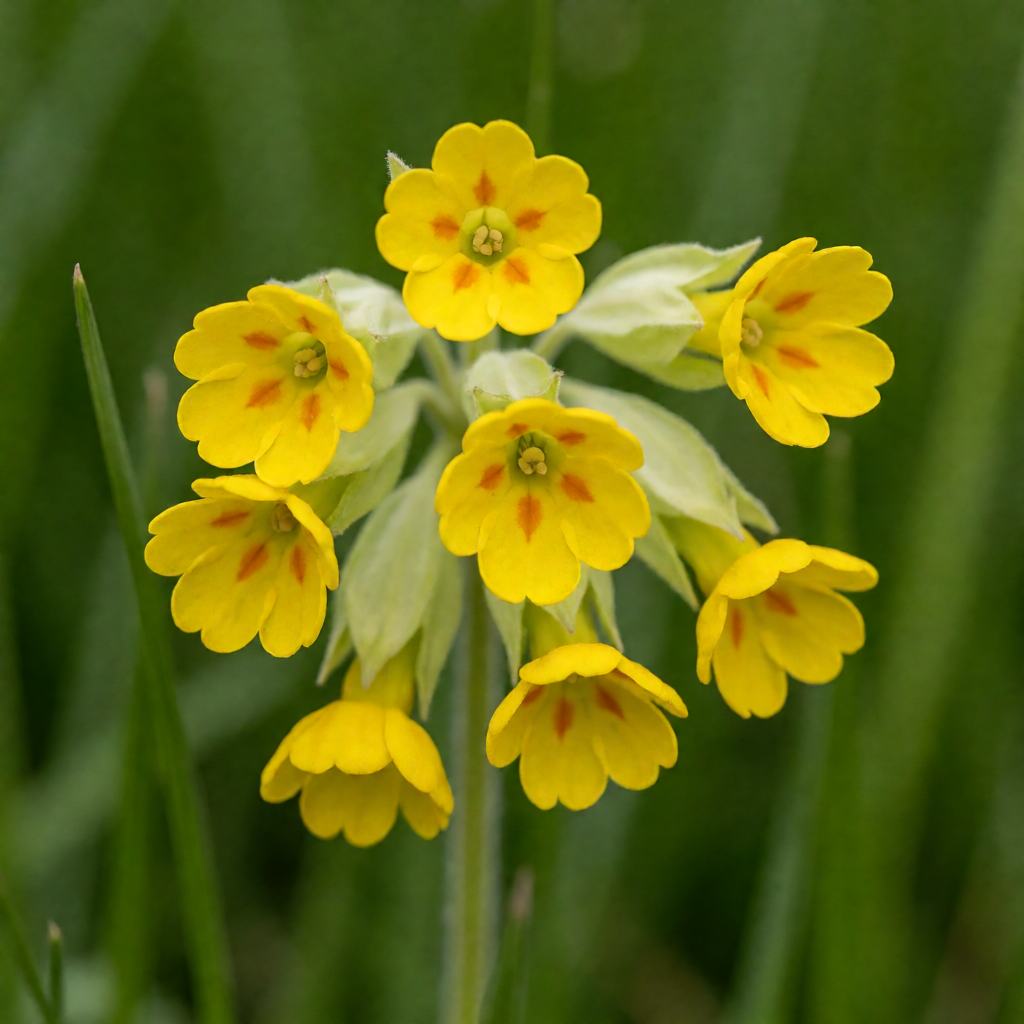
Each flower is a small, deep yellow bell. It smells sweet. It measures 9 to 15 millimetres across. Each flower nods to one side of the stem. The centre of each petal carries a patch of deeper orange. The whole bunch looks like a cluster of tiny golden keys. That image gave the plant one of its oldest names. The flowers come in 2 forms. This is the plant’s strangest feature.
A flower has either a long style, with the tip at the mouth of the tube, or a short style, with the tip low down. The two forms are called pin and thrum. They sit on separate plants. Insects must bring them together before seed can set. This plan runs right through the genus Primula. Experts have studied it for more than a century. It is one of the neatest tricks in the plant world. The root is short, thick and woody. It lives through the winter and sends up new growth in spring.
1
2
3
Chalk down and old pasture
Where it lives
The cowslip wants open, sunny, well-drained grassland. It wants soil that has never been given man-made feed. It also wants soil that has never been ploughed. Tall, coarse grass must not shade it out. So the plant lives in old meadow and chalk down. It also lives in chalk grassland and dry pasture. Old roadside verges suit it. So do railway banks and churchyards. The edge of open wood and scrub works too.
The plant bears dry, poor soil better than the primrose does. It likes ground that comes from chalk. It also likes other lime-rich rock. It grows best on south-facing downland slopes. Hundreds of years of cattle and sheep grazing made those sites. Further north and east it uses mountain and plain meadows. It also uses steppe and open wood. The plant is a classic sign of ancient grassland. Experts use it as a mark of a rich old meadow.
Cowslips show a meadow of high wildlife value. The plant belongs to an old landscape of small fields and hedges. Hay meadow and old grazing made it. Ploughing an old pasture removes the plant. Man-made feed does the same. So does the switch from hay to silage. Leaving steep, far-off slopes ungrazed hurts it too. Those changes caused the modern fall across the western lowlands.
A maker of its own food
What it eats
The cowslip makes its own food from sunlight. It takes water and salts from the soil. Fine roots and the root do this work. It takes gas from the air through its leaves. Light powers the building of sugars and other compounds. So the plant is not a parasite. It lives on light, water and salts alone. Its needs are small.
It is suited to poor, thin, dry soil where grass stays short. Competition from taller plants must stay low. It likes ground rich in lime. It is mostly absent from sour, wet, peaty soils. Lime seems to rule both where it grows and how well it flowers. The plant also feeds other life in the meadow. It makes nectar at the base of the long flower tube. Its stamens carry pollen.
Together these gifts draw bees and bee flies and other insects. Those insects pollinate the plant. The cowslip matters a great deal for early spring insects. It flowers when nectar is scarce. Few other meadow plants are in bloom then. Its leaves and flowers also feed grazing beasts. Rabbits and other grazers welcome them in early spring.
Pin and thrum
The breeding cycle
The cowslip flowers in spring. The season runs through April and May. In mild southern parts it may start in March. In cool northern parts it may run into June. Plants in shade or on poor, dry soil flower for less time. They may set no seed in a bad year. The species has 2 kinds of flower. That is the most important thing about how it breeds. The pin has a long style.
The thrum has a short style. The two sit on separate plants. Bees and bee flies and hoverflies visit the flowers. These long-tongued insects reach the nectar at the base of the tube. They carry pollen from one form to the other. The different lengths of style and stamens place that pollen just right. So the trick makes the 2 forms mix. The plant cannot set much seed on its own. Crosses between the 2 forms set far more seed.
Crosses within one form set much less. Seed grows in a small, round capsule with many seeds. The capsule forms on the stem after flowering. It opens at the top to let out many small brown seeds. That happens in mid and late summer. The plant can also spread by splitting its root. Seed remains its main means of travel. A seedling waits several years before it first flowers. So it reaches new sites far more slowly than a meadow weed.
A flower of the old fields
Conservation
The cowslip is Least Concern on the global Red List. Its range is huge. Its numbers in the world are still very large. Yet it has fallen a great deal across the western lowlands. It has gone from a very large number of sites. Losses have been heavy in Britain, the Low Countries, northern France and Germany. The plant is now scarce and local across much of its settled range. The main cause is a change in how grassland is farmed. Old pasture has been ploughed. Meadows have been sown again with rye grass and clover.
Man-made feed has been spread. Silage has taken the place of hay. Together these wiped out the open, poor, rich turf. Leaving steep, far-off slopes ungrazed added to the loss. Scrub and coarse grass now shade many smaller sites. Drainage harms the plant too. Weed spray does the same. People also dig and pick plants for their gardens. Most European Union countries protect the species. In several, the plant cannot be dug up or picked without leave.
Key surviving meadows are reserves. Managers graze them the old way. They cut hay late. Both suit the plant. Bringing back meadow on ploughed land is now common. It uses hay spread from old meadows to seed the new ground. The cowslip is often put into modern meadow seed mixes. So the plant draws both concern and real care.
Quick hits
Five things to remember
- The flowers sit in a bunch of 10 to 30 nodding golden bells on one stem. The bunch looks like a cluster of keys. That image gave the plant one of its oldest names and made it a badge of old spring festivals.
- The cowslip makes 2 forms of flower. The pin has a long style and the thrum a short one. They sit on separate plants, and insects must carry pollen between them before seed can set. This is a classic case of a plant that blocks its own pollen.
- The plant is one of the surest signs of ancient grassland. It shows the ground has never been ploughed and never given man-made feed. Experts use it as one of the best marks of a meadow’s wildlife value.
- The common name comes from old words for cow dung, since the species grew in grazed pasture. For centuries the flowers were gathered to make cowslip wine. The plant was also used in folk medicine for headaches and sleeplessness.
- The cowslip flowers in April and May, when nectar is scarce in the meadow. So it is a key early food source for bees and bee flies and other long-tongued insects. A new plant takes several years to reach flowering size.