 By st20113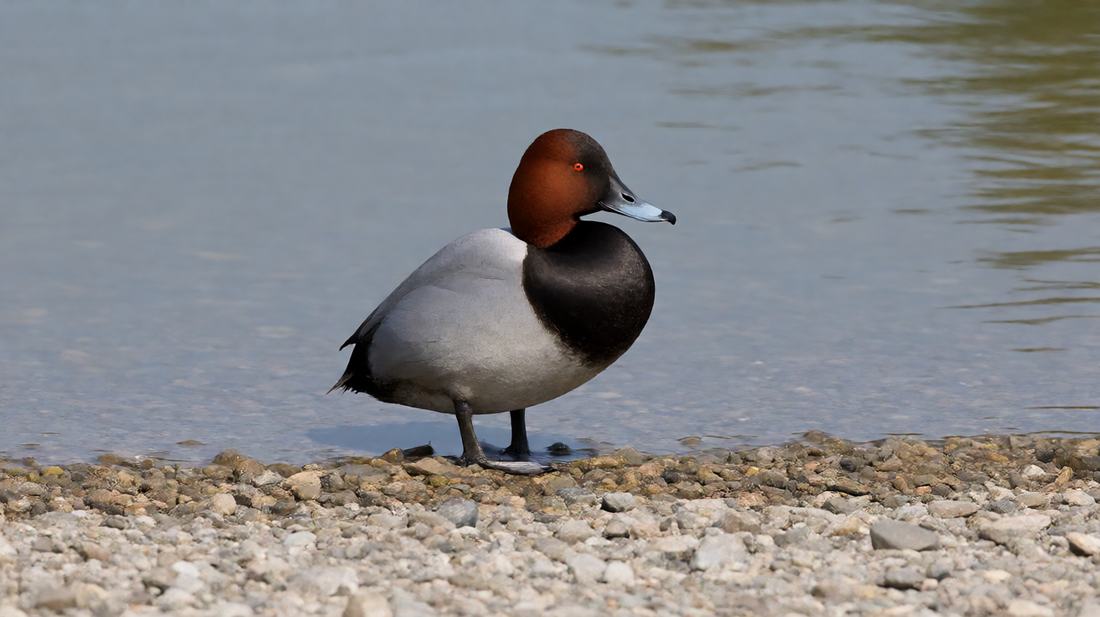
Aythya ferina | Common Pochard
Species Profile · Anatidae
Common Pochard
A true diving duck of the Eurasian marshes whose showy chestnut-headed drake winters in rafts of thousands — yet whose western breeders have fallen into real decline.
IUCN: Vulnerable
Range
Length
Weight
Nest
Dive
The diving duck
A raft bird of the reservoirs
The common pochard is a medium diving duck of Anatidae. It is among the most numerous diving ducks of Eurasia. The same bird nests in the reed beds of a Siberian steppe lake. In winter it joins rafts of hundreds or thousands on the gravel pits and estuaries of Britain and the Low Countries. It is a true diver, not a surface feeder. The male in breeding dress is one of the brightest ducks. He has a rounded chestnut-red head.
His breast is black. His body is pale grey. His tail is dark. He is unmistakable on the water. Pochards pack the open water in sleeping and feeding rafts. They dive as one. They burst into low, fast flight when scared.
The showy drake and the plain brown female show the clearest sex difference among ducks. The pochard likes still or slow water, not rivers or the sea. In western Europe its breeding numbers have slowly fallen. Its winter flocks have stayed large. The species is now a conservation concern, even as it stays common on reservoirs and coastal lagoons.
Family tree
Aythya, the diving ducks
The common pochard is in the genus Aythya, the diving ducks. They differ from the surface-feeding dabbling ducks by legs set far back. Their foot is lobed, not fully webbed. They dive, rather than tip up, to feed. The pochard is close to the Tufted Duck (Aythya fuligula).
That slightly smaller diver shares the round head, dark breast and gregarious winter raft. This shows that Aythya is a holarctic group of short-billed divers. They have spread to the ponds and lakes of the north. Linnaeus described the bird in 1758. Experts treat it as one wide form with no agreed subspecies.
The birds of the east are a little larger than those of the west. The breeding populations of the temperate lowlands have shrunk in north and west Europe. Those of the steppe and forest have held their numbers. The centre of the species has moved east. Its winter flocks of the west stay large.
Chestnut head and red eye
How to identify one
An adult common pochard is 42 to 50 centimetres long. Its wingspan is 72 to 84 centimetres. The female weighs about 0.6 kilogram. The larger male can reach 1.2 kilograms. The set-back legs give it a low, broad shape on the water. Its take-off is clumsy. It needs a long run across the surface before it lifts.
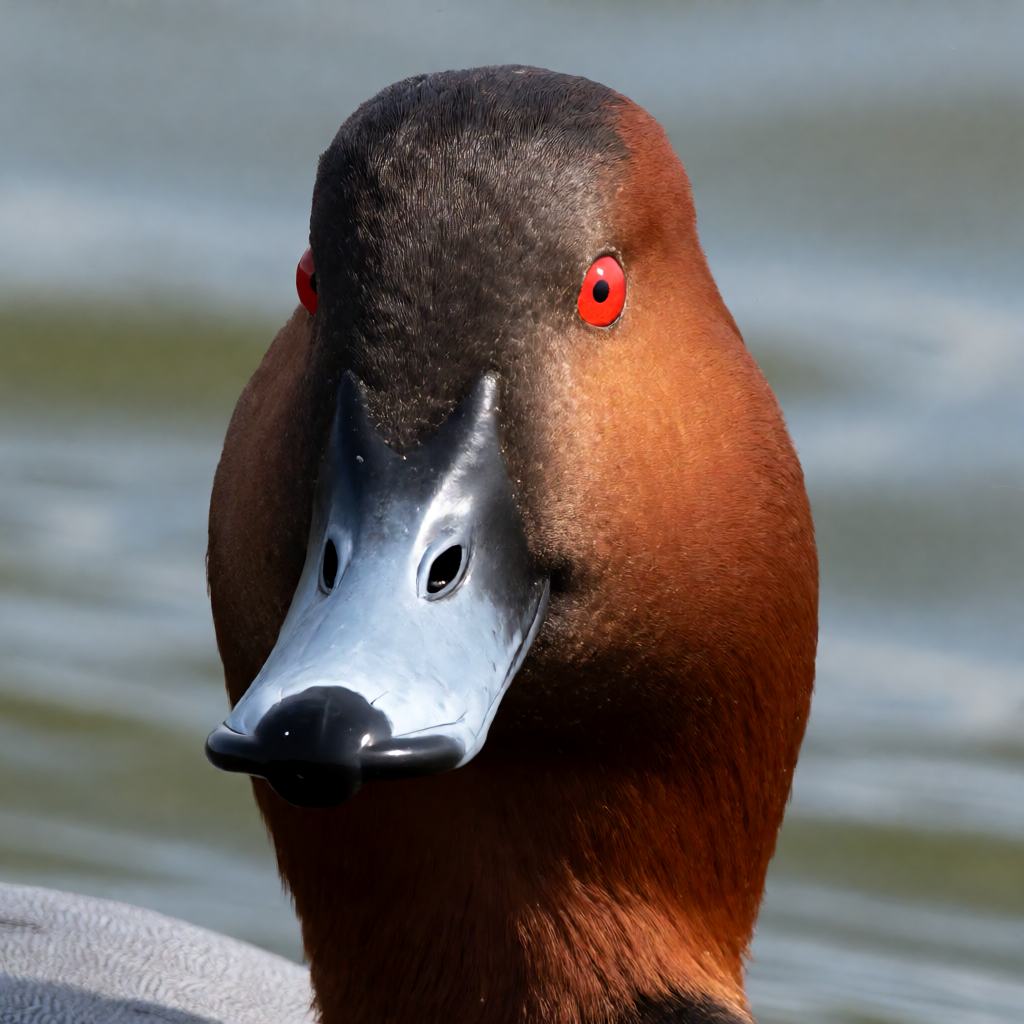
The male in breeding dress has a rounded chestnut-red head and neck. His breast and rump are black. His body is pale grey with fine bars. His tail is black. His bill is blue-grey with a black tip. His eye is a striking red. The female is plain warm brown with a darker head and paler bill.
The two are told apart by the head colour and the red eye. The wings are short and pointed for a duck. Flight is fast and direct once airborne. The voice is a low croak, mostly from the female in courtship. The wing feathers moult soon after breeding. The flightless adults gather on safe water for three or four weeks.
1
2
3
Lakes, gravel pits, lagoons
Where it lives
The pochard likes shallow, still or slow fresh water with a fringe of plants. For breeding it needs the sheltered bays and reed beds of lakes, gravel pits, peat diggings and marshes. For winter it needs the larger open waters of reservoirs, broads, coastal lagoons and sheltered estuaries. The species is absent from fast rivers and the open sea. It is a creature of the still, sheltered margins of the lowlands.
In summer the birds nest from the British Isles and Low Countries east through the Russian forest and steppe to central Asia. They need warm water and thick plants to hide the nest. In winter most of the western birds gather on the large lakes of Britain, Ireland, the Netherlands and the Mediterranean. They also line the Atlantic estuaries. They may join the tufted duck and the coot.
The pochard is a strong but reluctant migrant. It moves south only while the water stays ice-free. Rings show a single bird returns to the same winter lake for several years.
A plant-eating diver
What it eats
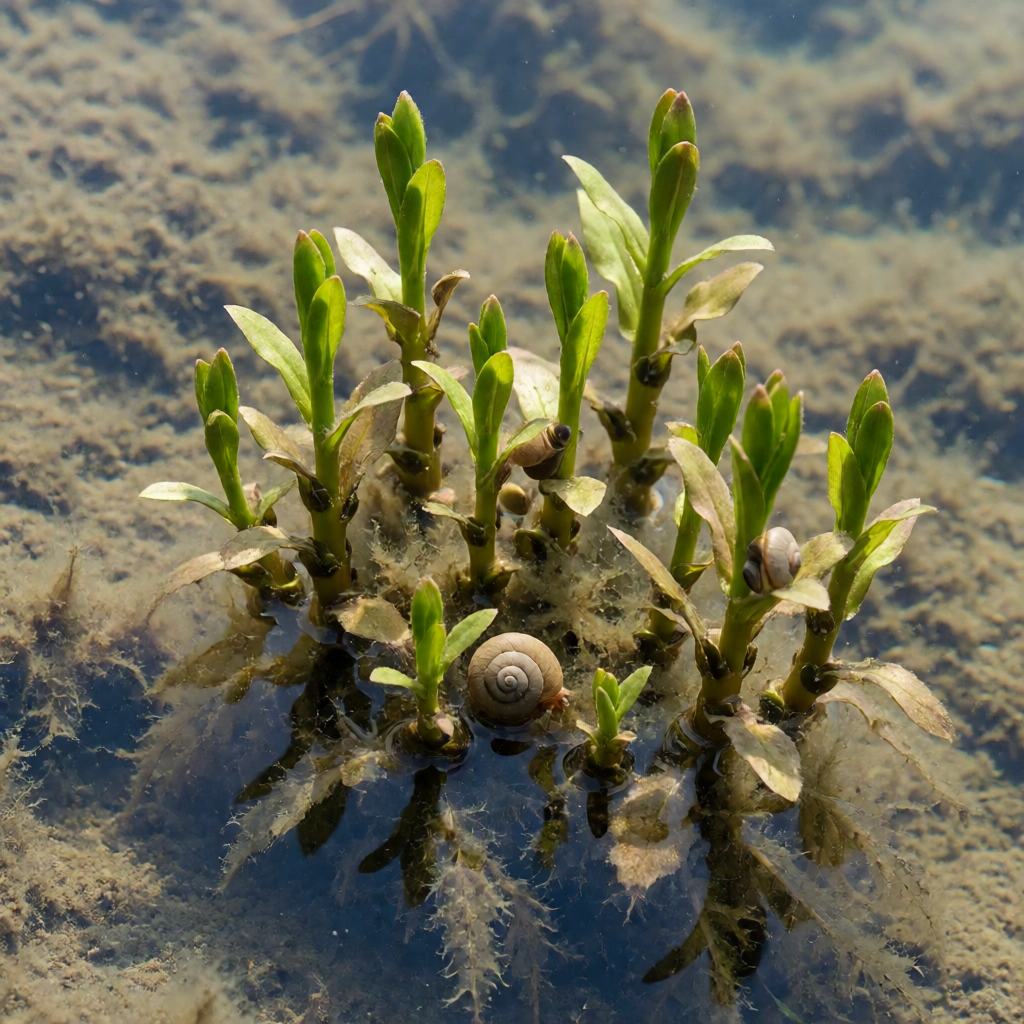
The pochard is an omnivorous diver. Its diet is seeds, roots and shoots of water plants. A bird takes these from the lake bed. It stays under for twenty to thirty seconds at a stretch. It feeds at depths of up to four metres.
A flock on a weedy lake crops the bottom bare in a way no surface feeder can. To this plant diet the bird adds molluscs and small crustaceans. It eats insect and amphibian larvae where they are many. In the breeding season it takes animal food for protein. The pochard dives, rather than filters, to feed.
It swallows grit to help the gizzard crush hard seeds and shells. It tolerates dirty, rich water well. This is why it thrives on the gravel pits and reservoirs dug across the lowlands. It is among the ducks most at risk from lead shot on the beds of shooting waters. The ban on lead in wetlands has cut but not ended this poison.
A cup in the reeds
The breeding cycle
Pochards pair in late winter and early spring. The bond lasts one breeding season, not life. The drake leaves the female as she starts to sit. He takes no part in the young. The female alone picks the nest, builds it and tends the brood. Nesting starts in late April and runs into June. The site is on the ground among dense plants at the water’s edge.
It is often over a shallow flooded margin. The female builds a bulky cup of dead leaves and stems lined with down from her breast. The clutch is six to twelve eggs. She lays one each day. She sits on them alone for twenty-five to twenty-eight days. She leaves only to feed and bathe. By then the drake has left for the moult flock.
The ducklings can walk soon after hatch. Their mother leads them to water. She broods and defends them against marsh predators. They can fly at fifty to sixty days. By then the family has split up and the young have joined the flocks that take them south.
A duck in decline
Conservation
The common pochard is Vulnerable on the global Red List. Its recent history gives cause for concern. The breeding population of western and central Europe has fallen sharply in thirty years. The loss and ruin of lowland marshes caused this. So did the rising feral and domestic mammals that take the nest. So did the change in how gravel pits and reservoirs are run.
The larger populations of the east have been steadier and have in places grown. The species is protected across its range. In Britain and the Low Countries the key winter and moult waters are reserves. They are managed to hold the water level and plant fringe the bird needs. The international deals on migratory waterbirds have cut the shooting on passage and winter flocks. Yet the loss of breeding habitat is hard to reverse.
The pochard is listed on the African-Eurasian Waterbird Agreement as a priority bird. The main threats are the drainage and richness of the breeding marshes. The predation of the nest by introduced and feral mammals is another. The lead left in wetlands still hurts. Recreation disturbs the best waters. Managing the pochard means protecting the reed beds and shallow bays across a continent and controlling the mammals that take the eggs.
Quick hits
Five things to remember
- The male pochard has a rounded chestnut-red head and a red eye. Together they make him one of the brightest diving ducks. The female is plain brown with a pale chin. The two sexes look like different species on the water.
- The pochard is a true diver. It can stay under for twenty to thirty seconds. It reaches down four metres to the lake bed. A flock on a weedy lake crops the bottom bare in a way no surface duck could.
- The drake takes no part in the young. He leaves the female as she starts to sit. This is why the ducklings are reared by the mother alone through the fifty or sixty days to flight.
- The pochard was once badly hit by lead shot on the beds of shooting waters. It swallowed the pellets with its food. The ban on lead in wetlands has cut but not removed the risk.
- The western breeding population has fallen sharply even as the winter flocks of Britain and the Low Countries stay large. The species is now a concern, though still common on the shore’s reservoirs.