 By st20113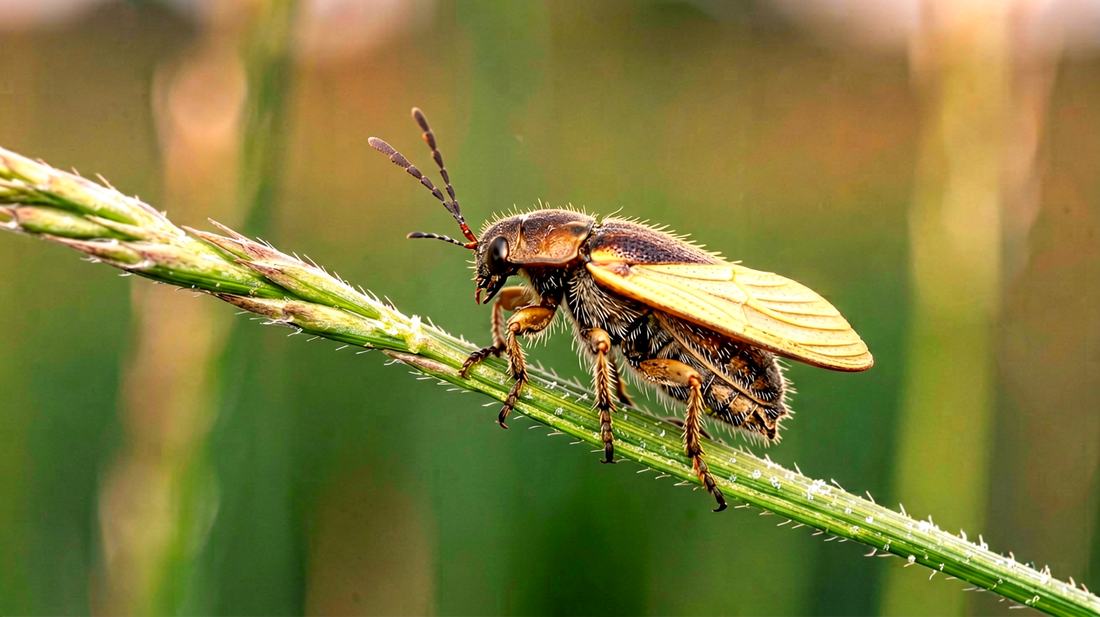
Amphimallon solstitiale | Summer Chafer
Species Profile · Scarabaeidae
Summer Chafer
A hairy yellowish-brown beetle that blunders around hedgetops at dusk in midsummer and spends years underground as a root-feeding grub.
Not assessed by IUCN
Range
Length
Flight
Colour
Larvae
The beetle of midsummer dusk
The summer chafer
The summer chafer is a stout, hairy, yellowish-brown beetle. It appears in a short burst at dusk in midsummer. The beetles blunder around the tops of hedges and trees. They often end up on lighted windows. It is one of the most familiar large beetles in gardens and parks.
Yet most people who see it cannot name it. The adult is harmless and short-lived. It feeds on leaves for a few weeks and then dies. The larva is a fat white grub. It lives in the soil for 2 or 3 years.
It feeds on the roots of grasses and other plants. Where grubs are numerous, they can damage turf. Like many insects of grassland and field edges, the summer chafer has become far less common. Its decline is part of the quiet loss of insects recorded across Europe.
Family tree
A small relative of the cockchafer
The summer chafer is in the family Scarabaeidae, the scarab beetles. That is one of the largest beetle families in the world. It holds the dung beetles, the flower chafers and the rhinoceros beetles. The summer chafer sits in the subfamily Melolonthinae and in the genus Amphimallon. A German entomologist described it in 1783. Its closest relative in Europe is the common cockchafer. That insect is larger and browner.
It appears in May rather than June. Both have slow larvae in the soil and both fly to lights at night. People often confuse the two. The easiest ways to separate them are size and the plates on the antennae. The summer chafer has 3 plates. The cockchafer has 6 or 7. The whole group feeds on roots as larvae and on leaves as adults.
The group has become much rarer in farmland over the last 50 years. One beetle of the same family lives in the same gardens. That is the Rose Chafer. Its adults feed on flowers and leaves like the summer chafer. But its larvae live in leaf litter and old wood, not in the soil.
Hairs, shape and antennae
How to identify one
An adult summer chafer is about 14 to 18 mm long. A few large ones reach 20 mm. It is broad and stout and noticeably hairy. The body is widest across the middle of the wing cases. It tapers slightly towards the rear. The colour is a dull yellowish-brown. The wing cases are lighter than the head and the front of the body. Long pale hairs cover the whole insect. They give it a soft, furry look.
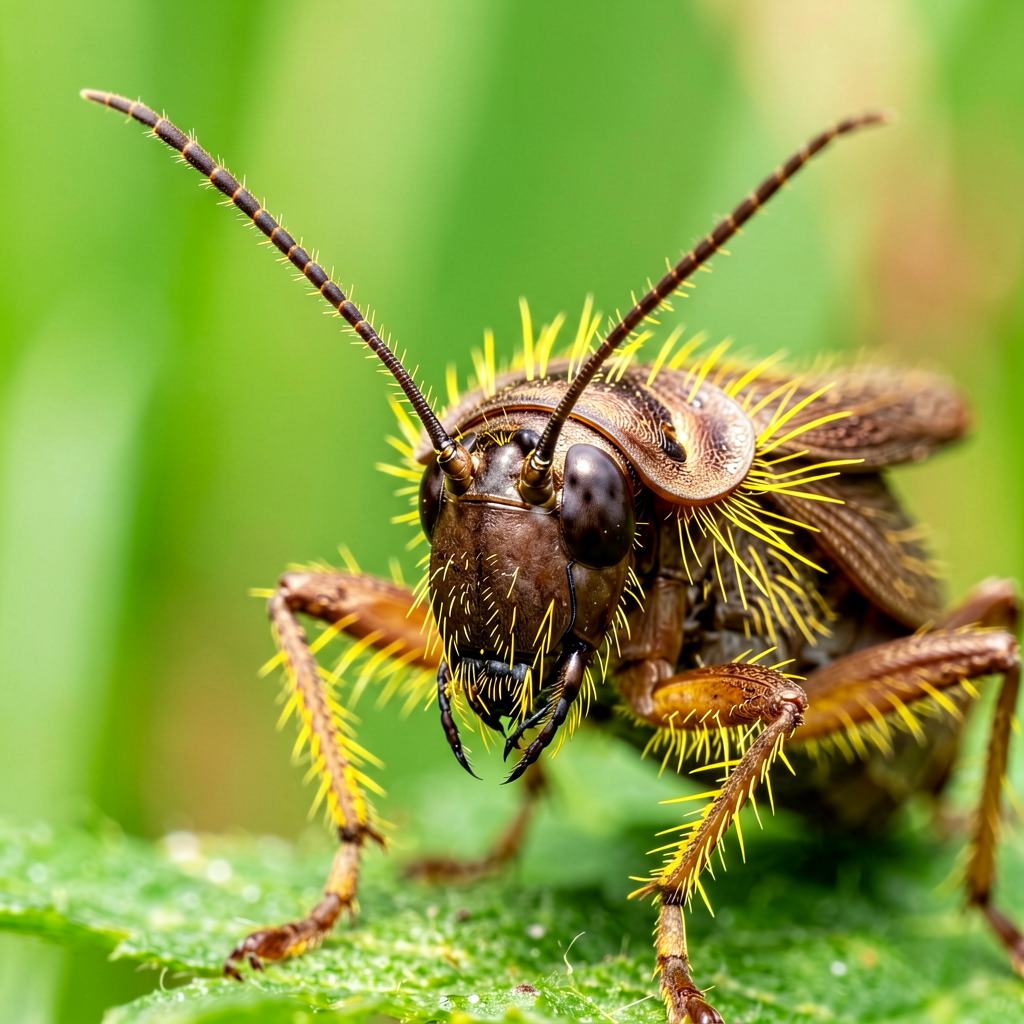
The hairs also trap a film of air. That helps the beetle keep warm on cool evenings. Its head is small. Its eyes are large and partly divided by a ridge. Its antennae are short and end in a club. The club has 3 flat plates. They can be fanned open like the pages of a book. Males use them to detect the scent of a female. Its wing cases carry several fine ridges.
Its legs are stout. Spurs and claws on the legs are used for digging and for gripping leaves. It has no sting. It has no bite worth mentioning. Adults feeding on ornamental plants can take enough leaves to be noticed. Larvae feeding on grass roots can thin a lawn. The insect is completely harmless to people.
1
2
3
Meadows, verges and gardens
Where it appears
The summer chafer is found across most of Europe. Its range runs east through Asia Minor and central Asia to Siberia. It is commonest in open country with a mix of grass, hedges, trees and scrub. Meadows, pasture, road verges and railway embankments all suit it. So do parks, gardens, allotments, orchards and woodland edges. The adults need two things during their flight weeks. They need leafy and flowering trees and shrubs to feed on.
They also need soft, undisturbed soil for the females to lay eggs in. The larvae need ground that is not disturbed often. The grubs take 2 or 3 years to develop. Ploughing and cultivation can kill them. So can repeated cutting or clearing of a site. That is why the species does well in permanent pasture. It also does well in old meadows and on lightly managed verges.
It does badly in intensive arable land. The soil is turned over every year there. The grass and herb roots the grubs need are absent most of the time. The beetles fly at dusk and after dark in June and July. The main flight period lasts only about 3 or 4 weeks. They are strongly drawn to lights. That is why they turn up on windows and around street lamps.
What it eats
Leaf bites and root grubs
The adults feed on the leaves of trees and shrubs. They take irregular bites out of the edges. Where the beetles are numerous they can strip small twigs. They prefer broadleaved trees and shrubs with soft leaves. The damage is usually slight. The beetles live for only a few weeks. Their numbers in most places are now much lower than in the past. The larvae are the more destructive stage.
They feed on roots. Young grubs start on dead and decaying plant material. That includes roots, dead leaves and other organic matter in the soil. As they grow they attack living roots. Grass roots are their main target. They also take the roots of herbs and shrubs in grassland. That reduces the plant’s ability to take up water and nutrients. A few grubs in a pasture do no visible harm.
Their burrows and droppings mix and aerate the soil. The grubs themselves feed many animals. Rooks, crows and gulls follow ploughs to dig them out. Badgers, foxes and moles eat large numbers. But heavy infestations can kill turf over large patches. That is why chafers have long been treated as pests of lawns and pasture.
Scent plumes at dusk
Mating in a few weeks
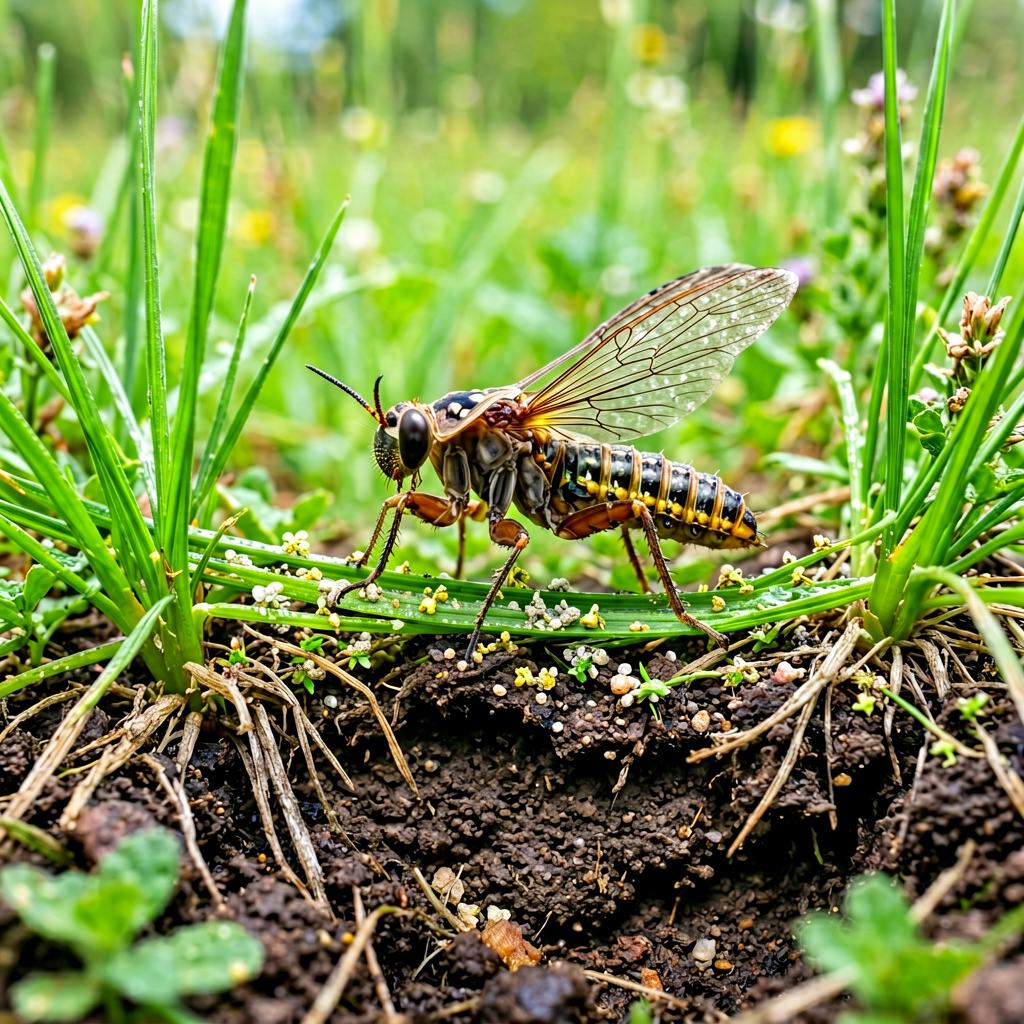
Summer chafers emerge as adults in late May and June. They climb out of the soil after a pupal stage of a few weeks. The new beetles fly to the nearest tree or hedge and start to feed. Males begin to search for females. They follow the scent plume the females release. Females produce the scent from glands at the tip of the abdomen. Males detect it with the fanned plates of their antennae. Those plates are largest in the male.
They let him follow the scent upwind over a long distance. Mating happens on the ground or in low foliage. The female then burrows into the soil. She usually chooses grassland or a field margin. She lays a batch of about 20 to 30 small white eggs. They sit a few centimetres down. She may lay more than one batch in her few weeks of life. The larvae hatch after a few weeks.
They feed on organic matter in the soil. They take 2 or 3 years to reach full size. They overwinter deep in the ground and move up again in spring. In their last autumn they go below the frost line. In the following spring they build a large cell. There they change into a pupa. The adult emerges a few weeks later. So the cycle takes 2 or 3 years from egg to adult.
A quiet decline
Falling insect numbers
The summer chafer has no formal conservation status. It is not protected in any European country. But long-term insect monitoring suggests it has become much less abundant in many areas. It shares the fate of many grassland and farmland insects. Their numbers have fallen sharply since the middle of the 1900s. The causes are the same ones that have hit bees, butterflies and many beetles. Farming has intensified. Permanent pasture has been turned into arable land.
Fields are cultivated repeatedly. Fertilisers and pesticides are used heavily. Hedgerows, field margins and rough corners have been lost. Hay-making has given way to silage-cutting, which takes the grass early. Verges and embankments are mown often. All of this removes the rough, undisturbed ground the species needs. Its larval stage lasts 2 or 3 years, so it needs that ground for a long time. Artificial lighting may also disrupt the adults.
It draws them away from the trees and hedges where they feed and mate. It also exposes them to predators. The species spends most of its long life underground. It is visible as a beetle for only a few weeks. So its decline is easy to miss. Records come mainly from light traps and systematic surveys.
Quick hits
Five things to remember
- The summer chafer is named for its flight period in June and July, a month later than the closely related cockchafer.
- Its antennae end in a fan of 3 plates, compared with 6 or 7 in the cockchafer, and the plates are far larger in the male.
- The larva lives in the soil for 2 or 3 years feeding on grass roots, while the adult lives for only a few weeks.
- The beetles are strongly attracted to lights and are most often noticed after blundering into a lighted window at dusk.
- Rooks, gulls and badgers dig out the fat white grubs in large numbers, so the species is important food for farmland animals.