 By st20113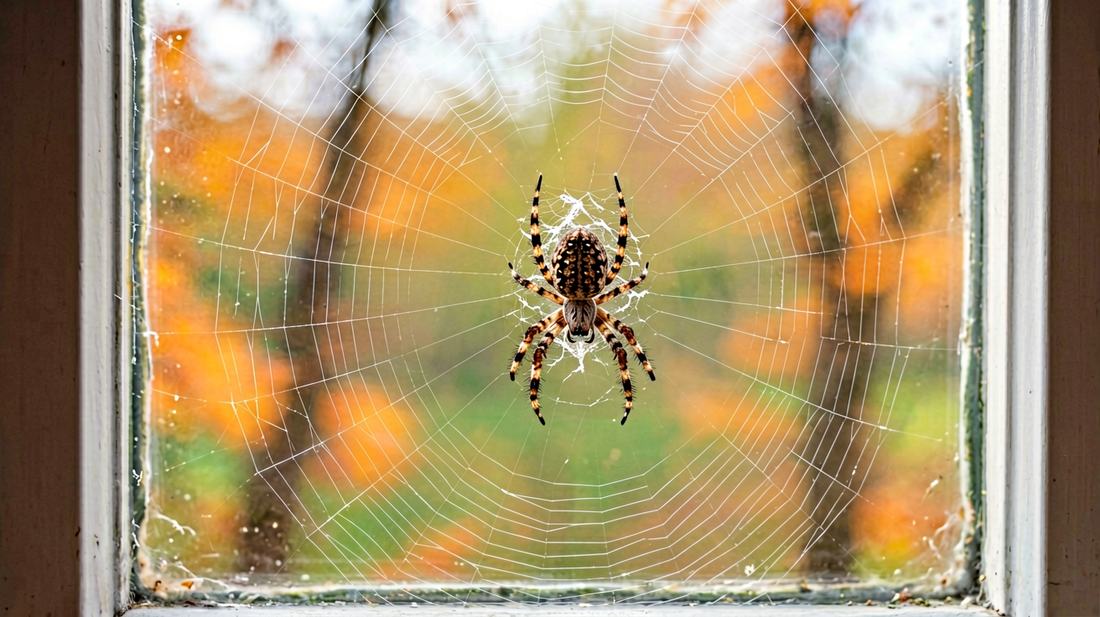
Zygiella x-notata | Missing-sector Orb Weaver
Species Profile · Araneidae
Missing-sector Orb Weaver
An orb weaver with a flaw built into its web: a whole wedge of sticky spiral missing, and two signal threads running through the gap.
Not assessed by IUCN
Range
Female
Web
Build site
Mature
The spider in the window
The missing-sector orb weaver
The missing-sector orb weaver is a small brown spider. It builds a round web with one obvious flaw built into it. It prefers window frames, fences, gates and other parts of buildings. So it is probably the orb weaver most often seen by people who are not looking for spiders. Its web has two radial threads running to the upper corner.
A whole wedge of the sticky spiral is gone between them. The spider sits at the hub with a foot on the signal thread. That thread runs down the empty sector to a retreat at the edge. When an insect hits the web, the spider feels it and runs out. The species is common across Europe.
It has been carried to other parts of the world. Its webs last through the winter. So they are a familiar sight on window frames in February as well as in August.
Family tree
A small orb weaver of the genus Zygiella
The missing-sector orb weaver is in the family Araneidae, the orb weavers. That is one of the biggest spider families in the world. It holds the familiar garden orb weavers. The species sits in the genus Zygiella. All members of that genus are small or medium spiders. They all build orb webs with a free sector and a signal thread.
A French naturalist described the species in 1802. Its name refers to markings on the body thought to look like the letter X. The genus holds a few species across the northern hemisphere. This one is the commonest of them. It is very hard to tell from two close relatives without a close look at their sex organs. The four species together form a group whose webs are very distinctive.
The empty sector alone names the genus well enough. One spider of the same gardens shares the family. That is the Yellow Garden Spider. It is much larger and more brightly coloured. It builds a bigger web with a zigzag band of white silk at its centre.
Size gap, colour and web
How to identify one
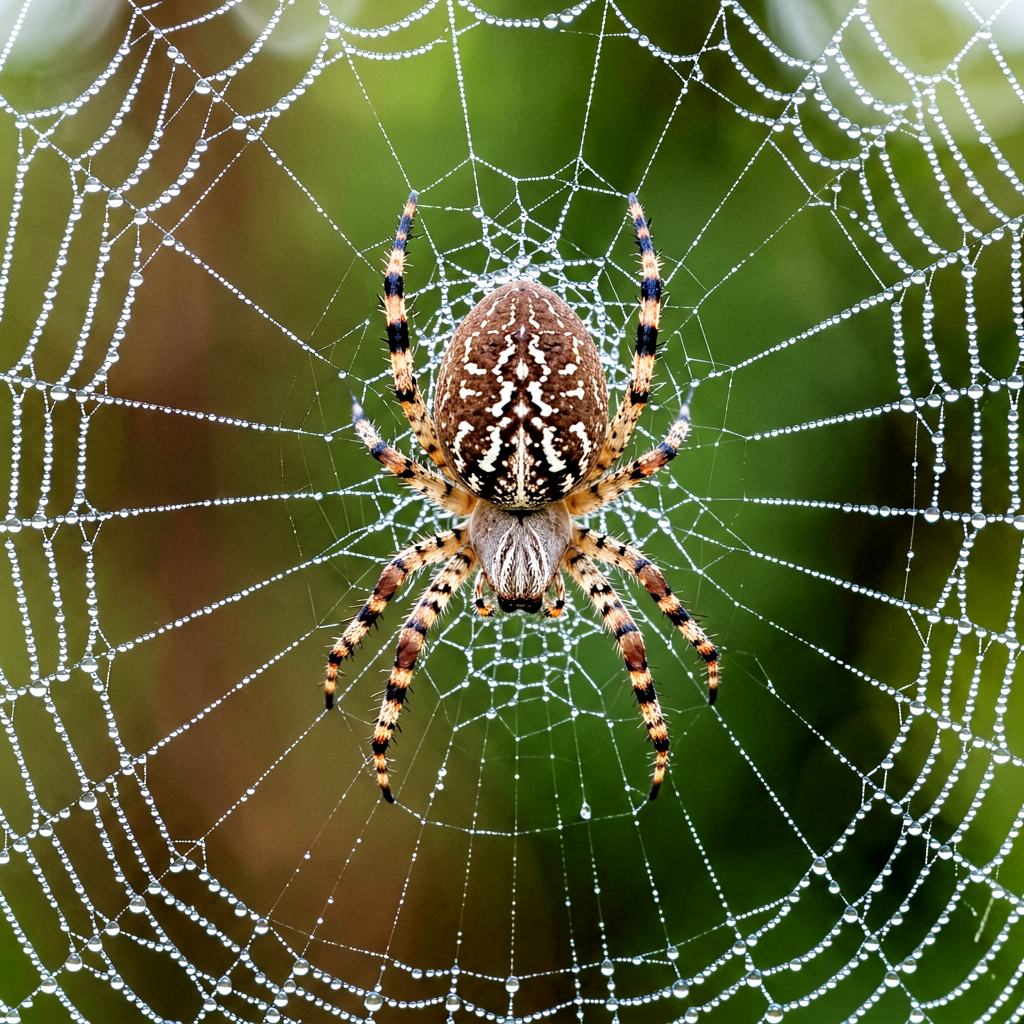
An adult female has a body 5 to 11 mm long. The male is much smaller at 3 to 5 mm. He also has a slimmer body and relatively longer legs. That size gap is normal among orb weavers. The male must approach a much larger female who could eat him. The colour is dull and mottled brown or grey-brown. The rounded abdomen carries a pale pattern or pale-edged marks. Darker lengthways bands are often present.
The legs are pale brown with darker rings. So the spider looks faintly banded. That matches old wood, brick and lichen. The abdomen is roughly oval and a little pointed behind. The front part of the body is small and narrower than the abdomen. Eight eyes sit in the usual pattern of orb weavers. Four are at the front and four behind. The spider can see all round, but best forwards and up.
That suits an animal that lives in a web. Its legs carry many fine hairs and bristles. They detect vibrations in the silk. Other organs respond to strain in the threads. So the spider can tell a small fly from a leaf that stirs. It uses different silks for different jobs. The frame, the radii and the catching spiral are all different. It also makes silk for wrapping prey.
1
2
3
Buildings and half-wild places
Where it lives
The missing-sector orb weaver is found throughout Europe. Its range runs from the Mediterranean to southern Scandinavia and the British Isles. It also reaches Asia and North Africa. People have carried it to other continents. It now lives in North and South America and parts of Africa and Australia. There it lives around buildings in the same way. It is above all a species of man-made and half-wild places.
Window frames, door frames, gateposts and fences are typical sites. Railings, bridges, walls, sheds and greenhouses all work. So do verandahs and the outside walls of buildings. The webs usually sit in a corner or against a support. There the frame can be stretched between two surfaces at right angles. Such a web is also at least part sheltered from wind and rain. Natural sites are used too.
The spider can be found on rocks, tree trunks, hedges and bushes. It prefers sheltered positions, especially near water. But it is far commoner on buildings than in woodland. Window frames probably explain why it is so common. The webs are mended and rebuilt often. A spider in a good site keeps the same web for weeks or months. It replaces the sticky spiral every day or two at night.
What it eats
Small insects in the sticky spiral
The missing-sector orb weaver eats flies, small moths, midges, small beetles and aphids. It takes any small insect that flies into the sticky spiral. The size of the prey is set by the web and by the silk. So the spider concentrates on small, common insects rather than large ones. The odd design of the web is tied to this way of hunting. The free sector holds two radii and no sticky spiral. The signal thread runs along it.
The spider sits at the hub with one leg on that thread. When an insect hits the spiral the vibrations travel along the silk. The spider can then run straight to the victim. Experiments show the missing sector does not reduce the catch. It does let the spider watch the web from a retreat. The retreat also hides it from birds, from wasps that hunt spiders and from bad weather. When a suitable insect is caught, the spider runs out and seizes it.
It wraps the prey in silk and then bites it. Small prey are eaten straight away. Bigger or awkward prey may be wrapped and left for later. The spider also eats damaged silk and even its old web. That gets back some of the protein in the silk. The species cannot harm people. Its jaws cannot pierce skin.
Courtship on a thread
Egg sacs in autumn
Missing-sector orb weavers mature in late summer and autumn. Mature males stop building webs and leave them. They wander in search of females. They find them by following scent threads the female leaves on her web. A male does not walk straight into the web. He signals by plucking and vibrating the silk. The pattern tells her he is a mate, not prey. He then approaches carefully.
He courts with more vibrations and with movements of his front legs. The female lays eggs in one or more silken sacs. She attaches them in her retreat or in a crack in the frame. Each sac may hold a few dozen eggs or well over 100. The eggs are pale yellow and packed in loose silk. The female may guard the sacs for a time. She often dies near them as winter comes. The eggs hatch in spring, or later in the year if it is cold.
The young spiders disperse by walking. They also balloon, releasing a thread of silk into the wind. That can carry them many kilometres. So they reach new buildings and new areas. Growth takes about a year. Most individuals mature in the summer or autumn after hatching. In mild conditions they may live more than a year.
A spider that gained from people
Carried to four continents
The missing-sector orb weaver has no formal conservation status. It is not protected. It depends on buildings and on the small insects that fly around them. So it has probably gained from human activity rather than lost. It has been carried to four other continents. It remains common across its native range. The main pressures on it are indirect. They act on its food and its nest sites, not on the spider itself.
Flies, midges and small moths have declined across much of Europe. That follows the loss of flower-rich vegetation. Wet ground has been drained. Gardens have been tidied. Insecticides are used widely. So a web may catch nothing, and a spider leaves a web that catches nothing. People also clean window frames and remove webs. Many see a spider’s web as mess.
That wrecks the sites where the species does well. Artificial light at night draws insects away from webs. They end up at lamps, where they burn out or die. The species lives close to people, so it meets any spray used outside buildings. It is not usually the target, but it loses its prey to such sprays. A single web can remove hundreds of small flies in a summer.
Quick hits
Five things to remember
- The web has a whole sector missing, with two bare radial threads instead of the sticky spiral, and the spider runs the signal thread along it to a retreat.
- It is one of the last spiders to disappear in autumn and stays in its web through mild spells in winter, when most other orb weavers are gone.
- Its webs are commonest on window frames, gates and railings, which makes it probably the orb weaver most often seen by people who are not looking for spiders.
- The male vibrates the silk to announce himself as a mate rather than as prey before approaching the much larger female.
- Young spiders disperse by ballooning on threads of silk in the wind, which is how the species has reached other continents.