 By st20113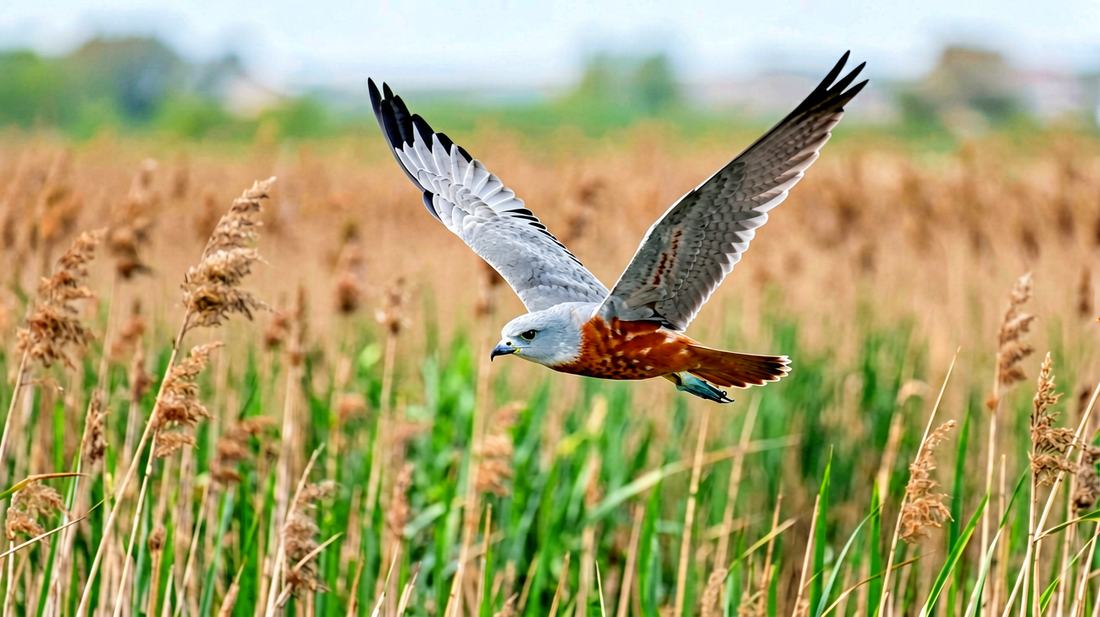
Circus aeruginosus | Western Marsh Harrier
Species Profile · Accipitridae
Western Marsh Harrier
A big, long-winged harrier of the reedbeds that fell to a single breeding pair in Britain in 1971 and has since crept back across the marshes.
IUCN: Least Concern
Range
Length
Weight
Incubation
Fledged
Back from the brink
The western marsh harrier
The western marsh harrier is the largest and heaviest European harrier. It is a long-winged raptor. It flies low over reedbeds and wet grassland. Its wings flap slowly and it tilts side to side as it searches below. It lives in marshes and fens. It hunts by surprise. It drops into the reeds to grab a frog or a vole. The male and female look very different.
Early naturalists thought they were two species. The male is grey and black. He has pale, silver upperwings. The female is rich chocolate brown. She has a creamy crown and shoulders. Marsh harriers nest in thick reedbeds. They build a reed platform just above the water. One male may hold a territory.
Two or three females nest there. The species neared extinction in Britain. The same happened in much of western Europe. Drainage and hunting caused this. Its recovery in the past fifty years is a good story. It is among the best in European conservation.
Family tree
A harrier of the wetlands
The western marsh harrier is in the order Accipitriformes. It is in the family Accipitridae. Its genus is Circus, the harriers. Harriers are slim raptors. They have long wings and long tails. They hunt by gliding low over open ground. Its closest kin in the family is the Common Buzzard. The buzzard is broad-winged and short-tailed.
It often soars or sits on a post. It drops onto prey from a height. It does not skim low over plants. The two birds share the same land. They never compete. One takes prey in the air. The other takes it on the ground. Circus has about fourteen species worldwide.
They include the hen harrier, Montagu’s harrier and the northern harrier of North America. Most live in grassland, marsh or steppe. The western marsh harrier was once one species with the eastern marsh harrier of Asia and the African marsh harrier. Modern experts split them. The western form lives across Europe and North Africa. Carl Linnaeus described it in 1766.
Wings, weight and colour
How to identify one
An adult is 43 to 55 cm long. Its wingspan is 115 to 130 cm. It weighs 400 to 800 g. Females are larger and heavier than males. This is rare among raptors. It may link to the sexes’ roles in hunting and nest defence. The male has a pale grey tail. His upperwings are grey with black tips. He has a dark brown back. His head is greyish.
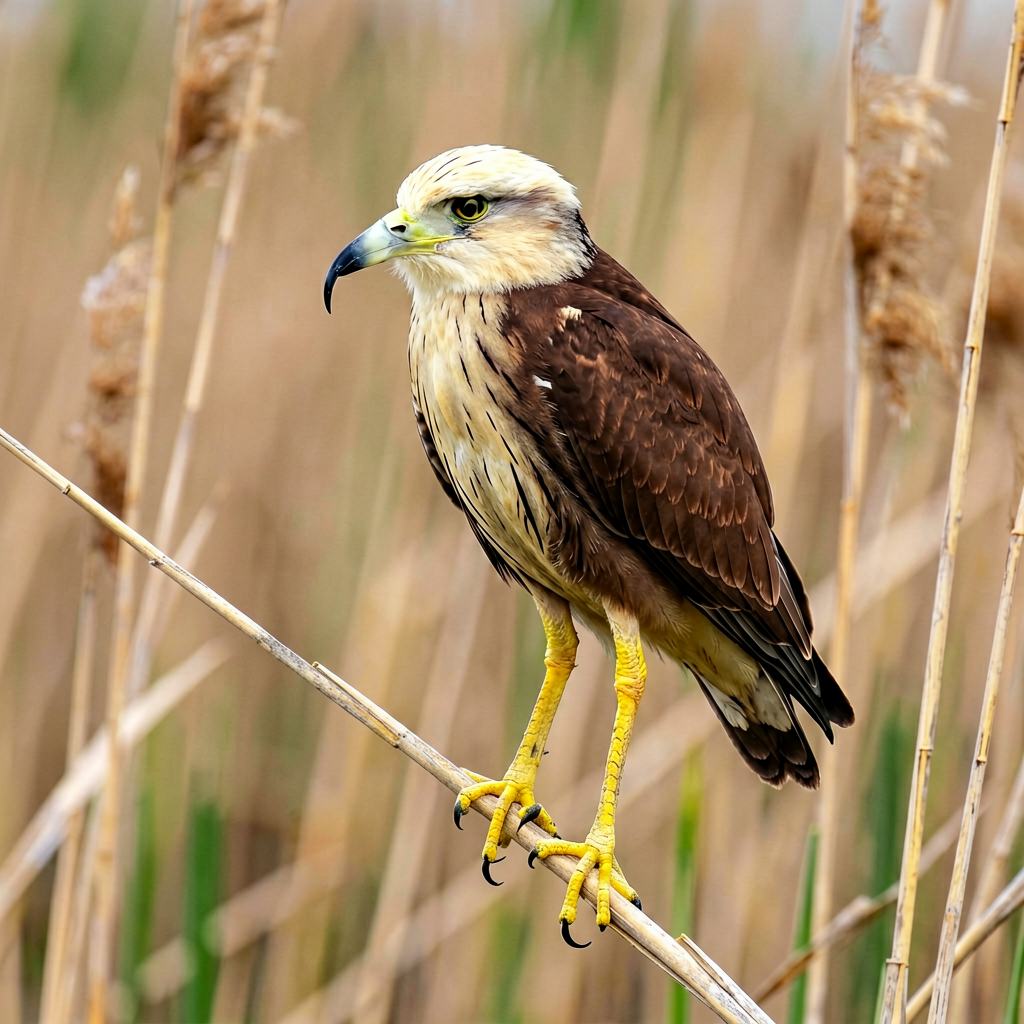
His body is rusty brown. Some males are almost cream on head and chest. The female is dark chocolate brown above and below. She has a pale cream crown and throat. Her wings have pale leading edges. At a distance she looks like a buzzard. Both sexes have long, narrow wings. They hold them in a shallow V when gliding. Both have a long tail used as a rudder. Both show five splayed primary feathers at the wingtip to help tell them apart.
The bill is short and sharply hooked. The legs and feet are long and thin. They are made for snatching prey from thick plants. They are not made for killing by force. Young birds look like the female. They are more evenly dark. Marsh harriers fly with slow, deep wingbeats. These mix with glides. Their hunt flight is a low, rolling sweep. It follows the shape of the reeds.
1
2
3
Reedbeds and wet meadows
Where it hunts
The western marsh harrier breeds across much of Europe and central Asia. Its range runs from Britain and Iberia east to Mongolia. It also breeds in North Africa. Northern birds migrate south each autumn. They go to the Mediterranean, West Africa and South Asia. It is a wetland bird. It uses large reedbeds and fresh or salty marshes. It uses fens, wet meadows and flooded lake edges. It also uses wet bits of farmland.
There drainage has removed most natural marsh. It needs a large, quiet area of thick reeds. Tall wetland plants are best for nesting. Open ground near it should hold many frogs and small mammals. In winter it uses drier land. This includes farmland, coastal grassland and river plains. Birds in Africa and southern Europe use savanna, marshes and fields. Marsh harriers hate nest disturbance. They leave a site if people come too often.
They dislike drainage. They dislike reedbed turned to farmland. The species has learned to nest in cereals. Winter wheat is a favourite. Nests are lost at harvest unless the field is left uncut. Agri-environment schemes now pay farmers. They guard such nests until the young can fly.
What it eats
Quartering the marsh
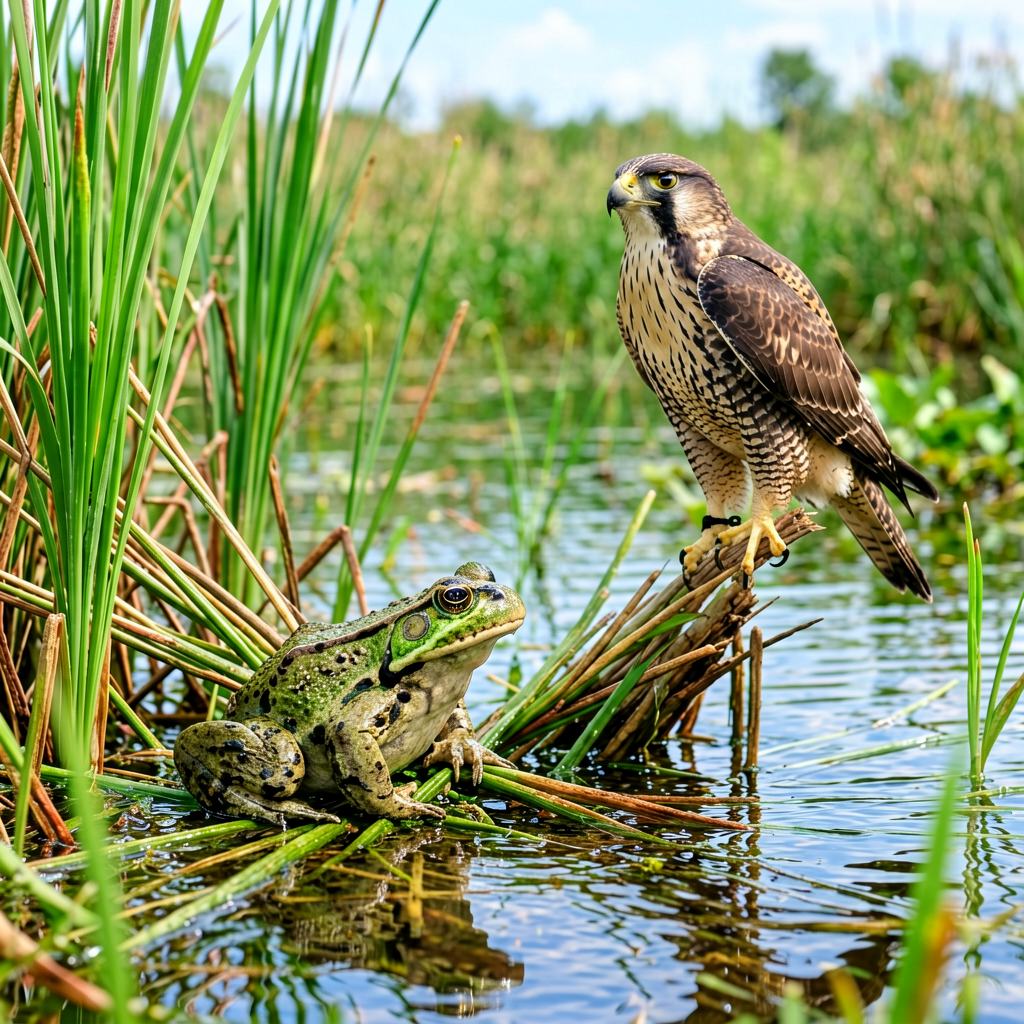
The western marsh harrier is an opportunistic predator. It takes what is common and easy to catch. Frogs and toads are key prey in spring and summer. This is above all true for females with young. Small mammals include voles, young rabbits and rats. Small birds include ducklings, coot chicks, waders and songbirds. Fish, insects, reptiles and dead meat are taken when found. Marsh harriers steal food from other birds.
They pick up dead animals from roads and field edges. Young waterbirds are at great risk. A harrier at a reed edge can take many ducklings in days. Hunting is mostly on the wing. It is low and slow. The bird drops with legs out. It grabs prey from reed tops or the water. It rarely hovers.
Unlike some harriers it seldom hunts open fields. Prey is carried back in the feet. It is torn up for the chicks. Early in the season the male feeds the female in mid-air. This happens during a tumbling show. Adult marsh harriers have few enemies. Foxes, crows and other raptors take eggs and chicks.
A nest among the reeds
Eggs and fledglings
Marsh harriers nest in late spring and early summer. Courtship starts in March or April. Males put on aerial shows. The male climbs high, stalls and drops. He may pass food to the female in mid-air. The species is odd among raptors. It is often polygynous. One male may hold a territory.
Two, three or even five females may nest in it. He must feed them all. The female builds the nest from reeds and grass. It sits in thick plants standing in shallow water. It is added to as the reeds grow through the season. A clutch of four or five eggs is laid in April or May. The female sits on them for 31 to 38 days. The male hunts for her.
The chicks hatch in down. They leave the nest after 30 to 40 days. They stay fed by parents for weeks more. At peak they eat four or five prey items a day each. Only about half the pairs breed in a given year. Success rests on weather, water, frogs and voles. Females may first breed at two or three years old. The oldest ringed birds lived past fifteen years.
Pesticides, then protection
A slow recovery
The western marsh harrier fell to a few pairs in western Europe by the mid-1900s. Its marshland was drained. It was shot and its eggs were taken. Pesticides in the 1950s and 1960s thinned its eggshells. In Britain it stopped breeding in 1899. It returned in 1911. Then it fell to a single pair in 1971 at Minsmere in Suffolk. Legal protection brought recovery.
Conservation groups bought reedbeds. The worst pesticides were banned. New wetlands were made. The British population now has several hundred breeding females. They span eastern and southern England. The Netherlands, Germany, Denmark and France recovered too. The species is not globally threatened. It is rated Least Concern.
It is still killed on some shooting estates. It stays at risk from wetland drainage. Disturbance at nests is a threat. So is nest loss at harvest in farmland. Agri-environment payments help. So do reedbed care and careful farm timing.
Quick hits
Five things to remember
- The male and female differ so much in plumage that they were once called two separate species.
- A single male may hold a territory with two, three or even five nesting females inside it.
- It hunts by quartering slowly and low over reeds, not by soaring like a buzzard.
- Britain’s breeding population fell to a single pair in 1971 and has since recovered to several hundred.
- The nest is a platform of reeds built over shallow water and raised as the reeds grow through the season.