 By st20113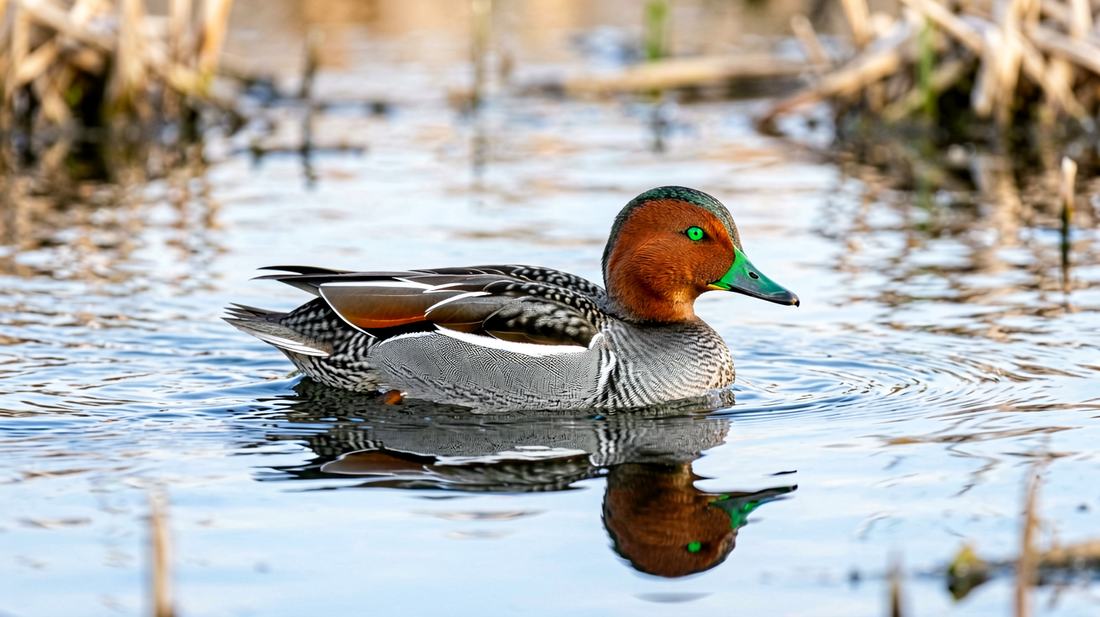
Anas crecca | Eurasian Teal
Species Profile · Anatidae
Eurasian Teal
Europe’s smallest duck, a fast, restless bird with a chestnut head and a green eye patch that gathers in huge winter flocks.
IUCN: Least Concern
Range
Length
Weight
Eggs
Feeding
The smallest duck
The Eurasian teal
The Eurasian teal is the smallest duck in Europe. It is a quick, compact and nervous bird. It flies in tight, fast flocks. It lifts off with a sudden, unanimous burst of wings. A male in full plumage is among the most beautiful European ducks. He has a chestnut head. A broad green patch sweeps back from the eye.
A thin white stripe runs along the shoulder. The female is a quiet, mottled brown. She nests in thick vegetation. In eclipse, both sexes look drab brown. Outside the breeding season, teal gather in enormous flocks. They use estuaries, reservoirs and flooded fields. They feed on seeds in shallow water.
They dabble at the surface and tip forward. The species breeds across northern Europe and Asia. It winters in huge numbers farther south and west. In Britain and the Low Countries teal are far more numerous in winter. They are among the most heavily hunted ducks in Europe.
Family tree
A relative of the mallard
The Eurasian teal belongs to the order Anseriformes. It is in the family Anatidae. It is in the subfamily Anatinae. It is in the genus Anas. It is a dabbling duck. Dabbling ducks feed at the surface rather than diving. Its closest familiar relative is the Mallard. The mallard is much larger and heavier.
The two share the same general anatomy. They share the tipping habit and the brown female plumage. They differ in size, habitat and behaviour. The mallard is a broad, powerful bird. It walks on dry land and grazes like a goose. The teal is quick, light and restless. It rarely strays far from water. Other small dabbling ducks are close kin.
They include the garganey and the blue-winged teal of North America. They also include the green-winged teal of the Nearctic. Some authorities treat the Eurasian teal as one species with the green-winged teal. The two interbreed where their ranges meet. The genus Anas holds about 30 species of dabbling ducks. Its members have a flat, toothed bill that strains food from mud. Linnaeus named the Eurasian teal in 1758. Its name crecca imitates the drake’s whistling call.
Green mask, white line
The breeding drake
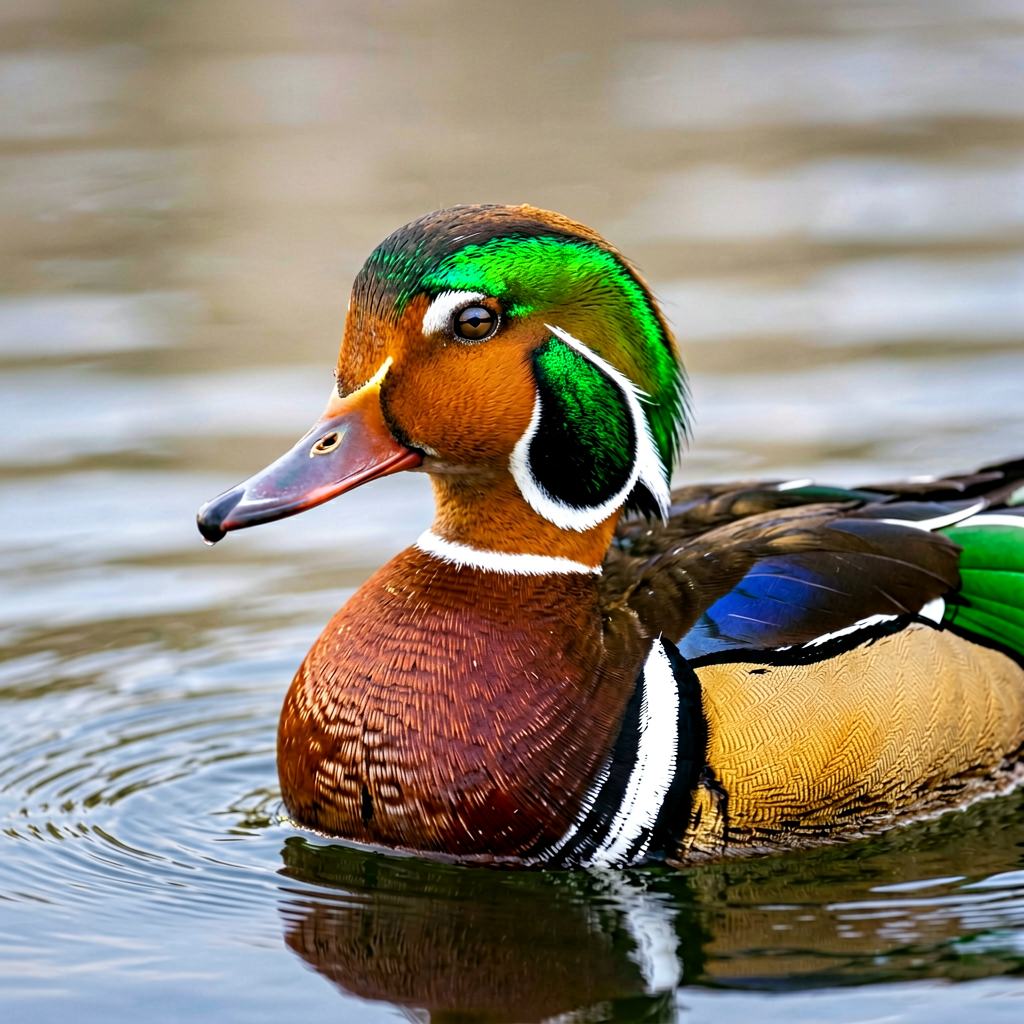
The Eurasian teal is a small, compact duck. It is 34 to 38 centimetres long. Its wingspan is 53 to 59 centimetres. It weighs only 200 to 450 grams. That is about half the weight of a mallard. In breeding plumage the drake has a chestnut-brown head. A metallic dark-green patch curves back from the eye. A thin white line borders the patch below. The body is finely marked in grey. A pale, almost buff panel sits at the rear.
A bright green speculum edged with white flashes on the folded wing at takeoff. The female is mottled dark brown and buff. A dark line runs through her eye. A pale stripe sits above it. She has the same green speculum. Both sexes have a short, dark grey bill. Both have dark, quick-looking eyes. The eclipse plumage is worn for a few weeks in late summer. The flight feathers are replaced then. The drake then resembles the female.
He keeps a darker, more uniform head. The legs are short and set well back. This makes walking clumsy but swimming efficient. The wings are short and pointed. They give fast, twisting flight. Teal fly in dense, fast packs. They bank and turn together. The drake’s high, piping whistle is a signature sound. It marks the winter marsh.
1
2
3
Marshes, estuaries and floods
Where teal gather
The Eurasian teal has an enormous range. It breeds from Iceland, Britain and Scandinavia. It spreads east across Russia and Siberia to the Pacific. It winters in western and southern Europe. It winters around the Mediterranean. It reaches parts of Africa and South Asia. In the breeding season it favours small, shallow waters. These waters are rich in nutrients. They have plenty of edge vegetation. Good sites are bog pools and moorland lochans.
Others are flooded meadows, ditches and lake margins. The bird likes quiet, enclosed sites. It avoids fast or deeply shaded water. In winter it becomes far more gregarious. It moves onto estuaries and coastal lagoons. It uses reservoirs, gravel pits and sewage farms. It visits flooded grasslands and lake edges. Flocks of hundreds or thousands gather. Around the coast it likes muddy, sheltered inlets. Eelgrass or algae grow there.
Teal are partial migrants. Birds from the west and south often stay put. Birds from the far north move south and west in autumn. Ringing shows Russian birds travel far. They may fly more than 3,000 kilometres. They winter in Britain or France. Cold snaps push birds west and south. A hard winter in the Low Countries adds teal fast. Tens of thousands can reach British waters in days.
What it eats
Dabbling in shallow water
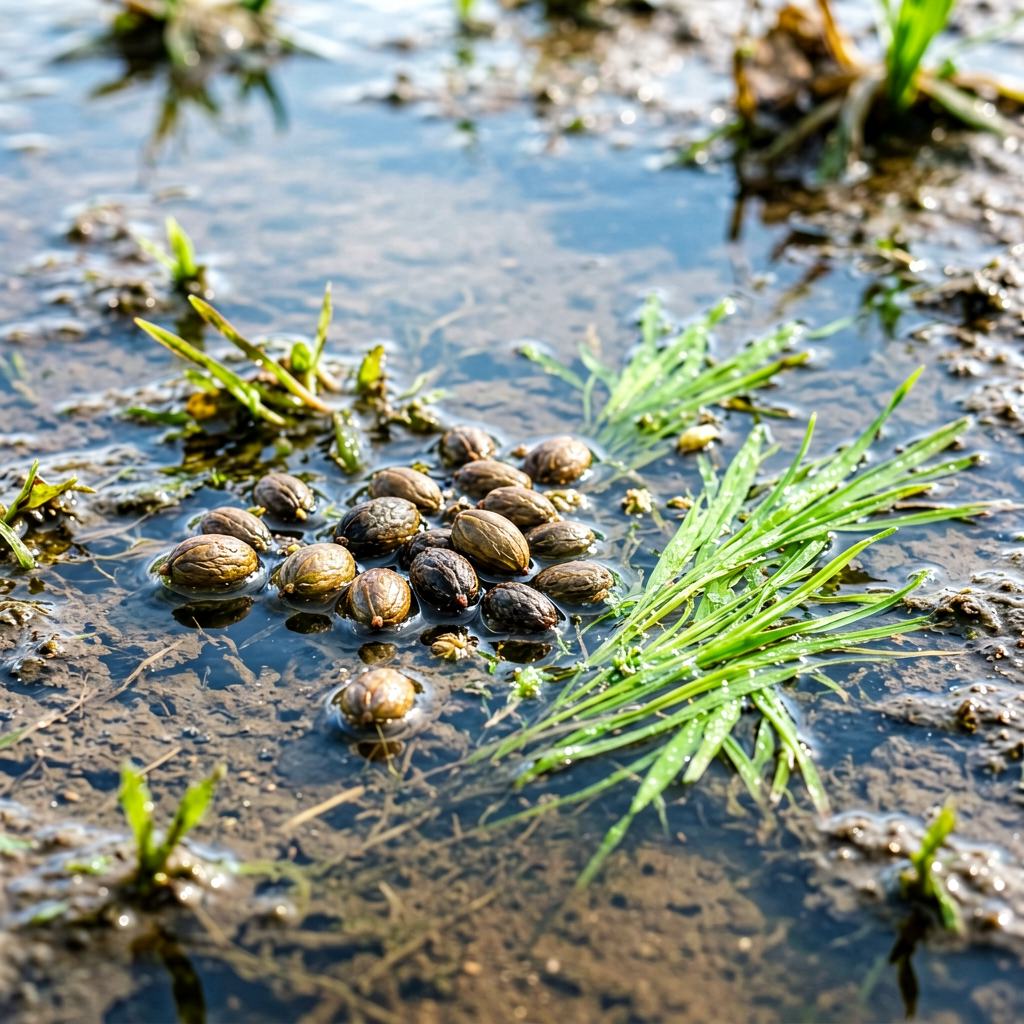
For much of the year the teal eats seeds. Its diet shifts with season and habitat. In fresh water it takes grass seeds. It takes seeds of sedges, rushes and pond plants. It eats a little green plant material. In winter it feeds heavily on eelgrass. It eats wigeon grass and tasselweed on tidal flats. It takes their seeds and tubers. Animal food matters more in spring and summer. It includes insect larvae and water beetles.
Molluscs, crustaceans and worms are eaten too. Growing ducklings need this protein. Teal feed by dabbling at the surface. They dip their heads in shallow water. They graze on mudflats. They pick grain from stubble fields. On many wintering grounds they feed at night. They move to open water after dark. Flooded fields draw them too. By day they roost in quiet, safe places.
They use moonlight and artificial light. Because they are small, teal feed in shallow water. Mallards cannot use the smallest pools. Teal exploit these pools. They are eaten by peregrine falcons and goshawks. Marsh harriers, foxes and otters take them. So do mink and large pike. The flock’s sudden, coordinated takeoff is its best defence.
A nest in the reeds
Courtship and ducklings
Eurasian teal pair up in winter. The pair bond lasts one season. The drake follows the female to her nest area. He stays until incubation begins. Then he leaves. He joins other males in a moulting flock. The female builds a shallow nest. She uses grass, leaves and down. She places it on dry ground. It hides in dense vegetation.
It lies within about fifty metres of water. She lays one clutch of eight to eleven eggs. The eggs are pale buff. She incubates for 21 to 23 days. She gets no help. She sits tightly and trusts her camouflage. She leads the ducklings to water within a day. The chicks swim and feed at once. They cannot fly for 25 to 30 days. Deaths are high in that period.
Gulls, crows and herons take ducklings. So do pike, mink and foxes. If a clutch is lost early, she lays again. In a good year she may raise a full brood. Teal reach breeding age in their first year. The oldest ringed birds passed twenty years. Most of Europe raises one brood a year. A second try after failure is common.
Draining the wetlands
A duck in decline
The Eurasian teal is Least Concern worldwide. It is still one of Europe’s most numerous ducks. Its wintering population reaches hundreds of thousands. Long-term counts show a moderate decline. The European breeding population has fallen in decades. The species is vulnerable in several countries. The main pressures are many. Shallow wetlands are lost and degraded. Water is drained and abstracted.
Floodplain grassland is farmed more intensely. Birds are disturbed at breeding and winter sites. Hunting is a major extra factor. The teal is a popular quarry. It is among the most shot ducks in Europe. Most countries set hunting seasons and bag limits. The total harvest is still substantial. Spent lead shot is swallowed with grit. It poisons dabbling ducks.
Bans on lead over wetlands exist in many places. The risk remains. Avian botulism can break out in warm summers. Other wetland diseases kill fast. Recreation disturbs the birds too. Conservation protects shallow wetlands. It also eases hunting along migration routes.
Quick hits
Five things to remember
- The Eurasian teal is the smallest European duck, weighing about half as much as a mallard.
- The drake’s high, piping whistle gave the species its scientific and common names.
- Winter flocks can number several thousand birds, and cold snaps push them west in days.
- Teal often feed at night and rest by day, so winter marshes stay oddly quiet in daylight.
- A female lays eight to eleven eggs and raises the brood alone; the drake leaves when incubation starts.